The storm took a few shingles and maybe more. There’s a damp patch on the hallway ceiling, the insurance company wants an estimate, and three different roofers have left flyers on your door since Tuesday. You need storm damage roof repair in Daytona Beach, and you want it from someone who’ll show you what’s actually there and fix it properly.
It’s stressful to make a big decision about your house while you’re still cleaning up the yard. You shouldn’t have to guess whether a roofer is overstating the damage, or understating it to win the job. You deserve to see the proof yourself.
APC Roofing is GAF Certified, licensed in Florida (CCC1337030) and insured, and in business since 2017. The inspection and estimate are free. Call 386-259-8425 to book yours.
It starts with a full inspection
A quick look from a ladder at one corner isn’t an inspection. A proper storm damage inspection covers every slope, the ridge and hips, the flashing at walls and chimneys, the pipe boots and vents, and the attic if there’s access. Every piece of damage gets photographed so you and your adjuster can see it.
A good inspection also separates storm damage from ordinary wear. Sun-baked shingles and an aging pipe boot aren’t storm damage, and calling them that doesn’t help you. You should hear clearly which is which.
What storm damage roof repair looks like by roof type
Shingle roofs
Wind breaks the seal under shingle edges and folds them back. Some tear off, and others lay back down with a crease that will fail in the next storm. Repairs replace the missing and creased shingles and reseal the rows around them. Flying debris and hail can also knock granules loose and crack the mat below.
Tile roofs
Concrete and clay tiles crack from impact, and high wind can lift and loosen tiles near the edges and ridge. Broken tiles can usually be replaced one by one. The bigger question is the underlayment beneath: if water has been getting past the tile for a while, that layer may need attention too.
Metal roofs
Metal handles wind well when it’s fastened right, but panel edges, trim and ridge caps can lift in a strong storm. Loose fasteners get replaced and lifted trim is refastened or replaced before wind can peel it back further.
Flat roofs
On a low-slope roof, look at the edges first. Wind pulls up perimeter metal and the membrane behind it, and debris can puncture the surface. Clogged drains after a storm can also leave water standing where it shouldn’t.
For damage from a specific kind of storm, see our pages on wind damage roof repair and hurricane damage roof repair in Daytona Beach.
If water is coming in right now
Put buckets under the drips and move furniture, rugs and electronics out of the way. If the ceiling is bulging with water, keep people out from under it. Stay off the roof. When you call, say that water is actively coming in so it’s clear the situation is urgent.
Repair part of the roof, or replace it?
Most storm damage can be repaired. Replacement starts to make sense when the damage covers most of the roof, when the roof was already worn out before the storm, or when the repair would be larger than Florida’s building code allows without bringing more of the roof up to current code. Matching matters too. A few new shingles on an older roof can be close but rarely exact. You’ll see the options before any work is done.
Choosing a storm damage roofing company
After a big storm, you’ll hear from a lot of roofers. A few checks protect you:
- Look up the contractor’s Florida license number on the state’s licensing website.
- Ask for proof of insurance.
- Get the estimate in writing, with photos of the damage.
- Read anything you sign carefully, and don’t hand control of your insurance claim to a contractor.
- Be wary of anyone who offers to waive or cover your deductible.
A roofer with a local office in Volusia County will still be around if you have questions after the job.
Storm damage and your insurance claim
You file your claim with your insurance company and you pay your deductible. We inspect the roof, document the damage with photos, give you a written estimate and work with your adjuster so the damage is clearly accounted for. Our roof insurance claims in Daytona Beach page walks through each step.
How it works
- Book your free inspection. Call 386-259-8425 or request your free estimate online.
- Get a clear, honest assessment and estimate. You’ll see photos of every problem we found, hear what’s storm damage and what’s normal wear, and get a written estimate for the repair or replacement. Financing is available through Aqua Finance, Fortifi, Hearth and Home Run Finance.
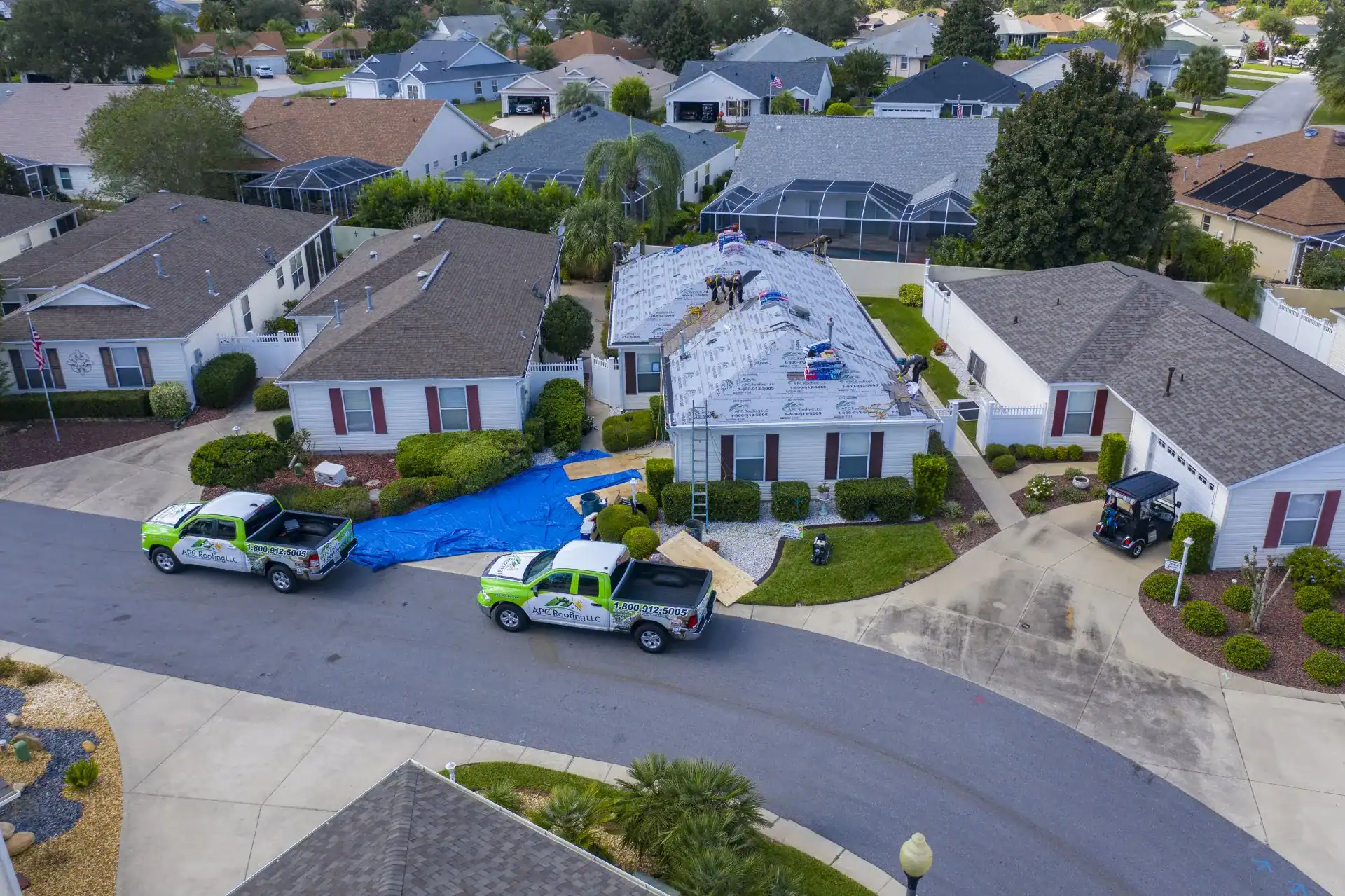
- Your roof gets repaired and the site gets cleaned up. The crew does the work and cleans up before leaving.
A storm-damaged roof that isn’t leaking yet often leaks in the next storm. Fixing it now keeps the repair on the roof instead of in your ceiling and insulation.
Storm damage roof repair questions
Can storm damage show up weeks after the storm?
Yes. Creased shingles, cracked tiles and loose flashing may hold for a while and then leak in the next heavy rain. That’s why it’s worth an inspection even if nothing is dripping.
Should I repair the roof before the adjuster comes?
Ask your insurance company first. Steps that prevent more water damage are usually expected, but permanent repairs before the damage is documented can complicate a claim. Keep photos and receipts either way.
Do you repair hail damage too?
Yes. Hail is less common here than wind, but it does happen during strong summer storms. Our storm damage page covers every kind of storm we see around Daytona Beach.
Book storm damage roof repair in Daytona Beach
Call 386-259-8425 or book your free inspection online. You’ll get a roof that’s sound again, a dry house, no surprise bill, and the peace of mind of knowing the work was done right before the next storm. Your satisfaction is our reputation.