Need Roof Maintenance in Greater Daytona Beach Metro Area?
APC Roofing handles everything from a simple checkup to a full replacement, on asphalt, steel and clay coverings alike.
Dial 386-356-2111, and a roofer heads out for a look at the house.
The Roof's Inner Build-Up: the Basics
The topmost material is nothing more than the outer layer, and underlayment, decking and structural framing sit out of view. Sheet-metal flashing takes over at each wall, stack and valley, and water there rarely traces back to worn shingles close by.
The air under the rafters counts as part of the roof, the same as any material, since trapped summer heat bakes the deck from underneath. A brown mark on a ceiling can originate at any level of the roof, and a fix aimed only at the outer surface can leave the real source untouched.
A Roof at Work: Quiet but Constant
A sloped covering sheds every storm's water downhill, while nails and seal strips resist the pull of gusts. The trusses and sheathing support the load above, snow included at the colder end of our territory, and openings low and high let moisture escape the attic.
The covering handles water, and the fastening handles wind, and holding the whole thing up falls to what is underneath. Trouble in one element tends to show up far from the original problem, so repairs target the root, not the visible mark.
Minor Roof Components: Different Timelines
The main covering is built for a long run, but the gasket around a vent pipe hardens within a fraction of that span. A path opens for water to travel down into the house, and a mark spreads across the ceiling beneath.
The bead where two materials meet cracks after enough hot seasons, and galvanized flashing corrodes at folds and nail holes. Shingles bent into caps split at the seam, because the highest point stands open to glare and gusts.
A Walk Around the Property Beforehand: Before Anyone Climbs
From across the street, the profile of the roof exposes dips, sags and wavy planes, and the fascia and gutter runs are visible at the same time. A zoom lens singles out torn collars, lifted tabs and bare patches, though failing sealant can stay hidden from the ground.
On the slope, a roofer works over every pipe connector and traces each flashing run, and the surface is checked for cracking, granule shedding and curled edges. A rain-slicked or very steep covering stays off limits underfoot, and the eave, reached by ladder, provides the vantage point instead.
Above the Ceiling: What Owners Can Find
A watermark on the decking shows where rain has gotten in, and a clammy touch means the problem is ongoing. Light passing through the decking reveals a breach, and a tape measure fixes the distance from the peak and gable wall.
Corroded fasteners poking through mean the attic air runs humid, and a flattened, discolored patch nearby carries the same message. A soffit choked with insulation, or a bath fan venting into the attic space, is spotted only from inside, so a look from the yard alone misses ventilation faults of that kind.
After the Roofer Leaves: a Plain Account
A record of the visit takes the form of photographs keyed to spots on the roof, and a written line explains what each image shows. Good sections get the same plain treatment as sections that do not, and trouble spots are ranked from most to least urgent.
A filed report from an earlier check-up serves as a reference going forward, and movement across seasons reads more directly than one day's condition. A covering looked at on a regular schedule rarely catches the owner off guard, and a big repair signals trouble long before the work is urgent.
Upkeep on a Shingle Roof: Small Jobs, Done Often
Vent collars get replaced before splitting, and dried sealant at walls and flues gets redone. Debris gets swept from the valleys and from the crickets, and the gutters get kept running and secured.
A loose piece fastened back promptly stays a minor task, but delay through the wet months lets water get in from below. Moss along a north-facing slope wedges under the laps, and the growth gets treated and brushed off, never pressure-washed.
The Habit Worth Keeping: Consistency Pays Off
A roofer's walk-through belongs on the calendar every year, placed right after the toughest season for roofs in that market. The point is finding small faults before a leak forms, and the household gets a fair sense of the remaining service life.
Following a storm, a walk around the house with eyes on the roof is a good habit, and upstairs ceilings deserve a look for new marks. A flashlight trip into the attic twice a year pays off: dark spots, daylight and matted insulation turn up long before anything travels any further.
Reading a Roof's Age: What Changes Over Time
A shingle surface in the first seasons looks crisp and even, and later in life the sun-exposed plane fades before the shaded side does. Close to the finish, corners lift and bald patches spread, and each fix soon fails again.
An impression formed from outside has real value, but a roofer nearby will always see more. Once shingles are spent, patching stops making sense, and a reliable contractor says so outright, instead of offering another fix.
A Channel That Has Given Up: A Quick Look
The covering carries runoff only to the lower edge, and from there a gutter does the remaining work. A channel hung the wrong way holds a pool against the house, and the framing at that spot decays.
Trouble along that edge usually comes from standing water, not the covering, and replacing the roof leaves the real cause untouched. Gutter pitch and downspout discharge get checked on a visit, and the metal at the drip edge gets looked over for gaps and poor overlap.
A Two-Way Exchange: What Homeowners Should Know
Intake at the overhang and exhaust at the top keep air moving through the attic, and that movement removes heat and moisture from under the deck. If the vents get blocked, the attic overheats each summer and stays sticky the rest of the year, and the covering wears out early.
Exhaust hardware installed with no matching intake draws conditioned air up from the rooms below, and stacking two setups the wrong way can leave one choking the other. Reroofing with poor airflow left alone carries the fault forward, so the underlying issue belongs in the scope of any re-roofing plan.
Weather Decides Every Job: Set by What's Nearby
At the colder end of our range, ice and drifting snow set the build, so an adhered barrier goes under the lowest rows. Near the coast, wind pressure sets how every panel gets nailed, and reinforced edge metal and sealed seams get specified.
Where hail falls hard at the colder end of our territory, an impact-rated covering is worth considering, while strong sun bakes asphalt across every market we serve. What goes on a given roof depends on local conditions, not habit or whatever a previous job used.
Houses and Commercial Buildings: How the Roofs Differ
Angle and overlap work together to move water off a pitched covering, and the material is commonly shingle, tile or metal panels. A store or warehouse shelters under a nearly flat, sealed membrane, and drains, scuppers and rooftop units sit built into that surface.
Plenty of residences include a shallow section over an addition, and a lapped product there lets water back up under the tabs. A low spot like that needs a continuous membrane tied in beneath the main covering, and re-laying shingles there repeats the same fault.
Covering an Open Roof: Done the Right Way
A barrier over a torn area keeps water out in the meantime, but a quick layer does not mend anything below. A properly installed cover wraps the ridge and gets pinned under wood strips, and the cover gets tensioned before the flapping starts.
Extra reach past the opening matters on any temporary cover, as driven rain works in wherever an edge falls short. Plastic left in place for months traps heat and moisture against the deck, and mildew and rot follow underneath.
Vertical Joints on a Roof: the Proper Method
Step flashing gets woven in with each course along a wall, and a strip of trim above turns down over the top edges. A brick chimney gets an apron downhill and metal set in up each edge, and a wide stack gets a cricket that divides the flow around back.
Caulk troweled onto a bad seam lets go once temperatures shift the metal, and a proper tie-in, rebuilt from scratch, is what holds. A failing chimney crown lets moisture into the stack above the roofline, and part of that repair belongs to a mason, not a roofer.
Putting Requirements on Paper: Nothing Left Vague
A clear plan identifies every material, from the shingle to the metal, by name, and the document states whether the old covering comes off. The account explains how rotten decking gets handled if any turns up, and every vent, every flashing piece and the haul-away get called out individually.
Thorough scopes from rival bidders can be checked point by point, and what one write-up covers and another skips becomes obvious. A roofer who waves off the specifics gives no genuine protection, because nobody can confirm later what got said.
A Tear-Off and Rebuild: the Basic Sequence
Landscaping and paving get shielded before any tearing begins, and the existing layers get torn off into a dumpster. Once exposed, the sheathing gets a careful look for rot and breaks, and anything that flexes underfoot gets sawn out and patched.
A protective membrane, new flashing and full underlayment get installed, and the covering, the ridge caps and the vents go on to finish the job. A magnetic sweep covers the yard and the drive at the end of the workday, and nothing from the cleanup stays behind in the gutters.
Upkeep on Other Coverings: Notes by Covering Type
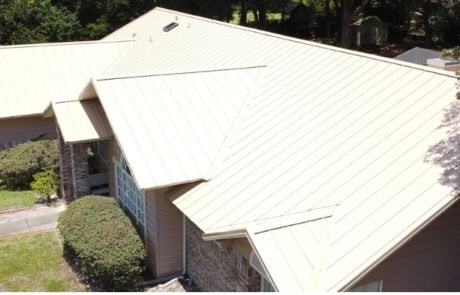
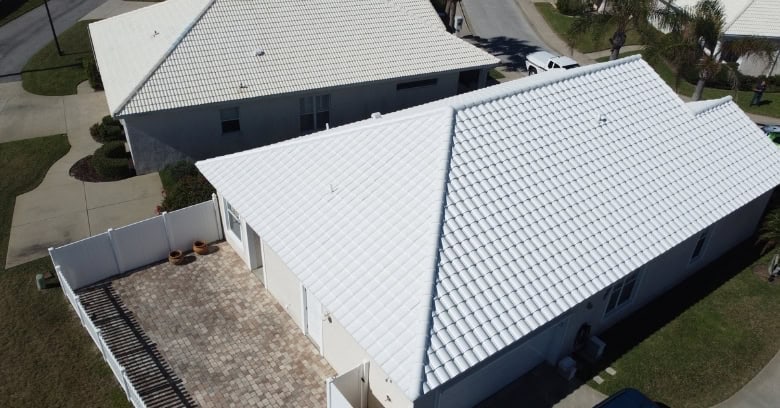
Screw-down metal panels depend on a gasket beneath each fastener, and a cracked washer gets replaced along with a fresh screw. Concrete and clay tile get installed by mortar, by foam or by mechanical attachment, and the underlayment handles the water, not the surface material.
A foot planted wrong breaks off a piece, and a damaged unit gets pulled and replaced to match the surrounding pattern. A modified-bitumen or single-ply section needs the seams and any puddling checked, and leaves get removed from the outlets regularly.
What Owners Tend to Notice: Outside and In
- A buildup of shingle granules in the drainage, in amounts that keep returning each season.
- Curled or lifting edges on the courses, noticeable from across the street.
- A pipe boot with an open gap, letting water run down into the attic.
- A ceiling mark that spreads with each downpour, new since the previous season.
- Light glowing between the planks, on a sunny afternoon.
- Clumps of moss under overhanging trees, growing thicker every spring.
- A wave running across a plane, often pointing to trouble in the deck beneath.
- Rust streaks below a metal joint, left behind by an earlier patch.
Roof Maintenance for Greater Daytona Beach Metro Area Households: How the Visit Works
Before any advice gets given, a roofer goes over the whole covering and the attic, and what turns up gets delivered as pictures along with a written explanation. Sound parts get named as plainly as parts that need work, and the choice of what to do next stays with the homeowner.
Roof Maintenance for Greater Daytona Beach Metro Area Homes: a Full Look, Not a Guess
Call 386-356-2111 to schedule a visit to the property.
A Roof's Own History: Best Done Early
Tracking when the covering went on and what was used is worth the effort, and every yearly report can go into the same file. Including a line for every repair, the spot and the method, rounds out the picture, and a decade on, the trend stands out clearly.
A buyer's home inspector almost always asks about the roof's history, and paperwork with dates carries more weight than recollection. A second copy of the file, kept somewhere else, is worth having, since a spill or a move should not be able to wipe out everything.
Judging the Result: Details to Check
The lines run true from eave to ridge, with rake cuts trimmed sharp, and no nail head shows on the finished surface. Metal against any wall or chimney rests flush and secure, and nothing gets troweled on to cover a shortcut.
Air can move from the eaves to the peak without obstruction, and the gutter runs finish straight and fastened. No nails or scraps get left in the grass or on the drive, and a quick hose-down removes the last of the sawdust from a walkway.
Anyone weighing choices for Roof Maintenance in Greater Daytona Beach Metro Area does not have to keep guessing about next steps. Picking up the phone for APC Roofing at 386-356-2111 moves the scheduling forward. Every stop covers the full roof, top to bottom, and no part of the roof goes unchecked.