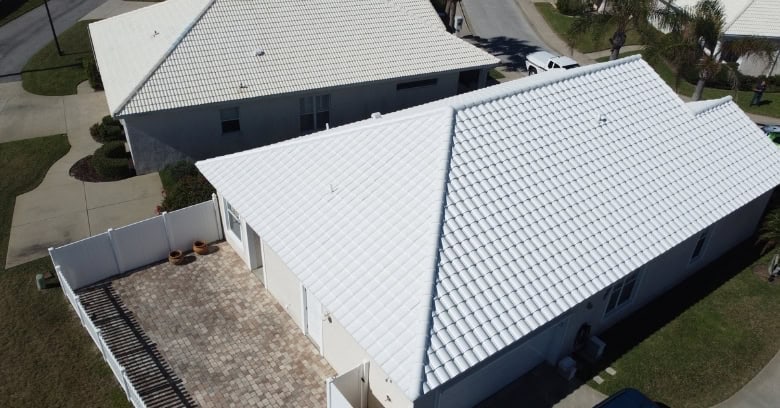
Trying to Find Roofing Services in Greater Daytona Beach Metro Area?
APC Roofing handles everything from a simple checkup to a full replacement, across shingle, metal and tile coverings.
Dial 386-356-2111, and a roofer heads out for a look at the house.
What Keeps a Roof Working: the Working Structure
The surface a passerby notices is only the outer layer, and underlayment, decking and structural framing sit out of view. Sheet-metal flashing takes over at each wall, stack and valley, and water there rarely traces back to worn shingles close by.
Airflow through the attic belongs to the roof system as much as any material, as heat trapped under the boards shortens the life of the shingles above. A stain on an upstairs ceiling can trace back to any level of the roof, and work confined to the outside can miss the real source.
The Duties of a Roof: Quiet but Constant
A sloped covering sheds every storm's water downhill, and the fastening pattern resists wind uplift. Beams and boards carry the mass overhead, snow included at the colder end of our territory, while airflow through the attic moves damp air out.
The covering deals with water, and nails and seal strips deal with wind, while gravity's pull goes to what is underneath. Trouble in one element tends to show up far from the original problem, and the real remedy sits back where the fault started.
Small Components on a Roof: Not All Equal
Most of the slope is designed to hold up for decades, but a rubber collar at a vent pipe gives out far sooner. Water works past that spot and follows the framing down, and a mark spreads across the ceiling beneath.
A line of caulk at a chimney shrinks with every hot season, and galvanized flashing corrodes at folds and nail holes. Ridge caps split across the crease, as nothing shelters the peak from gusts and glare.
Different Stages, Different Details: a Two-Step Read
From the yard, the shape of the roof reveals dips, sags and wavy planes, and the eave boards and downspouts can be sized up as well. Through binoculars, torn collars, lifted tabs and bare patches come into focus, but a weak spot underfoot tells what optics cannot.
Moving across the planes, a roofer tests every connector and traces every flashing joint, and the covering is checked for brittleness, granule shedding and curling. A rain-slicked or very steep covering stays off limits underfoot, and the eave line, reached by ladder, becomes the vantage point.
The Underside of a Roof: Signs Worth Finding
Discolored wood around a fastener points to water that beat the covering, and dampness under the fingers shows the entry is still active. A glow through the planking in daytime marks a hole, and a measurement from the peak locates the spot for the outside look.
Nails freckled with rust show condensation at work, not rain damage, and a flattened, discolored patch nearby carries the same message. Insulation crammed against the eave, or an exhaust fan dumping into the attic, comes to light only from inside, so a yard-only look passes over faults like that.
The Paper That Follows: An Overview
Each finding is recorded with a photograph tied to a place on the roof, and a written line explains what each image shows. Sound parts get listed as plainly as anything that requires work, and faults are ranked by how soon repair is needed.
A saved report from an earlier stop gives the next check a baseline, and a pattern over time tells more than a single day ever could. Regular yearly checks keep an owner from being caught off guard, and the signs of a major repair appear well before the job becomes pressing.
Routine Care for a Shingle Roof: Small Jobs, Done Often
New rubber boots go on the pipes ahead of any cracking, and the joints at each flue get resealed. Debris gets swept from the valleys and from the crickets, and the gutter runs along the eaves get straightened.
A slipped shingle put back early is easy work, but delay through the wet months lets water get in from below. Moss along a north-facing slope wedges under the laps, and a gentle wash clears the growth, since a pressure washer strips granules.
How Often the Checkup Should Happen: a Homeowner's Part
A roofer's walk-through belongs on the calendar every year, scheduled once the harshest stretch of local weather has passed. The aim is spotting aging before rain gets through, and nobody is left guessing about the roof's condition.
Between visits, an owner can look at the roof from the yard after rough weather, and any new mark on an upstairs ceiling is worth noting. A few minutes under the deck with a lamp each season pay off: dark spots, daylight and matted insulation turn up long before anything travels any further.
A Roof's Age, Read From the Yard: What the Years Bring
Brand-new shingles look dark and consistent across every slope, and later in life the sun-exposed plane fades before the shaded side does. Late in a roof's run, tabs cup and granules wash into the downspouts, and mending one area seems to open another.
A reading from the ground supplies a fair estimate, but a roofer nearby will always see more. A worn-out field is past the point where patching helps, and an honest contractor states that plainly, rather than pitching another repair.
The Channel at the Bottom: What to Watch For
The covering carries runoff only to the lower edge, and from there a gutter does the remaining work. A channel hung the wrong way holds a pool against the house, and the wood close by swells and softens.
A weak area there more often means bad drainage than a shingle issue, and a new covering will not fix what backed-up water caused. The direction of fall along each gutter gets checked, together with the outlets, and the flashing along the eave gets looked over for bent or missing pieces.
How the Roof Breathes: The Basics
Intake at the overhang and exhaust at the top keep air moving through the attic, and the draft clears warmth and humidity from under the sheathing. Once that gets shut off, the attic bakes in summer and stays soggy in humid weather, and the whole build's service life shortens.
A powered fan with too little inlet area draws cooled air through the ceiling, and one high point pulling toward a nearby high point can choke flow at the soffits. Swapping the surface with the vents untouched repeats the same problem, so the underlying issue belongs in the scope of any re-roofing plan.
Specifications That Follow the Weather: Set by What's Nearby
At the colder end of the markets we serve, snow load and ice at the edge drive the design, and a sticky underlayment protects the lowest courses. On the coastal side of our area, storm winds set the nail pattern, and impact-and-wind-rated shingles and sealed seams get chosen.
In towns at the colder end of our territory, where hailstones run large, a harder product makes sense, while heat takes a toll on roofs everywhere we work. What goes on a given roof depends on local conditions, not custom or what happened to be on the truck.
Family Homes and Business Buildings: Different Structures Entirely
A sloped covering sheds rain by lap, and shingle, tile and metal all serve that role. An office or warehouse roof depends on a flat, sealed surface, and drains, scuppers and rooftop units sit built into that surface.
A good number of homes have a shallow section over a porch or a sunroom, and a lapped product there lets water back up under the tabs. A low spot like that calls for a sealed sheet, tucked beneath the steeper roof above, and re-shingling that spot only repeats the trouble.
Temporary Covers After Damage: Done the Right Way
A barrier over a torn area keeps water out in the meantime, but the broken parts stay broken all the same. A well-set cover laps over the peak and gets battened along the edges, and the cover gets tensioned before the flapping starts.
A tarp needs to extend well beyond the break, since water runs sideways under a short edge. Plastic left in place for months traps heat and moisture against the deck, and the covering underneath ages faster than expected.
The Tie-In at a Chimney or Upright Surface: Getting the Work Right
Short metal steps get laced between the courses up the side of a dormer, and trim set higher up sheds water past that metal. Every chimney needs an apron at the front and metal carried up across each edge, and a broad stack gets a saddle set into the slope nearby.
Roof cement spread across an opening hardens and pulls away, so a fresh tie-in, installed correctly, is the dependable way to go. Porous or cracked mortar lets moisture into the masonry higher up, and a mason takes the stonework while a roofer takes the metal.
The Written Scope: Items to Expect
A signed agreement should identify the shingle, the underlayment and the metal by name, and the document says whether the existing roof gets stripped to the deck. The account explains how rotten decking gets handled if any turns up, and every vent, every flashing piece and the haul-away get called out individually.
Thorough scopes from rival bidders can be checked point by point, and the true difference between the two shows plainly. A roofer who waves off the specifics gives no genuine protection, and a spoken assurance proves nothing after the fact.
Replacing a Roof, Step by Step: What Happens
Beds, bushes and walkways get protected before demolition begins, and the existing layers get torn off into a dumpster. Opened up, the decking gets checked for soft spots and breaks, and weak spots come out, and solid planking follows.
A protective membrane, new flashing and full underlayment get installed, and the new covering goes down, capped and vented at the top. A magnet gets run over the lawn and the driveway when the work is done, and a last look confirms the gutters are clear.
Non-Shingle Roofing Care: Particular Needs
Metal sheets held by visible fasteners stay dry because of the gasket under each fastener, and a leaking screw gets paired with a fresh washer. Across our markets, tile sets by mortar, by foam or by clips, based on the property, and the membrane is what keeps the interior from taking on water.
Weight placed wrong breaks a piece, and a spare of the same profile goes in where one fails. Where part of a roof runs nearly flat, ponding and split seams are the warning signs, and grit and leaves get cleared from the scuppers.
Clues That Point to Trouble: Easy to Act On
- Grit gathering at the downspout outlets, well beyond what a new roof sheds.
- Shingle edges cupping upward, most visible on the sunniest slope.
- A split rubber collar around a plumbing vent, with a stain trail on the covering below.
- Paint blistering overhead after a storm, darker around the rim.
- Light glowing between the planks, spotted during a flashlight check.
- Green growth along the north-facing side, soaking up water after every rain.
- A sag along the ridge line, often pointing to trouble in the deck beneath.
- Rust streaks below a metal joint, a sign that the tie-in needs attention.
Roofing Services Near Greater Daytona Beach Metro Area: How the Visit Works
Before any recommendation gets made, a roofer walks the whole covering and checks the attic, and the evidence comes back as photographs and the verdict in writing. What is fine gets said as plainly as what needs attention, and the choice of what to do next stays with the homeowner.
Roofing Services Around Greater Daytona Beach Metro Area: Straight Answers About the Roof
Dial 386-356-2111 and set a time for a visit.
An Archive for the Roof: Easy to Maintain
Noting when the covering went on, along with the brands used, is worth doing, and each inspection report deserves a spot in the same folder. Listing every fix, the place and the scope, takes only a minute, and given enough time the pattern becomes clear.
A buyer's home inspector almost always asks about the roof's history, and a documented account settles the matter later. A copy kept at a second location protects the earlier notes, because a single set can be destroyed in a flood or a fire.
Standards Worth Holding a Crew To: Quality You Can See
Every row lines up, and the ends at the gables get trimmed evenly, and every fastener stays hidden under the shingle above. At each wall and chimney, fresh metal gets set in as the flashing climbs higher, and nothing gets troweled on to cover a shortcut.
The attic keeps intake and exhaust moving after the job, and the gutter runs finish straight and fastened. No nails or scraps get left in the grass or on the drive, and a quick hose-down removes the last of the sawdust from a walkway.
Anyone weighing choices for Roofing Services in Greater Daytona Beach Metro Area does not have to keep guessing about next steps. Contacting APC Roofing at 386-356-2111 moves the scheduling forward. Every stop takes in the whole roof, not just the part in question, with no loose ends left over.