You’ve watched one too many summer storms send a curtain of water off the roof and onto your walkway. You know you want rain gutters, but the choices pile up fast: aluminum or vinyl, five-inch or six-inch, K-style or round, the whole house or just the front. Rain gutters in Daytona Beach have to handle heavy afternoon downpours, salt air and hurricane-season wind, so the choice matters more here than in a lot of places.
You don’t need to become a gutter expert. You need someone who’ll look at your house, explain the trade-offs in plain words, and recommend what will actually work.
APC Roofing is GAF Certified, licensed in Florida (CCC1337030) and insured, and in business since 2017. Your estimate is free. Call 386-259-8425 to set one up.
Why rain gutters matter on a Volusia County home
Most homes around Daytona Beach sit on a slab, often with stucco walls and sandy soil. Without gutters, every storm drops the roof’s water in a line along the house. That splashes sand and dirt onto the lower walls and screens, wears a trench along the drip line, and keeps the ground next to the slab wet. Gutters collect that water and send it to a few downspouts you choose, so it lands where it can drain away.
They also keep water off your entry, garage and patio, which matters more than people expect when rain comes down this hard.
Comparing rain gutter materials
Aluminum is the most common choice in Florida, and for good reason. It doesn’t rust, it’s light enough to hang securely on most fascia, and it comes in a wide range of factory colors. Seamless gutters are almost always aluminum, formed on site to the length of each run.
Vinyl gutters are sold in home-improvement stores and snap together in sections. They’re affordable and easy to put up yourself. The downside here is sun: years of strong Florida UV can make vinyl brittle and faded, and the many joints are more places to leak. If you searched for vinyl gutters, it’s worth comparing them with aluminum before you decide.
Steel is strong, but cut edges and scratches can rust, which is a real concern a few miles from the ocean.
Copper looks beautiful and lasts a long time, and it’s priced like it. It’s usually chosen for looks on a particular style of home.
Gutter styles and sizes
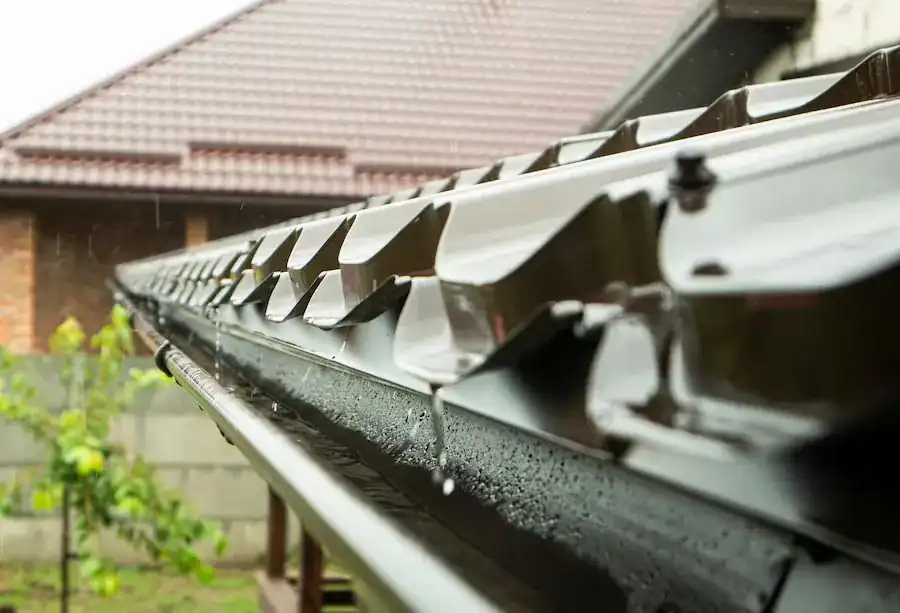
Most homes use K-style gutters. From the side they look a bit like crown molding, and their flat back sits tight against the fascia. Half-round gutters have a rounded, traditional look and suit some older or custom homes, though they hold a little less water for their width.
Size matters in a place where it can rain this hard. A five-inch gutter is common on many homes, and a six-inch gutter carries noticeably more water. Bigger downspouts help too, since the outlet is often what backs up first. The right size depends on how much roof drains to each edge and how steep it is. A roof with valleys over the front door, for example, may need a larger gutter or an extra downspout just in that spot. Our seamless gutters page goes deeper on sizing.
The whole house or just the trouble spots?
Some homeowners gutter the entire roofline. Others start with the front entry, the garage, the back patio and any side where water causes trouble. Both can work. What matters is that each section has somewhere sensible to send its water, and that the downspouts don’t dump onto a walkway, a neighbor’s yard or right against the slab.
Color and curb appeal
Aluminum gutters come in a long list of colors, so they can match your fascia, your trim or your roof. Most people match the fascia so the gutter disappears into the roofline. A good installer will bring color samples to the estimate so you’re not guessing.
How it works
- Book your free estimate. Call 386-259-8425 or request your free estimate online.
- Get a clear, honest assessment and estimate. We look at your roof and fascia, talk through materials, size and color, and mark where the downspouts would go. You’ll get it all in a written estimate. Financing is available through Aqua Finance, Fortifi, Hearth and Home Run Finance.
- Your gutters go up and the site gets cleaned up. The crew installs your gutters and cleans up before they leave.
Holding off rarely costs much in one season. Over several, the water running off a roof without gutters can wash out beds, stain walls and keep the soil along your foundation soaked.
Rain gutter questions from Daytona Beach homeowners
Are aluminum or vinyl gutters better in Florida?
For most homes here, aluminum. It handles sun and salt air better than vinyl and is the material used for seamless gutters.
Do I need gutters on every side of the house?
Not always. Many homes start with the sides where water causes problems, like entries, the garage and patios. We’ll tell you which sides matter on your home.
How big should my gutters be?
That depends on how much roof drains to each gutter and how steep it is. Five-inch gutters work on many homes, and six-inch is common where a lot of roof drains to one edge.
Will gutters hold up in a hurricane?
Well-fastened gutters with hangers spaced close together hold up far better than loose ones. Very high winds can still damage them, so check them from the ground after a big storm.
Get rain gutters in Daytona Beach that fit your home
Call 386-259-8425 or book your free estimate online. You’ll end up with gutters that suit the house, carry the water where you want it, and look like they belong there. For everything else we do with gutters, see our Greater Daytona Beach gutters page.