A summer storm parks over your house, and water sheets right over the front of the gutters and digs a trench in the flower bed. Or the house never had gutters, and every hard rain splashes sand onto the walls and soaks the ground along the slab. Seamless gutters in Daytona Beach are built for this kind of rain, but only when they’re sized and hung for your roof.
You don’t need a pitch about colors. You need someone to measure the roof, tell you what it takes to move that water away from the house, and put it in writing.
APC Roofing installs seamless rain gutters across the Daytona Beach area, including Holly Hill, Deltona and Palm Coast. We’re GAF Certified, licensed in Florida (CCC1337030) and insured, and your estimate is free. Call 386-259-8425 to set up a time.
Why seamless gutters suit a coastal home
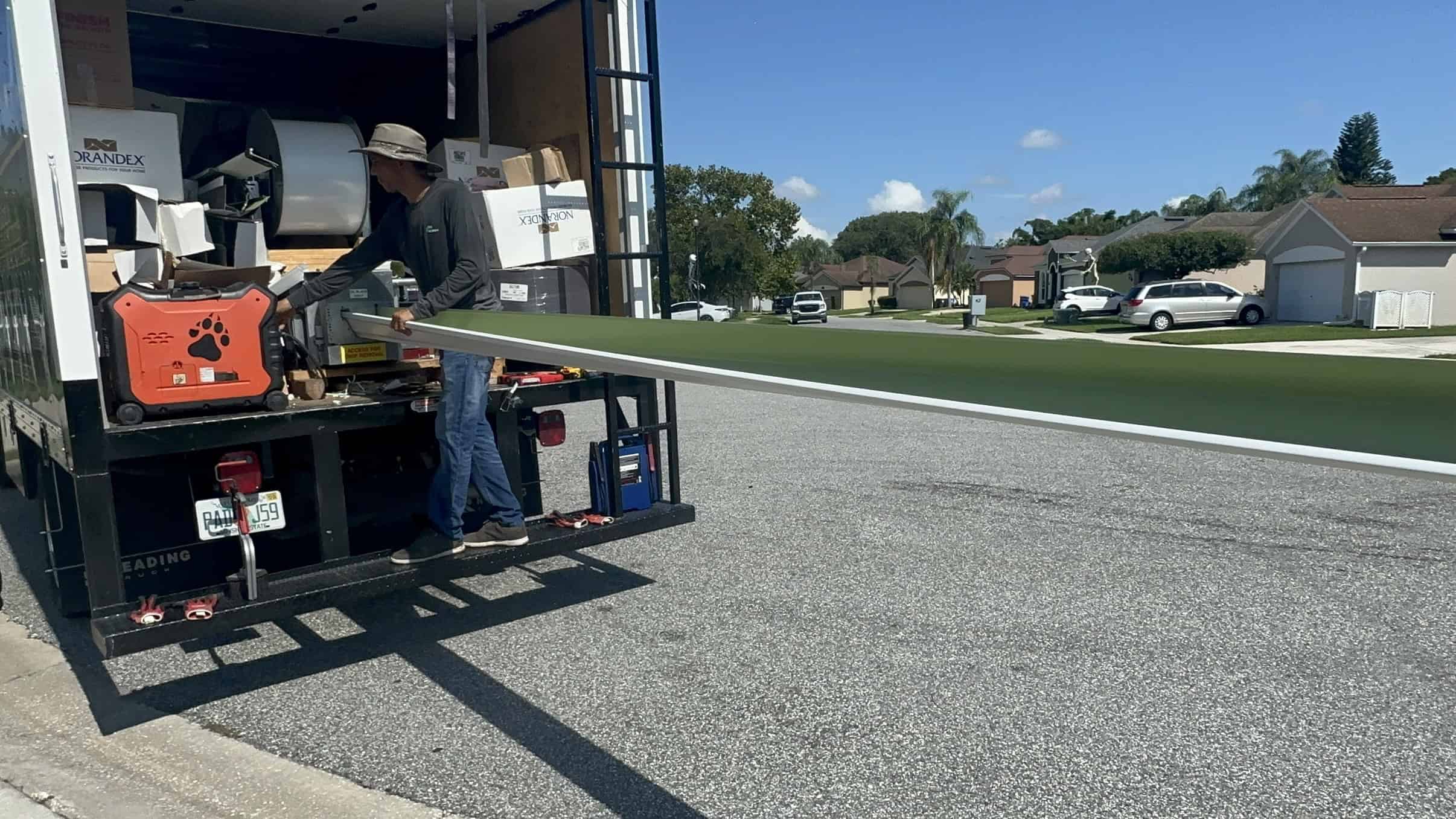
A seamless gutter is formed on site from a coil of aluminum and cut to the exact length of each roof edge. Sectional gutters come in short pieces joined every few feet, and every joint depends on a bead of sealant to stay watertight.
On the coast, those joints have a hard life. Sun bakes the sealant until it cracks. Salt air works on fasteners. The metal grows and shrinks a little with the heat every day, which tugs at each seam. A seamless run cuts the joints down to the corners, end caps and downspout outlets, and that’s where the careful sealing goes.
Aluminum is the usual choice near the beach because it doesn’t rust. It’s also light, so it doesn’t put much weight on the fascia board it hangs from.
Sizing seamless gutters for Daytona Beach rain
Your yearly rainfall total doesn’t decide gutter size. What matters is how hard it rains in the few minutes when a thunderstorm sits right on top of the house, and how much roof drains into each run. Florida’s summer storms can dump a lot of water fast, and a gutter that handles a steady drizzle can still overflow in a cloudburst.
When we measure, we look at four things:
- Roof area per run. The square footage that sheds into each gutter, including any upper roof that drains onto a lower one.
- Pitch. A steep roof throws water off harder, and it can shoot right past a small gutter.
- Gutter size. Most homes use a 5-inch or 6-inch K-style gutter. The 6-inch carries noticeably more water, which helps on bigger or steeper roofs.
- Downspouts. Too few downspouts is one of the most common reasons gutters overflow. Adding one, or going to a larger size, often fixes more than a bigger gutter would.
Valleys deserve a closer look too. Where two roof slopes meet, the valley pours both slopes’ water into a few feet of gutter. If your gutter spills at the same spot every storm, a downspout near that point is usually the answer.
The roof edge matters as much as the gutter
We’re roofers first, so the spot where the roof meets the gutter gets real attention. Water likes to cling to the roof edge and curl back behind the gutter, where it soaks the fascia board and stains the wall. Drip edge flashing that reaches into the gutter stops that. Shingle, tile and metal roofs each need that edge handled a little differently.
A gutter is only as solid as the board behind it. If old gutters have been leaking for years, the fascia may be soft. If it is, you’ll see it before the new gutters go up, priced as its own line so you know exactly what you’re paying for.
Hurricane season and your gutters
High wind pulls at anything attached to the edge of a house. Hidden hangers screwed into the fascia hold far better than the old spike-and-ring style, and spacing them closer together gives the gutter more grip. After a big storm, walk around the house and look for gutters pulled away from the fascia, sagging runs or dented sections. A gutter that looks fine from the street can still be bent out of pitch and holding water.
If the storm hit the roof too, our wind damage roof repair page explains how we check for it.
Where the water goes after the downspout
A downspout that dumps right at the foundation collects a whole section of roof and drops it in one spot. Sandy soil drains quickly, but that much water in one place can still wash soil away along a slab, splash dirt up onto stucco and leave puddles by the door. An extension or splash block that carries the water a few feet out solves most of it. Ground that slopes back toward the house is worth fixing at the same time, or the water just finds its way back.
What a good gutter estimate spells out
If you’re comparing two quotes and the totals don’t match, the difference is usually in what’s being installed. A quote you can actually compare lists the gutter size and material, how many downspouts and what size, the hanger type and spacing, how the roof edge will be handled, and where each downspout will send its water. If one of those is missing, ask. A price per foot with nothing behind it isn’t really a quote.
How it works
- Book your free estimate. Call 386-259-8425 or request an estimate online, and we’ll come measure the roof.
- Get a clear, honest plan. You’ll see the gutter size, downspout locations and any fascia problems in writing, with the reasons behind them.
- Your gutters go up and the site gets cleaned up. The gutters are formed on site and hung, and the crew cleans up before leaving.
Want to see everything we do for gutters in the area? Visit our Daytona Beach area gutter page.
Seamless gutter questions from Daytona Beach homeowners
Are seamless gutters worth it in Florida?
For most homes, yes. Fewer joints means fewer leaks, and aluminum holds up well in salt air. The bigger factor is sizing. A seamless gutter that’s too small still overflows.
What size gutters does my house need?
It depends on the roof area draining into each run and how steep the roof is. Many homes do fine with 5-inch gutters. Larger or steeper roofs often need 6-inch gutters or extra downspouts. We measure before recommending either.
How long does seamless gutter installation take?
Most homes take about a day. Larger homes, or homes that need fascia repair first, can take longer, and you’ll get a timeline with your estimate.
Can you add gutters to a house that never had them?
Yes. Plenty of Florida homes were built with gutters on only part of the roof, or none at all. We’ll look at where water is causing problems and recommend where gutters will help most.
Get your gutters sized right
Call 386-259-8425 or start your free estimate online.
The goal is a dry entryway, a clean foundation line and gutters that stay quiet through the next summer storm. Trust matters, and so does getting the numbers right the first time.