There’s a stain on the porch ceiling again, or water pooling on the flat roof over the garage after the snow melts. Low-slope roofs are where a lot of Denver homes leak first, and Denver EPDM roofing is one of the most common ways to fix them for good. You probably want to know whether the old roof can be patched, whether rubber is the right material for your house, and what you’re getting into before anyone pulls anything up.
You deserve a clear answer, backed by photos, before you decide anything.
APC Roofing is a GAF Certified roofing contractor, licensed and insured, and we install and repair flat and low-slope roofs on homes and light commercial buildings. Inspections and estimates are free. Call 720-902-6940 to have a roofer take a look, or see all of our flat roofing services in Denver.
What EPDM is and where it goes on a house
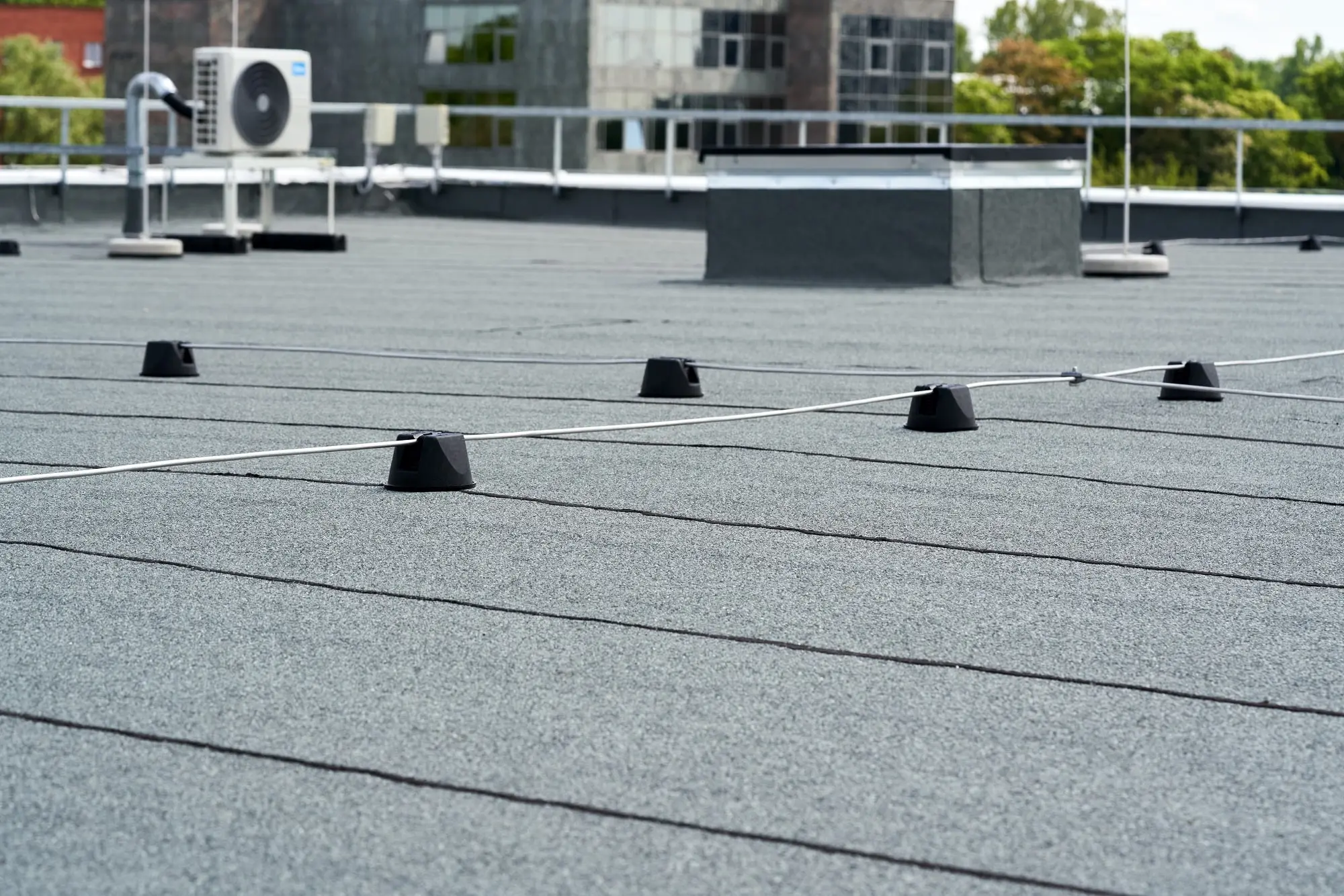
EPDM is a synthetic rubber membrane that comes in large black sheets. On a house, it’s most often used on the parts of the roof too flat for shingles: porches, attached garages, rear additions, dormers and sunrooms. Shingles need a slope of at least 2 inches of rise per foot, because on anything flatter, wind pushes water up under the rows. A membrane like EPDM forms one continuous waterproof sheet instead, so water can sit on it for a while without getting through.
A “flat” roof still needs a slight pitch toward a drain, gutter or edge. If yours holds water for days after a storm, the problem may be the shape of the deck, not just the covering.
Denver EPDM roofing and the Colorado climate
Colorado weather swings hard. A winter day can start well below freezing and warm up fast by afternoon, and that constant expanding and shrinking cracks stiffer materials. EPDM stays flexible in the cold, which is a big reason it’s popular here.
The sun is a factor too. At Denver’s altitude, UV is intense, and it slowly hardens membranes over time. Thicker EPDM holds up longer, which is why the written scope should list the membrane thickness. For homes, 45 or 60 mil is typical.
Snow brings its own trouble. Melting snow on a low roof can pond against a clogged drain or behind ice at the edge, and standing water wears a membrane out faster. Black EPDM absorbs sunlight, which helps snow melt off sooner but warms the space underneath in summer. If summer heat over the room below is the bigger concern, a white TPO roof reflects more of it, and we’ll talk through both with you.
Hail matters here as well. A newer EPDM roof shrugs off most hail, but an old, brittle membrane can split.
What a good EPDM installation includes
Most EPDM leaks don’t start in the open field of the sheet. They start at seams, edges and anything that pokes through. A good installation gets those details right:
Clean, fully bonded seams. EPDM seams are joined with primer and seam tape. Dirt or moisture left on the surface during installation means a weak bond, and old seams tend to curl at the ends.
The right layers underneath. The membrane sits over a cover board and rigid insulation on a solid deck. Insulation that gets wet loses its value and has to be replaced.
A proper tie-in to the main roof. Where a low roof meets a steeper shingled roof, the membrane has to run up under the shingles so water from above lands on top of it. When it’s done backwards, water runs under the lip, and you get a stain in the ceiling right where the two roofs meet.
Secure edges. Wind pulls hardest at corners and edges. Metal edge trim clamps the membrane down and directs water into the gutter, and a termination bar holds it tight where it meets a wall.
Sealed penetrations. Pipes get molded boots, and skylights or equipment sit on raised curbs with the membrane run up the sides.
Sometimes a new membrane can go over one existing layer with a board between them, as long as the insulation underneath is dry. If there are already two layers, or the insulation is wet, the old roof has to come off.
EPDM repair or replacement?
Most leaks on a rubber roof come from one small area: a lifted seam, a puncture or a worn boot. A patch of matching membrane, primed and taped, fixes those. Our flat roof repair in Denver page covers that work in more detail.
Replacement makes more sense when seams are failing across the whole roof, the membrane has gone stiff and cracked, or large areas of insulation are soaked. You’ll get photos and a straight recommendation either way. If a new roof is the answer, our flat roof installation in Denver team handles the tear-off and new system, and financing is available through Aqua Finance, Fortifi, Hearth and Home Run Finance.
How it works with APC Roofing
- Book your free inspection. Call 720-902-6940 or request a free online estimate.
- Get a clear, honest assessment and estimate. The roofer checks the drains, seams, edges and tie-ins, and you get photos and a written estimate. You decide what gets done.
- Get your roof done and the site cleaned up. The crew installs or repairs the membrane and cleans up before leaving.
EPDM roofing questions from Denver homeowners
Is EPDM good for a flat roof in Colorado?
Yes, for most homes. It stays flexible in the cold, handles Denver’s temperature swings well and is easy to repair. Thicker membranes hold up better to the strong sun at altitude.
What’s the difference between EPDM and TPO?
EPDM is a black rubber sheet with taped seams. TPO is a white plastic membrane with heat-welded seams that reflects more summer heat. Both work well on homes. If summer heat in the room below bothers you most, TPO usually wins. If cold-weather flexibility and easy repairs matter more, EPDM does.
Can you put EPDM on a porch or garage roof?
Yes. Porches, attached garages and additions are the most common places for EPDM on a house, since they’re usually too flat for shingles.
Why is water pooling on my flat roof?
Usually a clogged drain or a sagging spot in the deck. A new membrane alone won’t fix the shape of the roof. Tapered insulation, a small cricket or an added drain can.
A low roof you can stop worrying about
A small leak in a porch roof rarely stays small. Water soaks the insulation, then the decking, then the ceiling, and freeze-thaw makes every gap bigger each winter. You don’t have to replace everything at once. It helps to know where you stand.
Next spring the snow melts off, the drains run clear and the porch ceiling stays dry. That’s a roof you don’t have to think about. Call 720-902-6940 to book your free inspection, or start with our free online estimate.