There’s a stain spreading across the ceiling under your porch roof, or water drips in the garage every time the snow on top starts to melt. You need flat roof repair in Denver, and you’d like it to be the last time you deal with this leak, not the third. The trouble is that a flat roof can leak in one spot and let water travel several feet before it shows up inside.
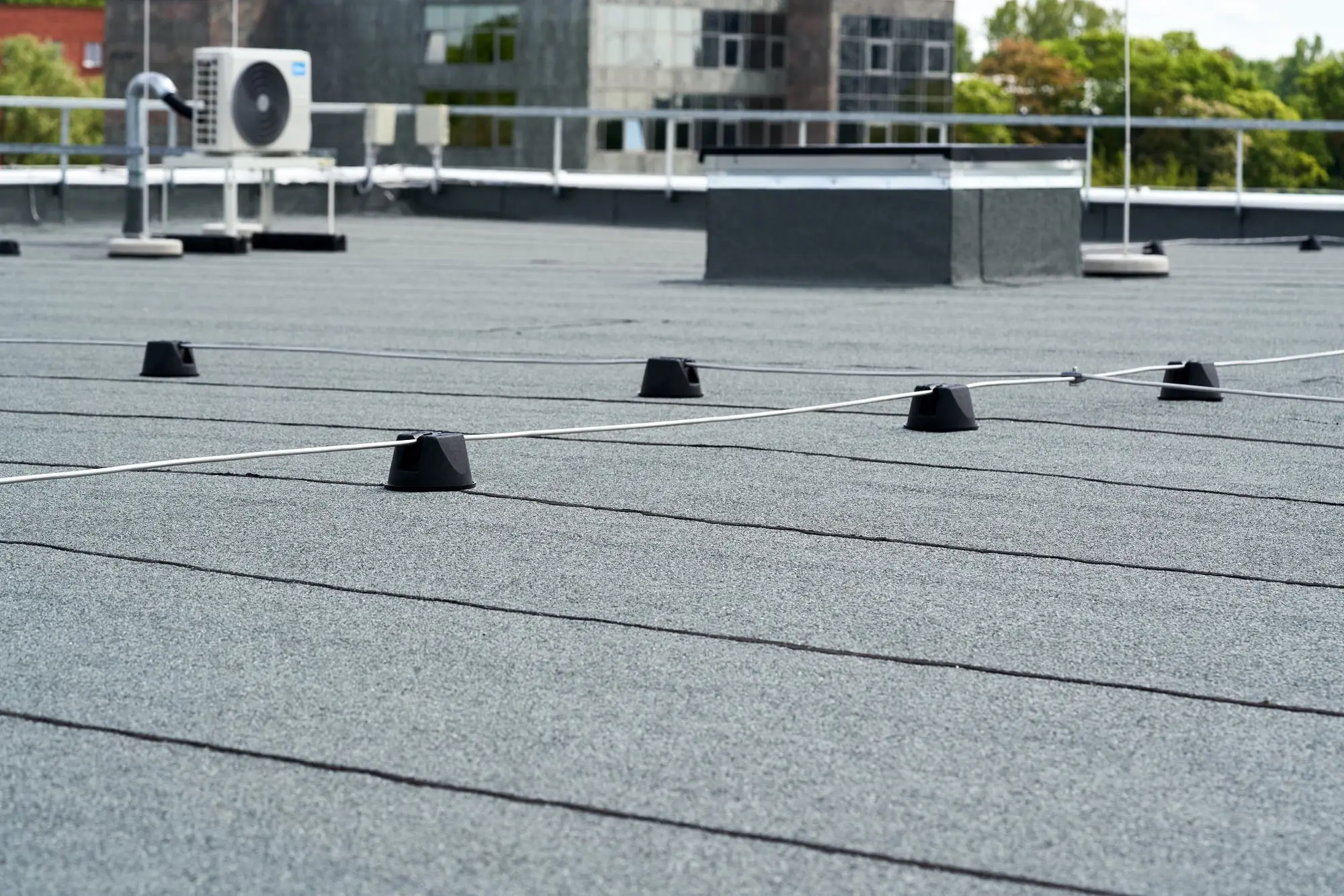
You also want to know if this is a patch or the start of a much bigger bill. That’s a fair thing to ask, and you should get a straight answer backed by what’s actually on your roof.
APC Roofing is a GAF Certified roofing contractor, licensed and insured, and we inspect and estimate for free. We repair TPO, EPDM, modified bitumen and built-up roofs on homes and light commercial buildings. Call 720-902-6940 to set up a visit, or read more about flat roofing in Denver.
What Denver weather does to a flat roof
Colorado is tough on low roofs in its own way. At this altitude, the sun’s UV is strong, and over the years it dries out and cracks membranes, especially dark ones. Temperatures can swing a long way in a single day, so the membrane, the edge metal and the seams expand and shrink over and over.
Then there’s hail. Large hail can split an older, brittle membrane or crack the seams, and the damage isn’t always easy to spot from a ladder. Winter adds its own problem. Snow piles up on a flat roof, melts in the afternoon sun and refreezes at night. Any water that sits near a clogged drain or in a low spot can freeze, thaw and work its way into a weak seam.
Where flat roofs usually leak
Most leaks don’t start in the open middle of the membrane. They start at the edges and joints:
- Seams. The overlaps between rolls are where trouble collects. A TPO seam that wasn’t welded fully, or an EPDM seam where dirt kept the tape from sticking, can open up over time.
- The joint with a sloped roof. On a porch or addition, the membrane should run up under the shingles above it so water flows over the top. If it was laid the other way around, water gets in behind it. A wet line on the ceiling right next to the house often points here.
- Edge metal. Wind pulls hardest at the corners and edges. Once a piece of edge trim lifts, wind can get under the membrane and peel it back.
- Pipes, vents and curbs. Boots crack, and the sealant in pitch pockets shrinks and splits after a few seasons.
- Ponding. Water that’s still sitting on the roof two days after a storm or a melt is a sign of a sagging deck or a blocked drain. Standing water ages the membrane faster and, in Denver, freezes in place.
How we find and fix the leak
We start with the drainage: drains, scuppers, gutters and any low spots. Then we probe the seams along their full length and check the edges, curbs and the joint with your main roof. When there’s an active leak, we use a moisture meter and sometimes a small core sample to see if the insulation under the membrane is wet. A flat roof can look fine on top while the insulation underneath is soaked.
Most repairs are a patch of matching material over the problem area:
- On TPO, the patch is heat-welded and then probed to make sure the seam is closed.
- On EPDM, the area is cleaned, primed and covered with a taped patch with rounded corners so the edges don’t peel.
- On modified bitumen and built-up roofs, the damaged layers are cut out and new material is bonded in.
If the leak comes from ponding, a patch alone won’t stop it from coming back. The fix is correcting the slope with tapered insulation, a small diverter called a cricket or an added drain.
When repair isn’t enough
A repair makes sense when the problem is in one area. Replacement usually makes more sense when seams are failing all over the roof, the membrane cracks when it’s bent or large sections of insulation are wet. We’ll show you photos and moisture readings either way, so you’re deciding with real information. If it’s time for a new roof, our flat roof installation in Denver page explains what’s involved.
After a hail or wind storm
If a storm hit your area, have the roof checked even if nothing is leaking yet. Hail bruises and splits on a membrane can open up later. We photograph and measure the damage and give you a written report. If you decide to file an insurance claim, you file it and pay your own deductible, and we provide the estimate and work with your adjuster. Our hail damage roof repair in Denver page covers that process.
How it works with APC Roofing
- Book your free inspection. Call 720-902-6940 or request a free online estimate.
- Get a clear, honest assessment and estimate. You’ll see photos of what we found and a written estimate, with any problems ranked by how urgent they are.
- Get your roof repaired and the site cleaned up. Any section we open is sealed watertight before the crew leaves for the day.
If you’d like to spread out the cost of a bigger job, we work with financing partners including Aqua Finance, Fortifi, Hearth and Home Run Finance.
Flat roof repair in Denver: common questions
Can you repair a flat roof in winter?
Often, yes. Small repairs can go in during a dry break in the weather. Cold slows down the adhesives used on EPDM, while welded TPO repairs handle cool days better. Rain or snow on the roof stops all membrane work, and a full replacement needs a run of settled days.
How do I know if hail damaged my flat roof?
You usually can’t tell from the ground. Look for dents in the edge metal, gutters or vents, since those show hail clearly. A close walk of the membrane finds splits and bruises, which is why an inspection after a big storm is worth it.
Why does my flat roof keep leaking in the same place?
Repeat leaks usually come from the joint with a sloped roof, a failing seam or water that ponds in one spot. Patching the surface without fixing the cause brings the leak back.
A dry ceiling, all year
A slow flat-roof leak soaks the insulation and decking long before much shows inside, so catching it early usually means a smaller job. There’s no need to panic. It’s just worth a look.
The snow melts off the garage roof and the ceiling stays dry. The next hailstorm passes and you already know where your roof stands. That’s the goal: a sound roof, no surprise bill and confidence in the call you made. Call 720-902-6940 to book your free inspection, or start with our free online estimate.