Roof Repair

Hoping to Find Emergency Roof Repair Around Deltona Florida?

APC Roofing seals the gaps that let rain indoors and traces the drip back to the detail that failed.

Dial 386-356-2111 and describe what you are seeing inside.


Finding the Way In: the Weak Spots in a Covering

A continuous stretch of shingles is hard for rain to get past, since gravity pulls the runoff over row after row. Trouble gathers wherever something breaks the pattern; think of vent pipes, chimneys, skylights and walls.

The wet patch indoors rarely lines up with the damage above, since a run of wood can guide the flow several feet. Measuring from inside without following the track leads a repair astray, and water keeps coming in after that.

Walls That Rise From the Roof: Where the Water Gets Behind

Small L-shaped flashing pieces are interleaved with the courses, with a counterflashing tucked above to cover the upper edge. Once a section corrodes or works loose, the leak shows up inside at the wall line.

What holds is new metal installed correctly, and the roofing beside the junction is opened up to reach the damage. A coat of mastic on top is not the same thing, because movement in the joint splits a surface seal.

Pipe Boot Leaks: a Crack at the Top

A drain stack is made watertight with a rubber collar and a flanged base, and heat and sunlight age the material steadily. Eventually a crack forms right around the pipe, letting runoff trickle down into the house.

Replacement involves loosening the rows above and sliding new hardware into place, while a rusted metal plate means the entire thing comes out. A heavier boot resists cracking much better, and suits a newer covering.

Valley Repairs: Wear and Debris

The crease between neighboring planes collects the drainage from each, and in a downpour the water runs deep and fast. Whatever covers the valley erodes faster than the surrounding roofing, and an unprotected install then fails as soon as the top layer goes.

Seed pods and needles lodge in the channel, which holds water against the overlaps. A failed valley is taken down to the sheathing and built again, as a surface patch cannot survive a fast stream.

Nails That Work Loose: Small Holes, Steady Drips

Plywood sheathing expands and contracts as humidity comes and goes, which slowly eases the shanks back out. A climbing nail forces a blister into the tab on top, letting runoff trickle in around the high point.

Hammering a loose fastener back down does not hold for long, because the wood fibers around the shank no longer grip. The nail comes out, the hole is sealed, and a fresh nail goes in close by, and a shingle that was pierced gets replaced.

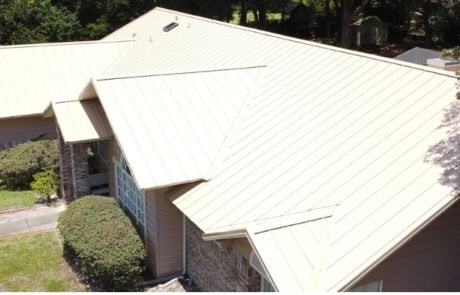
Metal Sheets on a House: What Gets Replaced

A lot of barn-style steel is held by screws through the top, where a gasket under every head keeps the opening tight. Heat and ultraviolet light harden the small rings until cracks form, while driving too shallow never pressed down far enough.

A failed screw is replaced by a new screw with an intact washer, and where the hole has widened, a thicker size is used. Adjoining laps and trim are gone over at the same time, as the whole batch has had the same sun.

Shingles After a Gale: Creases and Broken Seals

Every course is held by nails and by an adhesive strip that sticks to the course below, and a strong enough storm can pull the bond apart. A shingle that bends back takes a permanent kink, and the next blustery rain drives water inside.

A row that merely lifted, without harm, gets stuck down with roofing adhesive, and a shingle split lengthwise gets swapped. A tab that has blown off leaves the nail heads underneath bare, which lets water reach the deck.

The Crest: What Wind Does

The finishing pieces over the apex are creased over the fold, and cracks open up as the years pass. The deck under a ridge vent has a strip removed on purpose, which leaves the lid alone to shed the rain.

Nails that have risen let gusts drive spray inside, which leaves a wet band on the rafters just below the apex. Proper ridge work treats the caps and the vent housing as one job, because whatever is skipped lets the water return.

Frozen Eaves – Why the Attic Matters

Where the winters are long and snowy, a covering with no defect can still admit water, since warm air under the deck softens the snow from beneath. The runoff freezes again on reaching the unheated overhang, and the ice thickens into a lip.

Behind the obstruction, melted snow gathers with nowhere to drain, and shingles were never made to hold back a puddle. Insulation and airflow in the attic end the problem at the source, and a sticky membrane under the edge rows guards against a bad season.

Covered Porch Roofs: When Laps Stop Working

A good number of homes have a part that hardly slopes, and the near-flat portion frequently gets the material meant for the rest of the house. Courses that overlap rely on water never sitting still, and idle water finds a way under.

The cure is a continuous membrane sealed at every seam, run up beneath the roofing on the section uphill.

Tracks on the Rafters: Marks and Measurements

Runoff under the deck leaves a tide line on the lumber, and the tint holds long after the rain. The upper tip of the stain sits nearest the gap in the covering, so a tape run to the peak and to an end wall locates the spot from the roof.

Pushing a long nail up through the boards leaves a marker poking through, unless a finished ceiling blocks the way, in which case the search happens outdoors. Insulation that is soaked or matted marks where the drops keep landing, since a waterlogged layer loses insulating value and can feed mold.

Look-Alike Leaks: Where the Drops Come From

Dampness beading over the whole underside rarely starts outdoors, as the heat and steam of daily life collect where the air is coldest. At the colder end of our territory, frost on the nail tips has the same cause, and a thaw turns the ice into drips like a leak.

Work on the outside of the roof leaves the droplets untouched, since the remedy is ventilation plus exhaust fans that vent to the open air. We tell you whether we found an opening or condensation, which spares a homeowner the wrong repair.

Where a Chimney Meets the Shingles: Leaks at the Base

Along the front runs an apron, and short stepped pieces go up each flank, with counterflashing set into the joints and turned down over everything beneath. A chimney wider than a narrow flue needs a cricket at the back, so the flow is split and sent around the brick.

If the builder never framed a water-shedding wedge, needles and standing water settle on the uphill face, and the upper corners give way in time. Mortar that has gone soft draws rain in above the flashing line, so the fix sometimes needs a mason as well as a roofer.

Skylights and Skylight Wells: Keeping the Unit

Sealed double panes rarely admit rain, while the curb flashing often lets go. Runoff from above piles into the upper end, and fallen leaves bank up in drifts.

The unit stays put while the flashing around the frame is rebuilt, unless the skylight is simply worn out. Beads of vapor on the inner face can trickle down the well like a leak, which calls for a fan or a vent instead of a roofer.

Along the Eaves: Overflow and Backup

A ceiling spot beside an outside wall may come from the gutter, because a full trough forces water under the bottom course. With no drip edge, rain curls under the shingles instead of dropping free, which leaves the fascia and sheathing rotting.

Clearing the trough and resetting the pitch is sometimes the whole job, with spikes that worked loose swapped for screws. Flashing that ends shy of the eave counts against the original installer, and putting the edge right means a continuous run of metal at the roof line.

Holes Left by Old Mounts: Leaks Years Later

Installers often fasten receivers and lighting straight down into the sheathing, with a dab of caulk as the only barrier. Sun hardens the sealant until the bead cracks free, which leaves a path for water at every attachment.

A dish unbolted and hauled away does not take the bolt holes along, and grime and grit often hide the openings from view. The repair seals every penetration and lays new shingles over the spot, and a light that stays is moved onto a flashed block.

A Spongy Deck: New Panels in Place of the Old

Months of seepage saturate the plywood beneath the roofing, until mold and decay set in. A roofer on the slope notices the surface give with each step, and in the attic the panels visibly dip between rafters.

The soft decking is sawn away back to firm material, and matching sheets go in, nailed along each truss. New underlayment and shingles follow, while the source of the water is closed off at the same time.

Covers After a Storm: Done Properly

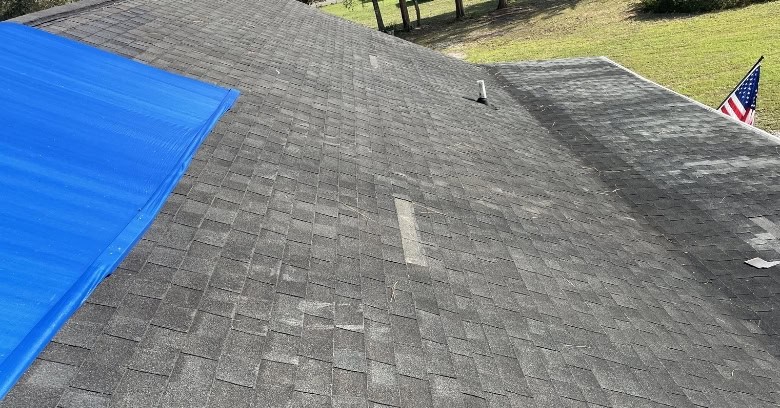
A tarp protects the rooms below, though the fault underneath is untouched. A well-anchored sheet runs over the ridge with boards fixed along the edges, whereas rocks piled on the corners soon roll off.

Fixing the cover down means driving nails into the shingles, which leaves small openings to close once the real work is done. Weeks turning into months under plastic hold heat and damp against the covering, and the granules start to suffer.

What You Are Given – Useful Later On

With fresh material installed, the broken piece disappears, while the part to blame can be as small as a single nail. Pictures capture the gap and the ruined component before anything comes off, and the finished job gets a separate set of shots.

All the images go to the homeowner, which helps when a buyer or an inspector asks about the roof. The report states in plain words which part gave out, plus a list of the work carried out.

Patch or New Roof: Where the Line Falls

On shingles with plenty of life, a leaking boot is treated as a local job, since a rubber or metal component seldom lasts as long as the tabs. Replacement is worth raising when every tab has gone brittle, or when water keeps finding different ways in.

A repair on tired shingles can still hold off the weather for a while, but the repair cannot add years to the rest of the roof. Our recommendation comes with the reasoning, and the choice is yours.

Getting a Close Match: What Is Still Made

A brand-new tab shows up plainly among older courses, as the originals have dulled with exposure. The product line, the cut and the closest shade in production are chosen to fit, and the patch blends in further each season.

When a manufacturer retires a design, an identical replacement is gone, so the choice is a similar substitute or a wider area redone out to a hip or the ridge. The match is judged with a sample next to the existing shingles, since catalog pictures seldom print the tones true.

Clues That a Roof Needs Work: Inside and From the Yard

  • A brown ring on the drywall that gets larger each storm, usually below the attic.
  • An earthy odor in a bedroom closet, which hangs around for days.
  • A sliver of daylight overhead, however small the gap looks.
  • Water trails on the framing, often beneath a chimney.
  • Rubber at a pipe gone hard and broken, sometimes in plain sight from the street.
  • Granules washing out of the downspouts, heaviest after a downpour.
  • A bare patch where a tab used to be, after a windy spell.
  • Flashing bent away at the edge, along the sides of a chimney.

APC Roofing and Emergency Roof Repair in Deltona Florida – Our Method

The attic comes first, ahead of any ladder, and the wood there shows where on the shingles the water entered. Whatever gave way is rebuilt properly, not smeared over, and anything close to giving out is listed.

Photographs are taken of the problem and of the finished job, along with notes in plain words. Where replacement is the honest answer, we tell you, and you decide from there.

Emergency Roof Repair Across Deltona Florida: Getting the House Dry Again

Dial 386-356-2111 and tell us what you are seeing.


Rigging and Weather: Heat, Cold and Adhesives

Plastic can be fastened down on a still-damp deck, while the permanent fix waits for a dry surface. Sealants set up slowly in chilly air, which is why cool-season installs get each piece stuck down by hand.

A high ridge demands anchored harnesses and roof jacks, as a slide down a sharp incline is hard to stop. A roof baking in the afternoon sun bruises under traffic, so scuffed spots lose the protective grit.

A Covering With Little Left: Working With Care

A tab that has spent many summers outdoors goes brittle, which means raising a course to reach the fasteners splits the shingle. Shingles ruined on the way in are added to the repair, and the patch can end up larger than the leak.

If the asphalt is past the point of handling, you are told up front, and a close-up of the cracking shows the reason. Mending one leak on an old roof is reasonable to keep the house dry, as long as nobody mistakes the work for years added.

For help with Emergency Roof Repair in Deltona Florida, phone APC Roofing at 386-356-2111. We trace the water to the way in and fix what failed, and you keep the photos.

Elaine Lee

Verified

★★★★★
I couldn’t be more pleased with the work done by APC Roofing. From start To finish, They were very professional, reliable, Incredibly efficient. The team Showed up on time, communicated clearly throughout the process, and completed the job exactly as promised. The quality of their work is outstanding. My roof looks great, and I feel confident, knowing it was done by such a skilled and trustworthy crew. They cleaned up everything throughly after the job was done, leaving no mess behind. It’s not often you come across a company that combines craftsmanship, integrity, and top-notch Customer Service, but this roofing company nailed it. I highly recommend them to anyone needing roofing work. They truly went above and beyond I’m grateful and thankful for Mike helping me through this process.

Glenn MacKinnon

Verified

★★★★★
APC Roofing did a great job replacing our roof damaged by Hurricane Helene. Our initial contact was with Anthony Fontan, sales rep/roofing expert who helped us successfully navigate the insurance claim and all actions necessary to have our roof replaced quickly. Anthony coordinated temporary repairs on the day after the hurricane. He always provided timely responses to our questions. Work to replace the roof started on schedule and was finished in two days. Site cleanup was well done and the end result exceeded our expectations. We would not hesitate to recommend APC to replace your roof. Make sure to ask for Anthony Fontan

bill lewin

Verified

★★★★★
Anthony was a great advisor and kept us informed during the process. I recommend APC and Anthony. Great job

Michael May

Verified

★★★★★
APC roofing installed a metal roof on my house. I'm highly pleased with communication, workmanship and crew. A real easy experience. The roof looks perfect and should last a lifetime.. Alan kept me posted through all the phases of process and made many options available. Want a quality roof and caring service ask for Alan.

Katty garcia

Verified

★★★★★
Good job!