Considering Shingle Roof Installation in Daytona Beach Florida?
APC Roofing re-covers slopes with laminated or flat strip products, from a small cottage to a large two-story house.
Call us at 386-356-2111 and someone will come out and explain what is up there.
Anatomy of a Covering – a Closer View
A mat of glass fibers makes each shingle strong, and asphalt spread over the sheet stops water, and granules rolled into the surface shade everything beneath from ultraviolet rays.
Bundles that seem identical on the shelf can differ widely inside, and a heavier build generally adds years on a house. A swatch offers the look and nothing more, while the maker's data sheet lists wind and impact ratings.
Traditional and Textured – Weight and Wind
A three-tab shingle is one thin layer with two slots cut into its lower half, and courses laid this way form tidy straight bands. An architectural shingle has an irregular top ply fused to a whole base, and the covering appears textured and shadowed.
Thicker double-layer shingles weigh more across a slope, and a stronger wind class is commonly assigned. Fasteners on an architectural shingle must catch the overlap of both plies, and a wrapper diagram shows the exact position.
Strip Products in Use – Practical Niches
Three-tab commonly goes on a shed, a carport or a covered porch, and new work can blend with existing courses of that kind. Several makers now offer that style in fewer colors than before, so a close pairing may take some searching.
A dimensional surface disguises minor unevenness in the sheathing, while flat courses make any hollow obvious. Either style goes over the same underlayment and flashings, while the shingle alone sets the two apart.
Mineral Grit and Aging – Normal or Worrying
Excess grains from the factory rinse off in the opening rains, and nothing about it signals a defect. Heavy grit at the downspouts of an older covering means the protective coat is thinning, and asphalt left bare hardens and fractures in the heat.
Southern and western slopes absorb the hottest light, and bald spots usually show up there ahead of the rest.
Courses Held Together – Cold-Weather Care
Each shingle carries a stripe of heat-activated glue, and a stretch of warm, sunny days softens it until the overlying row sticks. An adhered course resists gusts that try to pry up its lower edge, but nails remain the main fastening for the life of the covering.
During cold stretches at the colder end of our territory, sealing is delayed, and strong wind may raise tabs in the meantime. The manufacturer's sheet calls for hand-applied cement, and a drawing on each wrapper gives the amount and location.
How Courses Are Attached – Frequent Errors
Every nail belongs inside a narrow stripe the manufacturer marks, where the shank also catches the headlap of the row below. The basic schedule calls for four fasteners on each shingle, and high-wind or steep work moves the number to six.
A nail driven high pins one layer instead of two, a head sunk too deep tears the fiberglass, and a tilted shank props up the shingle resting on it. Published wind ratings assume the manufacturer's pattern was followed exactly, while one misadjusted compressor can spoil every drive on a job.
Under the Underlayment – Replacing Weak Sections
The deck under asphalt shingles is usually plywood or OSB, and every fastener needs solid material there to hold. Houses built for wooden shakes often have gaps between their deck boards, and new sheathing bridges them before any shingles.
A tear-off exposes spongy or rotten areas, which are removed and replaced, because nails in weakened material back out over time. Adjacent sheets are spaced slightly apart at their edges, as boards butted tightly lift into ridges when they absorb moisture.
Underlayment Basics: Known Limits
Building rules in most places require a water-resistant membrane over the deck, and its seams are lapped so rain crosses them without entering. Felt paper has mostly given way to synthetic underlayment, because the woven fabric resists tearing and stays flat when damp.
Water blown under a lifted tab runs down the membrane to the gutter, but it was never designed to serve as the only covering.
Self-Adhered Eave Membrane: Trapped Runoff
At the colder end of our territory, a heated attic thaws rooftop snow, and the meltwater refreezes at the unheated lower margin. Standing water behind the buildup finds its way beneath the shingles, and nails through ordinary underlayment give it an easy path.
Where cold winters bring ice dams, a sticky rubberized barrier is applied at the eaves, and it reaches up the slope past the inside line of the exterior wall. Throughout our service area, valleys and chimneys commonly receive it as well, since runoff lingers at every such detail.
Border Protection: Order of Layers
Prefinished drip edge follows each eave and each rake, and water sheds into the gutter instead of onto wood. On the lowest margin the underlayment laps over the flashing, while on the gable ends the sequence is flipped.
Codes across much of the country list edge metal as required on every perimeter of the covering, since rain creeps back onto the decking where nothing guards it.
Groundwork at the Eave: Installation Order
Under the first visible course lies a starter strip, so sealant lands exactly where the covering stops. A rotated field piece strands the adhesive several inches up, so the lowest run relies entirely on its nails.
Makers often specify a starter product up the gable sides too, because gusts pry at a roof's perimeter.
Drainage Between Planes: Debris and Flow
An open valley leaves a metal trough visible in the middle, while the closed-cut version clips one side's courses along a snapped line. Weaving rows from both planes together suits single-layer tab products, though dimensional shingles rarely take to it because of their bulk.
Nailing close to the fold is avoided, and a peel-and-stick liner covers the wood below. A mat of leaves lodged in a valley traps water and grime, and diverted water can work under the neighboring courses.
Vertical Surfaces: Transitions Between Materials
An individual step flashing, one to a course, climbs beside a wall, and a counterflashing or trim board covers the raised leg. A kickout diverter belongs where the lowest course runs into the face of the house, and without one rain runs inside and rots the sheathing.
Masonry chimneys take a base apron, side step flashing and counterflashing grooved into the joints, and a broad stack calls for a saddle upslope.
Holes for Plumbing – Upkeep Notes
A pipe boot is built from a flat base plate and a stretchy neoprene collar, and years of sun leave the seal brittle and split. The upper half of the flange tucks beneath the shingles above, so the lower edge sheds onto the shingles beneath.
Neoprene collars regularly fail well before the field shingles do, so a full reshingling normally includes fresh boots.
Where Slopes Crest: Cold and Cracking
A line of cap shingles covers the ridge and the hips, and a dimensional line comes with its own heavier companion product. Tabs cut from single-layer shingles make a thinner substitute, and at the colder end of our territory they can crack along the fold in freezing weather.
An exhaust vent commonly sits under the ridge caps, so longer fasteners go through it to anchor in the decking.
Attic Airflow – Heat and Moisture
Outside air should come in through vents under the eaves, while an exhaust at the peak lets it escape. Insulation that spills into the narrow cavity over the walls can shut the passage, and foam or cardboard baffles hold a channel clear.
Without airflow, an attic bakes the boards from below, and it traps humidity that drifts up from the living space. At the colder end of our territory, frost can coat every protruding nail, and the melt drips down when the sun comes out. A powered fan or gable vents alongside a ridge vent can scramble the pattern, and the soffits stop doing their job.
Across Our Range: Algae and Hard Winters
The towns we cover run from hard-freeze country to places that barely see frost, and each setting wears on asphalt differently. At the coastal end of our territory, the large storm systems blow for hours, so manufacturers list a high-wind nailing schedule. Relentless sunshine hardens the binder over the years, while streaks spread faster where the air stays sticky.
At the colder end of our territory, freeze and thaw cycles pry at every small crack, and heavy snow adds weight on top of that.
Frozen Pellets: Surface and Below
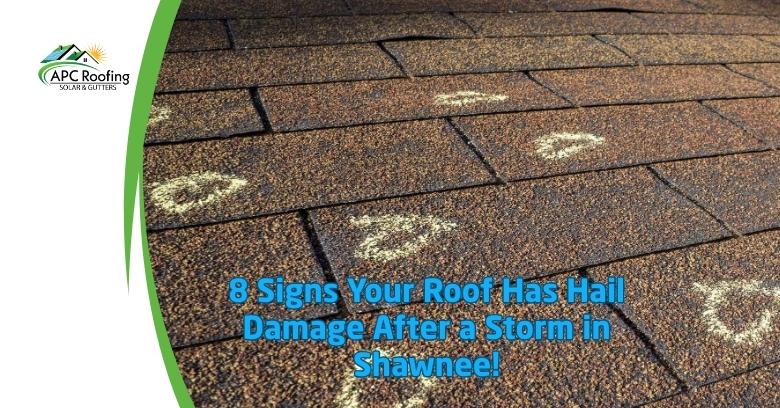
At the colder end of our territory, hail comes through often enough to plan around, so shingle lines that stand up to it are common. A strike strips the coating from a spot about the size of the stone, while a sharp jolt can split the mat itself.
Manufacturers earn an impact rating by dropping steel balls onto test panels, and a higher grade means passing a tougher trial. Certain makers blend a rubbery polymer into the coating, so the surface gives a little under a strike.
Strong Gusts: Folded Tabs
The border of a roof and its corners see the greatest upward force, so any piece that has come unstuck shakes in each blast. A tab folded back far enough creases along its width, and the mat never regains its strength along that line. A shingle in that condition gets replaced, while a loose but unharmed one takes a few dabs of cement.
Blown-off tabs leave the underlayment uncovered, and it was never made to stand up to daylight.
Living Things Up Top – Copper and Zinc
Blackish trails are colonies of algae, and it thrives on the limestone mixed into the asphalt. Growth spreads quickest on shady faces at the humid end of our territory, though the staining does little harm on its own.
Moss behaves differently, soaking up rain like a sponge, and as clumps thicken they wedge the tabs upward. Power washing tears granules loose as it goes, while a cleaner applied gently loosens the film. Many makers offer algae-resistant lines with copper in the coating, while rain running over a zinc band near the ridge holds the stain back.
Picking a Hue: Looks and Lots
Dark shingles soak up more sunlight and run hotter, while pale ones stay cooler. Some brands coat their granules to bounce back more heat, and a measured reflectance number comes with them.
The look can drift from one manufacturing lot to the next, so shingles from several bundles are mixed as the courses go on. Blends that combine many colors mask small mismatches, whereas a single flat shade gives them away.
Climbing Onto the Courses: Knowing When to Stay Down
Strong sunshine warms the bitumen until it goes pliable, and a twisting heel tears the mineral layer. At the colder end of our territory, icy mornings leave the tabs ready to crack underfoot, and a thin film of frost makes the slope a slide.
Owners do best to stay off the ladder altogether, and a good pair of field glasses picks up loose or missing pieces.
Shingles Over Shingles: What Gets Missed
A re-roof over a prior roof is legal in many towns, as long as there are not already two and the base is sound. With the old shingles left where they are, the decking is never exposed, which means damage stays trapped under fresh shingles.
An uneven base gives the new shingles a wavy face, and step and valley metal commonly remains in service. Two layers put more pounds on the rafters than they were planned to hold, while longer fasteners are needed to reach solid sheathing.
Things That Turn Up: A Short List
- Coarse granules wash onto the splash blocks, and the heaps come back after each cleaning.
- A few tabs sit raised above their neighbors, and wind has pried the adhesive apart.
- Courses have started to buckle and warp, since age and heat have stiffened the material.
- Straight breaks run through a few pieces, and the mat underneath takes on water.
- Parts of a slope look darker and slick, and bare asphalt now meets the weather.
- The seal around a plumbing stack has cracked, and rain slips through into the house.
- A strip of flashing at a dormer is rattling free, so a downpour can run in underneath.
- A brown ring shows on a ceiling, even though the leak may start far from the spot.
APC Roofing and Shingle Roof Installation in Daytona Beach Florida – Plain Talk, Clear Photos
An inspection begins with a walk across each slope, with a close look at the valleys, vents, flashings and edges. Inside the house, the attic is searched for stains and daylight, and the underside of the deck shows where water has been.
What turns up is photographed, and damaged areas are measured. The results are put in writing in everyday words, with a reason beside every recommendation. A little problem is never made to sound big, and a tired covering is spoken of honestly. Which way to go is up to the homeowner, be it a repair, a replacement or no work yet.
Shingle Roof Installation Around Daytona Beach Florida – Inspected, Photographed and Explained
Call us at 386-356-2111 to have someone come out.
Patching Versus a New Covering: Knowing the Limit
A cracked boot, loose flashing or a handful of torn tabs is routine repair work, and the sound shingles nearby stay in service. Fresh shingles stand out against faded neighbors at first, and the original product line may have been discontinued.
Old shingles snap when they are bent up to free a fastener, so the pieces beside the work may need to come out too. When curling edges and bald spots cover most slopes, a patch simply moves the problem along.
Time on the House – Estimates, Not Promises
Three-tab work generally holds up for fifteen to twenty years, while dimensional ones often manage a decade more. The ranges shift with attic ventilation, climate and installation care, and a single violent storm may finish a covering off early.
The vent collars and flashings deserve an occasional look, since a crack caught in time stays a small job.
For a roofer's view of Shingle Roof Installation in Daytona Beach Florida, get hold of APC Roofing at 386-356-2111. Every slope, edge and flashing gets a close look, and the written findings let you decide.
Verified

Verified
Verified
Verified