There’s a stain on a ceiling tile over the front counter, or a bucket in the back hallway that fills up every time it rains. You need commercial roof repair that stops the leak for good, without shutting down your business or paying to patch the same spot three times.
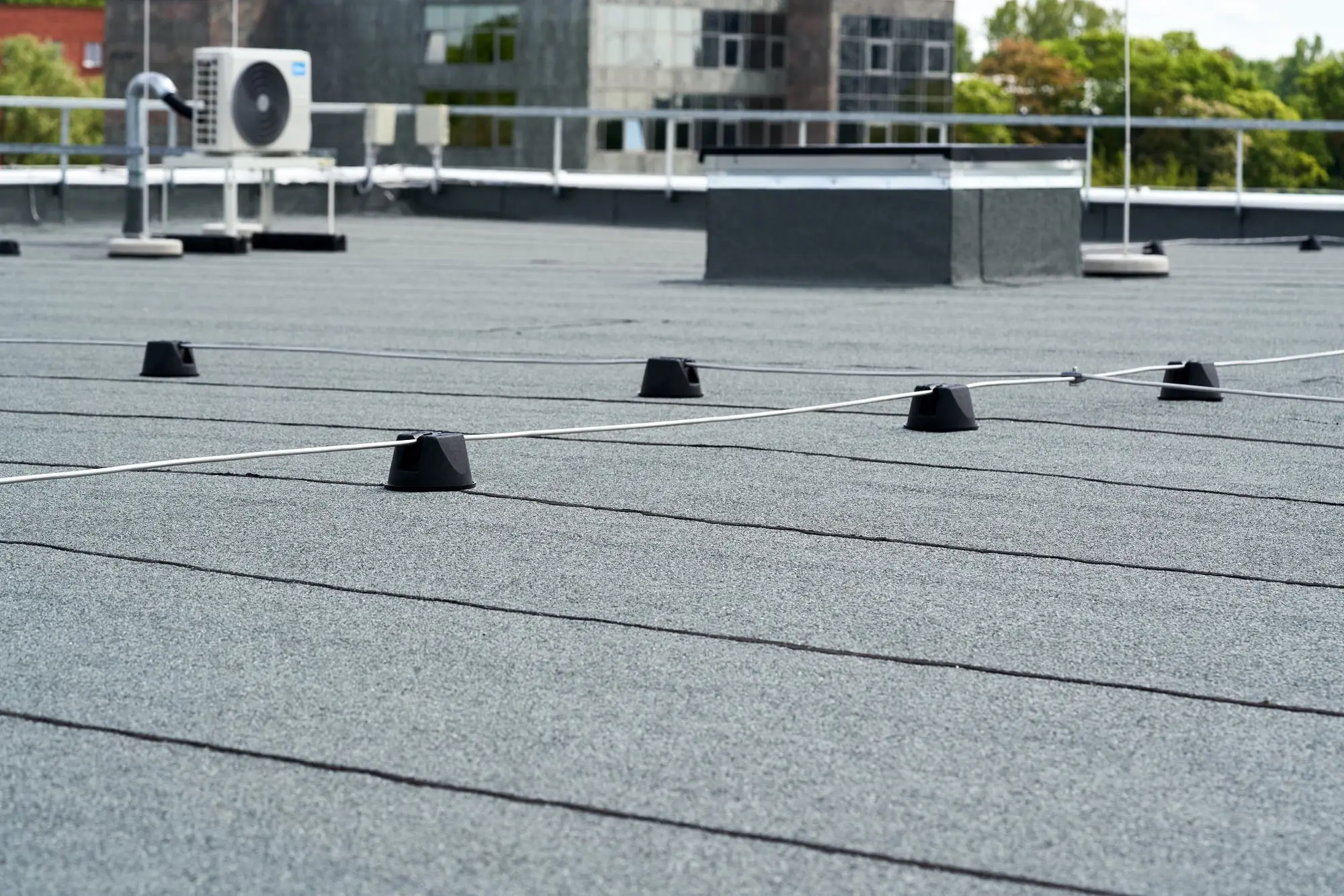
That’s a frustrating place to be. Every leak costs you something: damaged inventory, an unhappy tenant, a customer who sees the bucket. And you may already have paid someone to “fix” it once. You deserve a repair that’s based on where the water is actually getting in, explained in plain language.
APC Roofing repairs flat and low-slope roofs on commercial buildings across Central Florida, the Daytona Beach area, the Kansas City metro and Springfield, Missouri. We’ve been in business since 2017, we’re GAF Certified, licensed and insured, and the inspection is free. Call 866-995-0704.
Why the leak isn’t where the drip is
On a flat or low-slope roof, water rarely comes through the ceiling right under where it got in. It enters at a seam or around a pipe, runs along the top of the deck or between insulation boards, and drops through the first gap it finds. That can be several feet away, sometimes in another room.
This is why chasing the ceiling stain is the most expensive way to fix a commercial roof. A crew seals the spot above the drip, the next rain comes, and the leak is back because the real opening was somewhere else.
Where commercial roofs fail
Most commercial roof leaks start in a short list of places:
- Seams, where two sheets of membrane overlap. A seam that wasn’t fully bonded, or has been pulled loose by the building moving, is the most common source.
- Penetrations, the pipes, conduit and equipment curbs that go through the roof. The flashing around them has to stay tight through years of heat and cold.
- Drains and scuppers, where a loose clamping ring or a pile of debris lets water back up and find a way in.
- Edges and walls, where the membrane turns up a parapet or ends at metal trim, and old sealant has dried out.
- Punctures from foot traffic, dropped tools and storm debris.
Hail is its own problem. It can crack or bruise the insulation under a membrane that still looks fine on top.
Commercial roof repair has to match the roof
A repair that works on one kind of roof can fail on another. Heat-welded membranes like TPO are repaired by welding in matching material. EPDM rubber needs the right primer and seam tape, because ordinary adhesives won’t hold to cured rubber. Modified bitumen and built-up roofs get patched with compatible materials. Metal roofs need their own fasteners, sealants and panels.
Mixing materials that don’t belong together gives you a patch that looks fine the day it’s done and lets go within a year. The first step on any repair is confirming what your roof is actually made of. If you’re not sure, that’s normal. Many building owners inherit a roof with no records.
Wet insulation changes the job
Once water gets into the insulation under a membrane, it tends to stay there. Wet insulation is heavy, it stops insulating, and on a steel deck it can cause rust from the top down where no one sees it. Patching the membrane over soaked insulation seals the problem in.
So a good repair checks for trapped moisture around the leak, often with a small core cut through the roof. If the insulation is wet, the honest repair includes cutting it out and replacing it. That’s a bigger job than a patch, and it’s the most common reason a “repaired” roof leaks again in the same area.
Florida rain, Midwest hail and freeze-thaw
Where your building sits changes what the roof deals with. In Central Florida and the Daytona Beach area, heavy afternoon downpours put a lot of water on a flat roof at once, and slow drains or low spots let it pond. Strong sun ages membranes and sealants year-round, and hurricane season tests every edge and seam.
In the Kansas City metro and around Springfield, spring hail and strong winds do most of the damage, and winter freeze-thaw cycles work water into small cracks and open them up. Snow and ice can block drains and add weight. A repair plan should account for which of those your roof faces.
What you should get after an inspection
Ask for photos of each problem area and where it is on the roof, what’s being repaired and how, and anything that was found but isn’t being fixed yet, with a note on how urgent it is. That gives you something you can budget around, and it’s what an insurance company will want to see if storm damage is part of the picture.
If a storm caused the damage, you file the claim on your building’s policy and pay your deductible. We document the damage, provide the estimate and work with your adjuster.
How it works
- Book your free inspection. Call 866-995-0704 or request a free estimate online.
- Get a clear, honest assessment and estimate. You’ll see photos, hear whether a repair will hold or whether the roof is closer to replacement, and get the estimate in writing.
- The repair gets done and the site gets cleaned up. We’ll plan around your hours where we can so your business keeps running.
Small leaks on a flat roof rarely stay small. Every rain pushes more water into the insulation, and the repair grows with it.
Commercial roof repair questions
Can you repair my roof instead of replacing it?
Often, yes. Many commercial roofs have years left once the seams, flashing and drains are fixed. If the insulation is widely soaked or the membrane is worn out across the roof, we’ll show you why replacement makes more sense.
Do you repair TPO and EPDM roofs?
Yes, along with modified bitumen, built-up and metal roofs. See our flat roof repair page for more on low-slope repairs.
Can the work happen while my business is open?
Usually. Most repairs happen on the roof with little disruption below, and we’ll talk through timing, access and noise up front.
A roof you can stop watching
The goal is a dry building, a roof you can plan around and no repeat calls for the same leak. Call 866-995-0704 or book your free inspection online. If the roof is past repairing, our commercial roofing installation page explains what a new roof involves, and our commercial roofing page covers everything else we do for building owners.