
You own or manage a small commercial building in the Hidden Harbour area, and the roof is one of those things nobody thinks about until a tenant calls about a ceiling tile. You don’t know how old it is, what it’s made of or how much life it has left, and the budget meeting wants an answer. Commercial roofing in Hidden Harbour doesn’t have to be a surprise every time it rains.
Not knowing is the hard part. A roof you can’t plan for turns into an emergency at the worst time, usually right after a storm when every roofer in Central Florida is booked. You deserve a clear read on your roof’s condition so you can make the call on your own schedule.
APC Roofing is GAF Certified, licensed in Florida (CCC1337030) and insured. We repair, re-roof and install low-slope and metal roofs on offices, shops and other light commercial buildings around Altamonte Springs, and your first inspection is free. Call 407-270-1129.
Commercial roofing in Hidden Harbour starts with knowing your roof
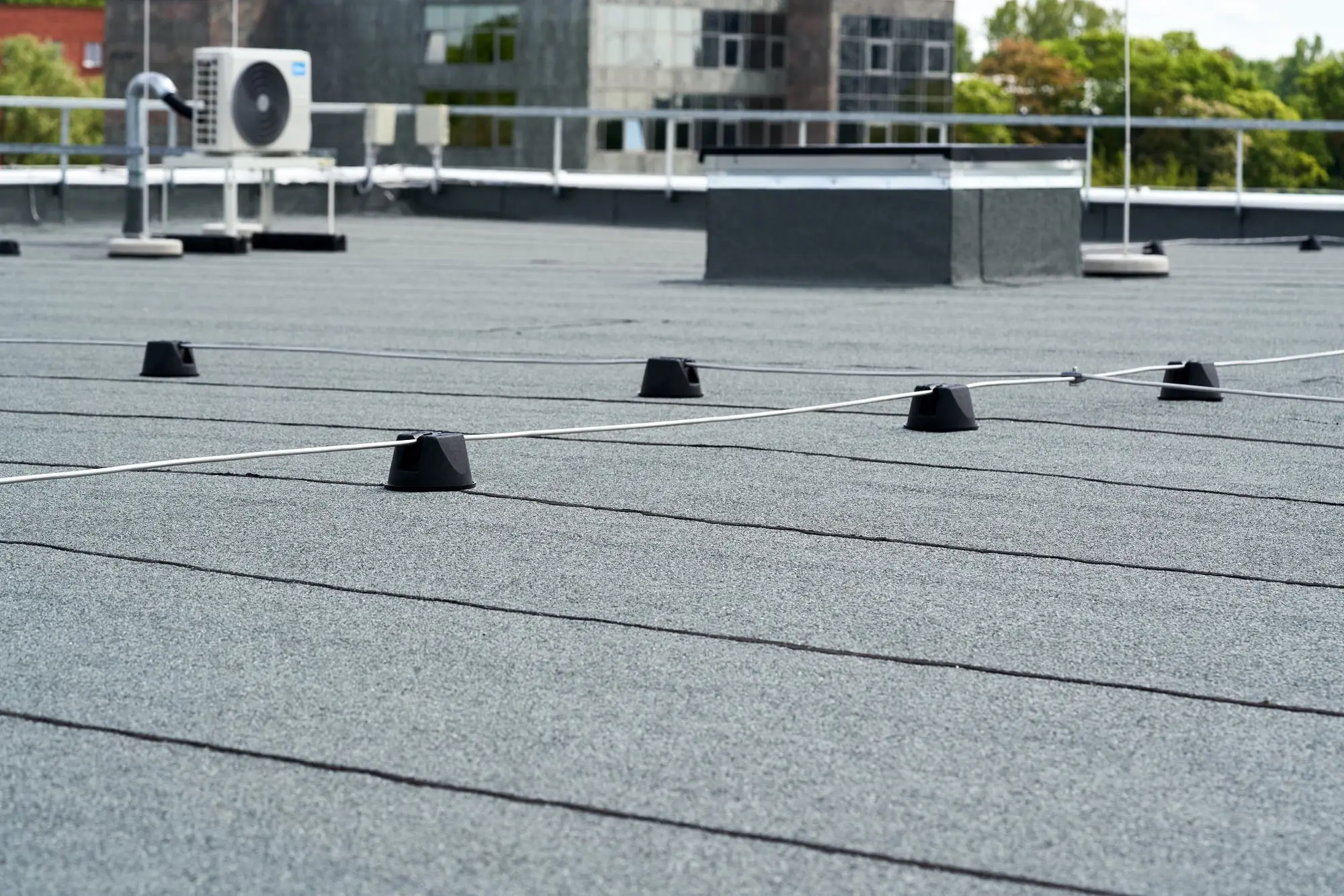
Most light commercial buildings have a low-slope roof covered with a membrane like TPO, EPDM, modified bitumen or built-up roofing, and some have metal. Each ages differently, and the age of the roof matters less than its condition. A roof that drains well and has dry insulation can have plenty left. One that ponds or has wet insulation under a clean-looking surface may be closer to the end than anyone realizes.
You can learn a lot without climbing up. Watch for:
- Ceiling tiles that darken after rain, then dry out
- Water pouring out of an overflow scupper during a storm, which usually means the main drain is blocked
- Paint peeling high on an outside wall, often from gaps in the coping above it
- Edge metal that rattles or lifts in the wind
- A ceiling that sags between supports
- Downspouts that gush at the joints
Any one of those is worth a closer look.
A regular look up top
As general guidance, a commercial roof is worth inspecting twice a year, once before hurricane season and once after the worst of it, plus after any major storm. Those checks catch the small things: a clogged drain strainer, a pitch pocket that has shrunk away from a pipe, a seam that’s starting to open. Fixing them early keeps water out of the insulation, which is where small problems turn into big ones.
Getting ready for hurricane season
Wind pulls hardest at the corners and edges of a low-slope roof, and loose edge metal is often what lets go first. Before the season, make sure the perimeter metal is tight, drains and scuppers are clear, and rooftop equipment is secure on its curbs. Clear drains matter as much as anything, because a tropical system can drop more rain in a few hours than a blocked roof can shed.
Keep records on your roof
Many older buildings have no paperwork on their roof at all, so every roofer who comes out starts from zero. A simple file changes that. Keep a sketch with each drain, hatch and rooftop unit marked, what the roof is made of from the deck up, and dated photos of every repair. Those records belong with the building, and they’re worth handing to the next owner or manager.
Other trades on your roof
HVAC technicians may be on a busy roof every few weeks, and their path from the hatch to the units slowly wears into the membrane. Walkway pads along that route protect it. Watch for one specific problem too: when an AC unit is replaced, the new adapter curb sometimes goes on without proper flashing, and a leak shows up inside within weeks. If you’ve had a unit swapped recently and a new leak appeared, that’s the first place to look.
Repair, re-roof or replace
When the time comes, the work should match the roof’s condition, not the calendar. A sound roof with a few trouble spots needs repairs. A roof with failing seams across the whole surface or widespread wet insulation needs a re-roof or a full replacement. Our commercial roof repair in Altamonte Springs page covers how leaks get traced, and commercial roofing in Altamonte Springs covers new installs and replacements.
If a storm damages the roof, you file the claim with your insurance company and you pay your deductible. We document the damage with photos, provide a written estimate and work with your adjuster.
How it works
- Book your free inspection. Call 407-270-1129 or request a free estimate online.
- Get a clear, honest assessment and estimate. We check the drains, seams, curbs, edges and parapets, look for wet insulation where there’s a leak, and give you photos with a written summary of what’s urgent, what can wait and what we’d recommend.
- The work gets done and the site gets cleaned up. You’ll know the schedule ahead of time so your tenants or staff aren’t caught off guard. Financing is available through Aqua Finance, Fortifi, Hearth and Home Run Finance.
Commercial roofing questions
How often should a commercial roof be inspected?
Twice a year is a common rule of thumb, plus after any major storm. Small problems cost far less to fix when they’re caught early.
Can you work on the roof while my business is open?
In most cases, yes. Noisy or high-odor stages can be planned around your hours and your HVAC intakes.
What should I keep on file about my roof?
A sketch of the roof with drains and equipment marked, what the roof is made of and dated photos of each repair.
A roof you can plan around
The easiest commercial roof problem to fix is the one you find before it reaches the insulation. Call 407-270-1129 to book your free inspection. You’ll know where your roof stands, what it needs and when, and you can head into the next storm season with a dry building and a plan.


















