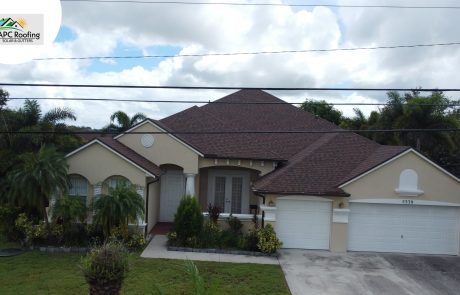
Planning Concrete Tile Roofing for a Property in Blue Springs Missouri?
APC Roofing builds, patches and relays coverings of every common shape, whether the job is a single slipped piece or an entire slope reset.
Dial 913-398-5020 and somebody experienced with clay and concrete will explain what is needed.
How the Covering Is Built: A Plain Guide
Rows of clay or concrete pieces carry the bulk of the rain down to the gutters, but the waterproofing itself is an underlayment on the deck below. Gusts can push a little moisture up under the courses during a downpour, and the layer beneath steers that seepage down to the lower edge.
One broken tile rarely means water inside the house, because the waterproofing underneath is still sound. Moisture that slips through failed underlayment tends to run along the wood for a while, and the visible mark and the way in do not always line up.
Deciding on a Material: Points of Contrast
Clay is shaped while wet and then fired until it sets hard, and nothing on the face can peel off. Sunlight over many decades barely alters how the roof appears, while a properly made unit soaks up almost no rain.
A cement-and-sand mix is molded to a profile and cured to make concrete tile, and on many brands the color is a thin coat on the face. A slope that gets full sun lightens over the years, and a new nick exposes gray under the weathered skin. Any replacement dropped into an aged roof is easy to spot, and the contrast narrows as time ages the newcomer.
Concrete is thirstier in a rainstorm than fired clay, and toward the colder end of our territory, moisture taken in swells as it freezes. Enough of those cycles can chip away the outer layer, so products carry a grade for how they stand up to that exposure.
Shapes You Will See – Style and Drainage
A barrel roof is built from half-round pans laid face up, with covers over the gaps between them, and the appearance recalls early Mediterranean villas. A single S-shaped tile does the work of the older two-piece layout, and it is widely used on newer houses.
Flat pieces lie close to the deck and can pass for slate or heavy shake from below, while runoff sheds across each course with no channel to follow. Needles and leaves gather in the dips of a rolled pattern, whereas a smoother surface keeps far less debris.
Weight and Support – Switching Coverings
Clay or concrete at full thickness is several times heavier than asphalt shingles, and rafters under a roof tiled when new were sized with that in mind. Switching from a light covering to tile adds a burden nobody allowed for, and a frame pushed past its limit can deflect and dip.
Ahead of a conversion, a structural engineer checks the rafters, the spans and the walls they bear on, and strengthening is sometimes part of the answer. Makers also produce low-weight concrete, and a house that could not hold full-thickness pieces may still manage that option.
Attachment Methods: Edges and Middle
A piece can be nailed or screwed through a hole near its head, and a lot of installations lay each course over a wooden batten. Elsewhere a two-part foam bonds each tile to the underlayment, while mortar holds the entire field on still others. Wire ties or storm clips give extra hold on particular installations, and the approved combination comes from the maker and the local code.
Suction from wind is fiercest at the borders of a slope, and attachment there is increased. The coastal end of our territory is held to hurricane standards that ask more of every tile, and the amount of foam and the number of screws are spelled out in advance. A replacement is fastened to match the surrounding courses, and a stuck unit ripped free can ruin the adjoining ones.
Under the Covering – Heat and Sunlight
Heavy asphalt felt is the classic product, while self-adhered bitumen and synthetics are the newer options. Summer heat builds up below the covering and bakes the underlayment, so a sheet not rated for those conditions goes brittle early.
A tile roof keeps the sun off the felt or synthetic under it, so a knocked-out tile opens a patch that degrades fast. A ceiling with no stain does not make a missing piece safe to ignore, since water passing a weathered membrane soaks into the plywood.
Work Below the Surface: Step by Step
Rather than being thrown away, the pieces on a big project can come down by hand and wait in stacks, and damaged plywood is cut out and replaced. Next comes new underlayment, rolled out from eave to ridge, and the same tile goes back where it came from. From the street, the house looks exactly as it did before, and the layer that stops leaks is at the start of a long life.
Not every piece survives being moved twice, and aged stock gives way more readily than newer stock. Fresh units must lock into the pattern already on the roof, and if the maker still produces the same design, the new work blends in. When a style has been dropped by its manufacturer, salvage or a near equivalent fills the gaps, and even the best option can differ slightly in shade.
Breakage on the Slopes: Prevention and Care
A lot of splits in a tile roof come from someone stepping in the wrong spot, and the one on the roof was frequently installing a dish or cleaning a gutter. A ladder resting on the eave line breaks pieces at the bottom, while a stabilizer arm set against the siding keeps the weight off.
A dead branch landing on the roof shatters everything under it, and pruning trees away from the house stops it before it happens. At the colder end of our territory, large hail can crack a tile outright, but modest impacts normally leave no trace.
Walking on Tile: Unseen Damage
Every piece is sturdy over the course below, but pressure on the middle, with nothing behind it, splits it clean. Where the tile is curved, the hollow pan is the place to step and the crown is not, and boards or foam pads carry the load on a busy route.
The fracture left by a misplaced heel is frequently on the back face, so a roof can collect breaks nobody knew about. Solar crews and dish installers do well to plan their access with a roofer, and every bracket then rests on flashing rather than on broken tile.
Valley Framing: Width and Upkeep
The inside corner where slopes meet collects the runoff of both, and on tile it gets a metal pan. Where the pieces are cut back decides how wide the open strip is, and too tight a space spills water sideways in a cloudburst.
Pieces along the edge end up small and often lose their nail holes, so foam or clips secure them instead. A buildup of debris in the trough backs water up against the pieces, and some of that water travels sideways beneath the pieces.
Hips and Ridges – Fastening and Venting
Each outside joint, at the peak or down a corner, gets a run of rounded trim, and mortar holds it on many roofs. Daily heating and cooling cracks old bedding over the years, so the pieces loosen and crumbs wash down the slope.
Many newer roofs mechanically fasten the trim to a raised support rail, with a flexible closure strip filling the space underneath. Breathable versions double as exhaust vents, and their baffles still keep out rain and insects.
Chimney and Wall Junctions – Common Faults
The inside corner at a vertical face is lined with bent sheet metal, while a counterflashing tucked in above covers its top. With tile, that flashing is broad at the base and ends in a raised lip, and the adjoining tile ends short so rain has room to drain.
A smear of roof cement along a chimney hardens and splits, and the leak comes back where it was. A proper repair means lifting the pieces and redoing the flashing under them, while the underlayment there is redone before the covering goes back.
Roof Penetrations: Where Shingle Parts Fall Short
A plumbing riser gets a base flashing tied into the underlayment, with a soft lead or aluminum skirt molded to the tile above. A standard neoprene boot cannot follow the rise and fall of a rolled piece, so runoff slips in beneath it.
Every skylight, vent and panel mount requires flashing suited to the tile, and a bracket screwed through a piece without it lets water in.
The Eave Edge – Keeping the Line Straight
A rolled profile leaves an open arch under the end of each piece at the gutter, and birds, wasps and blown rain get in unless something fills the gap. A formed closure is set along the fascia, and weep holes built into it let water escape.
Pieces in the last course have nothing under them for the same tilt, and a riser strip gives them the rise they need. Pieces laid too flat at the gutter let water linger and back up, and the lower edge looks wavy from the street.
Thermal Performance: Indoor Comfort
The shape of many profiles, or the battens beneath, holds the covering off the deck, and air circulates in the opening left below. The draft carries off heat before much of it passes downward, so the waterproofing stays cooler.
Through a hot season, the air conditioner has less to do, and dense clay or concrete holds warmth back for hours. Leaves packed at the eave or mortar filling the ridge can shut the airflow off, so the benefit disappears.
What Collects Up There – Pressure Washers
A whitish crust on fairly new concrete is usually efflorescence rising from within, and weather tends to clear it without help. Moss and lichen hold moisture in the laps and hollows, so at the colder end of our territory freezing can wear the face away.
Power washing strips the finish that gives concrete its color, and it pushes water past the pieces. A cleaner made for roofs, rinsed off gently, removes growth more safely, and it helps even more to clear valleys and gutters by hand.
Things to Watch For – Easy to Spot
- One unit sits lower than its neighbors, and the hold under it has given way.
- A gap shows where a piece is missing altogether, and the exposed sheet begins to degrade in sunlight.
- Shattered tile is found on the patio after wind, even when the slope looks whole from below.
- Small lumps of mortar sit near the porch, and the pieces along the peak may be rocking.
- A brown ring spreads on a ceiling below the roof, though the leak itself may start far from that spot.
- Streaks run down an inside wall below a chimney, and the metal along that joint may have failed.
- Mats of green or black growth choke the laps, so water lingers where it should run off.
- The lowest course sags between the corners of the building, and a missing riser or rotten fascia may lie behind it.
APC Roofing and Concrete Tile Roofing in Blue Springs Missouri: What to Expect
A visit begins with a walk over every slope, and the material, the shape and the way the pieces are set are identified. The valleys, the ridge, every wall junction and the eave each get a close look, and pieces are lifted in places where the underlayment has to be seen. From the attic, the underside of the deck is searched for stains and soft spots, since dark patches on the wood show past leaks.
Every fault is photographed, and the extent is measured. What was seen is set out in a written report, with a reason attached to every suggestion. Cracked pieces on a sound sheet are described as repair work, while a failed underlayment is named plainly. Choosing a path is left to the owner, and holding off for now is a fair option.
Concrete Tile Roofing on Homes in Blue Springs Missouri: Clear Findings
Dial 913-398-5020 to talk about what you are seeing.
How Much Work Is Needed – Reading the Condition
Plenty of trouble sits in one place, be it a cracked piece, a loose cap or a wall joint, and the fix stays right there. Whether the job grows into a relay depends on what lies beneath, and faded or chipped faces do not settle the matter.
A slope whose sheet has given out throughout is taken up and put back over new underlayment, and slopes still in good shape stay as they are. Underlayment installed in a single job generally gives out at about the same point, so the rest can be close behind.
Looking Ahead: Estimates, Not Promises
Quality fired clay can keep going for a century or more, and concrete lasts for decades, though usually not as many. The waterproofing below is replaced well before the pieces, so its condition generally decides when work is needed.
A roof checked regularly and kept clear of debris gets its full span, but a neglected one may lose its underlayment early under one missing piece. A stated age is a rough guide, not a pledge, as grade, hold-down and flashing detail all change it.
Pitch and Decking – Gutters Included
Tile sheds rain through overlapping courses, not sealed joints, so the roof must be steep enough for runoff to keep moving. Near the bottom of the allowed range, the underlayment is upgraded, while a roof flatter than the minimum is better off with a different product.
The deck beneath has to be sound, and weak sections are swapped while access is easy. Gutters are part of how the roof drains, and a clogged run can back water up under the lowest pieces.
When you are sizing up Concrete Tile Roofing in Blue Springs Missouri, contact APC Roofing at 913-398-5020. The covering, the metal and the sheet beneath are inspected and written up, and the decision stays with you.
Verified

Verified
Verified
Verified
Verified