Hoping to find Commercial Roofing in Blue Springs Missouri?
APC Roofing builds and mends the wide, low coverings above places of work, down to the drains, edge trim and equipment curbs.
Reach us at 913-398-5020 and a roofer will come out and look everything over.
Over Stores and Warehouses – an Overview
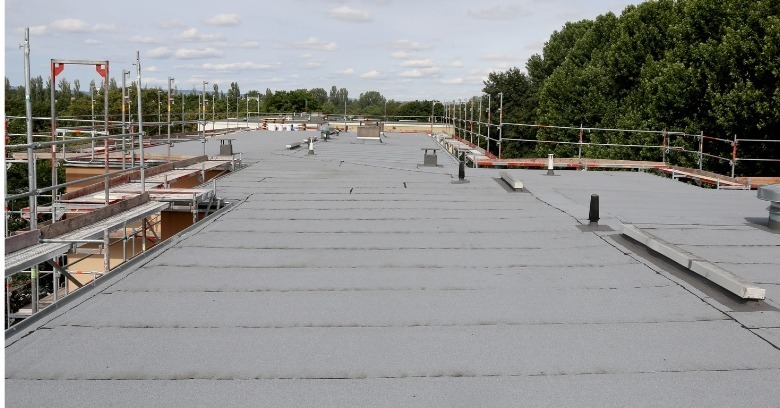
Staff, stock and machinery sit beneath the membrane, and dripping water can idle a conveyor or spoil a pallet of product. Wide commercial buildings carry a top surface that is nearly flat, so outlet sizes and wind design come from engineering figures.
Condensing units, exhaust stacks and antennas are spread across the top, and every pipe, duct or support must have a sealed opening. The business inside shapes the choice of system, and a freezer warehouse needs details an office never does.
The Principal Membranes: a Plain Primer
One flexible layer of TPO, PVC or EPDM is what single-ply describes, modified bitumen is rubberized asphalt sold by the roll, and built-up roofing piles felt and tar ply on ply. Thermoplastic overlaps are heat-welded into a continuous piece, but rubber sheets are joined with primer and splice tape.
Fryer exhaust coats the area around a restaurant's fans, and EPDM and asphalt swell and weaken beneath oily residue, so PVC is a common pick for the spot. Built-up work finished with gravel carries real weight and holds up for decades, and the rock cover screens the bitumen from the sun.
Metal Panels on Business Buildings: Where Trouble Shows
Some profiles are held down by screws driven through the flat of each sheet, and each shank is set into a purlin or joist. Sunlight bakes the washers until the rubber splits, and fasteners loosen as the metal moves with temperature.
On standing seam, concealed clips hold each rib to the deck, and the hardware lets each pan travel. Red rust breaks out at laps and along cut edges, and a restorative coating can add service to sound steel.
Deck Types: Grip and Strength
Attachment methods are limited by what the original builders put in, and reroofing leaves the framing in place. Corrugated steel gives screws a firm bite, concrete calls for adhesive or drilled anchors, and wood or gypsum plank takes nails or purpose-made fasteners.
Old, slow leaks corrode patches of a metal deck, and failing stretches are replaced rather than covered. The structure's underside is checked from indoors when access permits, and cores drilled from above confirm the remainder.
Attachment Methods – Pros and Cons
Some commercial sheets go down with plates and screws at the seams, fully adhered systems are glued across the whole underside, and ballasted sheets stay put under a blanket of stone. The kind of deck, the height and the wind at the site decide the pick, and a frame with no spare capacity rules out a heavy layout.
Between the plates, a fastened sheet balloons in stiff gusts, but an adhered sheet lies quiet and demands a dry, clean base. A ballasted layout turns inspection into a slow job, as every seam remains hidden until the stone or pavers are shifted.
Wind Forces Overhead – a Matter of Engineering
Suction peaks at the corners, since air accelerates on rolling over the perimeter. The strip down each side carries a smaller share, and the open middle is loaded more gently.
Fasteners go in closer together near corners and edges, with spacing taken from code tables for the building's height and exposure. An outer angle with too few anchors allows the sheet to lift, and a blow-off can run well across the field.
Foam Insulation – Several Jobs at Once
Polyisocyanurate panels cover the deck with offset joints, and a thin, hard cover board is often added last. Insulation reduces the load on air conditioning and furnaces, and tapered units can slope a dead-flat deck to the outlets.
Soaked foam gives up most of the thermal resistance, and the heavy mass adds weight and rusts a steel deck. Nondestructive meters and cored samples show how far the problem reaches, and every ruined section is replaced rather than covered.
Where Runoff Exits: The Path Down
A basket-shaped strainer caps each interior opening, and the bars catch bags, leaves and gravel before the pipe. Silt plastered over the grate cuts the flow to a dribble, and a wide pool gathers in the surrounding field.
An overflow opening is placed higher than the regular drain, and runoff spilling at the upper level points to a plug further down. Standing water loads the frame with weight beyond the design, and water lasting two days suggests a depression or a clogged strainer.
Following Water Back to the Entry Point – Patience Pays
Ceiling stains record where rain finally came through inside, yet the defect up top may be dozens of feet distant. Corrugated decking channels seepage the length of the building, and gaps between insulation boards add more routes.
Up top, the laps, curbs and outlets uphill from the mark are inspected, and a low-voltage test can trace an elusive leak. Patching straight above the damp tile usually lands in the wrong place, so the trouble returns with the following storm.
Air-Conditioning Gear – a Closer Look
Each large machine stands on a raised curb, and a flashing sleeve climbs the walls to a formed metal hood. Inside corners need preformed pieces or patient detailing, and a small gap lets wind-driven rain into the structure.
A new unit from the HVAC contractor may sit on an adapter with no flashing, and stains appear below a few storms later. Condensate running loose over the membrane breeds growth and grime, and the water should be routed to a drain.
Pipes, Vents and Conduit – the Small Stuff
A snug molded boot slides over each round stack, while awkward profiles are boxed in a pitch pocket and packed with filler. Aging compound contracts and opens hairline gaps, so a fresh layer goes on every maintenance list.
Electrical conduit and gas lines ride on blocks simply set in place, since every screw driven through the sheet is a future leak. A rubber pad beneath every foot distributes the weight, and the cushion saves the sheet from abrasion as the piping moves.
Skylights, Hatches and Smoke Vents – How Leaks Begin
Ultraviolet light leaves acrylic and polycarbonate hazy and weak, and the screwed-down rim is where cracks start. A gap at the frame corner lets rain inside, and the drip is often charged to the covering.
The hatch at the top of the ladder sees daily traffic on some buildings, which wears out the springs, latch and weatherstrip. Smoke vents release automatically when a fusible link melts, so flashing and materials stay clear of the swing path.
Walls That Rise Past the Deck: Staying Dry
The covering bends upward and becomes base flashing, a screwed termination bar secures the top, and a strip of counterflashing overlaps from higher up. Coping along the crest keeps rain out of the core of the parapet, though a cracked seam beneath lets runoff in.
Weathered brick and block take on water through the faces, and to anyone downstairs the wet ceiling seems like a roof leak. An inspection covers the coping, the counterflashing and the wall as well as the membrane, and failing mortar is raked out and repointed.
Metal Trim Where the Field Ends: What to Inspect
A cleat screwed to the nailer catches the folded hem of the flange, and a cover strip of membrane is laid over the upper face. Perimeter pieces must carry a wind rating for the building's height, since loose metal becomes a lever that gusts use against the field.
A box gutter on a long wall moves a torrent in heavy rain, which calls for sturdy hangers and oversized downspouts. Crumpled or raised trim is a clear repair item, since securing the metal now keeps the sheet from tearing.
Visitors Who Are Not Roofers: Setting Some Ground Rules
Equipment mechanics may be up top every few weeks on a busy building, and the route wears a visible track into the field. A dropped screw gets pressed through the membrane by the next boot, and a propped panel can gouge a hole.
A line of walkway pads guides people to every unit, and wear ends up on material built for foot traffic. Contracts with service firms can spell out where crews may walk, and loose screws and scraps should leave in a bucket.
Scheduled Inspections: What Gets Done
Twice annually is a sensible rhythm for a walk-through of a commercial system, plus an extra check after a severe storm. Upkeep includes emptying every strainer, any open lap is found with a probe, and hardened sealant is noted for redoing.
The trip ahead of the stormy months focuses on outlets and perimeter metal, and a later round looks for anything a punishing season loosened. Little defects go into a log, each tied to a spot on the plan, so repairs can be arranged before a leak starts.
Roof Records: Kept for Later Years
A useful dossier includes a plan with every unit, drain and hatch marked, and a written build-up traces each component from the deck to the membrane. Each fix is logged with a date and photographs, and new moisture findings are added over the years.
Countless older buildings reach new owners with no history attached, and each roofer who climbs up has to investigate afresh. Documentation stays with the building, so a later buyer or manager starts out informed.
Sizing Up the Job – Letting Condition Rule
A sound membrane with a handful of local faults simply gets patched, while an aged but dry surface can take a liquid-applied system. Waterlogged insulation across large areas points toward a new covering, and so do seams that have turned brittle everywhere, while a date on the calendar decides little.
Any restoration coating depends on a washed, repaired substrate, while lingering dampness gets bottled up. A partial tear-off of the spoiled areas can be a reasonable compromise, where the surrounding membrane still has life left.
Reroof Paths: What Codes Allow
Recovering adds another membrane on top of the current roof, and a cover board separates the surfaces. An overlay is allowed by code over no more than a single existing covering, as long as the insulation below is dry.
A complete strip-off clears away every layer, so rusted or soft decking gets fixed in the open. Tapered insulation installed at the same time can reduce chronic puddling, and saddles between drains steer water sideways.
Early Warnings: Before a Small Fault Grows
- A steady stream from the backup scupper in a storm, which exposes a blocked lower drain.
- A tan mark on acoustic tile that keeps growing, which reveals the foam above is getting soaked.
- Blotches or efflorescence on brick under the coping, which can suggest flashing trouble near the top.
- Rattling trim along an open eave, which can expose the border to uplift.
- A ceiling that sags or bows between the joists, which can indicate a settled structure or a fouled drain.
- A yellowed, brittle skylight lens, which can admit rain at the frame.
- Drops falling onto shelving during a downpour, which shows a leak traveling inside the assembly.
- A gutter that overflows along the front edge in rain, which can send runoff behind the fascia.
How APC Roofing Plans Commercial Roofing in Blue Springs Missouri – Our Sequence
The drains, scuppers and overflows get our attention before anything else, and the laps, curbs and perimeter come next. When a leak is present, the boards beneath are scanned, so nothing is proposed until the results are in.
Our findings go on paper, with pictures and a marked-up plan, and every defect is keyed to a location. The outcome we propose is a repair, a coating or a replacement, and the reasoning is laid out for you to question.
Commercial Roofing Across Blue Springs Missouri: Answers on Paper
Call 913-398-5020 and a time to look things over gets agreed.
Keeping Tenants in Mind – Planning Together
Screwing into a steel deck rings through the rooms beneath, and solvent smells from adhesives can be drawn into the ventilation. The loud part of the job is planned with whoever runs the building, and nearby vents can be closed off during curing.
Debris leaves by chute into a dumpster, and anything valuable underneath can be protected. Water-based adhesives give off far less odor than solvent-based glue, so gentle formulas are often specified above working space.
Phasing a Large Replacement – Protecting the Interior
Old layers come off only in amounts that can be closed up by evening, and each bare part gets fresh boards before more is taken up. A temporary closure protects the joint between finished and unfinished portions, and the extra piece is sliced off the next morning.
How much is stripped depends on the weather outlook, and a threatening sky scales the plan back. A sudden soaking ruins exposed insulation, and drips can fall on whatever sits underneath.
The Weather We Work In – What Changes by Market
At the colder end of our territory, hail and snow load both count, which argues for tough cover boards and a structural check. Wherever we operate, ultraviolet light and heat age the sheet, and a white reflective surface cuts the warmth absorbed.
Hurricane wind at the coastal end demands tighter anchoring, and torrential rain makes backup outlets essential. Low temperatures slow or stop many adhesives from curing, but a welder copes with cool air far better than with a shower.
Fall Protection Up Top: a Standard Part of the Job
Where the wall is low or missing, nothing catches a misstep over the side, and anyone close to the edge wears a harness tied to an anchor. Plastic skylights break under someone who stumbles onto the dome, so guards over each opening are standard practice.
Anchor points installed for good serve every trade that follows, and a gated ladder hatch adds another safeguard. A missing screen or warning line is flagged in our findings, as a single-story drop can still cause grave harm.
When you need Commercial Roofing in Blue Springs Missouri, dial APC Roofing at 913-398-5020. We will cover the surface on foot, from the outlets to the parapets, and the results arrive in writing to act on as you see fit.
Verified

Verified
Verified
Verified
Verified