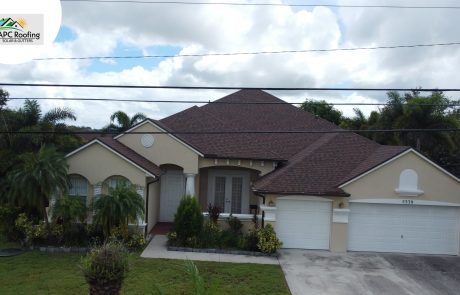
Considering Tile Roof Repair on a Home in Palm Coast Florida?
APC Roofing fixes and relays barrel, S-shaped and flat profiles, down to the waterproof sheet beneath the surface.
Call us at 386-356-2111 and the answers you get will be in everyday language.
What Sits Over the Attic: For Homeowners
Rows of clay or concrete pieces carry the bulk of the rain down to the gutters, and the real waterproofing is an underlayment laid across the boards. Gusts can push a little moisture up under the courses during a downpour, and the layer beneath channels that seepage off at the lowest course.
A cracked piece of tile does not by itself put a stain on a ceiling, because the waterproofing underneath is still sound. Water through torn underlayment can track across the boards before it lets go, and the visible mark and the way in do not always line up.
Picking a Material: Sun and Moisture
A clay piece is formed from wet earth and fired at high heat, and there is no painted coat on the face to wear off. Sunlight over many decades barely alters how the roof appears, and a quality product takes up next to no rain.
Concrete pieces are sand, cement and water pressed in a mold and cured, but the pigment on many lines stops just under the face. Sun-facing slopes grow paler year by year, while a fresh break reveals plain gray underneath. A replacement set among older neighbors stands out at once, and the contrast narrows as time ages the newcomer.
Concrete absorbs noticeably more rain than good clay does, and at the colder end of our territory, soaked-up moisture turns to ice within the body. Season upon season, that cycle can peel the face off in flakes, so products carry a grade for how they stand up to that exposure.
Profile Options: Rolled or Level
A barrel roof is built from half-round pans laid face up, with covers over the gaps between them, and the look goes back to old Spanish colonial buildings. An S-shaped tile folds the dip and the crown into a single unit, and newer houses carry it in large numbers.
The flat kind sits nearly level on the deck and resembles slate or thick shake, and rain runs over the face of each course instead of along a channel. Needles and leaves gather in the dips of a rolled pattern, whereas a smoother surface keeps far less debris.
Weight and Support: Lighter Products Too
Ordinary tile presses down with several times the mass of shingles, and a home planned for tile was given rafters to match. A move up from a lighter covering adds weight the house was never meant to carry, and a frame without enough margin may bow as it ages.
An engineer needs to confirm what the rafters and supports can carry before that conversion goes ahead, and extra bracing or sistered joists are sometimes required. Makers also produce low-weight concrete, and a house that would struggle under the standard version may take the reduced version.
Keeping Tile in Position – Rules and Practice
A piece can be nailed or screwed through a hole near its head, and plenty of installations hook the courses over wood strips set across the slope. On some houses, an expanding adhesive foam holds each tile down, while other homes have their whole field bedded in mortar. Metal clips at the lower edge add grip in certain systems, and the approved combination comes from the maker and the local code.
Along the rakes and the top edges, a gale sucks upward with greater force, so those courses get additional fastening. At the coastal end of our territory, hurricane codes set tougher requirements for keeping tile down, and the amount of foam and the number of screws are spelled out in advance. Mending a roof means matching the method that keeps its neighbors in place, and a stuck unit ripped free can ruin the adjoining ones.
Waterproofing Underneath – Heat and Sunlight
Heavy asphalt felt is the classic product, and more recent work relies on synthetics or self-sealing modified bitumen. The pocket under the covering stays warm for months and wears on the underlayment, and a membrane of the wrong kind dries out years ahead of schedule.
The tile also shades what lies under it from direct sun, and wherever a gap opens, sunlight breaks the exposed patch down quickly. A dry ceiling below a missing piece is no reason to put off the replacement, since water passing a weathered membrane soaks into the plywood.
A New Sheet Under Old Tile: Handling and Breakage
A major job on clay or concrete can keep the original pieces, removed by hand and stacked in the yard, and any soft or rotten sheathing is replaced. Fresh underlayment is then spread over the prepared roof, and the same tile goes back where it came from. The home keeps the appearance it was built with, and the layer that stops leaks is at the start of a long life.
A share of the pieces cracks while being lifted, stacked or carried, and older material fails at a higher rate. New tile needs the same curve as the old to lap properly, and a line still in production supplies an identical match. A retired shape is covered with salvaged stock or a close equivalent, and a slight difference in shade is common.
Chipped Pieces – What Helps
A good many fractured tiles were stepped on by somebody, and the visitor is often a sweep who came up for the chimney or an antenna. A ladder resting on the eave line breaks pieces at the bottom, while a stabilizer arm set against the siding keeps the weight off.
Big limbs crash through a whole patch when they fall, so keeping trees clear of the house removes most of that risk. Hail of real size at the colder end of our territory breaks units outright, while smaller pellets seldom mark so hard a surface.
Stepping Safely – Planning a Path
The lapped end of each piece bears weight well, but pressure on the middle, with nothing behind it, splits it clean. A rolled covering is crossed by stepping in the pans, not on the crowns, while repeated trips run over walk boards.
The fracture left by a misplaced heel is frequently on the back face, and harm accumulates over the years with no one aware. A company putting panels on this material ought to involve a roofer early, so brackets land on the deck with the covering reset around them.
Valley Framing – Points Worth Knowing
A fold between neighboring slopes takes the water of each, and tile jobs lay a metal liner in it. The cut on either side sets the width of the exposed strip, and water squeezed into a tight gap can spill beneath the pieces during a downpour.
Small leftover pieces along the metal have nothing to nail through, so foam, clips or wire ties hold them in place. Leaves and needles caught in the channel hold water back, so water finds its way sideways under the covering.
At the Ridge – Air and Closures
Where slopes meet at the peak and down the outside corners, a row of rounded trim covers the joint, and on many roofs it sits in mortar. Daily heating and cooling cracks old bedding over the years, and loose pieces and crumbs of grit follow.
Newer work fastens the trim to a raised wood or metal nailer along the joint, while a roll-out closure or foam closes the space below. Vented types let warm air out along the top, and their baffles still keep out rain and insects.
Along Chimneys and Walls: Wide Channels
The inside corner at a vertical face is lined with bent sheet metal, and an overlapping counterflashing keeps weather from getting behind its upper edge. Under tile, the flashing widens into a pan with an upturned rim, and the tile beside it is trimmed back so rain can flow freely.
Sealant smeared along the joint cracks within a few seasons, and water finds that gap once more. A repair that holds lifts the neighboring pieces and reworks the metal beneath, with fresh underlayment laid at that edge before the pieces go back.
Pipes and Vents – Rubber Boots
A drain line through the deck is wrapped by a base flashing joined to the underlayment, and a lead or soft aluminum sleeve is dressed down over the tile to shed water. A shingle-style rubber collar has no way to seal over curved tile, so runoff slips in beneath it.
Vents, skylights and panel mounts all take flashing made around the tile shape, and a bracket screwed through a piece without it lets water in.
At the Bottom Edge – Weep Holes and Drainage
Barrel and S shapes leave an arched opening at the lower end of every piece, which lets in birds, wasps and wind-blown rain until something fills the hollow. A molded closure is fastened along the fascia, and weep holes built into it let water escape.
Pieces at the eave lack a course below to lift their noses, and a riser strip gives them the rise they need. Low-set pieces at the gutter tend to pond water, and the lower edge looks wavy from the street.
Staying Cooler – When Debris Interferes
Rolled shapes and batten systems keep the pieces lifted above the boards, leaving a channel where outside air can flow. The draft carries off heat before much of it passes downward, so the underlayment stays cooler.
Over a scorching summer, indoor comfort holds steadier, while the weight of the material delays warmth reaching the living areas. An eave stuffed with debris or a ridge closed with mortar cuts off the current, so the benefit disappears.
Growth on the Slopes – What to Leave Alone
A whitish crust on fairly new concrete is usually efflorescence rising from within, and rainfall clears most of it eventually. Moss and lichen hold moisture in the laps and hollows, and at the colder end of our territory freezing slowly flakes the surface.
A pressure washer can blast the color layer off concrete pieces, and it pushes water past the pieces. A roof cleaner and a light rinse loosen growth without force, and clearing valleys and gutters by hand keeps water moving.
Warning Signs to Notice – Easy to Spot
- A single piece hangs crooked below the course, so the fastening there has likely failed.
- A hole in the pattern marks a piece that has come off, and the sun is reaching the membrane below.
- Pieces of clay or concrete turn up in the garden, and the source can be on a back slope.
- Sandy gray crumbs build up below the ridge line, and the pieces along the peak may be rocking.
- A bubbled patch of paint shows on an upper-floor ceiling, though the leak itself may start far from that spot.
- A wall next to the chimney has swollen drywall, and the metal pan there may be clogged or torn.
- Moss has spread along the overlaps on the north side, which keeps the pieces damp between storms.
- A low spot shows along the front edge of the covering, and a missing riser or rotten fascia may lie behind it.
How APC Roofing Works on Tile Roof Repair in Palm Coast Florida: Findings You Can Use
An inspection opens by walking the slopes one by one, while the material, the profile and the way the pieces are held are noted. Along the way, the valleys, ridge, walls and eave are gone over in turn, and a few pieces are lifted where the state of the sheet beneath decides the answer. Up in the attic, stains and softened sheathing are looked for, since dark patches on the wood show past leaks.
Anything wrong is photographed, and the extent is measured. The findings go into a written summary, and every proposed step comes with the reason for it. If the sheet beneath holds and the damage is only on top, a repair is the answer, and a spent underlayment is identified plainly. The next step is chosen by the owner, and deferring the work is a valid choice.
Tile Roof Repair on Homes in Palm Coast Florida – Looked at Closely
Reach us at 386-356-2111 and tell us what you have noticed.
Small Jobs and Big Ones: Where the Line Falls
Plenty of trouble sits in one place, be it a cracked piece, a loose cap or a wall joint, and attention there leaves everything else alone. Whether the job grows into a relay depends on what lies beneath, while the look of the pieces tells very little.
If the sheet is gone from eave to ridge on one side, the courses there are taken up and relaid, and any slope still serviceable is not touched. An underlayment laid all at once tends to wear out evenly, so the untouched parts may need the same work before long.
Tile and Time: Staying Sound
Quality fired clay can keep going for a century or more, while concrete lasts decades, usually fewer of them. The underlayment beneath wears out far sooner, and its condition usually sets when major work comes due.
Regular looks and clear gutters keep the covering in good order, but a missing piece ignored for seasons cuts the sheet's life short. A stated age is a rough guide, not a pledge, and product quality, fastening and the flashings at junctions shift it.
What Has to Be Underneath: Minimum Conditions
Rain runs off tile because each course laps over the one below, not because the joints are sealed, so there must be enough incline for rain to drain quickly. Near the bottom of the allowed range, the underlayment is upgraded, while under the stated minimum tile is not the right covering.
The decking must be solid before anything is laid on top, so spongy areas come out and new wood goes in. Gutters carry on where the tile leaves off, and once they fill, water can climb under the front row.
To look into Tile Roof Repair in Palm Coast Florida, phone APC Roofing at 386-356-2111. Every slope is inspected and the results go down in writing, and you decide the next step.
Verified

Verified
Verified
Verified