Thinking About Steel Roofing Here in Sanford Florida?
APC Roofing builds and maintains coverings made of coated sheet and aluminum, across homes as well as sheds and barns.
Phone 407-270-1129 and you will hear in plain words what condition the roof is in.
Sorting Out Types – Surface Clues
Exposed-fastener roofing is pinned by screws passing through every panel, whereas standing seam relies on clips that sit under locked joints. Nearly every residential job uses coated steel, and aluminum or copper appears now and then.
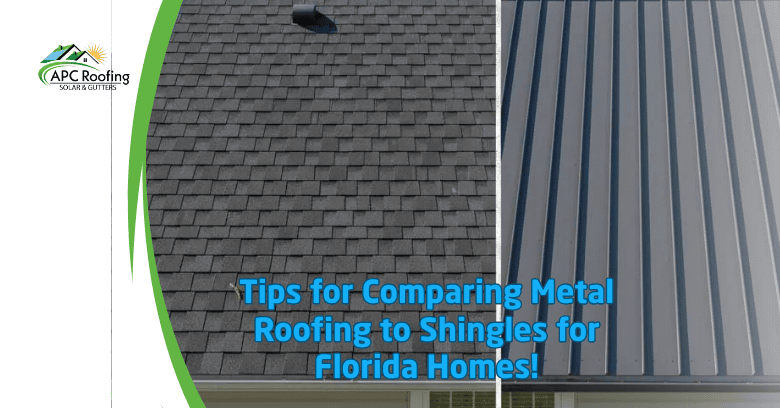
Rows of fastener heads, visible from the street, give away a screw-down roof, and clean flats between raised joints, bare of hardware, belong to standing seam. Corrugated sheet is a regular choice on barns, shops and porches, though a house can suit either.
Shapes Rolled Into Steel – Reach Between Supports
Corrugated sheet rises and falls in rounded, evenly spaced waves, whereas ribbed kinds stand up in squared ribs with flat stretches between. One length rides over a neighbor at a side lap, and fastener placement follows a published pattern.
A ribbed profile stands up to flexing and can bridge wider gaps, and a rounded wave appeals on older or rustic structures. Rib height governs how much water a long slope can move, while modest runs need little depth.
What Keeps Sheet Down: Every Detail Counts
A screw pulls the metal tight against a purlin or the deck, and a washer under each head stops water getting in. Synthetic rubber ages in the sun, going hard and then cracking, and the panels can go on for decades more.
An overdriven screw squashes a washer flat, and a fastener stopped short or angled leaves a gap for rain.
Fresh Fasteners: Scope and Limits
Washers dotted across a ribbed field grow old together, and a whole-roof re-screw is routine over the years. Each original fastener is taken out, and an oversized screw returns to every hole to catch undamaged fibers or metal.
A full re-screw with new washers closes leaks at each head and tightens loose sheets, but corrosion, parted laps and bad flashing are left as found. Screw style depends on what lies beneath, with coarse threads for wood and self-drilling tips for steel, and tops come painted to suit a colored finish.
Thermal Movement – Stress at Screw Holes
A steel sheet grows in afternoon heat and shrinks back by dawn, and a long run adds up to a measurable distance, while aluminum goes about twice as far. A panel pinned at both ends slowly slots every screw opening, and a washer stops sealing.
Snapping sounds at sunrise come from panels shifting against clips, and nothing is damaged where every detail allows for slack.
Under Upright Joints – Laid in Sequence
Each long pan is fixed solid in one short zone, and floating clips everywhere else let the pan glide. Trim at an unanchored end leaves a gap for travel, and metal with no play winds up torn or kinked.
As a pan is laid, clips are driven into the deck along one leg, so nothing that holds the roof down is left exposed.
Joint Styles: A Choice With Consequences
A basic profile engages with a firm push along a full length, and mechanical versions are turned over with a powered seamer. A double-lock seam holds far better against strong gusts and standing water, so maker ratings reach lower pitches.
Pan width and rib height vary from product to product, and architecture and a buyer's eye decide. Accessories such as clips and closures fit a single system, so any repair hinges on knowing exactly which panel is installed.
Stock Weight: Dents and Ripples
Coil for roofing is sold by gauge, and a low figure signals thick metal. Outbuildings commonly get twenty-nine, while twenty-six and twenty-four are typical choices for houses.
For aluminum, sheet is sized in thousandths, and more material means fewer marks and less waviness. Different grades look identical once installed, so only a maker's label or data sheet can confirm what was bought.
Rust Resistance – Aging in Sunlight
Steel for roofing is hot-dipped in zinc or an aluminum-zinc blend, and an oven-cured primer and color coat are applied on top. A scratch that stays within paint does no harm, but a cut that reaches base steel is where corrosion takes hold.
PVDF systems keep color and gloss for decades, and polyester families fade and chalk more quickly. An aluminum-zinc surface is damaged by contact with fresh mortar, so a gap or barrier separates panels from new block or stone.
Choosing the Metal – Trade-Offs
Aluminum is light and free of red rust, but a soft sheet dents from smaller blows. At the coastal end of our territory, salt spray breaks down galvanized coatings faster, so a marine-grade finish is often chosen for homes near a beach.
Copper turns up chiefly on bay windows, dormers and entry roofs, and with nothing applied, color shifts over the years.
Mixing Metals: A Slow Chemical Fight
Rain rinsing off a copper detail wears through coated steel downhill, and discoloration arrives well before a panel gives way. Pressure-treated framing corrodes aluminum laid directly on top, and fasteners of an unsuited metal leave a ring of damage.
Flashing added later should match whatever metal is already installed, or a plastic barrier divides unmatched metals.
Looks, Not Leaks – Why Installation Counts
What the trade calls oil canning is a mild wave in a flat pan, and low sun at dawn or dusk shows up every hollow. Metal with a visible warp stays just as watertight, and service life is unaffected.
Striations, heavier stock and narrower pans keep rippling in check, and a deck without humps or dips matters too. Pictures of houses with and without oil canning make comparison easy, and the choice of panel is yours.
Comfort Below – Day and Night
A racket many recall comes from sheet over open framing, because nothing there soaks up impact. A dwelling puts decking, a membrane and insulation between the panels and any bedroom, and indoors, few people notice more noise than under asphalt.
A light-colored panel sheds much of the sun's warmth, and the attic beneath stays cooler on a summer afternoon. A charcoal or black panel gets hot, and vents and insulation weigh as heavily as the choice of color. After sunset, metal sheds stored warmth quickly, and the attic eases off soon afterward.
Holding a Load Up There – Clamped or Fastened
Across the colder end of our territory, snow does not cling to painted steel, and a single release can take out a gutter or strike someone nearby. Retention bars keep a load up top to melt off gradually, with placement over doorways, decks and equipment.
Standing seam takes clamp-on brackets that grip each rib without piercing the metal, while exposed-fastener sheet takes mounts screwed into framing, and at the warm end of our range snow gear is unnecessary.
Blows From Above: When Paint Cracks
At the colder end of our territory, hail is a regular event, and thicker steel shows fewer dents. A crease that cracks paint exposes bare metal to rust, while a seam or trim edge pushed out of line may open.
Following a storm, our roofer takes pictures and measurements, and the depth of each dent is gauged.
Staying Put in a Blow – A Denser Pattern
Suction gathers along rakes and eaves, and air that gets under a loose edge can peel a sheet back. Finish trim is hemmed and caught on a cleat, so nothing sticks out to be grabbed.
Spacing shrinks where loads climb, at corners and a rim, set by a maker's tested layout for each exposure. At the coastal end of our territory, hurricane country asks for more holding power still, and products are chosen with a wind rating to match.
Where Something Pokes Through: Keeping Water Out
A flexible boot is formed around every rib and banded tight to a pipe, and a flat location lets a flange bed down evenly. Square penetrations take a curb and a cricket on a high side, and runoff is parted to either flank.
Caulk is a secondary barrier behind formed metal, because a compound shrinks and pulls away with time.
Inside Corners: Hooked and Clear
Valley metal is laid before a single panel, and every sheet is trimmed on the skew. Exposed ends are bent back and gripped by cleats, and fasteners stay clear of wherever rain concentrates.
On a run too long for one sheet, an endlap joins pieces with sealant between, and screws go through both thicknesses at close spacing.
Additions and Wings – Measured, Not Guessed
Most ribbed sheet is specified for about three in twelve or steeper, because on less, runoff lingers long enough to wick past laps. Machine-folded seams go much lower, and some products are allowed on nearly flat decks.
Porches, additions and back rooms often carry a barely tilted section, and we measure pitch on site, and anything under a panel's limit is finished in a membrane.
A Base Layer – Out of Sight Once Done
On a house, the panels go over solid sheathing, and a synthetic sheet rated for heat is sandwiched between, since ordinary felt dries out under sun-heated steel. On a barn or shop, panels often span open purlins, so support spacing and gauge are matched.
Once an old covering comes off, spongy sheathing is found and swapped, because screws in decay have nothing to grip.
An Overlay: Condition Decides
A single layer of shingles can usually remain under new metal, code permitting, and a yard is spared tear-off debris. At well under two pounds per square foot, steel is a light load, so most framing takes extra weight without reinforcement. A synthetic underlayment and rows of battens come next, and fasteners are long enough to bite solid boards below.
If the decking flexes, or earlier leaks show from the attic, the old roof comes off, because a problem covered with steel keeps growing out of sight.
Perimeter Details: Vented or Solid
Profile-cut closures fill openings beneath each rib at the upper and lower lines of a run, so blown rain and critters are shut out. A ridge cap can be vented to let warm air escape or left solid, depending on how an attic is ventilated.
A drip edge along an eave and trim on each rake complete a border, so rain does not run down behind fascia.
Working at Height: Handling and Footing
Each seamed pan is rolled out to reach a whole slope, and no cross joint interrupts runoff. A long panel needs several people to steady the metal on the way up, and a damaged pan is replaced, not flattened out.
On panels, a step belongs in a flat above a purlin or deck, since a heel on a rib crushes a fold. Moisture turns a painted panel into a slide, and a homeowner is better off staying on the ground.
What Homeowners Can Spot: Easy to Notice
- Rust rings around screw heads, near the top of a run.
- Loose screws riding high, mid-panel.
- Trim bent up at a corner, after a windstorm.
- A pipe collar tipped to one side, close to a ridge.
- Red streaks at a raw end, along a rake.
- Peeling paint, on a sunny slope.
- A ceiling stain in a straight line, under a porch roof.
- An endlap gaping, above a gutter.
How APC Roofing Tackles Steel Roofing in Sanford Florida: What Happens on a Visit
The first thing we do is identify which panel system is on the house and what holds the panels down, and next come screw locations, perimeter trim, pipes, valleys and overlaps. Notes cover gauge, finish and every kind of hardware, and a trip into the attic catches past leaks.
What we find goes into a report with photographs, and every piece of advice comes with an explanation. A sound covering is called sound, and a finished roof is described without softening.
Steel Roofing in Sanford Florida: A Careful Look
Call us at 407-270-1129 and a visit gets put on the calendar.
Keeping the Roof: Piece by Piece
A panel torn by a falling limb can be changed individually, though new metal looks brighter than weathered neighbors. Replacing a cracked boot deals with water at a pipe, and a full set of screws fixes tired rubber.
Widespread perforation puts replacement on the table, and a covering the wind has twisted out of shape is in the same position. A partial job on just one side is sometimes a sensible middle course, when harm is local.
Looking Down the Road: Watching Details
Coated steel put on properly often gives forty years or better, though any figure is an estimate, not a promise. Standing seam, with no holes through a pan, gets by on less maintenance, while corrugated and ribbed sheet calls for fresh screws in time.
Metals of different kinds touching, unhemmed cuts and sealant used in place of flashing shorten a roof's service, and a visit now and then spots trouble early. Pine needles packed into a valley trap water against coated steel, and brushing debris off protects paint.
Before deciding on Steel Roofing in Sanford Florida, reach APC Roofing at 407-270-1129. We will inspect all hardware, every edge and each penetration, and you get photographs, notes and a recommendation to consider.
Verified

Verified
Verified
Verified
Verified