Trying to find Commercial Roof Repair in Daytona Beach Florida?
APC Roofing builds and mends the wide, low coverings above places of work, including the drains, curbs and flashings.
Call 386-356-2111 and a roofer will walk the surface and explain the findings.
Above a Shop or Office: Setting the Scene
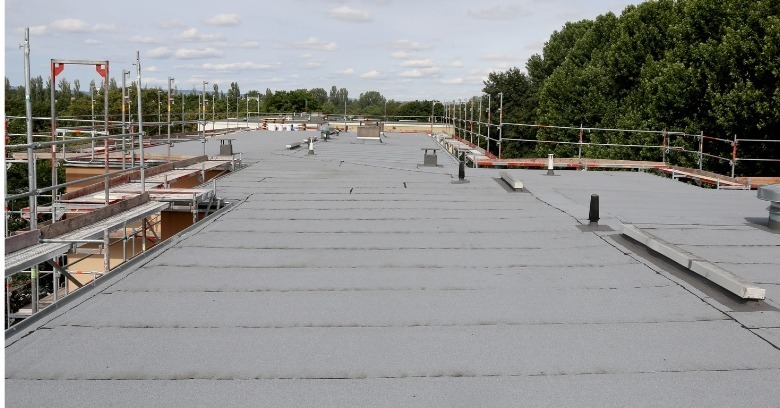
Customers, goods and running machines fill the space beneath the covering, and a leak can halt sales rather than just mark a ceiling. A big footprint is covered at a gentle grade, so drainage and wind resistance are worked out by calculation.
Condensing units, exhaust stacks and antennas are spread across the top, and every pipe, duct or support must have a sealed opening. The work done below decides which assembly suits, so a refrigerated plant is specified unlike a clinic.
Kinds of Low-Slope Covering: a Short Guide
One flexible layer of TPO, PVC or EPDM is what single-ply describes, modified bitumen is rubberized asphalt sold by the roll, and built-up roofing is felt sealed with hot tar several plies deep. A walk-behind welder fuses the overlaps on thermoplastic material, but rubber gets primer and tape at every splice.
Restaurant hoods blow grease out beside the fans, and EPDM and asphalt swell and weaken beneath oily residue, so PVC usually covers the affected stretch. A built-up roof topped with gravel is heavy and long-wearing, and the rock cover screens the bitumen from the sun.
Commercial Steel – Details Worth Knowing
Exposed-fastener sheets are secured with screws through the flats, and the threads bite into the purlins beneath. Rubber washers under the heads harden and crack in the sun, and thermal movement works the fasteners loose over time.
Standing-seam panels attach with clips tucked under the raised seams, and the pans shift slightly through the day. Rust tends to appear at side laps and cut edges, and a retrofit coating can give sound metal more years of service.
The Deck – Why the Base Counts
How the system is held down is set by the structure under the insulation, and a reroof almost never replaces the framing. Corrugated steel gives screws a firm bite, concrete wants adhesive or expansion anchors, and wood planking takes ring-shank nails or plates.
Water held against a metal deck for years can thin the sheet, and a weakened section is taken out and replaced before new layers go down. Wherever the interior is exposed, the underside gets a look from a lift, and a few test openings from the surface fill in the gaps.
How a Membrane Is Secured: Choosing an Approach
Mechanically fastened sheets carry rows of plates and screws in the laps, fully adhered systems are glued across the whole underside, and ballasted sheets are held down by rock or pavers. Height, exposure and the deck below guide the selection, and a frame with no spare capacity rules out a heavy layout.
Between the plates, a fastened sheet balloons in stiff gusts, whereas an adhered sheet stays still but needs a clean, dry substrate. On ballasted work an inspection drags, because the stone or pavers must be moved aside to expose a seam.
Gusts and the Membrane – Numbers Behind the Pattern
The strongest suction lands at each corner, since the flow tumbles and speeds up on turning over the edge. Along the sides, a narrower band sees a little less, and the interior bears a light load.
Fasteners go in closer together near corners and edges, with spacing taken from code tables for the building's height and exposure. Where anchoring falls short, the membrane can lift at an outer angle, and a blow-off can run well across the field.
Thermal Resistance: Beyond Energy Savings
Polyisocyanurate panels cover the deck with offset joints, and a gypsum or fiber cover board commonly caps the stack. Insulation keeps utility bills in check, and tapered units can slope a dead-flat deck to the outlets.
Soaked foam gives up most of the thermal resistance, and the heavy mass adds weight and rusts a steel deck. Meter readings confirmed by cut cores trace the extent, and any spoiled patch is replaced, never roofed over.
Where Runoff Exits: Clogs and Standing Water
A basket-shaped strainer caps each interior opening, so debris stays out of the leader below. When the grate mats over, rain has nowhere to go, so a shallow lake forms across the low area.
Codes call for a backup outlet mounted above the main drain, and a stream from the upper spout shows the ordinary route has stopped. Standing water loads the frame with weight beyond the design, and a pool that outlasts a downpour by two days marks a low spot or a fouled strainer.
Tracing a Leak: Why Care Pays
A brown ring on an acoustic tile shows where rain reached the room, but the split in the sheet is often somewhere else entirely. Steel decking guides runoff down the corrugations, and seams in the foam layer offer extra routes.
Up top, the laps, curbs and outlets uphill from the mark are inspected, and a flood test on a small section can reveal a stubborn leak. A patch placed right over the wet ceiling often misses, so a fresh ring appears in the next shower.
Cabinets and Condensate – Practical Notes
Each large machine stands on a raised curb, and a flashing sleeve climbs the walls to a formed metal hood. The corners are the fussiest detail up there, and a small gap lets wind-driven rain into the structure.
A replacement condenser frequently arrives on an adapter curb nobody flashes, and the ceiling underneath begins to spot. Condensate lines left dribbling onto the membrane grow algae, and a short extension to a drain ends the problem.
Everything Else That Passes Through: Handling Each Type
A snug molded boot slides over each round stack, and anything irregular is dammed with a pan and filled with pourable sealer. Sun and seasons shrink the compound until cracks open, and adding fresh material is ordinary maintenance.
Gas lines and conduit are meant to float on movable supports, since a bracket screwed through the covering becomes a leak. A rubber pad beneath every foot distributes the weight, and the buffer takes the wear as everything expands and shifts.
Skylights, Hatches and Smoke Vents: Common Faults
Ultraviolet light leaves acrylic and polycarbonate hazy and weak, and fractures tend to start at the fastener holes. Water gets in through a hardened gasket or a loose frame joint, yet the membrane usually takes the blame.
The access hatch is lifted on every service visit, so the latch, springs and weatherstrip eventually give out. Automatic smoke vents must deploy when heat melts a link, so nothing placed during roofing work may pin the covers down.
Parapet Walls and Coping: Common Trouble Spots
The membrane turns up the vertical face as base flashing, a termination bar holds the top margin, and counterflashing hangs down to shield the fastened line. Coping over the crest steers rain to either side, yet a gap between sections funnels runoff downward.
Brick and block that have weathered let water migrate indoors, and the resulting mark resembles a roofing defect. A proper look takes in the coping, the flashings and the wall along with the sheet, and cracked mortar gets repointed rather than smeared with sealant.
Fascia Metal at the Outer Edge: Holding the Line
The folded hem of the flange hooks over a cleat on the nailer, and a strip of membrane seals the joint on top. Codes want perimeter pieces that pass uplift testing for the site, since loose metal becomes a lever that gusts use against the field.
Commercial gutters catch far more runoff than a house ever sends, so hanger spacing and outlet size follow the flow. Any trim that has bent or lifted needs fixing, because a firm refastening spares the sheet a blow-off.
Service Visits and the Membrane: Protecting the Sheet
Refrigeration and heating crews climb up to the equipment month after month, and a worn lane appears between the hatch and the units. Screws left lying about are pushed into the membrane by work boots, and a cabinet panel leaned on a corner cuts a slit.
Walkway pads set out a marked route to the equipment, and the abuse lands on something made to take the wear. Property managers can ask each contractor to keep off bare membrane, and cut-offs and fasteners go down with the worker who carried up the parts.
Scheduled Inspections: Timing and Tasks
A commercial system benefits from a walk-through twice annually, plus a further check after a storm with high wind. Upkeep includes emptying every strainer, every lap is probed for loose spots, and the sealant at each pocket is inspected.
Before the stormy part of the year, attention goes to outlets and perimeter flashing, and the next round, after a hard season, searches for fresh movement. Little defects go into a log, each tied to a spot on the plan, so decisions can be made calmly and in advance.
Keeping Track of a System – a Long Memory
A clear drawing pins down the position of each unit, drain and hatch, and the assembly is described from the structure to the membrane. A dated photo log follows each repair, and cut samples and infrared findings get appended.
Plenty of older buildings arrive with no history at all, and each roofer who climbs up has to investigate afresh. Documentation stays with the building, and a copy can go to a successor or a buyer.
Choosing the Scope – Matching Work to Condition
Where the sheet is healthy apart from isolated defects, patching is enough, while a tired but dry surface can carry a silicone or acrylic layer. Extensive saturated boards make the job a replacement, and so do seams that crack wherever flexed, though years alone never decide the matter.
A silicone or acrylic coat demands a clean, mended substrate, and material below that holds water never dries out. Removing only the ruined parts can make sense as a middle option, where the surrounding membrane still has life left.
The Reroofing Decision – the Rules and the Reasons
With a recover, the old sheet stays and a new membrane goes over the top, and a cover board separates the surfaces. Codes permit an overlay on a single existing covering, and only where the insulation underneath is dry.
A tear-off strips everything down to the structure, so rusted or soft decking gets fixed in the open. New tapered insulation can correct ponding during the same project, and a cricket between outlets divides the flow.
Warning Signs – Reasons to Call
- Splashing from the upper overflow opening, which betrays a choked everyday outlet.
- A tan mark on acoustic tile that keeps growing, which means leakage has crossed every layer.
- Dark streaks running down the outside wall below a scupper, which can suggest flashing trouble near the top.
- A gravel stop that moves when a gust hits, which can hand a gale a lever.
- Ponding visible from a higher window days after rain, which may reflect a depression or a sluggish drain.
- A skylight whose plastic has turned chalky, which is ready to fail at the frame or under a load.
- Drops falling onto shelving during a downpour, which often traces back to a lap or a curb.
- A gutter pulling away from the hangers, which can soak the wall and the ground below.
How APC Roofing Carries Out Commercial Roof Repair in Daytona Beach Florida – Step by Step
The drains, scuppers and overflows get our attention before anything else, and next we go along each lap, curb and edge. If there is a leak, the layers under the membrane are tested, because saturation below changes the answer.
Each visit ends with a written account, a plan sketch and photographs, and each problem is labeled with a location. Each proposal names a choice: repair, restore or replace, and you get reasons to weigh for yourself.
Commercial Roof Repair Across Daytona Beach Florida: What Needs Doing Up Top
Call us at 386-356-2111 and a time to look things over gets agreed.
Sharing the Building – Planning Together
Fastening into metal decking carries a racket into the offices underneath, and glue fumes can travel down through open intakes. Noisy steps are discussed with the manager beforehand, and vents close to the work can be blocked until curing ends.
A crane or chute takes stripped material to a bin, and desks and machines under an open section can be shielded. A water-borne glue smells much milder than a solvent type, and the gentle option fits a store that stays open.
Sequencing a Big Replacement: Planning the Steps
A careful tear-off exposes only what can be dried in before the crew leaves, and each opened area is made tight again as stripping advances. A night seal links the finished part to the untouched field, and the patch is trimmed off when roofers return.
How much is stripped depends on the weather outlook, so an approaching storm means a smaller opening. Unprotected boards caught in a cloudburst soak through, and leaks can then reach stock and staff below.
The Weather We Work In: Timing and Materials
At the colder end of our territory, hailstones and drifted snow are real concerns, which argues for tough cover boards and a structural check. Sunlight and heat wear down a membrane in all of our markets, and a white reflective surface cuts the warmth absorbed.
Hurricanes at the coastal end raise the bar for anchoring, and heavy tropical rain calls for extra overflows. Glues and primers carry a temperature floor, but a welder copes with cool air far better than with a shower.
Fall Protection Up Top: Practical Precautions
Many low buildings have no wall at the perimeter to catch a misstep, and anyone close to the edge wears a harness tied to an anchor. Plastic skylights break under someone who stumbles onto the dome, so every opening should get a screen or a railing.
Permanent anchors help everyone who services the units, and a safety gate at the ladder completes the setup. A missing screen or warning line is flagged in our findings, because a fall from a low roof can still be serious.
When you need Commercial Roof Repair in Daytona Beach Florida, speak with APC Roofing at 386-356-2111. We will go over the entire field, drain by drain and seam by seam, and a written report follows, with the next step up to you.
Verified

Verified
Verified
Verified