
The storm passed, and now there are shingles in the yard, a gutter hanging loose or a stain spreading on the ceiling. You need storm damage roof repair in Orlando, and you need to know how bad it really is, whether insurance comes into it, and who you can trust when strangers are already knocking on doors up and down the street.
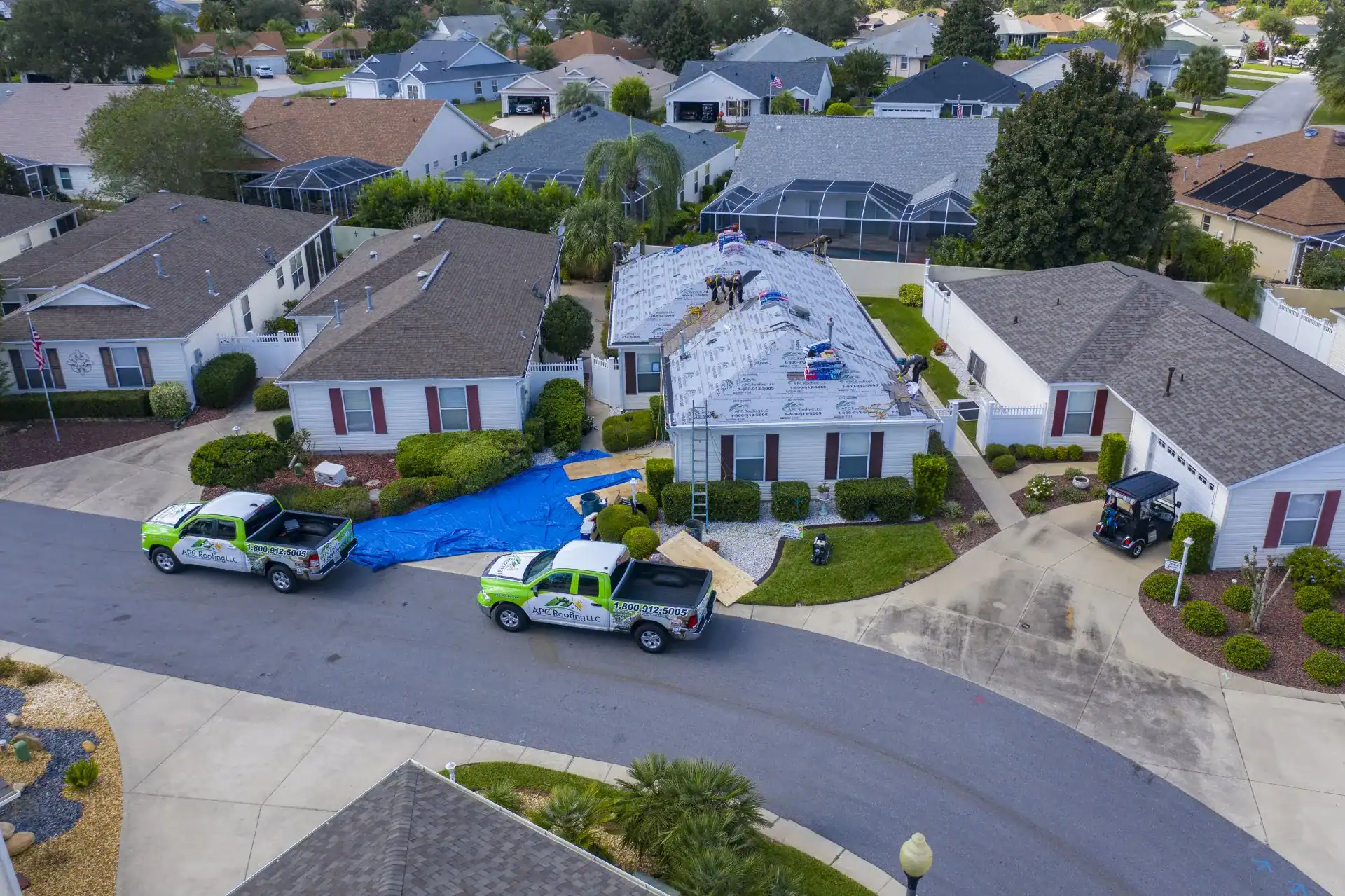
That’s a stressful spot to be in, and it’s normal to feel rushed. You don’t have to sign anything today. You deserve an honest look at the damage, in writing, before you decide.
APC Roofing is a GAF Certified roofer, licensed in Florida (CCC1337030) and insured. We inspect, document and repair storm-damaged roofs across the greater Orlando metro area, on homes and on light commercial buildings. Inspections and estimates are free. Call 407-270-1129 to set up a visit.
What Central Florida storms do to a roof
Orlando roofs take weather from two directions. Summer brings a thunderstorm most afternoons, with heavy, wind-driven rain and sometimes hail. Hurricane season runs from June through November, and a single strong storm can do more damage in a few hours than years of normal weather.
Wind damage
Wind doesn’t push evenly on a roof. It pulls hardest along the eaves, the rakes, the ridge and the corners. Each shingle is held by nails and by a factory sealant strip that bonds it to the row below. A strong gust can break that bond across a whole run of shingles without moving anything right away. The trouble shows up in the next storm, when the loose tabs lift and water reaches the nails. A shingle that gets folded back creases, and that crease stays weak. Our wind damage roof repair page goes deeper on this.
Hail damage
Hail isn’t as common here as in the Midwest, but strong Florida thunderstorms do drop it. A hailstone knocks granules loose and can bruise the shingle underneath. Those spots age faster than the rest of the roof. You’ll often see the clue in your gutters (a handful of granules) or as fresh dents on gutters, vents and the AC unit.
Falling limbs
A heavy branch drives all its weight into one spot. The shingle on top might only look scuffed while the decking underneath has cracked. That’s why a storm inspection has to cover the attic as well as the roof.
Wind-driven rain
Roofs are built to shed rain falling down. Sideways rain in a hard storm can get past flashing, through gable vents and behind siding. Sometimes a leak during a storm doesn’t mean the roof is damaged, and it’s worth confirming that before anyone opens up the roof.
Signs of storm damage to look for
From the ground and inside the house, watch for:
- Missing, creased or lifted shingles, especially along the edges
- Granules piling up in the gutters
- Dented or cracked vent caps and pipe boots
- Gutters pulled away from the fascia
- Daylight through the roof boards in the attic
- A ceiling stain that grows after each rain
- Water inside a skylight frame
If water is dripping from a light fixture, turn off that circuit at the breaker first. Please don’t climb on a wet or damaged roof to check.
First, keep the water out
A tarp can protect your home until repairs are done. It should run over the ridge and down both sides, and be fastened down rather than weighted with bricks, which blow off in the next gust. It isn’t a repair. A tarp left up for months can damage the shingles under it.
How storm damage gets documented
Good documentation matters, whether you file a claim or not. We photograph the whole house while the damage still looks the way the storm left it, measure each damaged area and note where it is on the roof. Gutters, vents, boots, skylights and trim get checked too, since they often show how hard the roof was hit. The attic gets a look for daylight, wet wood and rusty nail tips.
You get a written report in plain language. If you decide to file a claim, we’ll provide the estimate and work with your adjuster so everyone is looking at the same facts. You file your own claim and pay your own deductible. Our insurance roof claims page explains that process, and our hurricane damage roof repair page covers the bigger storms.
Repair or replace after a storm?
A few lifted shingles or a cracked boot can be repaired. New shingles won’t match a weathered roof exactly, so a patch on the front of the house may show. Some homeowners are fine with that. Others would rather redo one full side.
When damage is spread across most of the roof, or the shingles have lost their seal in many places, replacement often makes more sense. We’ll walk you through the photos so you can see the difference for yourself.
For business owners, storm damage on a flat or low-slope roof needs its own approach. See our commercial roof repair page.
How it works with APC Roofing
- Book your free inspection. Call 407-270-1129 or request a free online estimate.
- Get a clear, honest assessment and estimate. You’ll get photos, measurements and a written report, with every recommendation explained. You decide what happens next, with no pressure.
- Get your roof repaired and the site cleaned up. The crew does the work and clears away the debris before leaving.
Financing is available through Aqua Finance, Fortifi, Hearth and Home Run Finance.
Storm damage roof repair questions
How do I know if my roof has storm damage?
Look for missing or lifted shingles, granules in the gutters, dented vents and new ceiling stains. Some damage, like broken seals and bruised shingles, only shows up on a hands-on inspection.
Should I sign with a roofer who knocks on my door after a storm?
Take your time. A contract is binding, so ask for a copy to read overnight. Check the Florida license number and look for a company with a local office you can find again later.
Will insurance pay for storm damage?
That depends on your policy and what caused the damage. We document it so you and your adjuster have the same facts. You file the claim and pay your deductible.
Do you repair storm damage on commercial roofs?
Yes. We work on light commercial and flat roofs as well as homes.
Back to a roof you can trust
Storm damage tends to grow. A shingle that lost its seal gives way easier in the next storm, and water that reaches the deck spreads into insulation and drywall. You don’t have to fix it all at once. It just helps to know what you’re dealing with.
The next afternoon storm rolls through, and you hear the rain without worrying about it. That’s what you’re after: a sound roof, a dry house, no surprise bill and confidence in your decision. Call 407-270-1129 to book your free inspection, or start with our free online estimate.


















