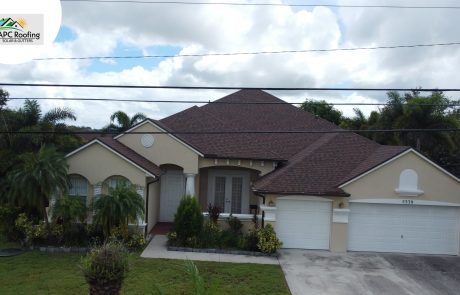
Looking for Storm Damage on a Family Home in Independence Missouri?
APC Roofing examines a slope in the calm after a rough spell, measuring every mark before anything is touched.
Call us at 913-398-5020 and set a time for a roofer to stop by.
Airflow Over a Sloped Roof: Not Spread Out Evenly
The eaves, the rakes and the ridge carry the heaviest load of any gust, and a wide center area sees far lighter duty. A draft finding a way beneath a raised flap levers the course set over the flap, and a single fastener ends up holding that shingle down alone.
At a house corner, wind rounding two exterior faces collides, and builders space the attachment points closer together at that spot. A row of shingles at that outside edge carries more push than a row set farther out, so extra fasteners there exist for exactly that reason.
A Roof's Quiet Final Step – Made by Warm Weather
A bead of adhesive runs beneath every shingle, and a firm hold forms there, doing much of the work, not nails alone. A sharp gust can tear a bond apart across a length of roof, and the shingle shows no gap at all.
A broken seal stays quiet for the next windy spell, and a fastener gets wet as soon as that joint fails. A single shingle off a bond hurts nothing taken alone, but a cluster of parted shingles makes a real opening.
A Rating Printed on a Wrapper: Worth a Second Look
A laboratory fastens new shingles to a test panel and seals every tab by hand, and moving air is then driven across the surface at a measured speed. A covering installed for years responds differently on a rough day than unweathered material would, and a bench rating stops matching a roof once real weather sets in for good.
A fastener placed high of the nailing band grips a smaller area than a maker intended, so a slope lets go sooner than a printed number suggests. A weathered mat behaves differently from the sample once tested at a factory, and a laboratory rating fits new construction, never an older roof.
Ice From the Sky: the Part That Matters
At the colder end of our territory, spring storms drop the heaviest stones, and even a brief burst can cause lasting dents. An impact packs the top dressing into the body of a shingle, leaving a tender patch that feels different from the sound surface nearby.
The core doing real waterproofing lies under a shingle's visible face, and a fault at that depth is never merely cosmetic. A hail-marked shingle gives up service life sooner than a sound shingle nearby, and a slope carrying many such spots fails unevenly over time.
Beyond the Roofline – a Second Place to Look
What a thick shingle takes without complaint can bruise a light-gauge trim piece, because bent material never straightens back out without help. A split boot at a plumbing stack lets water run down the outside of a pipe, and a ceiling below takes drips within a day or two. A dented gutter can still carry water as designed, but a flattened downspout holds a run's water behind a flattened point.
A pitted vent cap sits alongside a dimpled fascia and a scuffed drip edge on one visit, and pictures of trim sit beside pictures of the shingles in a report. Trouble in the metal fixtures seldom arrives without a shingle nearby in equally poor shape, and neither kind of damage shows up alone.
A Story in the Grit: Worth a Second Glance
Crushed rock on a shingle's surface stands between sunlight and the asphalt below, and exposure without that finish shortens a shingle's working life. Wind and rain together push stray silt toward a downspout, so a drift of sand at that point tells a roofer something worth knowing.
An uncovered patch of shingle weathers far faster than a covered one, and a covering left that way begins to fail in scattered places. A heap at an outlet is a rough measure of what washed down, and tracing grains back to that slope is straightforward for a roofer.
Rain That Arrives Sideways: Where Water Is Not Meant to Go
A lapped run of shingles handles whatever comes from directly above, so an angled gust finds a route no course was designed for. A turbine housing passes rain through once wind reaches a certain speed, so the deck nearby can darken with no tear anywhere on the slope.
What a Storm Drops From Above – Weighing the Impact
Considerable energy arrives through one narrow patch, and the framing bears force the finish alone never reveals. A plank can fracture with little sign of damage on the visible surface, which is why the attic gets a separate look after every storm.
A swaying bough polishes a bright curve into the granules a branch touches, and the outline stands out clearly once the pattern is known. Getting to a split panel calls for removing the covering above the crack first, which is why a small hit can turn into a larger job.
What the Attic Shows – What Daylight Reveals
Brightness passing through the framing tells where the covering gave way, and the precise location can be pinpointed against a truss or the end wall. Wet plywood darkens, and the tips of nearby nails often show rust, and the darkest mark generally sits closest to the actual opening.
A sunken patch in loose fill points to a regular drip somewhere overhead, and the fibers rarely spring back once squeezed that way. A driven shower through a vent can wet framing at the gable end, which spares a sound roof plane from being opened for no reason.
Down Where People Live: Signs Worth Tracing
A discolored area forms where a drop of rain finally let go, as water follows the wood down to the lowest reachable point. Blistered coating shows paint pushed away from behind by trapped moisture, which is why nobody should judge a covering by what shows up below.
Water reaching a ceiling fan is reason enough to cut power to that circuit, since the shock risk outweighs anything a bucket below can fix. Wetness along a wall below a chimney tends to follow the masonry closely, and the reglet sawn into the brick is examined as part of the same check.
The Metal Details on a Roof: Quietly Doing Real Work
Every wall unit up there is fastened and lapped at the same time, so the entire system is only as strong as the weaker of the two parts. Uplift at a gable can twist a strip of edge metal out of line, and the covering can begin to unzip from that corner inward.
Caps at the summit of a roof are unshielded on either side of the peak, and the seam stays unsealed the entire distance the instant that connection fails. Vent sections pulled free let weather straight into the space a vent once covered, so insulation across a wide stretch can end up wet, not just underneath.
What Lets Daylight In – Points of Failure
The frame under a skylight stands above deck level on purpose, and courses step around that rise in a set sequence. A hailstone can star the top layer of glass and leave the lower layer whole, and the assembly comes out complete rather than in pieces.
A dome hit by a falling branch can crack as force travels through the material, and a fracture from one storm can keep growing after that storm passes. Moisture trapped between the panes of a sealed glass unit means the edge seal has failed, which calls for new glazing, not a wipe-down.
When the Rate Climbs Too High: the Overshoot
Sheet flow off a wide slope can outpace the capacity built into that edge, so the excess spills across the fascia and onto the ground below. Anything gathering on the roof can pile up at the single opening meant to move debris onward, and a blocked length can sag out of line over time.
An Interim Measure – Anchored, Not Weighted
A sheet fastened over an opening can keep rooms dry while a proper fix waits, and that covering is never the end of the job. A covering run over the ridge and down both slopes moves water downhill as designed, which curbs a sudden surge from ripping the covering free.
Loose weight on top rarely secures a sheet once the gusts pick up, and a house can end up exposed again for anyone to see. Putting fasteners through good material creates problems nobody had before, which keeps the rest of a slope free of new punctures.
Sizing Up the Aftermath: a Simple Trail
Close-up shots are captured from several angles while marks are still clear, and every face of the house gets included in that record. A short account describes the shape and extent of each damaged spot, since scale is difficult to judge without a fixed reference.
Wind keeps moving debris that an earlier storm loosened, so a fresh look afterward can turn up something different entirely. A request for documentation gets the same file kept on hand, and none of that material gets altered for anybody's benefit.
When Everyone Arrives Together – Slow Down Before Signing
Unfamiliar trucks can move street by street once skies have cleared, and a portion of that traffic disappears once the season ends. A document filled out on a porch becomes a binding paper on the spot, and nobody should feel rushed through terms that matter.
A firm listed at a local address remains easy to reach later on, which is no small consideration when picking who does the work. Being rushed toward a decision before an inspection happens is a warning sign, and a reliable roofer has no trouble giving a homeowner time to decide.
How Weakness Builds Up: Picking Up Where Things Left Off
A slope carrying broken seals meets the next gust already at a disadvantage, and each following round can claim more than the round that came first. A shingle folded once in a strong wind carries a crease from that event onward, so a shingle in that condition becomes a solid candidate for replacement.
A second wave of runoff can travel past a roof deck and straight indoors, so work that started on a roof can spread into the rooms below. Sheathing soaked more than once loses grip on the fasteners driven into the wood, and new material fastened there in that state will not hold securely either.
Marks Worth a Closer Look – From the Yard to the Attic
- Bare patches where a shingle used to sit, on any elevation of a house.
- A dimpled fascia cover or downspout, unchanged by anything since the storm.
- Coarse sand lying in a trough, noticeable at cleaning time.
- Light where there should be none up top, near a vent or a stack.
- A bubble in the finish of an upstairs ceiling, often in a top-floor room.
- A soft spot in the wallboard near a corner, drying out between storms.
- Water standing on the inside of a skylight frame, or daylight showing where the unit meets the roof.
- A gutter hanging away from a fascia board, after a heavy limb came down.
How APC Roofing Takes On Storm Damage in Independence Missouri: Plainly Explained
Our roofer opens with a slow circuit of the house from ground level, and dented gutters or downspouts get photographed up close from below. Every accessible section of the roof gets covered in person, and the framing gets checked from inside once the surface pass is done.
The pictures and dimensions go into a plain account kept on file, and every finding stays tied to a specific spot on the roof. A recommendation comes with the reasoning laid out step by step, and what happens after that is entirely up to the homeowner.
Storm Damage Throughout Independence Missouri: Straight Answers After Bad Weather
Reach us at 913-398-5020 and describe what is showing up indoors.
A Slope Massed With Snow – Ready for Tougher Conditions
In the colder end of our territory, a deep white blanket bears down on the framing beneath, and wet, packed snowpack weighs far more than dry powder ever does. Ice built up along an eave can hold meltwater back behind that ridge of frost, so a leak from that kind of blockage can show up on an exterior wall.
Across the colder end of our territory, snow blown off one plane lands on the plane below, so the load across the framing ends up uneven rather than balanced. A sheet coming free from a metal surface can drop without warning, so keeping the ground clear beneath that overhang is worth doing.
The Toll Taken Near the Water: Fatigue Builds in Hardware
At the coastal end of our territory, a tropical system can settle over a house for most of a day, and metal surfaces along the coast face more frequent exposure to salt spray. Repeated flexing over many hours can loosen what a quick gust would not touch, which is exactly why hardware spacing matters more in that harder-hit zone.
Rain driven sideways can get behind siding as well as under shingles during a hard storm, and the attic is far from the only place moisture like that turns up. Codes at the coastal end of our territory call for more fasteners per shingle, so replacement pieces go on using the stricter local pattern.
A Patch on an Established Surface – Getting as Near as Possible
Fresh bundles come out brighter than a covering long weathered outdoors, and the surrounding roof ends up setting the visual standard. Replacement shingles near a driveway can catch the eye of anyone passing, and time takes some of the edge off a mismatch like that.
When a specific line has been dropped, a similar design takes over that spot, and the outline rarely lines up with total precision. Scattered repairs across one plane tend to stand apart from a distance, and doing one full side fresh looks far more deliberate than a piecemeal approach.
Signs of Careful Work – a Short Checklist
The row over a repair sits flush against the deck below, and the joints stagger the same way the earlier courses did. Flashing goes under and over the layers as the design intends, and caulk never ends up as the thing actually keeping water out.
No fastener shows on the visible face of a completed area, and every course sits flush rather than sinking in too deep. A photo of new work, dated, becomes useful the next time a question comes up, since a later inspection can see exactly what section was replaced and when.
If you searched for Storm Damage after bad weather in Independence Missouri, reach APC Roofing at 913-398-5020 to have a roofer come out to the house. Every mark gets checked, measured and photographed on the visit, and the options get laid out along with the reasons for every option.
Verified

Verified
Verified
Verified
Verified