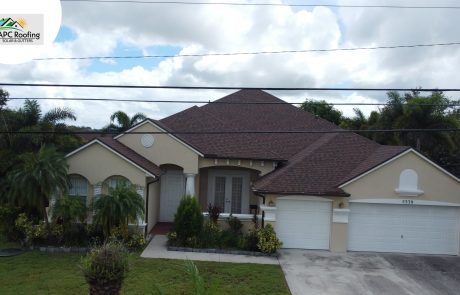
Asking About Hurricane Damage Roof Repair for a House in Palm Coast Florida?
APC Roofing walks a slope after a hard night outdoors, measuring every mark before anything is touched.
Call us at 386-356-2111 and describe what you are seeing from indoors.
Wind Against a Roofline: Not Spread Out Evenly
Pressure concentrates at the eaves, the rakes and the ridge, while an open middle section stays comparatively calm. Air slipping beneath a raised lip pushes upward on the shingle set over the lip, and one fastener beneath a course answers for the whole pull from there on.
A house corner throws wind into small eddies, and that area gets held down harder during construction. A course beside a structure's outside edge bears a heavier load than a course out in the open, and a crew's added fastening there answers exactly that need.
A Last Step the Sun Finishes – Made by Warm Weather
A band of adhesive along a shingle's underside catches the row sitting below, and nothing else secures a shingle's lower edge. A sharp gust can tear a bond apart across a length of roof, and the shingle shows no gap at all.
A broken seal stays hidden until the wind picks up again, so nail heads take on whatever weather follows. Taken alone, a single loose shingle is no emergency, but a cluster of parted shingles makes a real opening.
What a Bundle Label States: Read With Care
A test rig holds freshly made stock to a deck with every bond formed on purpose, and only then does a machine bring the airflow up to speed. A roof already carrying a season or two of harsh weather no longer behaves like unweathered asphalt, so a rating drawn from the original goods does not describe an aged roof.
A nail set too far up misses the layer a shingle relies on for a full hold, and the wind needed to lift a shingle turns out lower than expected. A shingle ages from the moment installation finishes, and stiffness follows, and a laboratory rating fits new construction, never an older roof.
Ice From the Sky – a Mark With Depth
Stones grow largest in storms that cross the colder end of our territory, while milder weather reaches every other market too. A strike drives surface granules down into the asphalt underneath, and the struck spot goes soft under a thumb.
A backing under the grit is where waterproofing happens, and a fault at that depth is never merely cosmetic. A damaged section of a shingle breaks down ahead of the surface nearby, which shortens the years a covering has left.
The Overlooked Fixtures: Easy to Walk Past
A hit the asphalt handles fine dents soft metal beside a struck slope, and nothing pushes a bent surface back into shape once calm returns. A boot opened by a strike lets water follow a pipe downward instead of around a pipe, and a wet patch shows near an interior wall soon after. A gutter knocked about at the front still moves water as designed, though a squashed downspout keeps the length above a squashed section from emptying out.
A marred cap, a marked fascia and a pockmarked drip edge all get read together, and every mark gets photographed along with the shingle damage. Trouble in the metal fixtures seldom arrives without a shingle nearby in equally poor shape, so marked shingles hardly ever stand next to hardware with no marks at all.
A Trickle of Sediment: Worth a Second Glance
Colored granules bedded into a shingle block sunlight from reaching the asphalt below, and a bare patch left exposed hardens and splits within a season. Heavy rain sweeps freed grains down toward a downspout outlet, and a heap of sand there says a great deal about the slope above.
An uncovered patch of shingle weathers far faster than a covered one, so a minor patch grows into a larger fault over time. Sand in a gutter run is material the roof no longer carries, so a look at that spot after a storm is worth the effort.
Rain That Arrives Sideways: Why a Sound Roof Still Drips
Every overlap in a shingle assembly assumes gravity alone does the moving, but pressure coming from the side changes the entire calculation. An open soffit can draw damp air upward into the attic space, which reads indoors like a fault in the shingles that is not really there.
What a Storm Drops From Above: More Than a Scrape
Sudden momentum drives an entire mass through one narrow point of contact, and the framing takes the full brunt of that force. Sheathing under a strike can split while the shingle above shows only a graze, and a roofer finds the break by tapping the deck and by checking from the attic.
A swaying bough polishes a bright curve into the granules a branch touches, and the mark is lighter than the surrounding material. Reaching a cracked board usually means lifting the shingles above the break, and the work grows once the true extent becomes clear.
What the Attic Shows – Quick to Check
A pinprick of brightness through the roof boards points to a hole, so a person can pin down the location before ever climbing outside. Damp sheathing stains in a pattern that follows the path water traveled, and the darkest mark generally sits closest to the actual opening.
A sunken patch in loose fill points to a regular drip somewhere overhead, and material packed down that way stops insulating long before the fibers look worn. A louver can admit rain into the far end of an attic during a hard blow, and the answer in that case is a baffle behind the slats, not a repair to the surface.
Down Where People Live: Tracing a Source Upward
A blotch overhead turns up where a trickle gave out, not where the leak began farther up, and the true entry point can lie well uphill of the visible blemish. A seam that has opened shows the panel swelled and then dried out, and the size of a stain has little to do with the size of the opening above.
A drip at a fan or a light is reason to cut the breaker without delay, because live wiring beside standing water is the greater danger. Dampness at the top of a wall adjacent to a chimney can run down inside the chase, so counterflashing set into the mortar gets a close look in a case like that.
Where Surfaces Come Together – Small and Critical
The assembly at a wall junction depends on staying tucked beneath the shingle layers while nailed in place at once, and a failure at either point alone can let rain through. A squall catching the end of a course can tear the drip edge loose, which turns a small opening into a bare run of exposed flashing.
Ridge-cap fasteners bite directly into the deck beneath the caps, and slack fastening opens the seal on the seam sitting beneath. A section that lifts leaves an unbroken slot running the same length, so insulation across a wide stretch can end up wet, not just underneath.
Openings for Daylight – Points of Failure
A curb under a skylight is built above deck level for a reason, because water must never arrive at that base head-on. A hailstone can star the top layer of glass and leave the lower layer whole, and the assembly comes out complete rather than in pieces.
Debris striking a plastic dome can leave a pattern that spreads with heat, and warm weather can lengthen a split that started out tiny. Cloudiness inside the glass is a broken seal, not everyday dirt, and no amount of daylight cures a fault hidden from view.
Swamped Within Seconds – Watching for the Backup
A cloudburst can push more water at a trough than that trough can hold, which sends standing water toward the wall rather than clear of the house. Buildup at a drop point can turn an entire drain line into a stagnant pool, which puts strain on brackets never designed to take that much moisture.
A Placeholder, Nothing More – Out There Overnight
A tarp over an opening can hold the line for a few days at most, and that covering is never the end of the job. A covering run over the ridge and down both slopes moves water downhill as designed, and screws for that step land in framing, not merely in the covering.
Loose weight on top rarely secures a sheet once the gusts pick up, and a house can end up exposed again for anyone to see. Driving nails through sound shingles just to hold a cover adds new leaks later, and the solid part of a roof stays untouched by that kind of work.
A Plain-Language Summary of the Damage: a Simple Trail
Every affected area gets photographed before anything is disturbed, and the record shows the roof exactly as things stood after the storm. Comments in everyday language accompany a description of each spot, so the size of a mark gets set down, not guessed.
The next rain shower can change what is visible on a damaged slope, and the earliest check usually captures the fullest state. Any review of the property draws on findings written up in ordinary language, and none of that material gets altered for anybody's benefit.
Strange Faces at the Curb: Worth a Second Thought
Crews from far away can show up in numbers soon after severe weather, but not every outfit working the area is a problem. A form signed at a front door binds a homeowner like any other contract, and nobody should feel rushed through terms that matter.
A roofer with a nearby yard is easy to track down if a question comes up, and a fresh look stays possible if new facts turn up. An offer that expires while a truck sits in the driveway is not a real offer, so there is no harm in declining to agree to anything on the spot.
What a Repeat Visit Brings – What Gets Left Behind
A slope carrying broken seals meets the next gust already at a disadvantage, and less force is required with each fresh round of damage. A creased shingle carries a line that later sun cannot undo, and water can find that same flaw on a future occasion.
Once framing has taken on water before, a fresh leak follows the same open path, and the list of materials still needing work can lengthen quickly. Sheathing soaked more than once loses grip on the fasteners driven into the wood, which turns what should be a simple job into a larger, structural one.
Marks Worth a Closer Look: Notes Worth Keeping
- A course lifted clear of the row beneath, easy to spot from a sidewalk.
- Bruises along an aluminum edge, on the faces that took the worst of a storm.
- Sandy drifts along a gutter run, noticeable at cleaning time.
- Sky seen through the boards overhead, with an attic lamp switched off.
- A bubble in the finish of an upstairs ceiling, often in a top-floor room.
- Staining on both sides of a chimney chase, with no plumbing anywhere close by.
- A cracked dome over a light shaft, on any unit facing the weather directly.
- Gutter spikes backed partway out of the wood, where a fall has gone visibly wrong.
APC Roofing and Hurricane Damage Roof Repair in Palm Coast Florida – A Closer Look
Our roofer opens with a slow circuit of the house from ground level, and stray pieces scattered nearby offer the first clue about what gave way overhead. A roofer moves across every plane that can be walked safely, and the space beneath the deck gets examined from the attic.
Photographs, measurements and notes get written up and handed over in plain language, and every finding stays tied to a specific spot on the roof. Each recommendation arrives together with reasons that hold up under questions, and a homeowner decides from there without pressure either way.
Hurricane Damage Roof Repair in Palm Coast Florida – Inspected and Measured
Call 386-356-2111 to have a roofer come out.
Snow Held Overhead – A Roof Under Extra Demand
At the colder end of our territory, a heavy fall can sit on the framing for days, so the load stays in place long after the clouds clear. A frozen edge at the gutter line can trap runoff on the slope higher up, and water held back that way can find a path up under the lowest courses.
At the colder end of our territory, drifts pile up in valleys and beside dormers, so the load across the framing ends up uneven rather than balanced. Material breaking free can damage anything sitting beneath the eave, which is why guards get installed in some exposed spots.
Extra Wear Near the Shoreline: Fatigue Builds in Hardware
The coastal end of our territory sees systems that last from morning into evening, and gutters and flashing there can corrode faster given the salt in the air. Hours of steady pressure can rock nails back and forth within a fastener hole, and fastening along the edges carries much of that extended strain.
Water thrown at a house again and again can test every joint in the building envelope, so a sound roof can still let water indoors even after conditions calm down. Along the coast, roofs typically go on with extra fastening at rakes and eaves, which any patch in that region has to respect.
New Work Beside Old – Getting as Near as Possible
Material from a current production run differs in tone from shingles baked by years of sun, and the difference shows plainly in low, slanting light. New shingles near the front of a house can stand out as a separate block, while work on the back of a house draws far less attention.
When a specific line has been dropped, a similar design takes over that spot, which is worth knowing before work begins. A slope covered in individual patches tends to read as pieced-together rather than one continuous surface, and redoing that whole slope from eave to ridge is sometimes the tidier outcome.
The Completed Slope – the Details That Hold Up
The row over a repair sits flush against the deck below, and the reveal of each course matches the courses nearby. Flashing goes under and over the layers as the design intends, and the overlaps alone do the real work of keeping water out.
A fastener lands in the strip built to receive a nail, and the count per shingle matches the maker's specification. A snapshot taken soon after a repair is worth saving for the future, since a later inspection can see exactly what section was replaced and when.
If a search for Hurricane Damage Roof Repair brought you here after a storm in Palm Coast Florida, get in touch with APC Roofing at 386-356-2111 and a roofer will come out and look the covering over. Every mark gets checked, measured and photographed on the visit, and the next step gets described without any pressure attached.
Verified

Verified
Verified
Verified