Asking About Wind Damage Roof Repair Near Springfield Missouri?
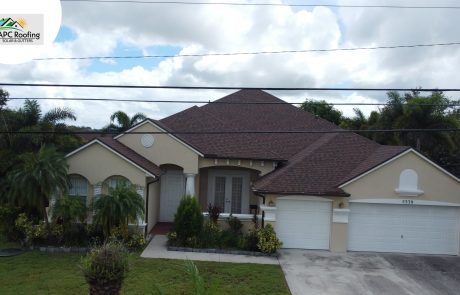
APC Roofing examines a slope in the calm after a rough spell, checking every edge and photographing what is there.
Call 913-398-5020 and a roofer will come out for a closer look.
What Fast Air Does to a Roof: a Pattern in the Corners
Pressure concentrates at the eaves, the rakes and the ridge, and a wide center area sees far lighter duty. Air that gets under a raised lip pries at the shingle set above the lip, so a nail under a shingle ends up doing the whole job alone.
Where two exterior faces meet, wind tumbles rather than running smooth, and that area gets held down harder during construction. A course near a structure's outside edge absorbs more force than a course out in the open field, so extra fasteners there exist for exactly that reason.
An Invisible Step in Every Install – Easy to Miss
Every shingle carries a strip of sealant that fastens down to the course beneath, and that formed hold is what stops rain from working up under a lap. Uplift can loosen a bond over a wide stretch, though nothing shifts out of place in the first hour after.
A course carrying a broken seal only reveals trouble when the wind stirs again, so nail heads take on whatever weather follows. A single shingle adrift on a wide slope is a small matter alone, but a whole run of parted shingles is an opening for the weather.
What a Bundle Label States – What Gets Left Out
Technicians secure factory-fresh material to a sample and close every seal, and moving air is then driven across the surface at a measured speed. A roof that has carried several seasons of weather no longer acts like unweathered shingles straight off a supplier's truck, so an early rating speaks to day one, never to a roof much later.
Placing a fastener above the strip reduces how much surface a nail can grip, and the wind needed to lift a shingle turns out lower than expected. A shingle ages from the moment installation finishes, and stiffness follows, and a laboratory rating fits new construction, never an older roof.
A Bruise in a Shingle's Mat – a Mark With Depth
At the colder end of our territory, stones fall heavier than anywhere else we cover, and even a brief burst can cause lasting dents. An impact packs the top dressing into the body of a shingle, and the struck spot goes soft under a thumb.
A saturated inner core actually keeps rain out of a roof, and a dent at that depth reaches the material that matters most. A hit section of a shingle ages on a shorter timeline than a sound section nearby, and a slope carrying many such spots fails unevenly over time.
Hardware That Also Suffers: Where a Blow Registers
A hit the asphalt handles fine dents soft metal beside a struck slope, so a mark from a storm remains long after the weather clears. A cracked collar no longer grips a pipe a collar once surrounded, so a stain indoors turns up close under the opening. A gutter knocked about at the front still moves water as designed, but a downspout pinched shut floods the run feeding a pinched downspout.
Lighter items up on a roof get checked the same way as the shingles, and pictures of trim sit beside pictures of the shingles in a report. A split collar, a warped flange and a battered gutter face rarely turn up without a shingle nearby in equally rough shape, and the damage on that hardware is a reasonable clue to how the shingles have held up.
What Ends Up in a Downspout: More Than Dirt
Small stones pressed into a shingle's face shield the material beneath the surface, which keeps a covered stretch flexible for years longer. Wind and rain together push stray silt toward a downspout, so a drift of sand at that point tells a roofer something worth knowing.
Bare spots widen as the sheet beneath a bare patch dries out, and small trouble in one place tends to spread outward from there. A heap at an outlet is a rough measure of what washed down, so a look at that spot after a storm is worth the effort.
Driven Rain on a Slope: Why a Sound Roof Still Drips
A shingle's lap directs a vertical descent down across the surface, which is why angled weather overwhelms defenses built only for a plumb, downward arrival. Off-ridge vents let spray past open baffles once wind picks up, so the deck nearby can darken with no tear anywhere on the slope.
A Falling Limb: More Than a Scrape
A concentrated load transmits pressure through only a few square inches of contact, and the framing takes the full brunt of that force. Boards can splinter under a blow the surface layer survives, and a roofer finds the break by tapping the deck and by checking from the attic.
Limbs raking a roof leave sweeping lines of exposed asphalt along the way, and the outline stands out clearly once the pattern is known. Repairing a fractured deck means opening the slope above the fracture, and the finished patch ends up wider than the mark visible above.
The View From the Rafters – What Daylight Reveals
A gleam between the boards signals a gap somewhere in the covering, and the location is clear well before anyone climbs onto the roof. Water leaves brown tide lines across the underside of a panel, so tracing the mark toward the highest point reveals the source.
A hollow pressed into batting shows a place where drips keep falling, and material packed down that way stops insulating long before the fibers look worn. Rain entering at an end wall can land nowhere near an actual hole above, and the answer in that case is a baffle behind the slats, not a repair to the surface.
What a Bubbling Ceiling Says: Reading the Stain
Discoloration overhead turns up well beyond the leak, not right next to the start, and the true entry point can lie well uphill of the visible blemish. Peeling alongside a joint says the board underneath stayed damp for a while, and a small mark can sit directly under a much larger fault.
Water reaching a ceiling fan is reason enough to cut power to that circuit, so nothing indoors gets touched until the switch is confirmed off. Staining on both sides of a chase usually points at the metal overhead, so counterflashing set into the mortar gets a close look in a case like that.
The Metal Details on a Roof: Quietly Doing Real Work
Every wall unit up there is fastened and lapped at the same time, and rain gets in the moment either point gives way. A squall catching the end of a course can tear the drip edge loose, and the damage travels along that whole run once the break starts.
Cap shingles at the crest take a steady buffeting during most of a storm, and slack fastening opens the seal on the seam sitting beneath. A raised end on a vent lets rain slip in under the baffle, and the mess found below often spreads well past the point of entry.
A Glass Opening After a Storm – Where Leaks Start
A raised curb holds a skylight's glazing clear of the shingles nearby, and shingles lap onto the sides of that structure in order. A blow can shatter the outer glass of the unit and spare the inner one, and the assembly comes out complete rather than in pieces.
Debris striking a plastic dome can leave a pattern that spreads with heat, and dampness can end up dripping into the shaft as seasons pass. Cloudiness inside the glass is a broken seal, not everyday dirt, and that fixture gets swapped rather than dried out.
More Than a System Can Take – Watching the Overflow Point
A sudden downpour can pass along more volume at once than a trough can handle, and whatever misses the channel runs down the siding underneath. Twigs and needles collecting at one spot can seal off an entire stretch of drain line, so weight from that backup can pull at the brackets holding a length in place.
What Bridges the Gap – Anchored, Not Weighted
A patch of poly over a break can buy time until conditions allow proper work, so nobody should mistake that covering for a completed repair. A covering anchored on both faces of a slope moves water the way overlapping courses would, which curbs a sudden surge from ripping the covering free.
Anything simply sitting on top can leave with the next hard blow, and a gap in the covering can scatter granules in the same blast. Fasteners set into an undamaged course create holes that need sealing afterward, and the solid part of a roof stays untouched by that kind of work.
Noting the Details Early: What a Roofer Writes Down
A camera goes over the roof while the marks a storm left are still fresh, and every face of the house gets included in that record. A short account describes the shape and extent of each damaged spot, because a mark's true size is hard to judge without a reference point.
A broken covering rarely stays exactly as the first storm left the surface, so a fresh look afterward can turn up something different entirely. Whatever gets requested for review comes from that same set of photographs and measurements, and that plain account is the whole of a roofer's part in the process.
A Line of Unmarked Rigs: Take a Moment First
Vehicles with out-of-area plates can work a neighborhood for days after a big storm, and a portion of that traffic disappears once the season ends. Paperwork handed over on a driveway still counts as a real contract, so a careful reader takes that stack of pages inside before making any commitment.
A company with a local address can be found again months after a job ends, and follow-up down the road stays possible with that kind of outfit. Urgency coming from a salesperson rather than the condition of a roof deserves suspicion, and a reliable roofer has no trouble giving a homeowner time to decide.
What a Repeat Visit Brings – What Gets Left Behind
A slope carrying broken seals meets the next gust already at a disadvantage, which is why trouble on a battered roof tends to accelerate. A creased shingle carries a line that later sun cannot undo, and granules often shed heavily from exactly that spot.
A path opened by one storm lets the next storm's water travel further, so work that started on a roof can spread into the rooms below. Sheathing soaked more than once loses grip on the fasteners driven into the wood, and that is exactly where leaving early damage unaddressed shows up later.
Signs Worth a Call to a Roofer: Outside and Indoors
- Tabs missing, creased or turned up along a rake, plain enough from a driveway.
- A dimpled fascia cover or downspout, still evident long after weather has passed.
- A heap of mineral grains under a spout, more than a covering normally sheds.
- Daylight showing between roof boards overhead, best looked for at midday.
- A bubble in the finish of an upstairs ceiling, in any room below the roofline.
- Wetness at the top of a wall beside a chimney, drying out between storms.
- A star-shaped crack in a plastic cover, whether or not the covering nearby is torn.
- A downspout crushed or pulled loose from a bracket, anywhere along that run.
APC Roofing and Wind Damage Roof Repair in Springfield Missouri: Plainly Explained
An inspection begins outside, along the lawn and the drive, before anyone climbs, and scattered wreckage gets a record made before any cleanup starts. Each roof face gets covered on foot wherever conditions allow, while the underside of the deck gets a separate look from below.
Everything found gets photographed, measured and put into a written report, and each page gets built so a reader can trace every point on the house. Every suggestion carries the thinking behind that call, and a homeowner decides from there without pressure either way.
Wind Damage Roof Repair Across Springfield Missouri: Getting a House Sound Again
Phone 913-398-5020 and describe what is showing up indoors.
Snow Held Overhead – Ready for Tougher Conditions
The colder end of our territory sees falls deep enough to press down on the framing, and rain soaking into the pile adds weight that dry powder never carried. An ice dam can form where a warmer deck meets a cold overhang, and a downspout assembly can come down when solid buildup pulls hard enough.
Up at the colder end of our territory, a lower roof beside a taller section collects drifting snow, and a heavy accumulation can weigh far more than an even layer spread across the whole roof. Material breaking free can damage anything sitting beneath the eave, which is why guards get installed in some exposed spots.
The Toll Taken Near the Water – More Upkeep for Fixtures
At the coastal end of our territory, a tropical system can settle over a house for most of a day, longer than a short spell anywhere else in our service area ever would. A load held that steadily can work fasteners loose in a way a brief burst never would, which is exactly why hardware spacing matters more in that harder-hit zone.
Wet blown against an elevation can work into window heads and trim, and interior cavities can stain as readily as ceilings do when that happens. Along the coast, roofs typically go on with extra fastening at rakes and eaves, and new work in that area follows the pattern already set locally.
A Fix That Blends In: What Homeowners Should Expect
Fresh bundles come out brighter than a covering long weathered outdoors, and the surrounding roof ends up setting the visual standard. Replacement shingles near a driveway can catch the eye of anyone passing, which some homeowners accept and others would rather avoid.
An older style no longer sold gets replaced with something comparable, and a substitute like that will never be truly identical. When much of a face has been patched, piecing the work together stops making visual sense, and redoing that whole slope from eave to ridge is sometimes the tidier outcome.
A Proper Result: What to Notice
The row over a repair sits flush against the deck below, and the joints stagger the same way the earlier courses did. Metal at a wall gets tucked into place rather than glued to the surface, which is what lets the whole assembly shed rain properly.
Every nail head on a mended spot sits beneath the next course up, and the count per shingle matches the maker's specification. A picture of a fixed section during the first week is worth filing away, because change is easiest to see beside a known baseline.
If Wind Damage Roof Repair is why you searched in Springfield Missouri, reach APC Roofing at 913-398-5020 and ask for a roofer to take a look. Every mark gets checked, measured and photographed on the visit, and a homeowner gets walked through exactly what was found.
Verified

Verified
Verified
Verified