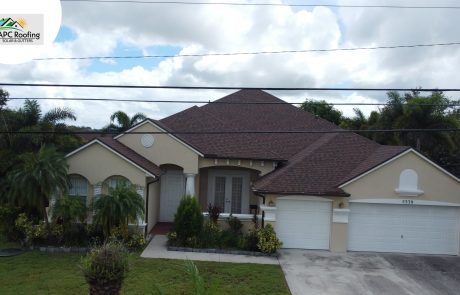
Shopping for Flat Roofing in Greater Daytona Beach Metro Area?
APC Roofing replaces and patches the coverings on shallow slopes, and on a typical residence that means porches, garages and rear additions.
Phone 386-356-2111 and a roofer will inspect every detail and explain the findings.
Runoff in Mind – a Question of Shape
A roof described as flat carries a slight fall toward the exits for rain, and a quarter inch per horizontal foot is what codes generally require. Carpenters can set the change in height into the rafters, or a tapered insulation layout can produce the difference during a reroof.
On a steep roof a storm drains away in moments, while a shallow porch roof keeps a film of rain for a good while, so minor defects see much more contact with water. A ridge called a cricket turns runoff aside at a chimney or curb, so debris and standing water have nowhere to collect.
Past the Point for Shingles: Where Membranes Begin
Asphalt roofing is permitted by code on two inches of rise per foot or more, and tile calls for a steeper plane still. Short of the limit, driven rain climbs back under the courses, and nails and decking stay damp for days.
Many homes combine a shingle main roof with a sheet-covered porch, since the steepness under each section decides the covering. Sheet roofing is one continuous skin with sealed joins, and slow runoff finds no opening to work through.
Low-Slope Choices – Sorting the Catalog
The single-ply group, TPO and EPDM, is installed from broad rolls, and modified bitumen is a polymer asphalt in narrower strips, and built-up roofing builds felt and tar in plies under stone. Light membranes spare the framing over porches and garages, and a crew can check every join closely.
TPO is normally a white plastic membrane, while EPDM is a dark synthetic rubber. Which product fits depends on the deck, the drains and any rooftop gear, and we say what we recommend and why, and the homeowner chooses.
Joins Between Rolls: Heat on TPO, Tape on EPDM
Leaks seldom start in the open area of a sheet, but the overlaps between widths are where trouble collects. On TPO, a hot-air welder melts the seams into one piece, and a roofer runs a probe down the joint to catch any gap.
EPDM laps are fastened with primer and adhesive tape, and moisture or grime trapped at installation leaves weak adhesion. An aged black-rubber join often curls up at a corner, and a cover strip laid across the gap puts the barrier right.
Picking a Shade: the Practical Side
A reflective TPO sheet sends a large share of solar heat back up, so an addition beneath stays more comfortable. Black rubber roofing absorbs radiant energy, so the framing below climbs in temperature. Turning back the sun matters in the hotter parts of our service area, and the effect is smaller at the colder end of our territory.
Sheet Thickness: Sorting the Options
Manufacturers list membranes in mils, or thousandths of an inch, and 45 and 60 are everyday figures on houses, with heavier rolls sold for demanding service. A beefier membrane shrugs off a dropped screw better, and the deeper body lasts longer in strong sunshine. From the ground, an owner cannot read the gauge, so the mil rating goes into the written proposal.
The Build-Up – Piece by Piece
The membrane usually rests on a thin cover board, and a course of rigid insulation follows, and the deck, plywood on a typical house, carries the whole. Polyiso slows heat passing into or out of the rooms, and extra inches raise the R-value. Water-filled insulation loses performance and burdens the deck, and a sealed membrane on top leaves the dampness nowhere to go. An electronic meter, an infrared camera or a test cut shows how far the problem spread, since the finished surface often gives no sign.
The Transition: the Right Sequence
Where a porch butts a steeper roof, the membrane climbs beneath the courses, so runoff from higher up spills onto the membrane. The top edge of the sheet stays tucked out of the weather, and no bead of caulk is trusted to keep the joint dry.
If the membrane sits on the last course, rain runs in behind, and a hard storm drives moisture into the framing. Damp drywall in the ceiling corner beside the house frequently points to a reversed junction, and the proper repair redoes the detail from the eave up.
Edge Flashing – the Finished Rim
Wind crossing a low roof pulls upward at corners and along the perimeter, and an opening can let the membrane peel back across a wide area. A metal edge fastened every few inches locks down the rim of the sheet, and the drip leg guides water down into the gutter.
The end of the membrane at a wall is secured with a termination bar, and a sealant bead keeps water from getting in behind, while counterflashing higher up sheds rain over the whole detail. A kinked piece of trim or a backed-out nail is a repair job, since a quick reset guards the membrane from uplift.
Low Walls Around the Deck: Protected From Rain
The membrane is taken up the inner face to form base flashing, and metal counterflashing laps over the upturned edge. A coping covers the upper surface of the parapet, with a tilt toward the roof so rain stays off the exterior.
Where crest joints open up, rain runs down within the wall, and the damp can show up far from the point of entry. Masonry with open mortar lines also calls for repointing, and framed construction under stucco needs sealed corners and a tight top.
Emptying the Surface – the Parts Involved
Water from a low roof goes out through an inside outlet, a scupper or a gutter along the edge, and a clog at any opening backs water up. An interior drain is set in a small sump and topped with a strainer, and piping in the house leads down to the yard or a storm line.
The overflow scupper is mounted higher than the main outlet, and parapet-enclosed roofs need a second way out by code. Maintenance means lifting debris off strainers and out of gutter throats, and a displaced dome is secured over the drain.
Standing Pools: Why Shape Matters
The trade calls rain on a membrane two days after a storm a defect, and the source is a sunken deck or a stopped outlet. Days underwater wear out the sheet faster, and sediment and algae settle on the wet surface. The mass of a broad, shallow puddle presses the framing down a little, so the sag grows each time rain gathers.
A new covering alone does nothing for a misshapen deck, so the true correction is tapered insulation, a cricket or an added drain. The framing and the routes open to new piping decide the remedy, and a level laid across the low area confirms the plan.
Holes in the Field: How Harm Happens
A single-ply membrane can be sliced through while still new, and a stray nail or a dropped knife is enough. Hail at the colder end of our territory can fracture a brittle membrane, and broken limbs can slash a surface wherever trees overhang.
An early catch turns a small opening into a simple patch, but a wet season of leaking waterlogs the insulation below. A search for pinholes takes a careful walk over the entire field, and a glance from a ladder misses tiny punctures.
Walkway Pads: Where the Boots Go
A membrane is a weather skin, not a floor, and each trip out to the air conditioner on the roof leaves a little wear on the surface. Thick pads are welded or adhered along the path to rooftop units, so the strips bear the abrasion rather than the membrane. Where mechanical gear sits up top, the scope includes traffic protection, and service crews are pointed to the marked lane.
Elevated Platforms: Heavy Loads, Easy Access
Pavers on adjustable pedestals keep chairs and tables off the membrane, and runoff flows beneath to the outlets. Planters full of soil need the joists checked beforehand, since damp earth is far heavier than dry.
Pavers come up individually without tools, so the membrane under a patio stays within reach for repairs.
Curbs and Pitch Pockets: Closing Each Opening
A molded boot made from the same membrane seals a plumbing vent, and a steel band secures the collar to the stack. A skylight or a unit sits on a curb raised above the deck, and the membrane runs up each side under a metal cap. A bracket or cable bundle that no boot fits goes into a pitch pocket, which is a small dam packed with sealant.
With age the fill shrinks away and cracks, and a periodic top-up is standard upkeep.
Repair or Start Fresh – the Honest Verdict
A leaking membrane generally has one small point of entry, and a matching piece set over the gap closes the membrane properly. TPO overlays are heat-welded and probed along the edges, and on EPDM a primed and taped cover goes on with rounded corners.
Replacement makes sense once seams are failing across the roof, or the membrane has turned brittle, or large stretches of insulation are soaked. We tell you directly which course is sound, and pictures and meter results sit behind the verdict.
Recover or Tear-Off – Choosing the Route
A new membrane can go over an old roof with a separator board between, and codes allow the method only where a single covering is present. An overlay only works over dry insulation, since moisture shut in keeps working on the framing.
Removal down to the deck is what a tear-off means, so rotten boards come out and the fall is set right, and a roof with two coverings must be stripped by code. The route follows the meter readings and how many layers are there, and the owner gets the findings in writing before choosing.
Weathering – What Hastens Wear
Daily cycles of heat and cold, ultraviolet light and pooled rain steadily degrade a membrane, and service traffic grinds trails into the field. Annual strainer cleaning and pocket top-ups add seasons, and small cuts sealed quickly keep the insulation from soaking.
Things to Watch For – Plain to See
- A brown ring on a ceiling beneath the low roof, which means rain has passed through the insulation.
- Water spilling from an overflow scupper during rain, which often points to a clogged main outlet.
- Perimeter trim pried up after a blustery day, which gives the membrane a place to start peeling.
- Moss gathering where the roof meets the gutter, which reveals runoff that never clears.
- A section that bows when seen from the street, which may mean the deck is carrying ponded weight.
- Blisters or ripples in view from an upstairs window, often from moisture trapped below or a lost bond.
- Vertical staining on siding under a parapet, often from open joints in the coping.
- Water marks in the ceiling corner beside the main structure, usually a clue the tie-in has opened.
How APC Roofing Tackles Flat Roofing in Greater Daytona Beach Metro Area – Step by Step
The drainage gets our attention before anything else, outlet by outlet, and the laps are probed from end to end next. Later, the inspection moves to edge metal, parapets, curbs and pockets, and where a leak is present, a meter and a core cut test the insulation.
Findings are set out in a written report with pictures, and each component gets a plain verdict. If a repair is enough, we say so, and a worn-out membrane is described without softening.
Flat Roofing in Greater Daytona Beach Metro Area: Roofers Who Know Membranes
Call us at 386-356-2111 and we will set a time to come out.
Painted-On Protection: Honest Limits
Rolled or sprayed fluid can go over an existing membrane, and the liquid hardens into a skin with no seams. On a watertight roof, a coat reflects sunlight and adds service, but on a leaking roof the layer just paints over trouble.
Silicone tolerates standing water, whereas acrylic breaks down where puddles sit. Washing and patching beforehand are the larger share of the labor, because leftover grime or chalk leads to peeling. We say plainly when a coating suits a roof, and when a new membrane is the better course.
The Right Conditions – Reading the Sky
On EPDM, primer and tape require a dry surface, and a chilly spell slows the adhesive's grab. Hot-air welding on TPO copes with brisk mornings, but rainfall halts membrane installation of every type.
A small repair can be done in a brief pause between showers, but a whole new membrane needs a run of stable days. Open areas are sealed off watertight before the crew goes home, so the rooms below are covered through the night.
For Flat Roofing in Greater Daytona Beach Metro Area, speak with APC Roofing at 386-356-2111. A roofer inspects the membrane, the outlets and the trim, and the findings arrive in writing with the decision left to you.