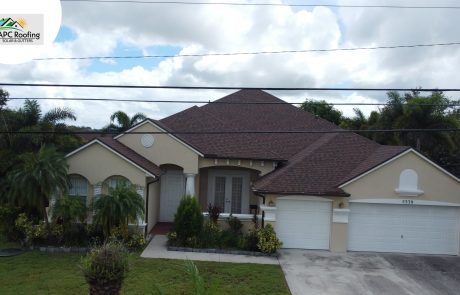
Trying to Find Storm Damage on a Family Home in Greater Orlando Metro Area?
APC Roofing climbs onto the shingles once bad weather has passed through, reading the flashings and the vents along the way.
Phone 407-270-1129 and set a time for a roofer to stop by.
How Air Travels Over Shingles: Not Spread Out Evenly
Along the eaves, the rakes and the ridge the force runs highest, and a broad open middle carries far less of that duty. Air that gets under a raised lip pries at the shingle set above the lip, and a single fastener ends up holding that shingle down alone.
A house corner throws wind into small eddies, so a tighter attachment pattern goes into that area during installation. A row of shingles at that outside edge carries more push than a row set farther out, which is why a crew raises the fastener count there on purpose.
A Roof's Quiet Final Step – Easy to Miss
Every shingle carries a strip of sealant that fastens down to the course beneath, so every shingle is anchored top and bottom. Uplift can loosen a bond over a wide stretch, while a section with a frayed seam still looks untouched from the ground.
Nothing announces a broken seal until the wind comes back, so nail heads take on whatever weather follows. A single shingle off a bond hurts nothing taken alone, but a whole run of parted shingles is an opening for the weather.
What a Bundle Label States: an Assumption Worth Checking
A test rig holds freshly made stock to a deck with every bond formed on purpose, before a controlled gust is brought to bear on the assembly. Material carrying years of weather no longer performs the way recently bundled material performs, which is why that rating fits day one and nothing after.
A nail set too far up misses the layer a shingle relies on for a full hold, and a course can fail at a wind nobody would call extreme. A weathered mat behaves differently from the sample once tested at a factory, and a laboratory rating fits new construction, never an older roof.
What a Hailstone Does to a Roof: the Part That Matters
At the colder end of our territory, spring storms drop the heaviest stones, and a few minutes of that can change a covering for good. A hit presses the mineral coat into the mat sitting beneath, and a dimple stays on a shingle after a storm passes.
A shingle blocks water through an inner core, not the shingle's own face, so damage that deep counts as structural, not cosmetic. A hail-marked shingle gives up service life sooner than a sound shingle nearby, so a covering with widespread hail damage develops trouble in scattered places.
What Else Takes a Beating – a Second Place to Look
Impact a shingle survives leaves a mark on a metal cap, and a mark like that does not heal the way flexible siding might. A boot opened by a strike lets water follow a pipe downward instead of around a pipe, and the water that follows shows up in a room below. A dented gutter can still carry water as designed, while a crimped downspout carries water over the leading lip without help.
A marred cap, a marked fascia and a pockmarked drip edge all get read together, and pictures of trim sit beside pictures of the shingles in a report. A split collar, a warped flange and a battered gutter face rarely turn up without a shingle nearby in equally rough shape, so marked shingles hardly ever stand next to hardware with no marks at all.
Loose Grit After a Storm: More Than Dirt
Small stones pressed into a shingle's face shield the material beneath the surface, which keeps a covered stretch flexible for years longer. A storm's runoff moves dislodged grains into the trough at the eave, and a pile of grit at that spot shows how much broke loose.
Asphalt left bare stiffens and splits as the seasons pass, which is why small failures on a slope tend to add up. Whatever collects at an outlet used to be part of the covering, so the next question is simply which face shed the most.
Water Pushed Uphill by Wind: a Different Kind of Path
An overlap performs because whatever comes from overhead obeys gravity, but pressure coming from the side changes the entire calculation. Gable louvers admit blown moisture through open slats in a hard blow, and drops fall well away from any actual break in the covering.
A Branch Across a Slope: Worth Opening Up
A concentrated load transmits pressure through only a few square inches of contact, and a substantial dose of force travels downward into the framing. Sheathing under a strike can split while the shingle above shows only a graze, and a roofer finds the break by tapping the deck and by checking from the attic.
Limbs raking a roof leave sweeping lines of exposed asphalt along the way, and the outline follows exactly where that motion carried. Repairing a fractured deck means opening the slope above the fracture, so the finished work covers more area than the scar first suggested.
What a Flashlight Finds Overhead – What Daylight Reveals
A pinprick of brightness through the roof boards points to a hole, and the precise location can be pinpointed against a truss or the end wall. Water leaves brown tide lines across the underside of a panel, so tracing the mark toward the highest point reveals the source.
A hollow pressed into batting shows a place where drips keep falling, and material packed down that way stops insulating long before the fibers look worn. Wind forcing air through an opening can carry moisture well past the covering, and knowing that is worth confirming before anyone opens the slope.
Down Where People Live: Signs Worth Tracing
Discoloration overhead turns up well beyond the leak, not right next to the start, since water can travel the framing for feet before letting go there. Blistered coating shows paint pushed away from behind by trapped moisture, and appearance on that surface says almost nothing about the size of a break.
Water near any electrical fixture is reason enough to cut power at the breaker, because live wiring beside standing water is the greater danger. Staining on both sides of a chase usually points at the metal overhead, so counterflashing set into the mortar gets a close look in a case like that.
Metal at the Joints – Small and Critical
Every wall unit up there is fastened and lapped at the same time, so the entire system is only as strong as the weaker of the two parts. Wind lifting a rake edge can peel that length of metal back off the trim underneath, so the section above starts to go the same way once that piece lets go.
Caps at the top of a roof face turbulence from both directions at once, and the seam stays unsealed the entire distance the instant that connection fails. A raised end on a vent lets rain slip in under the baffle, and the mess found below often spreads well past the point of entry.
A Glass Opening After a Storm – What a Storm Finds
A raised curb holds a skylight's glazing clear of the shingles nearby, and courses step around that rise in a set sequence. A hailstone can star the top layer of glass and leave the lower layer whole, so lifting the adjacent courses becomes part of that job.
Debris striking a plastic dome can leave a pattern that spreads with heat, so a hairline flaw rarely stays hairline for long in bright weather. Condensation locked inside a sealed unit cannot simply be wiped away, and that fixture gets swapped rather than dried out.
More Than a System Can Take: the Overshoot
A cloudburst can push more water at a trough than that trough can hold, and the surplus pours over the front lip instead of down a downspout. Anything gathering on the roof can pile up at the single opening meant to move debris onward, and a blocked length can sag out of line over time.
Getting Past the First Stretch: What Stays On
Anything secured over a break can protect a house until the weather clears, though nothing about that covering is built to last for long. A covering laid over the high side and anchored on both slopes stays effective, so a support strip backed by lumber spreads the load across a wider stretch.
Loose weight on top rarely secures a sheet once the gusts pick up, and a gap in the covering can scatter granules in the same blast. Fasteners set into an undamaged course create holes that need sealing afterward, which keeps the rest of a slope free of new punctures.
Noting the Details Early: What a Roofer Writes Down
The state of the house gets captured on camera while conditions are still current, and nothing gets tidied up or moved before that record is made. A short account describes the shape and extent of each damaged spot, and a note like that needs no further context to be useful.
A broken covering rarely stays exactly as the first storm left the surface, and every passing day can blur a mark that was once sharp. A request for documentation gets the same file kept on hand, and nothing in that record gets dressed up to suit the occasion.
A Line of Unmarked Rigs – Slow Down Before Signing
Out-of-town vans can tour a neighborhood once a storm has passed, and a share of that traffic does solid, honest work. A document filled out on a porch becomes a binding paper on the spot, so a careful reader takes that stack of pages inside before making any commitment.
A contractor whose office sits nearby stays reachable long after the work is done, which is no small consideration when picking who does the work. A deal that cannot survive a single night of thought is not worth taking, so there is no harm in declining to agree to anything on the spot.
What a Repeat Visit Brings: Picking Up Where Things Left Off
A roof that lost some grip once needs less wind the next time to lose more, so the threshold for further failure drops with every fresh episode. Where a course folded over once, the mat carries a break along that fold, which no amount of resealing along the edge actually cures.
Once framing has taken on water before, a fresh leak follows the same open path, and what began outside turns into a household project as well. Repeated soaking softens the wood fibers surrounding every fastener, and new material fastened there in that state will not hold securely either.
Signs Worth a Call to a Roofer: Outside and Indoors
- A course lifted clear of the row beneath, on any elevation of a house.
- A pitted cover on a stack or a vent, still evident long after weather has passed.
- Granules washing out where a gutter empties, gathering again within a few weeks.
- Pinpricks of light in the sheathing, anywhere along a ridge line.
- A brown ring on a ceiling that grows after rain, usually right under a roof plane.
- Peeling near the top of a wall, with no plumbing anywhere close by.
- A cracked dome over a light shaft, after a violent night of weather.
- Gutter spikes backed partway out of the wood, where a fall has gone visibly wrong.
The Way APC Roofing Works on Storm Damage in Greater Orlando Metro Area: What to Expect
A visit opens at ground level, crossing the yard and the driveway for anything that came down, and dented gutters or downspouts get photographed up close from below. Every roof plane gets covered wherever the pitch allows safe footing, and the attic gets checked from inside for anything missed from below.
The results get measured, pictured and set down in writing for the file, and every finding stays tied to a specific spot on the roof. Each recommendation arrives together with reasons that hold up under questions, and a homeowner decides from there without pressure either way.
Storm Damage for Homes in Greater Orlando Metro Area: a Careful Look at What Happened
Phone 407-270-1129 to arrange a visit.
Snow on a Roof – Ready for Tougher Conditions
Out at the colder end of our territory, a large fall remains on the rafters well after the weather has moved on, and rain soaking into the pile adds weight that dry powder never carried. An ice dam can form where a warmer deck meets a cold overhang, and water held back that way can find a path up under the lowest courses.
At the colder end of our territory, drifts pile up in valleys and beside dormers, and one section can carry many times what the rest of the roof holds. A built-up mass sliding loose can crush a porch set beneath the eave, and hangers can bend under strain from a sudden release like that.
Extra Wear Near the Shoreline: Fatigue Builds in Hardware
At the coastal end of our territory, a tropical system can settle over a house for most of a day, longer than a short spell anywhere else in our service area ever would. Hours of steady pressure can rock nails back and forth within a fastener hole, and a covering can give way to wind late in an event that started far milder.
Rain driven sideways can get behind siding as well as under shingles during a hard storm, so a sound roof can still let water indoors even after conditions calm down. Coastal practice generally asks more of every roof edge, which any patch in that region has to respect.
A Patch on an Established Surface – Getting as Near as Possible
Material from a current production run differs in tone from shingles baked by years of sun, and nothing leaves a factory looking weathered. A repair on the street-facing side can be noticeable from the sidewalk, while work on the back of a house draws far less attention.
A discontinued profile gets replaced with the closest style still in production, and a close substitute still shows a little on close inspection. Scattered repairs across one plane tend to stand apart from a distance, and redoing the whole side is a suggestion worth considering, not a requirement.
Signs of Careful Work: What to Notice
A mended section sits down without any visible ridges, and the courses run true with the shingles set on either side. Metal at a wall gets stepped in stages as the shingles rise, and the overlaps alone do the real work of keeping water out.
Every nail head on a mended spot sits beneath the next course up, and every course sits flush rather than sinking in too deep. A photo of new work, dated, becomes useful the next time a question comes up, since a later inspection can see exactly what section was replaced and when.
If Storm Damage is why you searched in Greater Orlando Metro Area, reach APC Roofing at 407-270-1129 and a roofer will come out and look the covering over. The covering gets checked from end to end and the findings get written down, and any question that comes up gets answered on the spot.