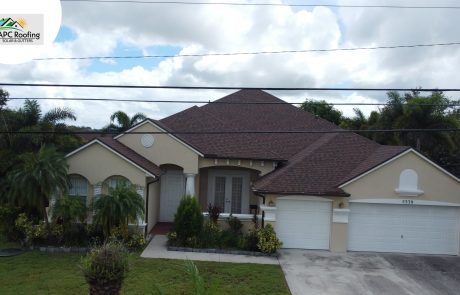
Exploring Tile Roofing for a Home in Kissimmee Florida?
APC Roofing fixes and relays barrel, S-shaped and flat profiles, including the valleys, ridges and wall flashings.
Phone 407-270-1129 and a roofer who knows tile will explain what is going on overhead.
What Sits Over the Attic: A Plain Guide
The clay or concrete pieces you see from the street shed most of the rain, while a sheet laid over the decking is what actually stops a leak. Gusts can push a little moisture up under the courses during a downpour, and the layer beneath leads that seepage down and off the slope.
A chipped or broken tile seldom shows up as a drip in a room, because the waterproofing underneath is still sound. Rain that does get past a worn underlayment can run along the deck before it drops, and the visible mark and the way in do not always line up.
Weighing the Materials: Sun and Moisture
Fired clay comes out of the kiln dense and hard, and the shade is part of the body itself. Long exposure to sunlight does almost nothing to the way such a roof looks, and a quality product takes up next to no rain.
A concrete piece is cast from a wet mix of sand and cement and left to harden, and a good share of brands color the face alone. Sun-facing slopes grow paler year by year, and any chipped edge shows up gray against the weathered front. Any replacement dropped into an aged roof is easy to spot, and only seasons outdoors soften the mismatch.
Cement-based pieces take in more rain than fired clay, and toward the colder end of our territory, moisture taken in swells as it freezes. Cycle after cycle, the face can start to flake, so products carry a grade for how they stand up to that exposure.
Common Shapes: Rolled or Level
Mission-style barrel work lays separate pans and covers in alternating rows, and the look echoes centuries-old Mediterranean houses. An S-shaped tile folds the dip and the crown into a single unit, and it is widely used on newer houses.
Flat pieces lie close to the deck and can pass for slate or heavy shake from below, and water travels down the lapped faces rather than through a groove. Needles and leaves gather in the dips of a rolled pattern, whereas a smoother surface keeps far less debris.
The Structural Question: Conversions and Options
Per square foot, standard tile carries several times the pounds of shingles, and a house built under tile had its rafters sized for that from the start. Going from a lighter roof to a heavy one adds weight the builder never expected, and a sagging ridge line can be the result.
A structural engineer should review the rafters, spans and bearing walls before any such conversion, and reinforcement may follow where the structure lacks strength. Some manufacturers offer a lighter concrete tile, so a modest house is sometimes a candidate after all.
Attachment Methods – Code and Exposure
A fastener through the top of each piece is a long-standing approach, while other jobs hang the courses on battens set over the sheathing. Other roofs rely on a roofing foam adhesive under each tile, and a mortar bed under every unit is used on others. A clip at the exposed end adds resistance to lifting in several designs, while local code and the manufacturer decide which mix is permitted.
Gusts tug most at the outer rows and along the hips and ridge, so the perimeter courses receive additional fasteners. At the coastal end of our territory, building rules written for hurricanes demand more hold-down, and installers use tested layouts for foam and screws. A repair has to work with whatever holds the neighboring courses, and a stuck unit ripped free can ruin the adjoining ones.
The Layer Below: Aging and Exposure
Asphalt-saturated felt is the traditional product, often laid in two plies, while self-adhered bitumen and synthetics are the newer options. The pocket under the covering stays warm for months and wears on the underlayment, and anything not intended for such exposure turns brittle early.
The units overhead keep daylight off the material under them, so a knocked-out tile opens a patch that degrades fast. A ceiling with no stain does not make a missing piece safe to ignore, because rot starts in the wood as soon as the membrane lets rain through.
Starting Over Underneath – Sequence of Work
A major job on clay or concrete can keep the original pieces, removed by hand and stacked in the yard, and damaged plywood is cut out and replaced. Next comes new underlayment, rolled out from eave to ridge, and the stored tile returns to its old position. The finished result looks just like the original, and the layer that stops leaks is at the start of a long life.
Handling always breaks a few pieces, and older material fails at a higher rate. Fresh units must lock into the pattern already on the roof, and a line still in production supplies an identical match. A discontinued shape is patched with salvaged stock or the closest substitute available, and even the best option can differ slightly in shade.
Damage to Single Units: Trees and Hail
Plenty of the tile that fails was stepped on, and the walker is often a contractor there for a dish, a chimney or a gutter. The top of a ladder set against the edge cracks the lowest units, while a standoff keeps the pressure elsewhere.
A heavy bough dropping onto the slope ruins many tiles at once, so keeping trees clear of the house removes most of that risk. Toward the colder end of our territory, hail of large size can snap a tile, while smaller pellets seldom mark so hard a surface.
Access Across the Slopes – Boards and Routes
Every piece is sturdy over the course below, while the open span in between gives way under a heel. Where the tile is curved, the hollow pan is the place to step and the crown is not, while repeated trips run over walk boards.
Damage done by a heel commonly sits on the hidden face, so a roof can collect breaks nobody knew about. A solar or satellite installer headed up there should coordinate access with a roofer, so the pieces under each mount are lifted and reset instead of drilled.
In the Valleys – Litter and Overflow
Where adjoining slopes meet, a single fold gathers rain from both, and a tile roof puts a formed metal trough along it. How far back the pieces are trimmed sets the open width, and a gap left too slim overflows in a heavy downpour.
The shortened pieces flanking the metal usually lack a hole, and adhesive foam, clips or wire hold them instead. Debris lodged in the valley holds the runoff back, and water spreads out under the neighboring courses.
Ridge and Hip Lines: Old and Newer Methods
The outside joints where slopes meet are covered by a run of trim, and on many homes it is set in mortar. Bedding that has seen years of temperature swings opens up in cracks, so the pieces loosen and crumbs wash down the slope.
On more recent roofs the trim is screwed to a raised board run along the joint, with a flexible closure strip filling the space underneath. Vented types let warm air out along the top, but they are shaped so rain and insects cannot enter.
Along Chimneys and Walls – Common Faults
Anywhere tile stops against brick or siding, bent sheet metal lines the corner, and an overlapping counterflashing keeps weather from getting behind its upper edge. A tile roof needs a broad pan there, finished with a raised rim, while nearby tile is trimmed to leave a clear path for runoff.
A smear of roof cement along a chimney hardens and splits, so the same spot takes on water again. Careful work takes the adjacent pieces up and remakes the metal below, while the underlayment there is redone before the covering goes back.
Through-Roof Parts: Where Shingle Parts Fall Short
The underlayment is joined to a base flashing around every plumbing riser, and a lead or soft aluminum sleeve is dressed down over the tile to shed water. A shingle-style rubber collar has no way to seal over curved tile, and water finds its way under its edge.
Every skylight, vent and panel mount requires flashing suited to the tile, and a bolt driven through a piece without it opens a path for rain.
At the Bottom Edge – Weep Holes and Drainage
A rolled profile leaves an open arch under the end of each piece at the gutter, and birds, wasps and blown rain get in unless something fills the gap. A closure made for the purpose is installed along the fascia, and weep holes in it still let water drain out.
Pieces in the last course have nothing under them for the same tilt, and a raised board or riser strip corrects that. Low-set pieces at the gutter tend to pond water, and a dip along the lower edge shows from the yard.
Heat Control: Indoor Comfort
The shape of many profiles, or the battens beneath, holds the covering off the deck, and air can move through the cavity below. The draft carries off heat before much of it passes downward, and the sheet below is spared much of it.
Over a scorching summer, indoor comfort holds steadier, and heavy pieces take up warmth slowly before releasing it. An eave stuffed with debris or a ridge closed with mortar cuts off the current, and the pieces then hold heat against the deck.
Caring for the Surface: Safe Cleaning
Newer concrete sometimes shows a powdery white film called efflorescence, and rainfall clears most of it eventually. Growth in the laps traps water against the pieces, and at the colder end of our territory repeated freezing can spall the surface.
A pressure washer can blast the color layer off concrete pieces, and it pushes water past the pieces. A gentle rinse with a roof-safe cleaning solution lifts moss without harm, and it helps even more to clear valleys and gutters by hand.
Clues Around the House: A Homeowner's Guide
- One unit sits lower than its neighbors, and the hold under it has given way.
- An empty space interrupts the pattern of tile, and the sun is reaching the membrane below.
- Pieces of clay or concrete turn up in the garden, even when the slope looks whole from below.
- Gray grit and mortar chips wash out of the downspouts, so the trim along the peak may be losing its hold.
- A brown ring spreads on a ceiling below the roof, while the opening that feeds it may lie higher up the slope.
- A wall next to the chimney has swollen drywall, so the counterflashing above may be letting water behind it.
- Thick moss or lichen covers large parts of a slope, and valleys nearby may be collecting debris.
- The line along the bottom edge dips or waves when seen from the yard, and the board under the last course may have softened.
APC Roofing and Tile Roofing in Kissimmee Florida: Our Method
The opening step is walking every slope, with the material, profile and fastening noted. Each valley, ridge line, wall joint and eave detail is examined, and pieces are lifted in places where the underlayment has to be seen. From the attic, the underside of the deck is searched for stains and soft spots, as discolored wood traces where water traveled.
Every fault is photographed, and its size is measured. Everything seen goes down in writing, with a reason attached to every suggestion. Cracked pieces on a sound sheet are described as repair work, while a failed underlayment is named plainly. The owner has the final word, and deferring the work is a valid choice.
Tile Roofing on Homes in Kissimmee Florida – An Honest Read
Phone 407-270-1129 to talk about what you are seeing.
Mending or Relaying – Slope by Slope
Many faults on tile remain in one place, such as a broken piece, a rocking cap or a split flashing, so the effort is confined to that area. Whether the job grows into a relay depends on what lies beneath, and faded or chipped faces do not settle the matter.
A slope whose sheet has given out throughout is taken up and put back over new underlayment, while slopes that are still sound are left in place. Underlayment installed in a single job generally gives out at about the same point, so a relay of the rest may come soon after.
Tile Over the Years – What Shortens the Span
Well-made clay can remain on a house for generations, while concrete serves for decades, if somewhat fewer. The waterproofing below is replaced well before the pieces, so its state is normally what schedules the next big job.
A covering that is inspected now and then and kept free of litter tends to go the distance, but a missing piece ignored for seasons cuts the sheet's life short. Any figure for years is an estimate, not a promise, since the product grade, the fastening and the flashings decide where it lands.
Pitch and Decking – Gutters Included
Each course of tile overlaps the next instead of being sealed to it, and the roof needs a steep enough angle to clear water. Where the pitch is modest, a stronger underlayment system is required, and under the permitted limit another covering does the job better.
The decking must be solid before anything is laid on top, and weak sections are swapped while access is easy. Gutters play a real part in keeping tile dry, because an overflowing trough can send water under the eave pieces.
If you are thinking of Tile Roofing in Kissimmee Florida, phone APC Roofing at 407-270-1129. What the slopes show is photographed and set out in writing, and the decision stays with you.
Verified

Verified
Verified
Verified
Verified