
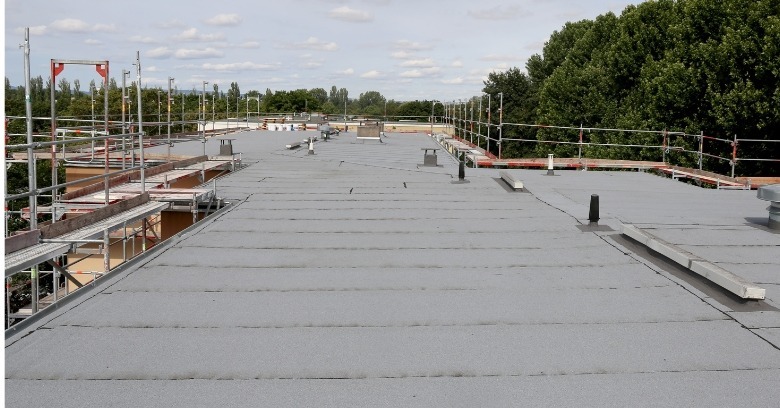
Looking for Commercial Roofing Installation in Aurora Colorado?
APC Roofing builds and mends the wide, low coverings above places of work, including the drains, curbs and flashings.
Dial 720-902-6940 and a roofer will come out and look everything over.
Business Property: Setting the Scene
Desks, shelving and production lines lie under the sheet, so a small opening can interrupt a full day of trade. Across a large building, the upper surface is broad and barely sloped, so outlet sizes and wind design come from engineering figures.
Condensing units, exhaust stacks and antennas are spread across the top, and each duct, line or support passes through the waterproofing. The purpose of the building drives the design, so a refrigerated plant is specified unlike a clinic.
Kinds of Low-Slope Covering: a Plain Primer
TPO, PVC and EPDM are single-ply products made as one flexible layer, modified bitumen is rubberized asphalt sold by the roll, and built-up roofing alternates felt with hot tar. The laps on a thermoplastic sheet are fused by a welding machine, whereas a rubber splice depends on primer and tape.
Fryer exhaust coats the area around a restaurant's fans, and asphalt or EPDM turns soft under oily buildup, so PVC usually covers the affected stretch. Gravel-surfaced built-up roofing weighs a lot and wears well, since the aggregate protects the felts from ultraviolet light.
Steel Over a Warehouse: Upkeep Notes
Screws through the flats hold an exposed-fastener sheet in place, and the threads grip purlins or joists underneath. UV exposure cracks the rubber seal under every head, and daily expansion and contraction slowly back the fasteners out.
On standing seam, concealed clips hold each rib to the deck, and the pans shift slightly through the day. Corrosion gathers where sheets overlap and at trimmed ends, and a coating over steel that is still sound can slow the damage.
The Supporting Deck – Why the Base Counts
Attachment methods are limited by what the original builders put in, and a new covering goes over the same framing. Steel with flutes holds screws securely, concrete is glued or drilled for anchors, and wood or gypsum plank takes nails or purpose-made fasteners.
Old, slow leaks corrode patches of a metal deck, and a damaged area is removed and a new piece fastened in place. The structure's underside is checked from indoors when access permits, and a few test openings from the surface fill in the gaps.
Anchoring the Membrane: Weighing the Choices
Many installations are fastened with plates screwed along every lap, fully adhered systems are glued across the whole underside, and ballasted sheets are held down by rock or pavers. The kind of deck, the height and the wind at the site decide the pick, and a heavy design goes ahead only once the framing is confirmed adequate.
Screw-down systems flutter between plates when gusts hit, whereas an adhered sheet stays still but needs a clean, dry substrate. Ballast makes any inspection slow, as every seam remains hidden until the stone or pavers are shifted.
Uplift on a Big Building – Numbers Behind the Pattern
Each corner feels the hardest pull, because moving air curls and speeds up on spilling over the edge. The strip down each side carries a smaller share, and the interior bears a light load.
Attachment rows tighten on the approach to corners and edges, as set out in engineering tables for height and wind speed. An outer angle with too few anchors allows the sheet to lift, and a blow-off can run well across the field.
Rigid Foam – an Overlooked Component
Panels of polyisocyanurate rest on the structural deck in offset rows, and a tough cover board over the stack takes foot traffic. Insulation keeps utility bills in check, and tapered stock tilts the finished surface toward the drains.
Soaked foam gives up most of the thermal resistance, and the added weight and dampness corrode metal decking. Meter readings confirmed by cut cores trace the extent, and nothing ruined is left under a new covering.
Outlets on a Big Building: Clogs and Standing Water
A basket-shaped strainer caps each interior opening, and the bars catch bags, leaves and gravel before the pipe. A grate packed with sludge chokes the flow, so a shallow lake forms across the low area.
A raised overflow waits above each primary drain, and runoff spilling at the upper level points to a plug further down. Rain held across a wide area can put tons onto the beams, and a puddle that survives two days hints at settling or a choked strainer.
Following Water Back to the Entry Point – Patience Pays
The mark on a suspended ceiling shows where moisture landed, but the split in the sheet is often somewhere else entirely. Fluted steel decking carries runoff sideways along the ribs, and gaps between insulation boards add more routes.
Up top, the laps, curbs and outlets uphill from the mark are inspected, and electronic leak detection can locate a pinhole. Sealing whatever sits above the soggy tile rarely fixes anything, so the trouble returns with the following storm.
HVAC Equipment Up Top – Leak-Prone Spots
A sturdy curb holds each machine clear of the membrane, and the sheet is carried up the faces and tucked under metal. The corners are the fussiest detail up there, and a poorly sealed crease admits rain.
When a heating contractor swaps a machine, an adapter curb often goes on unflashed, so a new leak follows within a season. A condensate tube emptying onto the sheet keeps a patch constantly damp, and the fix is carrying the flow to a drain.
Penetrations Through the Field: Handled Case by Case
A snug molded boot slides over each round stack, while oddly shaped items get a metal pan poured full of sealant. The compound shrinks and cracks as the years pass, so a fresh layer goes on every maintenance list.
Electrical conduit and gas lines ride on blocks simply set in place, because anchoring a stand through the membrane invites a leak. A rubber pad beneath every foot distributes the weight, so heat and vibration scuff the buffer instead of the membrane.
Glazing and Access Points: What Wears
Plastic bubbles on older units go cloudy and brittle under sunlight, and fractures tend to start at the fastener holes. Rain slips past a dried gasket or an open frame corner, and the stain below often gets blamed on the membrane.
The access hatch is lifted on every service visit, which wears out the springs, latch and weatherstrip. Smoke vents release automatically when a fusible link melts, so flashing and materials stay clear of the swing path.
The Low Wall Around the Edge – What Goes Where
Base flashing carries the membrane up the inside face, a termination bar pins the upper margin, and counterflashing tucked into a reglet covers the fastened line. Coping over the crest steers rain to either side, but joints whose sealant has cracked admit runoff beneath.
Brick and block that have weathered let water migrate indoors, and the ceiling stain that follows mimics a membrane problem. Inspection extends past the sheet to the coping, the flashings and the wall, and cracked mortar gets repointed rather than smeared with sealant.
Metal Trim Where the Field Ends: Rated for Uplift
The folded hem of the flange hooks over a cleat on the nailer, and a strip of membrane seals the joint on top. Gauge and profile are matched to the wind exposure at the building's height, since loose metal becomes a lever that gusts use against the field.
Gutters along a long eave take a huge volume in a storm, and skimpy hangers or leaders lead to overflow and sagging. Any trim that has bent or lifted needs fixing, since securing the metal now keeps the sheet from tearing.
Other Trades Overhead: Living With Guests
Mechanics who tend the condensers make the same trip many times a year, and a worn lane appears between the hatch and the units. A forgotten screw is stepped straight into the covering, and a propped panel can gouge a hole.
Walkway pads set out a marked route to the equipment, and grinding hits dense material instead of the field. Contracts with service firms can spell out where crews may walk, and nobody should leave scraps or screws behind.
A Regular Look Up Top: Timing and Tasks
A walk-through twice annually suits most commercial coverings, with an added check after any violent storm. A service call clears leaves and trash from the strainers, every lap is probed for loose spots, and caulked joints are examined for cracking.
A walk before the stormy months concentrates on outlets and the perimeter, and a later round looks for anything a punishing season loosened. Minor faults get noted and pinned to a sketch, so repairs can be arranged before a leak starts.
Keeping Track of a System: Knowledge That Lasts
A useful dossier includes a plan with every unit, drain and hatch marked, and the assembly is described from the structure to the membrane. Photos with dates accompany every repair entry, and core and scan results are added whenever taken.
Plenty of older buildings arrive with no history at all, so the same facts get rediscovered with each visit. A roof log stays with the site, and a copy passes to the next manager or buyer.
Mend, Coat or Start Over: What Tips the Balance
A sound membrane with a handful of local faults simply gets patched, and a weathered surface that is still dry can take a fresh liquid layer. Big stretches of waterlogged insulation make a new covering the sensible answer, and so do seams that have turned brittle everywhere, but the calendar alone is no verdict.
Cleaning, priming and repairs underneath come before any coating, because trapped moisture beneath gets locked in. Taking out just the spoiled areas occasionally works as a halfway measure, as long as the remaining membrane has plenty of service ahead.
Reroofing Options: Code and Condition
A recover lays new membrane over what is already there, and a board is placed between old and new. Codes limit an overlay to buildings with a single covering in place, as long as the insulation below is dry.
Tearing off takes the assembly back to the bare structure, and an open view shows what needs mending. Fresh tapered boards can give a dead-flat surface some fall, and saddles between drains steer water sideways.
Things to Flag: What to Look Into
- A steady stream from the backup scupper in a storm, which suggests a plugged strainer.
- A damp patch over a desk or shelf that returns, which means leakage has crossed every layer.
- Peeling paint high on the exterior wall, which can signal water entering the masonry.
- Edge metal visibly bent or lifted from the ground, which can hand a gale a lever.
- Standing water in the same place long after a downpour, which can indicate a settled structure or a fouled drain.
- A hazy plastic dome over the warehouse floor, which may give way under a misstep.
- Drips from light fixtures or sprinkler heads after a storm, which often traces back to a lap or a curb.
- A gutter that overflows along the front edge in rain, which can send runoff behind the fascia.
How APC Roofing Carries Out Commercial Roofing Installation in Aurora Colorado – Our Sequence
We look first at the drains, scuppers and overflows, and the seams, curbs and edges are next in line. If there is a leak, the layers under the membrane are tested, and the advice waits for the numbers.
What we see is set down in writing, photographs and a drawing included, and every trouble spot is pinned to a location. Our advice names a repair, a restoration or a new system, and the why is explained in terms you can verify.
Commercial Roofing Installation Across Aurora Colorado: What Needs Doing Up Top
Dial 720-902-6940 and we will fix a time to see the building.
Working Above Occupants: Noise, Odor and Debris
Drilling a steel deck sounds like thunder to everyone below, and adhesive fumes can drift into rooftop air intakes. Noisy tasks are scheduled with the manager's input, and vents beside the work can be covered while the cement sets.
A crane or chute takes stripped material to a bin, and desks and machines under an open section can be shielded. Most of the odor comes from solvent, and water-based glue has far less, which makes the gentler kind a sensible pick over offices.
Sequencing a Big Replacement – Order and Timing
A careful tear-off exposes only what can be dried in before the crew leaves, and each opened area is made tight again as stripping advances. A temporary tie-in joins the finished work to the existing covering overnight, and the stopgap is lifted at the restart.
Radar and forecasts govern how much comes off, and a front on the way shrinks the stretch. Unprotected boards caught in a cloudburst soak through, and leaks can then reach stock and staff below.
Seasons and Storms: Timing and Materials
Hail and the weight of snow matter at the colder end of our territory, so a resilient top board and stronger framing are called for. Strong sun across every town we serve slowly bakes a membrane, and a pale surface sends much of the radiation back.
Hurricanes at the coastal end raise the bar for anchoring, and tropical downpours need generous overflow capacity. Low temperatures slow or stop many adhesives from curing, while hot-air welding copes with cool days but not with showers.
Staying Safe Aloft: Rules on the Job
A knee-high parapet or a bare perimeter leaves a sheer drop, and anyone near the edge works inside warning lines or clipped to anchors. Plastic skylights break under someone who stumbles onto the dome, so a screen or guardrail at each opening prevents a plunge.
Permanent anchors help everyone who services the units, and a self-closing gate at the hatch adds a barrier. Our findings mention any guard that is lacking, since a fall from even a single story can cause serious injury.
When Commercial Roofing Installation in Aurora Colorado is on your list, contact APC Roofing at 720-902-6940. A roofer will inspect the drainage, the seams and the flashings, and the results arrive in writing to act on as you see fit.
Verified

Verified
Verified
Verified


















