
Searching for Commercial Roof Repair in Aurora Colorado?
APC Roofing puts down and fixes low-slope systems over stores and offices, taking in the edges, the outlets and every curb.
Call 720-902-6940 and a roofer will go up top and check every part.
Workplaces and Storefronts – an Overview
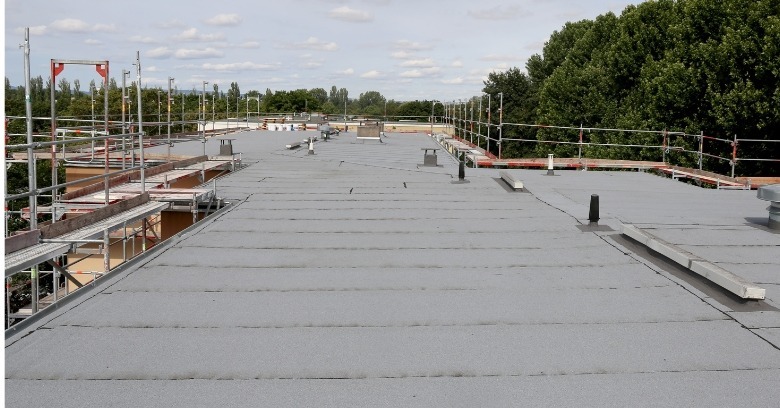
Desks, shelving and production lines lie under the sheet, so a small opening can interrupt a full day of trade. A large building is usually topped by a broad, nearly level surface, so drainage and wind resistance are worked out by calculation.
Exhaust fans, condensers and antennas are mounted up top, and each support, line or duct gets careful flashing. How the building is used guides the specification, and a freezer warehouse needs details an office never does.
Kinds of Low-Slope Covering – Sorting the Catalog
A single-ply job uses one layer of TPO, PVC or EPDM, modified bitumen is asphalt toughened with polymers and laid from rolls, and built-up roofing is felt sealed with hot tar several plies deep. The laps on a thermoplastic sheet are fused by a welding machine, whereas rubber splices rely on primer and adhesive tape.
Kitchen exhaust leaves a film of grease around a restaurant's fans, and oily residue softens asphalt and EPDM, so PVC tends to be installed across the exposed zone. A built-up roof topped with gravel is heavy and long-wearing, and the aggregate shields the bitumen from sunlight.
Metal on Shops and Plants: Where Trouble Shows
Through-fastened sheets take a screw at intervals across the flats, and the threads grip purlins or joists underneath. The sealing washers age and harden on a hot, sunny surface, and daily expansion and contraction slowly back the fasteners out.
A standing-seam roof is held by clips folded into the ribs, and the pans slide freely along the length. Corrosion gathers where sheets overlap and at trimmed ends, and a restorative coating can add service to sound steel.
The Supporting Deck: Age and Condition
Fastening choices depend on the structure below, and a reroof almost never replaces the framing. Steel with flutes holds screws securely, concrete wants adhesive or expansion anchors, and wood or gypsum plank takes nails or purpose-made fasteners.
Rust from old leaks can leave soft spots in metal decking, and a weakened section is taken out and replaced before new layers go down. The underside can be viewed from below where no ceiling blocks the view, and exploratory openings from above reveal the remainder.
Keeping a Membrane in Place: Weighing the Choices
Many installations are fastened with plates screwed along every lap, adhered work is stuck down across the full surface, and ballasted sheets lie loose under stone or pavers. Height, exposure and the deck below guide the selection, and a frame with no spare capacity rules out a heavy layout.
A mechanically fastened sheet billows between fastener rows in strong gusts, whereas an adhered sheet stays still but needs a clean, dry substrate. A ballasted layout turns inspection into a slow job, as every seam remains hidden until the stone or pavers are shifted.
Uplift on a Big Building: Setting the Screw Pattern
The strongest suction lands at each corner, as vortices form where the flow crosses the parapet line. The strip down each side carries a smaller share, and the middle of the field takes a small fraction.
The fastening pattern gets denser toward corners and edges, and published wind tables fix the spacing for each height. A thinly anchored outer angle can peel back, and air forced underneath keeps widening the opening.
Foam Insulation: Doing Double Duty
Panels of polyisocyanurate rest on the structural deck in offset rows, and a firm cover board spreads concentrated weight. Insulation keeps utility bills in check, and tapered sections supply the gradient that carries rain to the drains.
Soaked foam gives up most of the thermal resistance, and the soggy material sags while rust spreads beneath. Scanning at dusk, with a few cores for proof, marks out the damage, and spoiled sections come out while new stock goes in.
Where Runoff Exits: The Path Down
Each interior sump wears a cast strainer dome, so debris stays out of the leader below. A clogged grate slows the outflow to a trickle, and a wide pool gathers in the surrounding field.
An overflow scupper sits a little higher than the main drain, and runoff spilling at the upper level points to a plug further down. Standing water loads the frame with weight beyond the design, and a pool that outlasts a downpour by two days marks a low spot or a fouled strainer.
Tracing a Leak: Why Care Pays
Ceiling stains record where rain finally came through inside, but the split in the sheet is often somewhere else entirely. Fluted steel decking carries runoff sideways along the ribs, and joints between foam panels open more paths.
On the membrane, every lap, curb and outlet on the high side gets examined, and a low-voltage test can trace an elusive leak. Sealing whatever sits above the soggy tile rarely fixes anything, and the next rain brings the trouble back.
Cabinets and Condensate: Keeping Water Out
Each large machine stands on a raised curb, and a flashing sleeve climbs the walls to a formed metal hood. The corners are the fussiest detail up there, and any open seam lets rain get behind.
When a heating contractor swaps a machine, an adapter curb often goes on unflashed, and stains appear below a few storms later. Condensate discharged straight onto the covering discolors and softens the surface, so the stream ought to be carried to a drain.
Pipes, Vents and Conduit: Handling Each Type
A round plumbing stack gets a molded boot clamped at the top, while oddly shaped items get a metal pan poured full of sealant. The compound hardens, shrinks and separates at the edges, and adding fresh material is ordinary maintenance.
Gas lines and conduit are meant to float on movable supports, because a mount fastened through the sheet lets rain in. Each base needs a protective pad beneath, so daily movement rubs the buffer rather than the covering.
Glazing and Access Points – Service Notes
Acrylic panes yellow and turn fragile after years of sun, and hairline breaks radiate from each fastener. Rain slips past a dried gasket or an open frame corner, and the drip is often charged to the covering.
Technicians lift the access hatch many times a year, and hinges, springs and weatherstrip wear from constant opening. Smoke vents release automatically when a fusible link melts, so flashing and materials stay clear of the swing path.
The Low Wall Around the Edge – Getting the Details Right
The covering bends upward and becomes base flashing, a termination bar holds the top margin, and a strip of counterflashing overlaps from higher up. Coping along the crest keeps rain out of the core of the parapet, though a cracked seam beneath lets runoff in.
Unsealed brick draws water in and carries moisture indoors, and the resulting mark resembles a roofing defect. The coping, the wall and every flashing are reviewed together with the field, and open mortar joints are repointed instead of caulked.
Fascia Metal at the Outer Edge – Wind at the Border
A continuous cleat is fixed along the eave and locks the hem of the flange, and a strip of membrane seals the joint on top. Gauge and profile are matched to the wind exposure at the building's height, because a loose run of metal lets gusts pry up the membrane.
Gutters along a long eave take a huge volume in a storm, and skimpy hangers or leaders lead to overflow and sagging. Trim that is kinked or raised deserves prompt attention, and fastening down loose runs helps stop the membrane peeling away.
Foot Traffic From Technicians: Setting Some Ground Rules
Refrigeration mechanics may call on a large store every few weeks, and the route wears a visible track into the field. An abandoned screw gets forced through the sheet by a passing boot, and a falling wrench can split the sheet.
Heavy walkway pads laid along the route show where to tread, and grinding hits dense material instead of the field. Managers can require contractors to keep off the unprotected sheet, and cut-offs and fasteners go down with the worker who carried up the parts.
A Regular Look Up Top: What Gets Done
A commercial covering should get a professional walk-through twice annually, with an added check after any violent storm. Upkeep includes emptying every strainer, every lap is probed for loose spots, and caulked joints are examined for cracking.
Ahead of the stormy months, outlets and perimeter metal get close attention, and the next round, after a hard season, searches for fresh movement. Small problems are noted against a drawing of the building, so repairs can be arranged before a leak starts.
Paperwork Worth Keeping – Notes That Help
A sketch of the whole area places each unit, drain and hatch, and a written cross-section lists every layer from the deck up. Each fix is logged with a date and photographs, and core and scan results are added whenever taken.
Many older properties change hands without a scrap of information about the covering, and each roofer who climbs up has to investigate afresh. A roof log stays with the site, and a copy passes to the next manager or buyer.
Mend, Coat or Start Over: The Main Signals
A sound membrane with a handful of local faults simply gets patched, while an aged but dry surface can take a liquid-applied system. Big stretches of waterlogged insulation make a new covering the sensible answer, and so do seams that crack wherever flexed, but the calendar alone is no verdict.
Pressure washing and repairs have to precede the coating, and material below that holds water never dries out. A partial tear-off of the spoiled areas can be a reasonable compromise, provided the rest of the field has good years left.
Routes to a Reroof – Guided by What Lies Beneath
Recovering adds another membrane on top of the current roof, and a separation board is laid in between. Building codes accept an overlay where only a single covering is in place, as long as the insulation below is dry.
A tear-off strips everything down to the structure, and an open view shows what needs mending. Tapered insulation installed at the same time can reduce chronic puddling, and a cricket between outlets divides the flow.
Clues Around the Building: What to Look Into
- Rain gushing out of the high overflow, which suggests a plugged strainer.
- A tan mark on acoustic tile that keeps growing, which indicates water reaching the interior.
- Peeling paint high on the exterior wall, which can trace to a leaking downspout joint.
- A gravel stop that moves when a gust hits, which can give wind a place to pry.
- Standing water in the same place long after a downpour, which can indicate an overloaded deck or a plugged outlet.
- A yellowed, brittle skylight lens, which may give way under a misstep.
- Water trickling down an interior column in a storm, which points to an entry somewhere on the membrane.
- A gutter that overflows along the front edge in rain, which can mean a clog or an undersized run.
How APC Roofing Plans Commercial Roof Repair in Aurora Colorado: What Happens and When
The first thing we examine is each drain, scupper and overflow, and next we go along each lap, curb and edge. On a leaking building, cores and a meter check the foam, and no recommendation is made until the readings are in.
Each visit ends with a written account, a plan sketch and photographs, and each fault is marked at the exact spot. Our advice names a repair, a restoration or a new system, and the reasoning is laid out for you to question.
Commercial Roof Repair Throughout Aurora Colorado: What Needs Doing Up Top
Call 720-902-6940 and we will fix a time to see the building.
Keeping Tenants in Mind – Clear Communication
Every screw driven into steel decking is heard indoors, and solvent smells from adhesives can be drawn into the ventilation. The facility manager hears in advance when the noisy stage is coming, and vents beside the work can be covered while the cement sets.
Old membrane and foam are lowered by hoist or dropped through a covered chute, and anything valuable underneath can be protected. Low-odor adhesives cut down the smell considerably, so the softer-smelling kind is common above occupied rooms.
Sequencing a Big Replacement: Planning the Steps
Crews remove only as much old covering as can be made watertight by evening, and fresh foam and sheet cover the bare area without delay. A night seal links the finished part to the untouched field, and the patch is trimmed off when roofers return.
The weather report limits the size of each tear-off, and a threatening sky scales the plan back. Unprotected boards caught in a cloudburst soak through, and drips can reach the rooms below.
Regional Conditions: Planning Locally
Hail and the weight of snow matter at the colder end of our territory, and denser cover boards with verified beam capacity follow. Strong sun across every town we serve slowly bakes a membrane, so a bright, reflective finish reduces solar gain.
The coastal end of our territory demands fastening designed around hurricane gusts, and tropical downpours need generous overflow capacity. Some adhesives will not cure below a set temperature, whereas welded seams can go down in cool weather but never onto a wet deck.
Keeping People Safe Overhead – Measures Worth Having
A knee-high parapet or a bare perimeter leaves a sheer drop, so warning lines or harnesses tied to anchors are used near the edge. A dome breaks through easily under a misplaced step, so every opening should get a screen or a railing.
Permanent tie-off points benefit the service crews who visit later, and a safety gate at the ladder completes the setup. A missing screen or warning line is flagged in our findings, because a drop from a single floor can badly hurt someone.
When Commercial Roof Repair in Aurora Colorado is on your list, call APC Roofing at 720-902-6940. We will go over the entire field, drain by drain and seam by seam, and the results arrive in writing to act on as you see fit.
Verified

Verified
Verified
Verified


















