
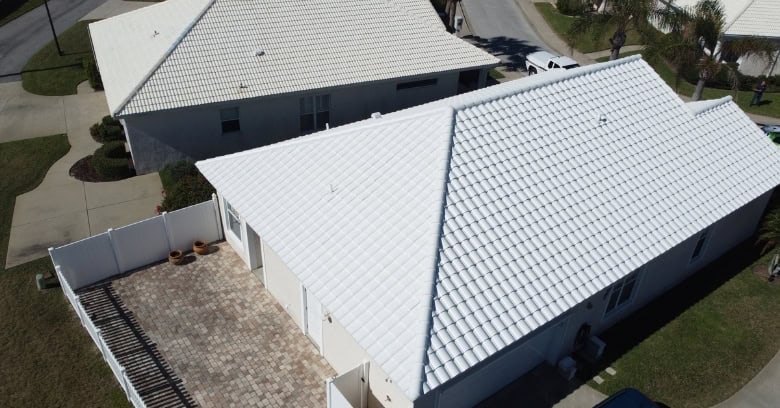
Looking for Residential Roofing in Minneola Florida?
APC Roofing covers everything from a routine checkup to a complete replacement, whether the covering is shingle, metal or tile.
Get in touch at 407-270-1129, and a roofer sets a time to come look at the house.
The Roof's Working Parts: What Holds a House Together
The shingles or panels on top form the outer layer, and a water barrier, plywood and framing sit below the surface. Bent metal covers the gap at a chimney, a pipe or a valley, and dampness there seldom traces to shingles failing somewhere close by.
The attic air beneath the deck counts as part of the roof assembly, since heat and humidity held there wear down the wood and covering overhead. A brown mark on a ceiling can originate at any level of the roof, and a fix aimed only at the outer surface can leave the real source untouched.
A Roof at Work, Component by Component
Gravity and overlap send each shower to the ground, and the nailing keeps gusts from lifting the courses. The trusses and sheathing support the load above, snow included at the colder end of our territory, and openings low and high let moisture escape the attic.
The covering deals with water, and nails and seal strips deal with wind, while what is underneath holds the whole thing steady, out of sight. A weak link puts strain on the parts around the weak spot, so the trail gets followed back before anything gets mended.
Minor Roof Components: Different Timelines
An asphalt surface is expected to serve for decades, but the flexible seal around a stack splits well before the shingles do. Moisture gets behind the covering and moves toward the room, and paint bubbles on the ceiling below.
Sealant along metal edges dries and shrinks in strong sun, and galvanized flashing corrodes at folds and nail holes. Shingles bent into caps split at the seam, since the crest takes more weather than the planes below.
A Walk Around the Property Beforehand: Standing Back and Then Closer
At a distance, the outline of the roof gives away dips, sags and wavy planes, and the gutters and trim can be checked in the same glance. Binoculars pick out torn collars, lifted tabs and bare patches, though failing sealant can stay hidden from the ground.
Crouched at each pipe, a roofer feels for gaps and traces the flashing along every wall, and every course is checked for edges that have come loose. Nobody walks a covering that is wet or too steep, and the eave, reached by ladder, provides the vantage point instead.
The Attic: What Owners Can Find
A stained patch on the plywood shows water that got in before, and moisture felt by hand shows the water is still coming through. A pinpoint of sky through the boards marks a gap, and a tape measure fixes the distance from the peak and gable wall.
Nails freckled with rust show condensation at work, not rain damage, and a darkened patch under the deck tells the same story. A blocked eave packed with fill, or a bathroom fan venting into the attic, shows up only on an inside look, so ventilation trouble of that kind escapes a yard-only check.
The Paper That Follows: Kept for Reference
The visit produces photographs linked to particular spots on the roof, and a written line explains what each image shows. Good sections get the same plain treatment as sections that do not, and faults are ordered from most to least pressing.
Keeping an older report gives the next check something to compare against, and change over time is easier to judge than condition on a single day. A roof tracked across each year brings few surprises, and a big repair signals trouble long before the work is urgent.
Keeping a Shingle Roof in Shape: a Short Rundown
Worn pipe gaskets get swapped out before failure, and brittle beads at the walls get cut out and run again. Branches and leaf litter come off the low points and the chimney back side, and the gutter runs along the eaves get straightened.
A slipped shingle put back early is easy work, but waiting out a rainy stretch invites water in from beneath. Moss along a north-facing slope wedges under the laps, and the growth gets treated and brushed off, never pressure-washed.
A Regular Routine: Consistency Pays Off
Somebody trained in the trade should go over the roof once a year, set for just after the roughest local weather each season. Catching things early is the whole point of a regular check, and the homeowner learns roughly how much life the covering has left.
Following a storm, a walk around the house with eyes on the roof is a good habit, and bedroom ceilings upstairs can be watched for fresh spots. Looking around the attic with a flashlight now and then makes sense: soft wood, tiny bright spots and soggy insulation surface long before anything reaches the space below.
Judging a Roof's Age From Outside: Clues at Each Stage
Freshly laid, a shingle covering is flat and evenly toned, and by mid-life the sun-facing side fades ahead of the shaded side. At the very end, tabs turn brittle and crack, and mending one area seems to open another.
An impression formed from outside has real value, but a ladder and a closer look tell the fuller story. A covering that has reached the end of a normal service life raises a replacement question, and a straightforward contractor says so directly, instead of selling one more fix.
The Channel at the Bottom: The Stakes Explained
Shingles hand off rainfall at the drip edge and no farther, and the gutter picks up the flow at the edge. Blocked outlets send overflow over the back lip of the channel, and the wood underneath begins to rot.
A weak patch there usually traces to a stopped-up drain, not the shingles, and reroofing alone will not solve a fault at that spot. The slope of every gutter and where each downspout empties get checked, and the drip edge gets looked over where the metal meets the fascia line.
A Two-Way Exchange: What Homeowners Should Know
Fresh air is meant to come in at the soffits and exit along the ridge, and that path carries heat and moisture out of the attic. Once that gets shut off, the attic bakes in summer and stays soggy in humid weather, and the deck and shingles suffer early.
A fan starved of intake draws air from the rooms below, not from outdoors, and a mismatched pairing at the ridge and gables can cut the draft short. A new covering placed over a poorly vented attic inherits the same fault, so the underlying issue belongs in the scope of any re-roofing plan.
Specifications That Follow the Weather: Set by What's Nearby
Toward the colder end of our territory, frozen gutters and heavy snow set the priorities, so an adhered barrier goes under the lowest rows. Nearest the coast, uplift resistance governs the fastening choices, and storm-rated trim metal and taped seams get called for.
In towns at the colder end of our territory, where hailstones run large, a harder product makes sense, while strong sun bakes asphalt across every market we serve. Every material choice answers to the weather at that house, not custom or what happened to be on the truck.
Homes and Shops: Split by Structure Type
A sloped covering sheds rain by lap, and the surface is usually shingle, tile or metal. An office or warehouse roof depends on a flat, sealed surface, and internal drains and heating units share space on that roof.
Plenty of residences include a shallow section over an addition, and shingles in that spot often leak because runoff moves too slowly. A spot like that needs a welded or adhered membrane, laced under the pitched covering above, and a second round of shingles there fails the same way.
Protecting a Damaged Roof for Now: What Lasts a Few Weeks
A secured sheet keeps rain out while repairs get scheduled, but nothing gets solved underneath. A good cover goes up and over the peak and gets fastened with wood strips, and enough tension keeps gusts from finding any slack.
A cover has to reach well past the damaged area, since water slips in under any edge that ends too soon. Material left on for a long stretch keeps the roof from drying out, and mildew and rot follow underneath.
The Detail Where a Roof Meets Something Upright: Getting the Work Right
Every course against a wall gets a dedicated step-flashing piece, and counterflashing tucked into the masonry covers that metal from above. On a brick chimney, an apron handles the lower edge and metal runs up each edge, and a broad stack gets a saddle set into the slope nearby.
Tar smeared over a gap gives way as the metal moves, so a rebuilt detail is the only answer that lasts. Porous or cracked mortar lets moisture into the masonry higher up, and a mason may need to handle the stonework while a roofer handles the metal.
The Written Scope: Items to Expect
The plan for a job names every product by brand, and a plain line covers tearing off versus covering over. The account spells out in advance how damaged plywood gets counted, and the metal, the ventilation and the yard cleanup are each called out.
Two written proposals can be compared line by line, and the real differences between the two documents come into view. A business that keeps every particular verbal gives an owner nothing to hold onto, and memory is a poor record of what got agreed.
How a Re-Roof Unfolds: Start to Finish
Beds, bushes and walkways get protected before demolition begins, and the existing layers get torn off into a dumpster. Once exposed, the sheathing gets a careful look for rot and breaks, and weak areas get cut out and replaced with sound lumber.
A water-resistant membrane, fresh flashing and ice protection get installed next, and shingles or panels, capped at the ridge, complete the installation. A magnet gets run over the lawn and the driveway when the work is done, and the gutters get a final check for leftover material.
Upkeep on Other Coverings: Details by Material Type
A metal system with exposed fasteners relies on the gasket beneath every fastener, and a worn spot gets cured with a new screw rather than caulk. Based on the house, tile may be mortar-set, foam-set or clipped directly, and the membrane is what keeps the interior from taking on water.
A careless step snaps a piece easily, and a damaged unit gets swapped for another of matching shape. Flat sections show trouble as standing water and raised seams, and clogged drains get cleaned out on a visit.
Clues That Point to Trouble: Caught Early
- Sand-like mineral grains in the gutter runs, well beyond what a new roof sheds.
- Curled or lifting edges on the courses, on planes that face the afternoon sun.
- Torn rubber where a pipe exits the deck, easy to miss without a zoom lens.
- A ceiling mark that spreads with each downpour, new since the previous season.
- Daylight through the attic boards, with the lamp switched off.
- A carpet of moss along the eaves, in spots that stay damp longest.
- A dip between rafters, often pointing to trouble in the deck beneath.
- Gaps opening where flashing meets siding, easy to spot from the yard.
Residential Roofing Near Minneola Florida: APC Roofing's Approach
Before anything gets proposed, a roofer looks over the whole covering and the attic, and the results come back as images plus a short written summary. Good sections get the same plain treatment as problem areas, and the choice of what to do next stays with the homeowner.
Residential Roofing Around Minneola Florida: a Roofer Who Reads the Whole Roof
Call 407-270-1129 and get a date on the calendar.
A Roof's Paperwork: Best Done Early
Writing down the installation date and the materials used is a smart habit, and each report from a follow-up visit joins the same file. Listing every fix, the place and the scope, takes only a minute, and looking back after enough time shows what keeps recurring.
Once a home hits the market, the roof's age and condition come up in conversation, and a folder of dated pages settles things quickly. A copy kept at a second location protects the earlier notes, so nothing depends on one paper version alone.
A Neat Result, Up Close: Quality You Can See
Rows sit true across each plane, with tidy trimming at the gable edges, and nails stay covered by the layer above. The wall joints carry new flashing, tucked to match the way water runs, and any sealant used is a neat bead, never a smear.
Ventilation openings stay in place and free of debris, and the gutters return to position, clean and fastened. The property gets checked with a magnet for stray fasteners, and sawdust from a trimmed board is the most common leftover, easy to rinse from a walkway.
Anyone researching Residential Roofing in Minneola Florida is closer to an answer than a listings page ever gives. Contacting APC Roofing at 407-270-1129 moves the scheduling forward. Every visit takes in the whole roof and the attic beneath, with no loose ends left over.
Verified

Verified
Verified
Verified
Verified


















