
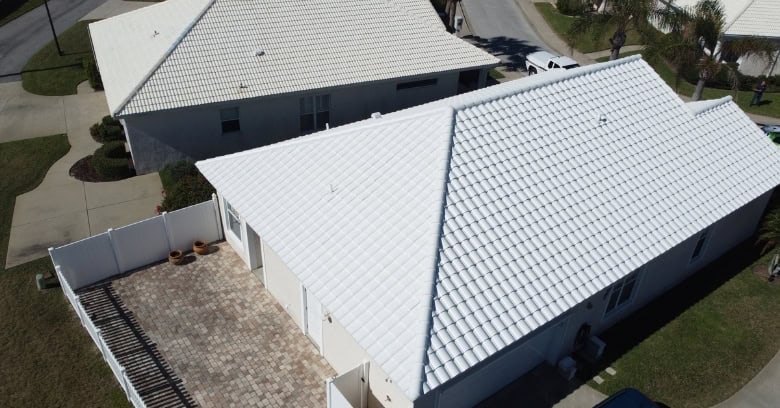
Trying to Find Roofing Services in Minneola Florida?
APC Roofing takes care of a routine checkup right up to a complete replacement, whether the covering is shingle, metal or tile.
Call 407-270-1129, and a roofer schedules a visit to look at the house.
A Roof's Construction, Explained: What Holds a House Together
What shows from the curb is just the outer layer, and underlayment, decking and rafters sit beneath the surface. Metal flashing seals the seam at a wall, a pipe or a valley, and water there rarely traces back to worn shingles close by.
Airflow through the attic belongs to the roof system as much as any material, since heat and humidity held there wear down the wood and covering overhead. Water showing indoors may come from any level of the structure, and work confined to the outside can miss the real source.
What a Roof Does for a House: More Than Meets the Eye
A pitched covering sends rain down toward the gutters, while nails and seal strips resist the pull of gusts. Beams and boards carry the mass overhead, snow included at the colder end of our territory, and openings low and high let moisture escape the attic.
The covering deals with water, and nails and seal strips deal with wind, and holding the whole thing up falls to what is underneath. A failure in one part puts pressure on neighboring parts, so the trail gets followed back before anything gets mended.
The Smaller Details Up Top: Different Timelines
A field of sound shingles can go for decades, but a rubber collar at a vent pipe gives out far sooner. Moisture gets behind the covering and moves toward the room, and a mark spreads across the ceiling beneath.
A line of caulk at a chimney shrinks with every hot season, and galvanized flashing corrodes at folds and nail holes. Cap shingles break along the seam, because wind and weather strike the peak harder than the slopes below.
A Walk Around the Property Beforehand: a Two-Step Read
From across the street, the profile of the roof exposes dips, sags and wavy planes, and the gutters and painted trim show up in the same look. Through binoculars, torn collars, lifted tabs and bare patches come into focus, but a weak spot underfoot tells what optics cannot.
Crouched at each pipe, a roofer feels for gaps and traces the flashing along every wall, and the surface is checked for cracking, granule shedding and curled edges. A rain-slicked or very steep covering stays off limits underfoot, and the eave, reached by ladder, provides the vantage point instead.
Behind the Ceiling: Clues From Below
A dark ring on the sheathing shows water has come through, and dampness under the fingers shows the entry is still active. A pinpoint of sky through the boards marks a gap, and the position gets noted by measurement before anyone climbs.
Nails freckled with rust show condensation at work, not rain damage, and a matted, gray patch backs up the same story. A blocked eave packed with fill, or a bathroom fan venting into the attic, shows up only on an inside look, so a check from the ground alone leaves that kind of fault hidden.
The Paper That Follows: the Basics
Each finding is recorded with a photograph tied to a place on the roof, and a note explains what each picture shows. Sound parts get listed as plainly as anything that requires work, and problem areas are ranked by urgency.
A report kept on file lets the next check be measured against a known starting point, and a pattern over time tells more than a single day ever could. A roof checked on a steady yearly cycle seldom surprises the owner, and a large job gets seen coming well ahead of time.
Keeping a Shingle Roof in Shape: the Basic List
Worn boots around the stacks get exchanged for new ones, and brittle beads at the walls get cut out and run again. Anything the trees drop gets brushed out of the channels, and the gutters get kept running and secured.
A loose piece fastened back promptly stays a minor task, but delay through a wet season can let water reach the ceiling below. Moss along a north-facing slope wedges under the laps, and the growth gets treated and brushed off, never pressure-washed.
The Habit Worth Keeping: The Payoff
A roofer's walk-through belongs on the calendar every year, timed for right after the season that is hardest on roofs locally. The goal is seeing deterioration ahead of any drip, and nobody is left guessing about the roof's condition.
Between visits, an owner can look at the roof from the yard after rough weather, and bedroom ceilings upstairs can be watched for fresh spots. Looking around the attic with a flashlight now and then makes sense: dark spots, daylight and matted insulation turn up long before anything travels any further.
A Roof's Age, Read From the Yard: Clues at Each Stage
Freshly laid, a shingle covering is flat and evenly toned, and by mid-life the sun-facing side fades ahead of the shaded side. Toward the end, granules collect in the gutters and the mat starts to show, and new leaks appear in different spots.
An impression formed from outside has real value, but only a hands-on check settles the matter. When shingles are exhausted, the candid conversation turns to replacement, and an honest contractor states that plainly, rather than pitching another repair.
A Channel That Has Given Up: What Homeowners Should Know
The covering carries runoff only to the lower edge, and the gutter takes over from that point. A hanger that has given way tips the run toward the wall, and the wood close by swells and softens.
A soft spot along that edge points more often to drainage trouble than to worn shingles, and replacing the roof leaves the real cause untouched. Gutter pitch and downspout discharge get checked on a visit, and the drip-edge metal and the overlap at each joint get looked over as well.
How the Roof Breathes: An Overview
Cooler air should enter through the soffit and rise out at the ridge, and that flow carries built-up heat and dampness away from the attic. When that gets blocked, the attic overheats in summer and stays muggy through humid months, and the shingles age prematurely.
Adding roof openings without matching intake draws air from the rooms beneath, and competing setups on one roof can leave the lower attic stagnant. Fresh shingles laid over stale, trapped heat age nearly as fast as the old ones did, so the underlying issue belongs in the scope of any re-roofing plan.
One Company, Many Conditions: What Shifts From Place to Place
At the colder end of our range, ice and drifting snow set the build, so an adhered barrier goes under the lowest rows. Near the coast, wind pressure sets how every panel gets nailed, and storm-rated trim metal and taped seams get called for.
In the hail-prone part of our range, at the colder end, a tougher product deserves a look, while intense sun dries out asphalt everywhere we work. Every build answers to conditions at that particular site, not routine or whatever was used on the last job.
Homes and Businesses: Different Structures Entirely
A sloped covering sheds rain by lap, and the surface is usually shingle, tile or metal. A business roof relies on one continuous sealed sheet, and drains, scuppers and rooftop units sit built into that surface.
A fair number of homes have a shallow strip over a porch, and a shingled surface there lets rain linger long enough to work under the courses. A low spot like that needs a continuous membrane tied in beneath the main covering, and a second round of shingles there fails the same way.
A Cover Until Things Get Fixed: What Works and What Fails
Plastic over a break keeps the rooms beneath dry for a time, but the broken parts stay broken all the same. A well-set cover laps over the peak and gets battened along the edges, and enough tension keeps gusts from finding any slack.
Extra reach past the opening matters on any temporary cover, since water slips in under any edge that ends too soon. Film left in place for months holds heat and humidity against the deck, and whatever sits below begins to suffer.
The Detail Where a Roof Meets Something Upright: No Room for Guesswork
Every course against a wall gets a dedicated step-flashing piece, and an overlapping strip above keeps runoff off that metal. A chimney gets an apron across the downhill face and metal tied in up each edge, and a broad stack gets a saddle set into the slope nearby.
Caulk troweled onto a bad seam lets go once temperatures shift the metal, so a rebuilt detail is the only answer that lasts. Porous or cracked mortar lets moisture into the masonry higher up, and a mason may need to handle the stonework while a roofer handles the metal.
A Contract Worth Reading: Nothing Left Vague
The rundown for a job should list every product by name, and a plain line covers tearing off versus covering over. A firm outline settles ahead of time how bad wood gets handled, and the metal, the ventilation and the yard cleanup are each called out.
Bids laid out in full are easy to check against each other, and the gaps between the two sets of paperwork come into view. A crew that asks for trust instead of anything in hand has left out the part that matters, since a handshake settles nothing once a dispute starts.
How a Re-Roof Unfolds: What Changes at the House
Plants take tarps and hard surfaces take padding before the crew begins, and the worn material gets pulled loose and hauled away. The bare deck gets checked plane by plane once the old covering is off, and anything that flexes underfoot gets sawn out and patched.
A protective membrane, new flashing and full underlayment get installed, and the main covering, the ridge line and the vents finish the work. The property gets swept with a magnet once the crew wraps up, and a last look confirms the gutters are clear.
Care for Non-Shingle Roofs: Particular Needs
A metal system with exposed fasteners relies on the gasket beneath every fastener, and a hardened washer gets swapped out along with a new screw. Clay and concrete tile go down by more than one method, from mortar to foam to clips, and the underlayment does the actual waterproofing.
Weight placed wrong breaks a piece, and a damaged unit gets pulled and replaced to match the surrounding pattern. On the shallow parts of a roof, lingering water and loose seams are worth watching, and debris gets cleared from drains and scuppers.
Clues That Point to Trouble: Easy to Act On
- Coarse grains washing out after every rain, from a covering that is no longer new.
- Shingle edges cupping upward, on planes that face the afternoon sun.
- Torn rubber where a pipe exits the deck, letting water run down into the attic.
- Paint blistering overhead after a storm, still visible once dry.
- Light glowing between the planks, wherever nothing should show through.
- Moss packed into the laps, holding moisture against the surface.
- A sag along the ridge line, visible against the sky.
- Dried beads separating at a skylight, often after a hot summer.
Roofing Services for Minneola Florida Households: APC Roofing's Approach
Before anything gets suggested, a roofer takes in the whole covering and the attic together, and the results come back as images plus a short written summary. What is fine gets said as plainly as what needs attention, and the decision belongs to the homeowner, not the crew.
Roofing Services Across Minneola Florida: a Full Look, Not a Guess
Phone 407-270-1129 to arrange a visit on site.
An Archive for the Roof: Easy to Maintain
Writing down the installation date and the materials used is a smart habit, and each report from a follow-up visit joins the same file. Tallying each repair, the location and the method, keeps things complete, and after several years the weak spots become obvious.
When a house goes up for sale, a buyer's inspector asks about the roof, and dated receipts make the answers easy to give. A second copy of the file, kept somewhere else, is worth having, so nothing depends on one paper version alone.
Signs of a Job Done Right: Small Things, Handled Properly
Courses run straight and the cuts along the rakes come out clean, and no nail head shows on the finished surface. Flashing at walls is new and set in properly, and any sealant used is a neat bead, never a smear.
Intake and exhaust vents stay open and unblocked, and the gutters return to position, clean and fastened. A final sweep with a magnet tidies the yard and drive, and a quick hose-down removes the last of the sawdust from a walkway.
Anyone who arrived looking into Roofing Services in Minneola Florida has one straightforward next step. Contacting APC Roofing at 407-270-1129 gets a date on the calendar. Every visit takes in the whole roof and the attic beneath, and no part of the roof goes unchecked.
Verified

Verified
Verified
Verified
Verified


















