
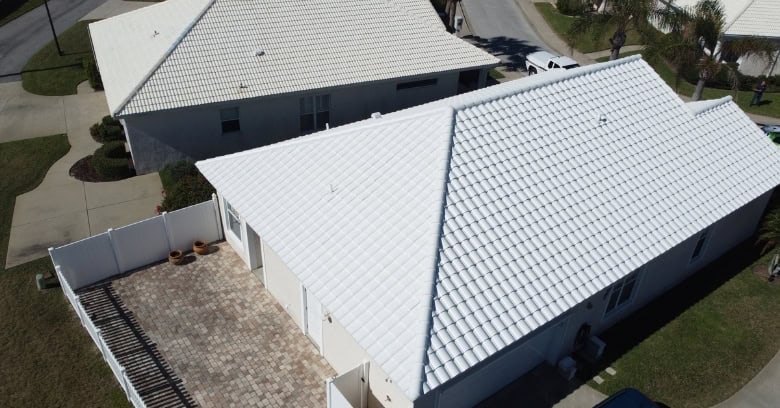
In Search of Roof Inspection in Minneola Florida?
APC Roofing takes on jobs ranging from a basic checkup to a full replacement, across asphalt, metal and tile alike.
Reach us at 407-270-1129, and a roofer sets a time to come look at the house.
The Roof's Inner Build-Up: a Plain Guide
The surface a passerby notices is only the outer layer, and a moisture barrier, sheathing and framing sit underneath. Strips of flashing cover the gap at a chimney, a pipe or a valley, and a drip there rarely points to worn shingles on the slope.
The air under the rafters counts as part of the roof, the same as any material, since trapped summer heat bakes the deck from underneath. A drip inside a bedroom can come from any level of the roof, and work confined to the outside can miss the real source.
What a Roof Does for a House: Quiet but Constant
The slope on the building sends runoff toward the gutters, while the fastening pattern stands up to uplift. The trusses and sheathing support the load above, snow included at the colder end of our territory, and openings low and high let moisture escape the attic.
Shedding water is the covering's task, and resisting wind is the fastening's job, and holding the whole thing up falls to what is underneath. A failure in one part puts pressure on neighboring parts, so the trail gets followed back before anything gets mended.
The Minor Pieces of a Roof: The First to Weaken
Most of the slope is designed to hold up for decades, but the flexible seal around a stack splits well before the shingles do. A path opens for water to travel down into the house, and a mark spreads across the ceiling beneath.
Caulk along a wall joint hardens and pulls away in the heat, and coated metal rusts once the coating wears through. Cap shingles break along the seam, as nothing shelters the peak from gusts and glare.
Steps Before Heading Up: Standing Back and Then Closer
From the yard, the shape of the roof reveals dips, sags and wavy planes, and the gutters and painted trim show up in the same look. Good binoculars show up torn collars, lifted tabs and bare patches, but a weak spot underfoot tells what optics cannot.
Out on the roof, a roofer presses on every connector and follows each run of flashing, and the covering is checked for brittleness, granule shedding and curling. A steep or wet roof is not walked, and the view comes instead from a ladder at the gutter line.
The Attic: Clues From Below
Discolored wood around a fastener points to water that beat the covering, and moisture felt by hand shows the water is still coming through. Light passing through the decking reveals a breach, and a tape measure fixes the distance from the peak and gable wall.
Corroded fasteners poking through mean the attic air runs humid, and a matted, faded patch nearby confirms the same condition. A blocked eave packed with fill, or a bathroom fan venting into the attic, shows up only on an inside look, so ventilation trouble of that kind escapes a yard-only check.
The Paper That Follows: An Overview
A record of the visit takes the form of photographs keyed to spots on the roof, and a short note describes what each image covers. Solid sections are treated in the same plain language as sections that are not, and trouble spots are ranked from most to least urgent.
A record saved from an earlier check sets a baseline for the next inspection, and change over time is easier to judge than condition on a single day. A roof followed on a consistent schedule rarely springs a surprise, and a big repair signals trouble long before the work is urgent.
Seasonal Shingle Maintenance: the Basic List
Stiffened collars at the plumbing vents get changed early, and brittle beads at the walls get cut out and run again. Branches and leaf litter come off the low points and the chimney back side, and sagging gutter hangers get tightened.
A raised corner glued down in time stays a simple repair, but waiting out a rainy stretch invites water in from beneath. Moss holds shingle edges up and traps water against the courses, and the growth gets treated and then brushed away, not blasted off.
A Simple Habit Worth Building: What to Expect
Somebody trained in the trade should go over the roof once a year, set for just after the roughest local weather each season. Catching things early is the whole point of a regular check, and the family hears plainly where the roof stands.
In the months between visits, a look from the driveway after high wind helps, and top-floor rooms are worth checking for fresh stains. Checking the attic with a lamp each season makes sense: soft wood, tiny bright spots and soggy insulation surface long before anything reaches the space below.
How Age Shows on a Roof: Clues at Each Stage
Newer asphalt lies smooth and uniform in tone, and around the midpoint the sun-facing plane grows paler sooner than the rest. Near the end, corners curl and granules gather in the gutters, and new leaks appear in different spots.
Judging from the street supplies a reasonable idea, but a roofer nearby will always see more. When shingles are exhausted, the candid conversation turns to replacement, and a trustworthy contractor gives a plain answer, rather than selling more mending.
A Channel That Has Given Up: What Homeowners Should Know
The covering carries runoff only to the lower edge, and a gutter takes the water the rest of the way. A run choked with leaves sends overflow behind the trim board, and the rafter tails nearby rot over seasons.
A soft spot along that edge points more often to drainage trouble than to worn shingles, and a fresh covering does nothing for a fault at the edge. Gutter pitch and downspout discharge get checked on a visit, and the drip-edge metal and the overlap at each joint get looked over as well.
What Ventilation Is For: How the Design Works
Intake at the overhang and exhaust at the top keep air moving through the attic, and the draft clears warmth and humidity from under the sheathing. When that gets blocked, the attic overheats in summer and stays muggy through humid months, and the shingles age prematurely.
A fan starved of intake draws air from the rooms below, not from outdoors, and two mismatched setups on one roof can work against each other. A roof placed over bad ventilation inherits an existing weakness, so the underlying cause gets addressed in the plan for the new roof.
Roofing That Fits Where You Live: Set by What's Nearby
Where winters bite hardest at the colder end of our territory, ice at the edge shapes the details, so peel-and-stick material gets laid along the overhang. Near the coast, wind pressure sets how every panel gets nailed, and impact-and-wind-rated shingles and sealed seams get chosen.
Where hail falls hard at the colder end of our territory, an impact-rated covering is worth considering, while strong sun bakes asphalt across every market we serve. The details get set by conditions at that specific location, not routine, and not whatever a past project called for.
Houses and Commercial Buildings: Different Structures Entirely
A sharply angled pitch sheds water course over course, and the material is commonly shingle, tile or metal panels. A commercial building usually has a nearly flat, sealed membrane, and internal drains and heating units share space on that roof.
Many houses have a gently rising porch or addition, and shingles over an area such as that leak because standing water finds a way under the laps. A low spot like that calls for a sealed sheet, tucked beneath the steeper roof above, and re-shingling that spot only repeats the trouble.
Tarps and Emergency Covers: What Holds Up
A barrier keeps rain off a hole before repairs begin, but the trouble below stays untouched. A good cover goes up and over the peak and gets fastened with wood strips, and the material gets drawn tight enough to hold quiet in a gale.
A cover needs a wide border around the hole, since water slips in under any edge that ends too soon. A cover left up through a whole season holds heat against the surface, and the shingles beneath start to deteriorate.
Where the Roof Changes Direction: the Proper Method
Every course against a wall gets a dedicated step-flashing piece, and trim set higher up sheds water past that metal. On a brick chimney, an apron handles the lower edge and metal runs up each edge, and a broad stack gets a diverter built into the roof behind.
A smear of mastic over a bad patch opens up within a few seasons, and only a correct rebuild ends things for good. Soft mortar lets water into the brick above the flashing, and a mason takes the stonework while a roofer takes the metal.
What a Proposal Should Say: Comparing Bids
A clear plan identifies every material, from the shingle to the metal, by name, and the document states plainly whether the work is a tear-off or a layover. A firm outline settles ahead of time how bad wood gets handled, and flashing, ventilation and cleanup each appear as a separate line.
Bids laid out in full are easy to check against each other, and what one write-up covers and another skips becomes obvious. A firm unwilling to resolve the plan in advance is telling an owner something, and a spoken assurance proves nothing after the fact.
How a Re-Roof Unfolds: What Changes at the House
Shrubs, flower beds and the driveway get protected ahead of the work, and the worn material gets pulled loose and hauled away. With the old material gone, the plywood gets examined board by board, and any spongy spot gets swapped for new stock.
Membrane at the eaves, underlayment across the field and new flashing all go down, and shingles or panels, capped at the ridge, complete the installation. The property gets swept with a magnet once the crew wraps up, and the gutters get a final check for leftover material.
Care for Non-Shingle Roofs: What Differs by Material
Exposed-fastener metal panels seal at a rubber gasket under every fastener, and a hardened washer gets swapped out along with a new screw. Across our markets, tile sets by mortar, by foam or by clips, based on the property, and the underlayment handles the water, not the surface material.
A heavy step on an unsupported piece causes a crack, and a matching replacement goes in wherever one gives way. On a low-slope section, standing water and open seams are the things to watch, and leaves get removed from the outlets regularly.
Signs Worth a Closer Look: Outside and In
- Coarse grains washing out after every rain, well after the roof was new.
- Corners turned up across a slope, spread across more than one row.
- A pipe boot with an open gap, letting water run down into the attic.
- Paint blistering overhead after a storm, soft at the center.
- Daylight through the attic boards, on a sunny afternoon.
- Moss on a shaded slope, soaking up water after every rain.
- A dip between rafters, widening a little each season.
- Sealant pulling away at a wall, worth a closer look before the next storm.
Roof Inspection Around Minneola Florida: How APC Roofing Works
Before anything gets proposed, a roofer looks over the whole covering and the attic, and what turns up gets delivered as pictures along with a written explanation. Sound parts get named as plainly as parts that need work, and the homeowner decides what happens from there.
Roof Inspection Near Minneola Florida: Straight Answers About the Roof
Reach us at 407-270-1129 and get a date on the calendar.
An Archive for the Roof: A Short List
Writing down the installation date and the materials used is a smart habit, and each visit's report belongs with the earlier entries. Marking down every repair, with the location and the work done, leaves useful detail, and a decade on, the trend stands out clearly.
At sale time, questions about the roof's age and history always come up, and dated receipts make the answers easy to give. A second copy of the file, kept somewhere else, is worth having, since paper can be damaged or destroyed over the years.
What Good Work Looks Like: Points to Look For
The field reads as straight bands, with crisp cuts where each slope ends, and the nailing stays out of sight across the roof. Around chimneys and dormers, the flashing gets replaced rather than reused, and no gob of roofing cement stands in for a missing piece.
Ventilation openings stay in place and free of debris, and the drainage runs at least as well as before. The lawn and driveway get a magnetic pass at the end of the job, and a light scatter of sawdust near any cut line rinses off a walkway in seconds.
Anyone who came here searching for Roof Inspection in Minneola Florida is closer to an answer than a listings page ever gives. Getting in touch with APC Roofing at 407-270-1129 sets the process moving. Every stop covers the full roof, top to bottom, and nothing is left to guess at.
Verified

Verified
Verified
Verified
Verified


















