
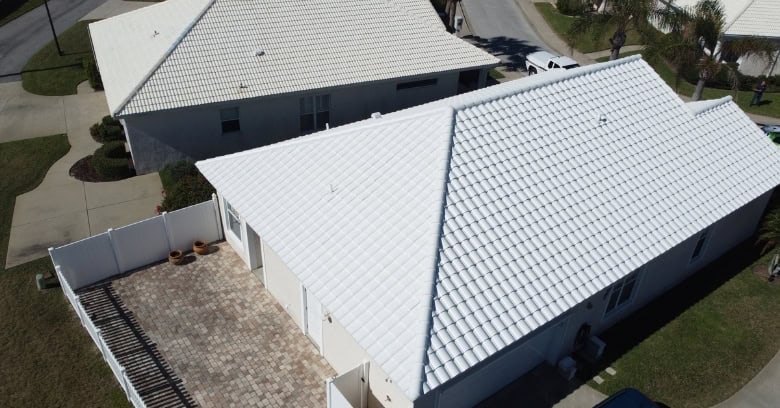
Looking for Roofing Contractors in Minneola Florida?
APC Roofing takes care of a routine checkup right up to a complete replacement, on asphalt, steel and clay coverings alike.
Phone 407-270-1129, and a roofer arranges a visit to the house.
A Roof's Construction, Explained: What's Tucked Away
The surface a passerby notices is only the outer layer, and felt or a synthetic membrane, boards and rafters lie out of sight. Metal flashing seals the seam at a wall, a pipe or a valley, and a leak at that spot rarely points to failed shingles nearby.
The attic air beneath the deck counts as part of the roof assembly, because trapped heat and damp age the deck and shingles above. A leak noticed inside can begin at any level of the roof, and a fix aimed only at the outer surface can leave the real source untouched.
Everyday Work of a Roof: an Owner's Overview
Laps and pitch steer rainfall toward the gutters, and the fastening pattern resists wind uplift. The framing bears the load above, snow included at the colder end of our territory, while vents let damp air leave the attic.
Shedding water is the covering's task, and resisting wind is the fastening's job, while gravity's pull goes to what is underneath. A weak link puts strain on the parts around the weak spot, and the real remedy sits back where the fault started.
The Minor Pieces of a Roof: Not All Equal
An asphalt surface is expected to serve for decades, but the flexible seal around a stack splits well before the shingles do. Moisture gets behind the covering and moves toward the room, and a stain appears on the ceiling below.
Sealant along metal edges dries and shrinks in strong sun, and coated metal rusts once the coating wears through. Shingles bent into caps split at the seam, because wind and weather strike the peak harder than the slopes below.
Spotting Trouble Without a Ladder: Before Anyone Climbs
Seen from the sidewalk, the shape of the roof shows dips, sags and wavy planes, and the gutters, fascia and trim come into view at the same time. Through binoculars, torn collars, lifted tabs and bare patches come into focus, yet a few conditions still need a hand on the surface.
Out on the roof, a roofer presses on every connector and follows each run of flashing, and the surface is checked for cracking, granule shedding and curled edges. A rain-slicked or very steep covering stays off limits underfoot, and the eave, reached by ladder, provides the vantage point instead.
The Attic: Clues From Below
A dark ring on the sheathing shows water has come through, and a soft, wet feel means the entry point is still open. Light passing through the decking reveals a breach, and the spot gets pinned down by distance from the ridge, ready for the outside check.
Rust on the nail shanks comes from moisture in the house, not rain, and a matted, faded patch nearby confirms the same condition. A blocked eave packed with fill, or a bathroom fan venting into the attic, shows up only on an inside look, so a street-level glance never catches faults of that kind.
A Homeowner's Take-Away: a Plain Account
Each finding is recorded with a photograph tied to a place on the roof, and a short note describes what each image covers. Sound parts get listed as plainly as anything that requires work, and faults are ordered from most to least pressing.
A saved report from an earlier stop gives the next check a baseline, and change over time is easier to judge than condition on a single day. Regular yearly checks keep an owner from being caught off guard, and large jobs show warning signs well ahead of the work becoming pressing.
Upkeep on a Shingle Roof: the Basic List
New rubber boots go on the pipes ahead of any cracking, and the joints at each flue get resealed. Needles and leaves get cleared from valleys and from behind chimneys, and sagging gutter hangers get tightened.
A loose piece fastened back promptly stays a minor task, but waiting out a rainy stretch invites water in from beneath. Moss on a shaded slope traps moisture under the courses, and the growth gets treated and then brushed away, not blasted off.
Staying Ahead of Trouble: The Payoff
An experienced roofer should read the covering once every year, set for just after the roughest local weather each season. The point is finding small faults before a leak forms, and the family hears plainly where the roof stands.
Following a storm, a walk around the house with eyes on the roof is a good habit, and upstairs ceilings deserve a look for new marks. Checking the attic with a lamp each season makes sense: damp wood, daylight and wet insulation are easy to see long before anything reaches the space below.
Reading a Roof's Age: Early Signs to Late Signs
A shingle surface in the first seasons looks crisp and even, and by mid-life the sun-facing side fades ahead of the shaded side. Close to the finish, corners lift and bald patches spread, and new leaks appear in different spots.
Judging from the street supplies a reasonable idea, but a walk on the roof is what confirms the condition. When shingles are exhausted, the candid conversation turns to replacement, and a good contractor gives that answer plainly, rather than selling another repair.
The Channel's Part in the System: What Homeowners Should Know
The covering's job on water stops at the drip edge, and a gutter takes the water the rest of the way. A channel hung the wrong way holds a pool against the house, and the wood close by swells and softens.
Trouble along that edge usually comes from standing water, not the covering, and a fresh covering does nothing for a fault at the edge. Gutter pitch and downspout discharge get checked on a visit, and the flashing along the eave gets looked over for bent or missing pieces.
Keeping Things Working Underneath: Why the Details Matter
Intake at the overhang and exhaust at the top keep air moving through the attic, and the draft clears warmth and humidity from under the sheathing. With the opening closed, the attic turns hot in summer and clammy in humid months, and the deck and shingles suffer early.
Exhaust hardware installed with no matching intake draws conditioned air up from the rooms below, and stacking two setups the wrong way can leave one choking the other. Reroofing with poor airflow left alone carries the fault forward, so a proper replacement addresses the same issue at the same time.
Specifications That Follow the Weather: What Shifts From Place to Place
Where winters bite hardest at the colder end of our territory, ice at the edge shapes the details, so peel-and-stick material gets laid along the overhang. Closest to the ocean, gusts decide how the covering gets anchored, and wind-rated materials and sealed flashing go into the plan.
In towns at the colder end of our territory, where hailstones run large, a harder product makes sense, while sun and heat age coverings everywhere we work. The details get set by conditions at that specific location, not routine or whatever was used on the last job.
Houses and Commercial Buildings: Different Structures Entirely
A sharply angled pitch sheds water course over course, and the surface is usually shingle, tile or metal. An office or warehouse roof depends on a flat, sealed surface, and rooftop units and drains get set directly into the surface.
A good number of homes have a shallow section over a porch or a sunroom, and a lapped product there lets water back up under the tabs. A low spot like that calls for a sealed sheet, tucked beneath the steeper roof above, and putting shingles back on that spot solves nothing.
A Cover Until Things Get Fixed: What Works and What Fails
A barrier over a torn area keeps water out in the meantime, but the broken parts stay broken all the same. A good cover goes up and over the peak and gets fastened with wood strips, and the material gets pulled taut so wind cannot get behind the edge.
Extra reach past the opening matters on any temporary cover, because rain slips in around a snug fit. Plastic left in place for months traps heat and moisture against the deck, and the material underneath weakens over time.
The Tie-In at a Chimney or Upright Surface: Where Leaks Start
Short metal steps get laced between the courses up the side of a dormer, and a strip of trim above turns down over the top edges. A chimney gets an apron across the downhill face and metal tied in up each edge, and a broad stack gets a saddle set into the slope nearby.
A smear of mastic over a bad patch opens up within a few seasons, and a proper tie-in, rebuilt from scratch, is what holds. Eroded mortar joints let water into the brick above the flashing line, and a mason may need to handle the stonework while a roofer handles the metal.
Getting the Scope in Writing: What to Look For
A clear plan identifies every material, from the shingle to the metal, by name, and the document states whether the current layer stays or goes. A firm outline settles ahead of time how bad wood gets handled, and the metal, the ventilation and the yard cleanup are each called out.
Competing proposals listed in detail can be read side by side, and any gap between the two versions stands out. A roofer who waves off the specifics gives no genuine protection, because nobody can confirm later what got said.
Replacing a Roof, Step by Step: the Basic Sequence
Anything near the eaves that could get damaged gets protected ahead of time, and the worn material gets pulled loose and hauled away. Opened up, the decking gets checked for soft spots and breaks, and rotten sections get rebuilt before anything gets put back down.
Membrane at the eaves, underlayment across the field and new flashing all go down, and shingles or panels, capped at the ridge, complete the installation. The property gets swept with a magnet once the crew wraps up, and nothing from the cleanup stays behind in the gutters.
Beyond the Shingle Roof: What Owners Should Watch
A metal system with exposed fasteners relies on the gasket beneath every fastener, and a hardened washer gets swapped out along with a new screw. Concrete and clay tile get installed by mortar, by foam or by mechanical attachment, and the real water barrier is the underlayment, not the surface material.
A careless step snaps a piece easily, and a damaged unit gets lifted out and replaced with one of the same profile. On a low-slope section, standing water and open seams are the things to watch, and grit and leaves get cleared from the scuppers.
What Owners Tend to Notice: Caught Early
- A buildup of shingle granules in the drainage, long after the covering was installed.
- Curled or lifting edges on the courses, noticeable from across the street.
- Torn rubber where a pipe exits the deck, easy to spot with binoculars.
- Paint blistering overhead after a storm, close to an outside wall or a chimney.
- Pinholes of light in the sheathing, beside a vent stack.
- Green growth along the north-facing side, in spots that stay damp longest.
- A hollow spot in an otherwise even stretch, seen best from across the street.
- Rust streaks below a metal joint, easy to spot from the yard.
Roofing Contractors Near Minneola Florida: APC Roofing, Step by Step
Before a scope gets drawn up, a roofer examines the whole covering and the attic, and the report shows up as photographs and a clear written account. What is fine gets said as plainly as what needs attention, and the homeowner decides what happens from there.
Roofing Contractors Across Minneola Florida: a Roofer Who Reads the Whole Roof
Dial 407-270-1129 to arrange a visit on site.
A Roof's Paperwork: Useful at Resale
Writing down the installation date and the materials used is a smart habit, and adding every inspection report to that folder grows the file. Listing every fix, the place and the scope, takes only a minute, and given enough time the pattern becomes clear.
A buyer's home inspector almost always asks about the roof's history, and a folder of dated pages settles things quickly. A second copy of the file, kept somewhere else, is worth having, because a single set can be destroyed in a flood or a fire.
Standards Worth Holding a Crew To: Small Things, Handled Properly
The field reads as straight bands, with crisp cuts where each slope ends, and nails stay covered by the layer above. The wall joints carry new flashing, tucked to match the way water runs, and caulk, where used at all, forms a thin, careful line.
Intake and exhaust vents stay open and unblocked, and every gutter ends up hanging correctly. The property gets checked with a magnet for stray fasteners, and a light scatter of sawdust near any cut line rinses off a walkway in seconds.
Anyone weighing choices for Roofing Contractors in Minneola Florida is closer to an answer than a listings page ever gives. Contacting APC Roofing at 407-270-1129 moves the scheduling forward. Every stop covers the full roof, top to bottom, with nothing left unclear.
Verified

Verified
Verified
Verified
Verified


















