
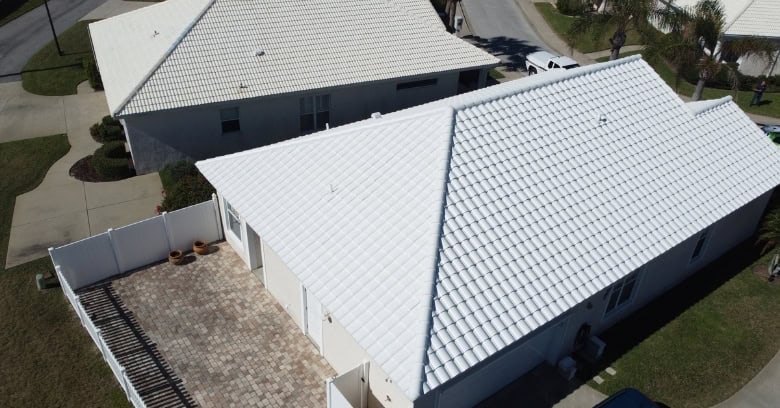
Need Roofing Contractors in Ocala Florida?
APC Roofing takes care of a routine checkup right up to a complete replacement, whether the covering is shingle, metal or tile.
Dial 407-270-1129, and a roofer arranges a visit to the house.
What a Roof Is Made Of: What Holds a House Together
The surface a passerby notices is only the outer layer, and felt or a synthetic membrane, boards and rafters lie out of sight. Metal flashing seals the seam at a wall, a pipe or a valley, and a leak at that spot rarely points to failed shingles nearby.
The space under the sheathing works as a component of the roof, too, because moisture trapped up there softens plywood and rusts nails overhead. A drip inside a bedroom can come from any level of the roof, and work confined to the outside can miss the real source.
Everyday Work of a Roof, Component by Component
A pitched covering sends rain down toward the gutters, and the fastening pattern resists wind uplift. What lies below carries the weight of everything on top, snow included at the colder end of our territory, and openings low and high let moisture escape the attic.
The covering deals with water, and nails and seal strips deal with wind, while what is underneath holds the whole thing steady, out of sight. Trouble in one element tends to show up far from the original problem, so repairs target the root, not the visible mark.
Small Components on a Roof: The First to Weaken
A field of sound shingles can go for decades, but the flexible seal around a stack splits well before the shingles do. Moisture gets behind the covering and moves toward the room, and a stain appears on the ceiling below.
Sealant around a skylight loses hold after enough summers, and galvanized flashing corrodes at folds and nail holes. Ridge caps split across the crease, because the highest point stands open to glare and gusts.
Spotting Trouble Without a Ladder: Near and Far
At a distance, the outline of the roof gives away dips, sags and wavy planes, and the fascia and gutter runs are visible at the same time. Binoculars pick out torn collars, lifted tabs and bare patches, yet a few conditions still need a hand on the surface.
Once on the roof, a roofer checks every connector closely and follows the flashing at each wall, and every course is checked for edges that have come loose. Nobody walks a covering that is wet or too steep, and the view comes instead from a ladder at the gutter line.
The Underside of a Roof: Evidence to Look For
A tide line on a rafter shows where rain has entered, and a clammy touch means the problem is ongoing. Light passing through the decking reveals a breach, and the position gets noted by measurement before anyone climbs.
Nail points gone orange signal damp air, not a leak, and a matted, faded patch nearby confirms the same condition. A soffit choked with insulation, or a bath fan venting into the attic space, is spotted only from inside, so ventilation trouble of that kind escapes a yard-only check.
What Comes Home With You: a Plain Account
Findings arrive as photographs tied to specific places on the roof, and a written line explains what each image shows. What is holding up gets named as clearly as what is not, and faults are ranked by how soon repair is needed.
A record saved from an earlier check sets a baseline for the next inspection, and change over time is easier to judge than condition on a single day. A roof tracked across each year brings few surprises, and large jobs show warning signs well ahead of the work becoming pressing.
Maintenance Tasks: the Basic List
Stiffened collars at the plumbing vents get changed early, and brittle beads at the walls get cut out and run again. Branches and leaf litter come off the low points and the chimney back side, and the gutter runs along the eaves get straightened.
A loose piece fastened back promptly stays a minor task, but putting off that step through storms can end in a drywall stain. Moss holds shingle edges up and traps water against the courses, and a gentle wash clears the growth, since a pressure washer strips granules.
A Regular Routine: Consistency Pays Off
Somebody trained in the trade should go over the roof once a year, timed for right after the season that is hardest on roofs locally. Catching things early is the whole point of a regular check, and repair work gets planned rather than rushed.
In the months between visits, a look from the driveway after high wind helps, and top-floor rooms are worth checking for fresh stains. Checking the attic with a lamp each season makes sense: soft wood, tiny bright spots and soggy insulation surface long before anything reaches the space below.
Judging a Roof's Age From Outside: What the Years Bring
Newer asphalt lies smooth and uniform in tone, and by mid-life the sun-facing side fades ahead of the shaded side. Near the end, corners curl and granules gather in the gutters, and mending one area seems to open another.
A reading from the ground supplies a fair estimate, but the true condition shows only from up top. A covering that has reached the end of a normal service life raises a replacement question, and a good contractor gives that answer plainly, rather than selling another repair.
A Blocked Channel: The Stakes Explained
The covering carries runoff only to the lower edge, and from there a gutter does the remaining work. A clogged or sagging channel pushes water back behind the fascia, and the material there softens over time.
Trouble along that edge usually comes from standing water, not the covering, and replacing the roof leaves the real cause untouched. The direction of fall along each gutter gets checked, together with the outlets, and the flashing along the eave gets looked over for bent or missing pieces.
Why the Area Above Needs to Work Right: An Overview
Cooler air should enter through the soffit and rise out at the ridge, and that movement removes heat and moisture from under the deck. Once that gets shut off, the attic bakes in summer and stays soggy in humid weather, and the tabs curl and the plywood softens ahead of schedule.
A roof opening installed with no matching intake draws air from the living space below, and two mismatched setups on one roof can work against each other. A roof placed over bad ventilation inherits an existing weakness, so the arrangement gets corrected while the deck is already open.
Roofing That Fits Where You Live: An Overview
Where winters bite hardest at the colder end of our territory, ice at the edge shapes the details, so a self-sealing membrane runs up from the edge. At the coast, uplift decides the fastening pattern, and storm-rated trim metal and taped seams get called for.
In towns at the colder end of our territory, where hailstones run large, a harder product makes sense, while ultraviolet light ages granules in every market we serve. The details get set by conditions at that specific location, not habit or a standard default.
Family Homes and Business Buildings: One Steep, One Flat
A sharply angled pitch sheds water course over course, and shingle, tile and metal all serve that role. Most commercial buildings use a single-ply or built-up membrane, and internal drains and heating units share space on that roof.
Plenty of residences include a shallow section over an addition, and a shingled surface there lets rain linger long enough to work under the courses. A spot built that way needs a sealed membrane tucked under the pitched roof above, and putting shingles back on that spot solves nothing.
A Cover Until Things Get Fixed: What Holds Up
A sheet shields a gap for a little while, but the broken parts stay broken all the same. A properly installed cover wraps the ridge and gets pinned under wood strips, and the material gets pulled taut so wind cannot get behind the edge.
A sheet cut too small leaves the edges of the opening exposed, as driven rain works in wherever an edge falls short. A membrane left up too long traps moisture against the covering, and mildew and rot follow underneath.
Vertical Joints on a Roof: an Explanation
Short metal steps get laced between the courses up the side of a dormer, and a strip of trim above turns down over the top edges. A chimney has an apron below and metal run up against both edges, and a broad stack gets a saddle set into the slope nearby.
Tar smeared over a gap gives way as the metal moves, and a proper tie-in, rebuilt from scratch, is what holds. A failing chimney crown lets moisture into the stack above the roofline, and part of that repair belongs to a mason, not a roofer.
A Contract Worth Reading: Nothing Left Vague
The plan for a job names every product by brand, and the document states whether the old covering comes off. The account explains how rotten decking gets handled if any turns up, and new metal, vents and the cleanup work appear as separate items.
Offers from different contractors can be weighed point for point, and the gaps between the two sets of paperwork come into view. A business that keeps every particular verbal gives an owner nothing to hold onto, and memory is a poor record of what got agreed.
Replacing a Roof, Step by Step: What Changes at the House
Shrubs, flower beds and the driveway get protected ahead of the work, and the existing layers get torn off into a dumpster. The bare deck gets checked plane by plane once the old covering is off, and rotten sections get rebuilt before anything gets put back down.
Membrane at the eaves, underlayment across the field and new flashing all go down, and shingles or panels, capped at the ridge, complete the installation. The property gets swept with a magnet once the crew wraps up, and no debris gets left in the gutters.
Beyond the Shingle Roof: Notes by Covering Type
A metal system with exposed fasteners relies on the gasket beneath every fastener, and a cracked washer gets replaced along with a fresh screw. Based on the house, tile may be mortar-set, foam-set or clipped directly, and the layer underneath carries the job of shedding water.
A foot planted wrong breaks off a piece, and a damaged unit gets swapped for another of matching shape. A modified-bitumen or single-ply section needs the seams and any puddling checked, and leaves get removed from the outlets regularly.
Clues That Point to Trouble: a Checklist
- Grit gathering at the downspout outlets, long after the covering was installed.
- Tabs curling at the corners, spread across more than one row.
- A vent seal that has pulled loose, easy to spot with binoculars.
- A brown patch on upstairs drywall, still visible once dry.
- Light leaking in near a valley or a pipe, beside a vent stack.
- Moss on a shaded slope, soaking up water after every rain.
- A bulge that catches the light at dusk, often pointing to trouble in the deck beneath.
- Rust streaks below a metal joint, easy to spot from the yard.
Roofing Contractors Around Ocala Florida: How APC Roofing Works
Before anything gets suggested, a roofer takes in the whole covering and the attic together, and the results come back as images plus a short written summary. What is fine gets said as plainly as what needs attention, and the homeowner decides what happens from there.
Roofing Contractors Near Ocala Florida: a Roofer Who Reads the Whole Roof
Dial 407-270-1129 and book a visit to the property.
A Roof Timeline: Useful at Resale
Writing down the installation date and the materials used is a smart habit, and each report from a follow-up visit joins the same file. Listing every fix, the place and the scope, takes only a minute, and looking back after enough time shows what keeps recurring.
When a house goes up for sale, a buyer's inspector asks about the roof, and a folder of dated pages settles things quickly. A duplicate set, saved to a phone or a drive, is worth making, so nothing depends on one paper version alone.
What Good Work Looks Like: Small Things, Handled Properly
The lines run true from eave to ridge, with rake cuts trimmed sharp, and nails stay covered by the layer above. Flashing at walls is new and set in properly, and caulk, where used at all, forms a thin, careful line.
The soffit vents breathe freely and the ridge vent stays clear, and every gutter ends up hanging correctly. The lawn and driveway get a magnetic pass at the end of the job, and sawdust near a cut line is the most common leftover once the work wraps up.
Anyone who came here searching for Roofing Contractors in Ocala Florida is closer to an answer than a listings page ever gives. Getting in touch with APC Roofing at 407-270-1129 gets a date on the calendar. Every visit covers the roof and the attic together, with nothing left unclear.
Verified

Verified
Verified
Verified
Verified


















