
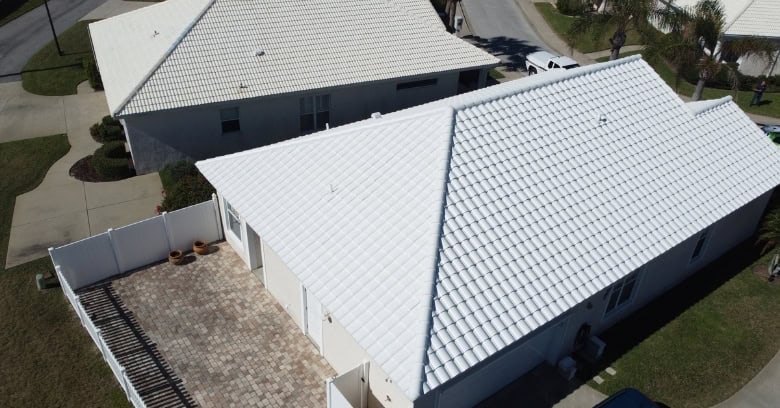
Looking for Roofing Companies in Mineola Florida?
APC Roofing covers everything from a routine checkup to a complete replacement, on shingle, metal and tile alike.
Dial 407-270-1129, and a roofer sets a time to come look at the house.
The Roof's Inner Build-Up: What's Tucked Away
The surface a passerby notices is only the outer layer, and a moisture barrier, sheathing and framing sit underneath. Sheet-metal flashing takes over at each wall, stack and valley, and a leak at that spot rarely points to failed shingles nearby.
Ventilation in the attic ranks as one more working part of the roof, since heat and humidity held there wear down the wood and covering overhead. Water showing indoors may come from any level of the structure, so a repair aimed only at the surface can miss the real cause.
The Duties of a Roof, Component by Component
A pitched covering sends rain down toward the gutters, while nails and seal strips resist the pull of gusts. Beams and boards carry the mass overhead, snow included at the colder end of our territory, while vents give damp attic air a way out.
The covering deals with water, and nails and seal strips deal with wind, while what is underneath answers for holding the roof up, unnoticed. A weak component shows up as a sign of trouble somewhere else on the roof, and a lasting fix reaches back to where the fault began.
The Smaller Details Up Top: The First to Weaken
The main covering is built for a long run, but the rubber boot at a drain stack wears through much earlier. Moisture gets behind the covering and moves toward the room, and a stain appears on the ceiling below.
Caulk along a wall joint hardens and pulls away in the heat, and steel flashing corrodes from trimmed edges inward. Hip and ridge caps open at the center crease, because wind and weather strike the peak harder than the slopes below.
Spotting Trouble Without a Ladder: a Two-Step Read
From the driveway, the outline of the roof shows dips, sags and wavy planes, and the eave boards and downspouts can be sized up as well. Through binoculars, torn collars, lifted tabs and bare patches come into focus, yet a few conditions still need a hand on the surface.
Moving across the planes, a roofer tests every connector and traces every flashing joint, and every course is checked for edges that have come loose. A rain-slicked or very steep covering stays off limits underfoot, and the eave line, reached by ladder, becomes the vantage point.
Inside the Attic: Clues From Below
A dark ring on the sheathing shows water has come through, and dampness under the fingers shows the entry is still active. Daylight visible between the boards marks an opening, and a measurement from the peak locates the spot for the outside look.
Nail points gone orange signal damp air, not a leak, and a matted, gray patch backs up the same story. Fill pushed into the eave opening, or a fan duct ending in the attic, turns up only from inside, so a yard-only look passes over faults like that.
A Homeowner's Take-Away: the Basics
Findings arrive as photographs tied to specific places on the roof, and a caption states what each picture reveals. What is holding up gets named as clearly as what is not, and trouble spots are ranked from most to least urgent.
A saved report from an earlier stop gives the next check a baseline, and how the covering is aging shows up better than a single day's reading. A roof followed on a consistent schedule rarely springs a surprise, and a serious repair shows warning signs long before the work turns urgent.
Seasonal Shingle Maintenance: a Short Rundown
Worn pipe gaskets get swapped out before failure, and shrunken caulk along the flashing gets a fresh bead. Branches and leaf litter come off the low points and the chimney back side, and the gutter runs along the eaves get straightened.
A lifted tab sealed down early stays a small job, but a season of neglect can end in a ceiling mark. Moss along a north-facing slope wedges under the laps, and the growth gets killed with a treatment and swept off by hand.
The Habit Worth Keeping: a Homeowner's Part
Somebody trained in the trade should go over the roof once a year, timed for right after the season that is hardest on roofs locally. The point is finding small faults before a leak forms, and repair work gets planned rather than rushed.
Between visits, an owner can look at the roof from the yard after rough weather, and top-floor rooms are worth checking for fresh stains. Checking the attic with a lamp each season makes sense: discolored boards, light through the deck and damp insulation turn up long before anything reaches the space below.
Judging a Roof's Age From Outside: Early Signs to Late Signs
Brand-new shingles look dark and consistent across every slope, and around the midpoint the sun-facing plane grows paler sooner than the rest. Toward the end, granules collect in the gutters and the mat starts to show, and mending one area seems to open another.
An impression formed from outside has real value, but a ladder and a closer look tell the fuller story. Once shingles are spent, patching stops making sense, and a reliable contractor says so outright, instead of offering another fix.
A Channel That Has Given Up: A Quick Look
A roof moves water only as far as the drip edge, and the gutter picks up the flow at the edge. A clogged or sagging channel pushes water back behind the fascia, and the wood close by swells and softens.
A weak patch there usually traces to a stopped-up drain, not the shingles, and a new covering will not fix what backed-up water caused. Gutter fall and downspout placement get checked together, and the drip edge gets looked over where the metal meets the fascia line.
A Two-Way Exchange: How the Design Works
Intake at the overhang and exhaust at the top keep air moving through the attic, and that flow carries built-up heat and dampness away from the attic. When that gets blocked, the attic overheats in summer and stays muggy through humid months, and the whole build's service life shortens.
A roof opening installed with no matching intake draws air from the living space below, and two mismatched setups on one roof can work against each other. A roof placed over bad ventilation inherits an existing weakness, so a proper replacement addresses the same issue at the same time.
What Gets Chosen and Why: How Choices Differ
At the colder end of the markets we serve, snow load and ice at the edge drive the design, so an adhered barrier goes under the lowest rows. On the coastal side of our area, storm winds set the nail pattern, and wind-rated materials and sealed flashing go into the plan.
Where hail falls hard at the colder end of our territory, an impact-rated covering is worth considering, while strong sun bakes asphalt across every market we serve. Every material choice answers to the weather at that house, not habit or a standard default.
Family Homes and Business Buildings: Different Structures Entirely
A pitched covering sheds water through overlapping courses, laid in asphalt, tile or metal. Most commercial buildings use a single-ply or built-up membrane, and mechanical equipment and drains break through that surface.
Some houses have a gently sloped patch over a back room, and a lapped product there lets water back up under the tabs. A spot built that way needs a sealed membrane tucked under the pitched roof above, and putting shingles back on that spot solves nothing.
Covering an Open Roof: What Works and What Fails
Plastic over a break keeps the rooms beneath dry for a time, but the underlying trouble waits for a crew. A sound cover sits over the ridge and gets held down by wood battens screwed through the material, and the fabric gets stretched so no loose fold can catch the wind.
Extra reach past the opening matters on any temporary cover, as driven rain works in wherever an edge falls short. A cover left up through a whole season holds heat against the surface, and the material underneath weakens over time.
Vertical Joints on a Roof: an Explanation
Short metal steps get laced between the courses up the side of a dormer, and trim set higher up sheds water past that metal. A chimney gets an apron across the downhill face and metal tied in up each edge, and a broad stack gets a saddle set into the slope nearby.
A smear of mastic over a bad patch opens up within a few seasons, so the lasting answer is new metal laced in properly. Crumbling mortar lets rain soak into the masonry higher up, and some leaks like that need a mason as well as a roofer.
What a Proposal Should Say: Items to Expect
The plan for a job names every product by brand, and the document states whether the old covering comes off. A dated form covers what happens if rotten boards turn up, and the flashing, the exhaust work and the final cleanup all get covered.
Thorough scopes from rival bidders can be checked point by point, and the gaps between the two sets of paperwork come into view. A firm unwilling to resolve the plan in advance is telling an owner something, and memory is a poor record of what got agreed.
How a Re-Roof Unfolds: What a Homeowner Sees
Anything near the eaves that could get damaged gets protected ahead of time, and the existing layers get torn off into a dumpster. With the old material gone, the plywood gets examined board by board, and weak areas get cut out and replaced with sound lumber.
Membrane at the eaves, underlayment across the field and new flashing all go down, and the main covering, the ridge line and the vents finish the work. A magnet pass covers the grass and pavement at the end, and a last look confirms the gutters are clear.
Beyond the Shingle Roof: Particular Needs
Exposed-fastener metal panels seal at a rubber gasket under every fastener, and a brittle washer gets replaced whole, never smeared with anything extra. Clay and concrete tile go down by more than one method, from mortar to foam to clips, and the underlayment handles the water, not the surface material.
Weight placed wrong breaks a piece, and a spare of the same profile goes in where one fails. A modified-bitumen or single-ply section needs the seams and any puddling checked, and leaves get removed from the outlets regularly.
Clues That Point to Trouble: Easy to Act On
- Granules collecting in the gutters, well after the roof was new.
- Tab ends that curl instead of lying flat, spread across more than one row.
- A hardened gasket at a stack, easy to miss without a zoom lens.
- A ceiling ring in a top-floor room, soft at the center.
- Light glowing between the planks, spotted during a flashlight check.
- Clumps of moss under overhanging trees, growing thicker every spring.
- A bulge that catches the light at dusk, visible against the sky.
- Rust streaks below a metal joint, easy to spot from the yard.
Roofing Companies Around Mineola Florida: How the Visit Works
Before a scope gets drawn up, a roofer examines the whole covering and the attic, and what turns up gets delivered as pictures along with a written explanation. What is holding up gets stated as clearly as what is not, and the next step is left to the homeowner.
Roofing Companies for Mineola Florida Homes: a Full Look, Not a Guess
Get in touch at 407-270-1129 and set a time for a visit.
A Roof Timeline: Easy to Maintain
Tracking when the covering went on and what was used is worth the effort, and every yearly report can go into the same file. Logging each repair by spot and by task builds a fuller picture, and given enough time the pattern becomes clear.
Once a home hits the market, the roof's age and condition come up in conversation, and paperwork with dates carries more weight than recollection. A scanned set of the same files, stored separately, guards against a misplaced original, in case the paper sheets go missing in a move.
Signs of a Job Done Right: Quality You Can See
Every row lines up, and the ends at the gables get trimmed evenly, and no nail head shows on the finished surface. Metal against any wall or chimney rests flush and secure, and any sealant used is a neat bead, never a smear.
The attic keeps intake and exhaust moving after the job, and the gutter runs finish straight and fastened. A final sweep with a magnet tidies the yard and drive, and wood shavings from a trimmed edge are the most common leftover from the work.
Anyone who arrived looking into Roofing Companies in Mineola Florida does not have to keep guessing about next steps. Picking up the phone for APC Roofing at 407-270-1129 moves the scheduling forward. Every stop takes in the whole roof, not just the part in question, with nothing left unclear.
Verified

Verified
Verified
Verified
Verified


















