Hailstorms in the Kansas City metro rarely announce their damage. A storm blows through on a Tuesday evening, the sky clears, the driveway dries, and the roof looks exactly the way it did the week before. Months later, a brown ring appears on a bedroom ceiling, and by then the insurance clock may have run out. That gap between the storm and the symptom is the single biggest reason homeowners lose money on hail, and it is why reliable roofing contractors push for a documented inspection while the evidence is still fresh rather than waiting for a leak to make the case. Property owners in Shawnee Kansas deal with this pattern nearly every spring.
The problem is compounded by how hail damage actually presents itself. Functional hail damage on asphalt shingles is often invisible from the ground and easy to misread even from a ladder. Meanwhile, the visible dents on a gutter or an air conditioner are frequently the only clues a homeowner ever notices and those clues, properly photographed, can carry an entire claim. Knowing the difference between a hail bruise, a blister, and a thermal split is the difference between an approved replacement and a denial letter.
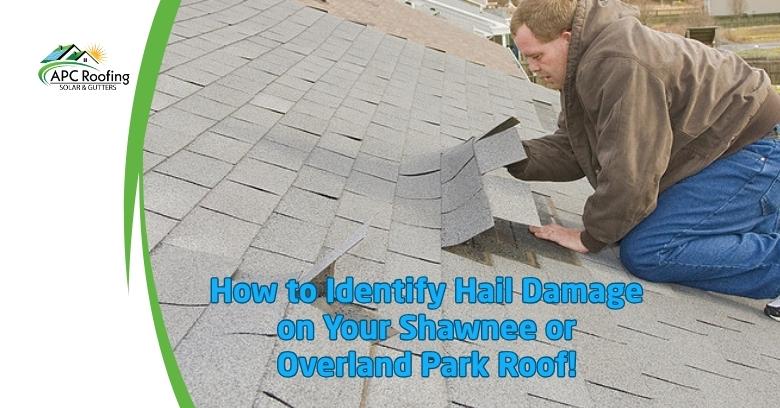
This article walks through how to identify hail damage on a Shawnee or Overland Park roof: when storms hit, which neighborhoods are most exposed, what damage experienced roofing companies look for, what real hail impacts look like on shingles, metal, tile, and wood shake, what gets misdiagnosed as hail, how adjusters measure damage with test squares, and how Kansas rules on deductibles, contractor registration, and permits affect the process. It closes with the questions homeowners ask most often on the phone.
Why Hail Season in Johnson County Deserves Close Attention
The Storm Calendar
Hail season across the KC metro runs from March through June, with April and May producing the heaviest activity and a secondary window opening again in September. Kansas consistently ranks among the top states in the country for hail claims, and Johnson County sits squarely in the path. Homeowners in nearby Overland Park Kansas see the same storm cells that clip Shawnee, Lenexa, and Olathe, often within the same hour.
The seasonal mechanism matters as much as the calendar. A spring hailstorm can fracture the asphalt mat of a shingle without opening a hole. Water then works into that bruised area and the freeze-thaw cycles of a Kansas winter, along with ice damming at the eaves, expand those micro-fractures until the roof finally leaks. Hail can bruise underlayment and decking and stay dry for one to three years before failing. The leak shows up in January; the loss happened in May.
Neighborhoods Where Age Multiplies the Risk
Roof age changes everything about how hail behaves. Western Shawnee subdivisions around Monticello and Clear Creek, along with the 1990s and 2000s build-outs across Overland Park, now carry roofs that are 20 to 25 years old. Aged, brittle shingles have already lost flexibility, so even wind-driven three-quarter-inch hail can fracture them. These roofs are most likely to be declared a total loss rather than a partial repair.
Tree cover adds another layer of confusion. Older homes along the Nieman Road corridor and near Shawnee Mission Park sit under heavy oak and ash canopy. Falling limbs leave gouges that look like impact damage, and shade encourages dark algae streaking that homeowners mistake for hail bruising. Experienced roofing companies separate those conditions before an adjuster ever arrives, because a claim built on the wrong evidence invites a denial.
What Genuine Hail Damage Looks Like on Asphalt Shingles
Granule Loss and Exposed Mat
The first signature a roofing contractor looks for is granule loss. A hailstone strikes the surface, knocks the protective mineral granules loose, and exposes the black asphalt mat underneath. Fresh exposure looks dark and clean, not faded. Granules collecting in gutters and at downspout outlets support the finding, though heavy granule accumulation on a brand-new roof is usually just factory shedding.
The Bruise Test
The second signature is the bruise and it decides claims. Pressing a fingertip on a suspected hit should reveal a soft, spongy spot where the fiberglass mat has fractured beneath the surface. That fracture qualifies as functional damage even with no crease, tear, or hole. A dent that feels firm and solid is cosmetic; a dent that gives under light pressure is a compromised shingle.
Random and Non-Directional
Real hail lands randomly. Hits appear scattered across a slope with no rhythm, no rows, straight lines, or evenly spaced marks. When dents line up in a track or cluster along a walking path, the cause is mechanical such as from a foot traffic, a dropped tool, or a ladder. This distinction is one of the fastest ways an adjuster dismisses a claim and one of the most common reasons homeowners feel blindsided.
Hail Size and What It Actually Does
Storm reports give sizes in familiar objects, and those sizes map roughly to outcomes:
- Pea, about 1/4 inch - no meaningful roof damage.
- Marble, about 1/2 inch - cosmetic at most; may mark screens.
- Penny, about 3/4 inch - can damage aged or brittle shingles, especially wind-driven.
- Quarter, about 1 inch - the point where functional shingle damage typically begins.
- Golf ball, about 1.75 inches - widespread bruising and granule loss are likely.
- Tennis ball, about 2.5 inches - expect fractured mats, split shingles, and damaged soft metals.
On newer laminated architectural shingles, the common working threshold is around 1.25 inches combined with wind. On a twenty-year-old roof, considerably less can do the job.
Soft-Metal Collateral: The Evidence That Often Wins the Claim
Because shingle bruising is hard to see and even harder to photograph, roofing contractors look for soft-metal denting, which often carries the argument. Hail that dents aluminum almost certainly struck the roof with the same force. Walk the perimeter and look for:
- Dents in gutters, gutter apron, and downspouts
- Dimpling on fascia wrap and metal soffit panels
- Bruised roof vents and dented turbine or ridge vent caps
- Flattened fins on the AC condenser
- Torn or pocked window and door screens
- Dented mailbox, grill lid, and patio furniture
- Fresh impact marks on wood deck boards
Photograph each item with something for scale such as a coin or a tape measure and note the date. This is the one part of the inspection a homeowner can do safely from the ground and it is the part many roofing companies say makes or breaks borderline claims.
Metal, Tile, and Wood Shake: Different Rules
Metal roofing and metal soffit often show nothing but denting after hail, with no loss of water-shedding function. That is precisely why many policies now include cosmetic-damage exclusions or endorsements for metal surfaces. Owners of standing seam or metal panel systems should read the declarations page before assuming a dented panel is a covered loss, and should ask roofing contractors to document whether panel seams, fasteners, or coatings were actually compromised.
Wood shake behaves differently again. Hail-damaged shake splits with sharp, unweathered corners and shows an impact mark at the point of the split. A split with rounded, gray, weathered edges is age, not hail. Tile can crack or spall under larger stones and cracks are often hidden until someone walks the field carefully which on tile, means knowing where to step.
Five Things Commonly Mistaken for Hail Damage
- Blistering - Round, granule-free pockmarks caused by trapped moisture or heat. They look like hail hits, but the mat beneath stays firm.
- Thermal splitting - Straight vertical cracks from expansion and contraction, with no impact bruise nearby.
- Algae streaking - Dark vertical stains from Gloeocapsa magma, common on shaded north slopes and cosmetic only.
- Nail pops - Raised bumps from fasteners backing out, often in neat rows that follow the nail line.
- Factory granule shedding - Loose granules in the gutters of a roof installed within the last year or two.
Misreading any of these is how homeowners end up filing a claim that gets denied, which is a poor outcome when the same storm may have caused genuine, documentable damage elsewhere on the structure.
Insurance, Deductibles, and the Kansas Rules That Apply
How Adjusters Measure
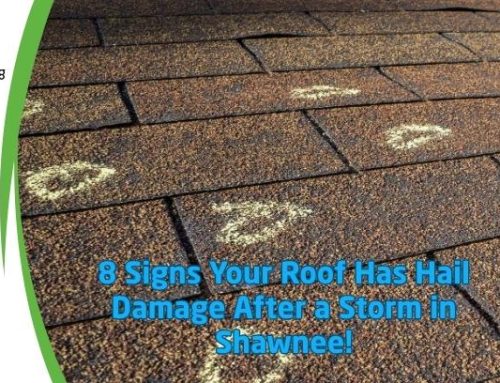
Most adjusters chalk a 10-by-10-foot test square on each slope, count the hits inside it, and extrapolate. Carriers commonly treat a slope as totaled when hits exceed roughly eight to ten per square, though the threshold varies by insurer. Each slope is judged separately, which explains why a north slope may qualify while a south slope does not and why two neighbors can get different answers from the same storm.
Deductibles, ACV, and Timing
Wind and hail deductibles in Kansas are often percentage-based rather than flat, commonly one to two percent of dwelling coverage. On a $350,000 home at two percent, that is $7,000 out of pocket before the policy pays anything. Nationally, architectural shingle replacement trade averages run roughly $450 to $700 per square installed, putting a typical 25 to 35-square home in the $12,000 to $25,000 range, with steep, multi-story, tile, and metal roofs higher. Replacing plank decking or sagging 7/16-inch OSB adds cost. Actual cash value policies pay depreciated value first and release the remaining depreciation after the work is completed and invoiced; replacement cost value policies cover the full cost subject to that process. Policy suit-limitation clauses typically cap filing at one to two years from the date of loss, so waiting is expensive.
Kansas Contractor Rules and Local Permits
The Kansas Roofing Contractor Registration Act requires roofing contractors to register with the state Attorney General, and homeowners may generally cancel a roofing contract within five business days of learning that the insurer denied the claim. Kansas also prohibits a contractor from paying, waiving, or rebating a homeowner's insurance deductible, and no contractor may negotiate or adjust a claim unless licensed as a public adjuster. Any company offering to eat the deductible is offering something illegal.
Work in Shawnee Kansas and neighboring Overland Park requires a building permit plus a Johnson County Contractor Licensing Program license and the residential code limits a structure to two total layers of shingles. Door-knocking surges across Johnson County within 48 hours of a storm as out-of-state crews follow radar, so verifying registration, licensing, and local permit history is the fastest way to separate legitimate roofing companies from storm chasers. Class 4 impact-resistant shingles rated under UL 2218 typically add roughly $15 to $40 per square in material and often earn an insurance premium credit of five to twenty percent which is worth discussing with roofing contractors during any replacement.
Wrapping Up
Hail damage is more of a documentation problem than a visibility problem as the bruised shingle that will leak next winter looks almost identical to the one that will not, and the dented gutter downstairs may be the strongest evidence available. Homeowners in Shawnee and Overland Park Kansas who inspect the soft metals after a spring storm& photograph what they find with dates and scale, and then bring in qualified roofing contractors for a full slope-by-slope assessment put themselves in a far stronger position than those who wait for a ceiling stain.
Because suit-limitation clauses often cut off claims one to two years after the date of loss, and because freeze-thaw cycles do the real damage months after the hail falls, roofing companies serving the area know the window for action is narrower than it feels. Scheduling an inspection now before the next hail window opens costs nothing and preserves every option that matters later!
Key Takeaways
- Functional hail damage on asphalt shingles means granule loss that exposes the black mat, plus a soft, spongy bruise felt with a fingertip; no tear or hole is required.
- Genuine hail impacts are random and non-directional, while dents arranged in rows or lines indicate foot traffic or mechanical damage.
- Dented gutters, downspouts, vents, AC condenser fins, screens, and mailboxes are ground-level evidence that often decides whether a claim is approved.
- Functional shingle damage typically begins around 1-inch hail, but wind-driven 3/4-inch hail can damage roofs that are already 20 to 25 years old.
- Kansas law bars roofing contractors from paying or waiving an insurance deductible and from adjusting a claim without a public adjuster license.
- Roofing work in Shawnee and Overland Park requires a permit and a Johnson County contractor license, and codes allow no more than two total shingle layers.
Frequently Asked Questions
Can hail damage be seen from the ground?
Usually not on the shingles themselves. From the ground, homeowners can generally only spot collateral evidence such as dented gutters, torn window screens, and flattened AC condenser fins, which is why a close-up slope inspection is necessary to confirm shingle bruising.
Will filing a hail claim raise the premium or cause a policy cancellation?
Hail is a weather-related loss rather than a fault-based one, so a single claim is treated differently from an at-fault liability claim. Rates across a region can rise after major storm seasons regardless of individual filings and repeated claims may affect renewal, so it is worth discussing specifics with the carrier.
What is the difference between ACV and RCV?
ACV pays the roof's depreciated value, while RCV pays the full replacement cost. Under an RCV policy, the insurer issues the depreciated amount first and releases the withheld depreciation once the work is completed and final invoices are submitted.
Why did a neighbor get an approved roof when this one was denied?
Adjusters evaluate each slope with a chalked 10-by-10-foot test square and count hits, so wind direction, roof age, shingle type, and slope orientation all change the outcome. Two homes on the same street can legitimately receive different decisions.
Will the roof be repaired or fully replaced?
It depends on hit density per test square. Carriers commonly total a slope when hits exceed roughly eight to ten per square, while lighter, isolated damage is often handled as a repair.
How long after a storm can a claim still be filed?
Policy suit-limitation clauses commonly cap filing at one to two years from the date of loss. The exact limit appears on the declarations page, and earlier documentation always strengthens the claim.
Are impact-resistant shingles worth the upcharge in Johnson County?
For many hail-belt homeowners, yes. Class 4 shingles rated under UL 2218 typically add roughly $15 to $40 per square in material and often qualify for an insurance premium credit, which can offset the cost over several years.
How can a storm chaser be identified after a hailstorm?
Check for Kansas Attorney General roofing registration, a Johnson County contractor license, a local physical address, and a willingness to pull the required city permit. Any offer to cover or rebate the deductible is a clear warning sign.