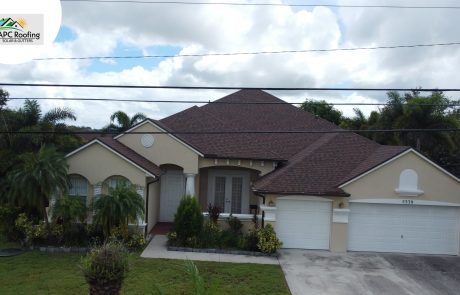
In Need of Emergency Roof Repair Near Greater Orlando Metro Area?
APC Roofing closes up the places where rain is getting in, working at the flashing, the valleys and the vent pipes.
Reach us at 407-270-1129 to set up a visit from a roofer.
Finding the Way In: the Weak Spots in a Covering
Across the unbroken middle of a slope, shingles seldom fail, because overlapping courses carry water downhill. Weak points sit wherever the surface stops against something else, at the pipes, the chimney, the valleys and the walls.
A spot on the ceiling paint shows where the drip fell, not where rain got in, because the trickle clings to rafters and sheathing before falling. Guessing from inside puts the repair in the wrong place, and water keeps coming in after that.
Walls That Rise From the Roof: What Goes Wrong
One bent piece of flashing is slid under each row in turn, with a counterflashing tucked above to cover the upper edge. Once a section corrodes or works loose, the leak shows up inside at the wall line.
What holds is new metal installed correctly, with the neighboring shingles lifted and relaid. A coat of mastic on top is not the same thing, since a surface seal hardens and shrinks away from the edges.
Pipe Boot Leaks: Splits and Replacements
A drain stack is made watertight with a rubber collar and a flanged base, and heat and sunlight age the material steadily. Sooner or later the seal tears at the top, and a bathroom ceiling is often where the water shows.
The remedy is a fresh unit, fed in beneath the courses on the uphill side, and a rusted base means the whole assembly goes. A heavier boot resists cracking much better, on a roof with plenty of seasons left.
Valleys: Wear and Debris
An inside corner takes the water shed by the slopes on either side, and during a hard rain the water rushes along. The material lining the trough is scoured thin years before the open roofing, and an install with no underlayment gives way once the granules are gone.
Twigs and needles collect where the planes join, so water ponds and creeps beneath the laps. A bad valley comes apart and goes back properly, because the current tears a coat of cement away within months.
Nail Pops – a Pinhole Leak
Plywood sheathing expands and contracts as humidity comes and goes, which slowly eases the shanks back out. A nail that has backed out leaves a bump in the covering, and rain can seep in around the high spot.
Sinking the loose metal home again gets undone, since the same loosened spot simply lets go again. A sound repair removes the nail, fills the hole and nails again into firm decking, plus a new shingle wherever a tab tore.
Metal Sheets on a House – What Fails With Age
Exposed-fastener steel is attached with screws through the flat areas, with only a small washer between the rain and the deck. In time the little rings harden and shrink, while driving too shallow never pressed down far enough.
A failed screw is replaced by a new screw with an intact washer, with a wider shank used wherever the old hole has grown. Adjoining laps and trim are gone over at the same time, as the whole batch has had the same sun.
Tabs the Wind Has Raised: Checking the Damage
A row stays down thanks to nails and a factory-applied adhesive line, but a violent squall can peel the lower edge free. Any tab flipped past upright ends up creased, and a sideways downpour finds the gap.
If only the bond failed and the piece is intact, a few spots of cement hold the course down again, while a torn tab is removed and matched. A tab that has blown off leaves the nail heads underneath bare, and water runs straight in around the shanks.
The High Line of a Roof: Leaks at the Summit
The finishing pieces over the apex are creased over the fold, and weather opens splits over time. The deck under a ridge vent has a strip removed on purpose, and nothing but the housing protects the attic.
A unit the wind has shaken loose admits blown spray, and the clue is moisture along the highest board. A ridge repair replaces cracked caps and resecures the vent together, since leaving any part undone invites the same trouble.
Ice at the Eaves – Why the Attic Matters
Where the winters are long and snowy, a covering with no defect can still admit water, as heat lost upward thaws the lower face of the snow. Once past the outside wall, the dripping hardens again, until a frozen barrier lines the gutters.
Upslope of the blockage, standing melt spreads out, and shingles were never made to hold back a puddle. Keeping the sheathing cold with ventilation and insulation stops the cycle, though a waterproof underlayment at the eave protects the house in the meantime.
Roofs Over Porches – Membranes and Transitions
A good number of homes have a part that hardly slopes, yet builders often run the steeper-roof material straight across the flat portion. Courses that overlap rely on water never sitting still, so a sluggish trickle climbs beneath the joints.
A sound fix swaps in a roll membrane designed for near-level roofs, tucked up under the bottom row of the steeper roof above.
Tracks on the Rafters – Finding the Spot Outside
Water running along the framing leaves a dark streak on the boards, and the discoloration remains long after everything dries. The stain's upper limit lies right under the fault, so a tape run to the peak and to an end wall locates the spot from the roof.
A wire or nail poked upward from inside shows exactly where to look, but under a cathedral ceiling there is no access, so the search moves outdoors. Compressed, discolored insulation sits under the drip, and a layer in that state is replaced, not dried out.
Sweating Decks: Where the Drops Come From
Even dampness across the whole underside of the sheathing usually has nothing to do with rain, because warm, humid household air turns to droplets on meeting a cold surface. Where winters freeze, frost on the nail tips after a frigid night has the same cause, so the next thaw sends drops onto the insulation.
Nothing done to the covering dries a sweating deck, since better airflow and sealed openings from below are what work. Our finding names the cause as a leak or as vapor from indoors, and the diagnosis decides who gets called in.
The Chimney Detail: Leaks at the Base
The front carries an apron, and the flanks carry stepped metal; higher up, counterflashing let into the joints laps down over everything. A chimney wider than a narrow flue needs a cricket at the back, which divides the flow and sends the water past.
Without a raised wedge to shed rainwater, the uphill face holds leaves and water every storm, and the upper corners are soon soaked. Eroded mortar passes rain into the brick well above the flashing, so the fix sometimes needs a mason as well as a roofer.
Skylight Trouble – Reflashing Around the Frame
Sealed double panes rarely admit rain, while the curb flashing often lets go. The top edge bears the flow from the whole slope above, so debris gathers there and holds moisture.
New flashing goes on around the unit already there, unless the curb has rotted. Humid indoor air misting the glazing can drip down the shaft, which calls for a fan or a vent instead of a roofer.
At the Overhang: Overflow and Backup
A wet patch where a ceiling meets an outside wall is often a gutter problem, since a blocked run spills backward toward the house. Missing edge flashing lets rain creep around the lip and underneath, which leaves the fascia and sheathing rotting.
A gutter problem may need only a cleanout and a re-pitch toward the downspout, and screwed hangers hold far longer than the old spikes. An edge strip cut too short is a fault in the installation, and the fix is a full-length piece slipped under the bottom course.
Old Dish and Antenna Holes: Leftover Openings
Solar lights, receivers and similar gear are usually screwed into the deck, with a dab of caulk as the only barrier. Sun hardens the sealant until the bead cracks free, which leaves a path for water at every attachment.
Once a mount comes off, the bolt holes are still there, and grime and grit often hide the openings from view. A sound fix fills each penetration with sealant and weaves in new tabs, and anything staying up goes back on a flashed pad.
Rotted Sheathing – When the Base Gives Way
A trickle that goes on unnoticed waterlogs the plywood below, until the veneers separate and turn mushy. A roofer on the slope notices the surface give with each step, and underneath the deck droops between the rafters.
Every rotten piece is removed, right back to sound lumber, before replacement sheets are secured to the trusses. The patch is then covered with underlayment and shingles, and the leak that caused the damage is fixed as well.
Storm Covers – Battens, Not Bricks
A heavy tarp keeps the interior dry, though the fault remains. A secure installation laps over the ridge and clamps the edges under strips of wood, and a few bricks end up in the yard.
Fixing the cover down means driving nails into the shingles, which leaves small openings to close once the real work is done. Poly still in place months later seals in heat and humidity, and the granules start to suffer.
The Record of the Repair: For Your Files
With fresh material installed, the broken piece disappears, while the part to blame can be as small as a single nail. The camera captures the entry point and the worn component ahead of removal, and matching shots follow when the work is finished.
Copies of the images are handed over, which helps when a buyer or an inspector asks about the roof. A written note names what failed and why, along with what we did about the problem.
When a New Roof Is the Answer: Weighing the Options
On shingles with plenty of life, a leaking boot is treated as a local job, since rubber seals often wear out well before the surrounding asphalt. Replacement comes into the conversation when the tabs are brittle and bare on every slope, or once the drips move from place to place.
Fixing one leak on a tired roof can help for a while, but the roof overall is no younger for the work. You hear which way we lean and why, and the decision stays with you.
Getting a Close Match: Finding the Right Product
Newly laid pieces look sharper than the older courses nearby, because years outdoors have bleached the granules on the rest. Our match covers the shape, the size and the nearest available color, and time takes much of the edge off the contrast.
A design nobody sells anymore has no exact double, which means picking a comparable tab or extending the job to a hip or a ridge. The fit is judged properly only with a sample beside the existing courses, because printed charts rarely get granule color right.
Clues That a Roof Needs Work: What to Watch For
- Paint that bubbles on a ceiling after a storm, however small the mark.
- An earthy odor in a bedroom closet, which hangs around for days.
- Pinpoints of light in the sheathing, seen from the attic.
- A damp stripe down a truss, often with a musty smell.
- Rubber at a pipe gone hard and broken, plain to see with binoculars.
- A layer of sandy grains in the gutter, more than a new covering sheds.
- A torn or absent tab, near a ridge or a rake.
- A rust stain streaking down from a flashing, visible with binoculars from the yard.
How APC Roofing Takes On Emergency Roof Repair in Greater Orlando Metro Area: What to Expect
The attic comes first, ahead of any ladder, and the highest wet mark there is matched to a spot on the slope. What let the water in is repaired the lasting way, with the same weak points across the house checked too.
The camera records the problem and the completed work, with a plain written summary alongside. When a roof is beyond saving, we say so, and what happens next is your decision.
Emergency Roof Repair Across Greater Orlando Metro Area: Straight Answers and Sound Work
Reach us at 407-270-1129 and describe the problem.
Weather and Access: What Sealants Ask For
Plastic can be fastened down on a still-damp deck, whereas the proper repair waits on dry sheathing. Sealants set up slowly in chilly air, so cooler weather calls for hand-sealing.
Height and pitch decide how much rigging goes up, because a tumble off the roof is serious. A roof baking in the afternoon sun bruises under traffic, so careless steps leave bare patches.
A Covering With Little Left: Working With Care
With enough years, the mat goes stiff and dry, so prying a course up to get at the fasteners snaps the shingle. Shingles ruined on the way in are added to the repair, so the effort may widen once underway.
If the asphalt is past the point of handling, you are told up front, and the photographs show the reason. Mending one leak on an old roof is reasonable to keep the house dry, while everyone knows the roof is near the end.
To arrange Emergency Roof Repair in Greater Orlando Metro Area, call APC Roofing at 407-270-1129. We track down the entry point and rebuild the detail, and you keep the photos.