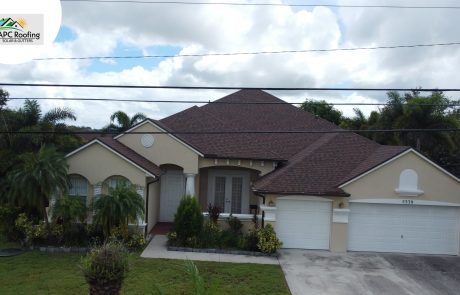
Planning Clay Tile Roofing in Palm Coast Florida?
APC Roofing lays kiln-fired and cement-based coverings and restores worn ones, from one cracked piece to a whole slope taken up and put back.
Dial 386-356-2111 and a roofer will say in everyday words what is overhead.
What Sits Over the Attic – an Overview
What shows from the yard is a run of heavy pieces that throws off the bulk of any rain, but an underlayment beneath the surface is what keeps the house dry. In a driving storm, some moisture always blows in beneath the courses, so the layer beneath has to guide that seepage out at the eave edge.
One broken tile rarely means water inside the house, because the underlayment below is generally still whole. Water that finds a hole in the underlayment may travel down the boards for some distance, and the damp patch may form far from where it entered.
Material Choices: Sun and Moisture
Fired clay comes out of the kiln dense and hard, and there is no painted coat on the face to wear off. Decades in strong sunlight change its appearance hardly at all, and a quality product takes up next to no rain.
A cement-and-sand mix is molded to a profile and cured to make concrete tile, but the tint on many brands is only a surface finish. A slope that gets full sun lightens over the years, and a new nick exposes gray under the weathered skin. Any replacement dropped into an aged roof is easy to spot, and the difference narrows over many seasons.
Concrete absorbs noticeably more rain than good clay does, and at the colder end of our territory, soaked-up moisture turns to ice within the body. Over many seasons that cycle can spall the outer skin, so each product is graded for how it copes with that stress.
Profiles on the Market – What Differs Up Close
A barrel roof is built from half-round pans laid face up, with covers over the gaps between them, and the appearance recalls early Mediterranean villas. A one-piece S tile combines hollow and crown in a single form, and a lot of newer houses carry it.
Flat pieces lie close to the deck and can pass for slate or heavy shake from below, and water travels down the lapped faces rather than through a groove. Barrel and S patterns collect pine needles and leaves in their hollows, while smoother surfaces let the wind clear most of the debris.
Weight and Support: Before Switching Materials
Per square foot, standard tile carries several times the pounds of shingles, and a home with tile from day one was built to bear it. Switching from a light covering to tile adds a burden nobody allowed for, and the ridge line can sag as the years pass.
The rafters, spans and bearing points get an engineer's review before a conversion like that proceeds, and strengthening is sometimes part of the answer. Makers also produce low-weight concrete, and a house that would struggle under the standard version may take the reduced version.
Attachment Methods: Edges and Middle
A fastener through the top of each piece is a long-standing approach, while other jobs hang the courses on battens set over the sheathing. Foam-set roofs rely on beads of adhesive beneath the tiles, and mortar-set work beds every unit in a pad of mortar across the field. Metal clips at the lower edge add grip in certain systems, and what a given job gets is set by the maker's literature and the code.
Uplift is strongest around the borders of each slope, and attachment there is increased. At the coastal end of our territory, building rules written for hurricanes demand more hold-down, so screw spacing and foam coverage are designed to pass inspection. A replacement is fastened to match the surrounding courses, since forcing loose a glued unit tends to break the ones next to it.
Waterproofing Underneath: What Is at Stake
Asphalt-saturated felt is the traditional product, often laid in two plies, and newer options include synthetic rolls and peel-and-stick bitumen. The pocket under the covering stays warm for months and wears on the underlayment, and a membrane of the wrong kind dries out years ahead of schedule.
The units overhead keep daylight off the material under them, so a knocked-out tile opens a patch that degrades fast. A ceiling with no stain does not make a missing piece safe to ignore, because rain soon finds its way into the deck.
A New Sheet Under Old Tile – Sequence of Work
The existing pieces on a major project are frequently hand-removed and set aside, after which rotten boards are swapped for sound ones. A new membrane is then laid over the mended wood, and the saved tile is relaid over it. Passers-by see the familiar face the house has always had, while everything that stops water is starting over.
Some breakage in handling is unavoidable, and old, brittle stock fails more often than newer stock. Each new piece has to sit flush with its neighbors, and if the maker still produces the same design, the new work blends in. Discontinued tile is replaced with salvage or the nearest alternative, though the tone can still differ a little.
Chipped Pieces: Trees and Hail
Somebody's shoe accounts for a large number of the fractures, and the visitor is often a sweep who came up for the chimney or an antenna. A ladder leaned on the eave can crack the lowest course, while a standoff keeps the pressure elsewhere.
A dead branch landing on the roof shatters everything under it, and cutting back overhanging growth heads off most of that harm. Hail of real size at the colder end of our territory breaks units outright, though pea-sized pellets usually do nothing.
Access Across the Slopes – Advice for Installers
A piece bears weight where it laps over the course below, but pressure on the middle, with nothing behind it, splits it clean. On rolled shapes, the pan takes a step far better than the raised crown, while repeated trips run over walk boards.
A trodden-on unit may look whole while its underside is split, and problems add up quietly from one visit to the next. Solar crews and dish installers do well to plan their access with a roofer, and every bracket then rests on flashing rather than on broken tile.
Valley Lines – Points Worth Knowing
A fold between neighboring slopes takes the water of each, and under tile it carries a broad pan of sheet metal. The point where the covering stops sets how wide the exposed band is, and a gap left too slim overflows in a heavy downpour.
The shortened pieces flanking the metal usually lack a hole, and adhesive foam, clips or wire hold them instead. Needles packed into the channel slow the water and pool it, and water spreads out under the neighboring courses.
At the Ridge: Old and Newer Methods
Where slopes meet at the peak and down the outside corners, a row of rounded trim covers the joint, and mortar holds it on many roofs. Bedding that has seen years of temperature swings opens up in cracks, and pieces work loose while grit collects in the gutters.
Current practice ties each trim piece to a raised nailer set along the joint, with foam or a flexible strip sealing beneath. Certain versions breathe, letting attic air escape at the peak, yet rain and insects are still kept outside.
Walls and Chimneys: Lifting and Reworking
The inside corner at a vertical face is lined with bent sheet metal, with a counterflashing set above it to cover its upper edge. On tile, the lower leg is wide, with a raised lip at its outer margin, and the tile beside it is trimmed back so rain can flow freely.
Sealant smeared along the joint cracks within a few seasons, so rain returns to exactly that spot. A proper repair means lifting the pieces and redoing the flashing under them, with fresh underlayment laid at that edge before the pieces go back.
Pipes and Other Openings: Where Shingle Parts Fall Short
A plumbing riser gets a base flashing tied into the underlayment, with a lead jack beaten to the shape of the tile on top. A standard neoprene boot cannot follow the rise and fall of a rolled piece, and water finds its way under its edge.
A skylight, an attic vent or a solar mount calls for flashing built to suit tile, and a bracket bolted straight through a piece without it will leak.
The Lowest Course: What to Watch
Curved pieces leave arched openings at their lower ends, which lets in birds, wasps and wind-blown rain until something fills the hollow. A molded closure is fastened along the fascia, and drain holes let water run free.
Eave pieces have nothing below them to angle them up, and a raised board or riser strip corrects that. Without that support, the end pieces hold water on their faces, and the lower edge looks wavy from the street.
Heat Control: Indoor Comfort
The shape of many profiles, or the battens beneath, holds the covering off the deck, and outside air moves through the space underneath. Much of the sun's heat leaves with that draft instead of sinking inward, so the underlayment stays cooler.
Over a scorching summer, indoor comfort holds steadier, and heavy pieces take up warmth slowly before releasing it. Leaves packed at the eave or mortar filling the ridge can shut the airflow off, and heat builds up in the dead space.
Growth on the Slopes: Upkeep Choices
Concrete pieces can develop a light, powdery bloom of salts, known as efflorescence, and ordinary rain rinses it off within a few seasons. Moss packed into the overlaps holds rain where it should drain, and at the colder end of our territory repeated freezing can spall the surface.
Power washing strips the finish that gives concrete its color, and it can break pieces as the operator walks the slope. A roof cleaner and a light rinse loosen growth without force, and clearing valleys and gutters by hand keeps water moving.
Things to Watch For: A Short List
- One unit sits lower than its neighbors, so whatever held it has let go.
- An empty space interrupts the pattern of tile, leaving the layer underneath exposed to daylight.
- Broken shards lie on the ground below the eave, and the break they came from may be out of sight.
- Gray grit and mortar chips wash out of the downspouts, as the old bedding up top gives way.
- A bubbled patch of paint shows on an upper-floor ceiling, and the source is often several feet away.
- Plaster softens on the wall beside a dormer, so the counterflashing above may be letting water behind it.
- Heavy growth darkens whole sections of the covering, so water lingers where it should run off.
- Part of the bottom row droops below the rest, and the board under the last course may have softened.
How APC Roofing Approaches Clay Tile Roofing in Palm Coast Florida: Findings You Can Use
An inspection starts with a walk across each slope, noting the material, the profile and how the pieces are held down. Along the way, the valleys, ridge, walls and eave are gone over in turn, and where the answer depends on the underlayment, a few pieces come up so it can be seen. Up in the attic, stains and softened sheathing are looked for, as discolored wood traces where water traveled.
What turns up is photographed, with measurements taken of the extent. A plain written report sums up the findings, and each recommendation states why it is made. Where the sheet under the pieces is sound and only pieces are broken, the answer is a repair, and a spent underlayment is identified plainly. The owner picks what to do, with waiting one of the options.
Clay Tile Roofing for Properties in Palm Coast Florida – An Honest Read
Dial 386-356-2111 to talk about what you are seeing.
How Much Work Is Needed – Slope by Slope
Single faults, like a broken piece or a loose cap, usually sit in one place, and the surrounding courses stay untouched. Whether the job grows into a relay depends on what lies beneath, and the look of the surface says little about it.
A slope whose sheet has given out throughout is taken up and put back over new underlayment, while the sound slopes are not disturbed. Where the whole roof got its underlayment together, it ages at a similar pace, and the parts spared may follow within a few seasons.
Tile Over the Years: Staying Sound
Good clay often outlives the people who put it up, and concrete holds up for many decades, as a rule not quite as long. Beneath the pieces, the underlayment gives out sooner, and its condition usually sets when major work comes due.
A covering that is inspected now and then and kept free of litter tends to go the distance, whereas neglect lets a single gap ruin the sheet early. A quoted number is an estimate rather than a promise, since the product grade, the fastening and the flashings decide where it lands.
Getting the Basics Right – Gutters Included
Water leaves a tile roof by running over lapped courses rather than through sealed seams, so the roof must be steep enough for runoff to keep moving. Where the pitch is modest, a stronger underlayment system is required, and below the minimum a different covering is the right choice.
Every board under the tile needs to be firm, so spongy areas come out and new wood goes in. Clean gutters matter to the covering above them, and a clogged run can back water up under the lowest pieces.
If you are thinking of Clay Tile Roofing in Palm Coast Florida, contact APC Roofing at 386-356-2111. The covering, the metal and the sheet beneath are inspected and written up, with the decision left in your hands.
Verified

Verified
Verified
Verified