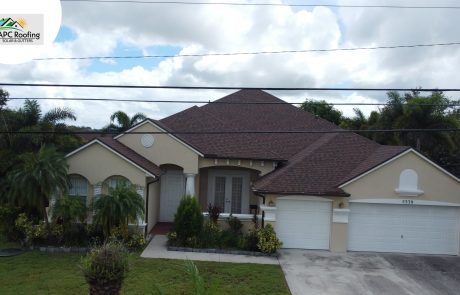
Searching for Storm Damage Roofing on a Family Home in Springfield Missouri?
APC Roofing goes over the shingles once the sky has cleared, reading the flashings and the vents along the way.
Phone 913-398-5020 to arrange a visit from a roofer.
A Roof Shaped by Moving Air: Not Spread Out Evenly
The eaves, the rakes and the ridge carry the heaviest load of any gust, and a broad open middle carries far less of that duty. Air that gets under a raised lip pries at the shingle set above the lip, so a lone nail beneath a shingle bears a following blast unaided.
Where two exterior faces meet, wind tumbles rather than running smooth, so a tighter attachment pattern goes into that area during installation. A course near a structure's outside edge absorbs more force than a course out in the open field, and a closer-set fastener arrangement there is a direct answer to that pressure.
A Roof's Quiet Final Step: Left to the Weather
Asphalt shingles carry a line of sealant that fuses down to the row set beneath, and nothing else secures a shingle's lower edge. A strong blast can snap a bond without moving the shingle, though nothing shifts out of place in the first hour after.
A broken seal stays quiet for the next windy spell, and water reaches wood that had remained dry before that joint failed. Left alone, a single unsealed shingle is a minor thing, while a broad run of parted shingles is a serious gap.
What a Bundle Label States: Read With Care
In a lab, unused shingles are pinned to a board and every seal is made deliberately, before a controlled gust is brought to bear on the assembly. A roof already carrying a season or two of harsh weather no longer behaves like unweathered asphalt, so a rating drawn from the original goods does not describe an aged roof.
Placing a fastener above the strip reduces how much surface a nail can grip, and the wind needed to lift a shingle turns out lower than expected. An aged mat loses flexibility a new mat still carries, so a rating measured on fresh stock says little about a roof carrying years of weather.
Ice From the Sky: Under the Surface
Stones grow largest in storms that cross the colder end of our territory, and even a brief burst can cause lasting dents. A blow forces the outer coat into the material a shingle relies on, leaving a tender patch that feels different from the sound surface nearby.
A shingle blocks water through an inner core, not the shingle's own face, so a bruise reaching that depth is a fault, not a blemish. A struck area of a shingle runs down faster than a sound area beside a struck spot, and a slope carrying many such spots fails unevenly over time.
The Overlooked Fixtures: Easy to Walk Past
A hit the asphalt handles fine dents soft metal beside a struck slope, and a mark left that way keeps the same shape for years. A split boot at a plumbing stack lets water run down the outside of a pipe, and a ceiling underneath is usually where that water first appears. Marks on a gutter's surface rarely stop a gutter from working, while a crimped downspout carries water over the leading lip without help.
A pitted vent cap sits alongside a dimpled fascia and a scuffed drip edge on one visit, and every mark gets photographed along with the shingle damage. A storm strong enough to scar the shingles usually leaves a matching toll on the metal, and neither kind of damage shows up alone.
A Story in the Grit: Worth a Second Glance
A mineral coat baked onto a shingle screens the asphalt from direct sun, which keeps a covered stretch flexible for years longer. A hard rain washes displaced grains all the way to a gutter, and a handful scooped from that spot says plenty about the roof.
A shingle stripped of a protective coat starts to curl at the edges, and a covering left that way begins to fail in scattered places. Coarse sand sitting in a trough came off a shingle not long before, and the quantity found says something about how hard a storm hit.
Rain That Arrives Sideways: Where Water Is Not Meant to Go
A shingle's lap directs a vertical descent down across the surface, and a strong gust uncovers a route that ordinary wet weather never finds. A ridge vent can take in spray when wind blows straight along the peak, and nothing on the covering needs repair from an event like that.
A Falling Limb – Small Mark, Real Harm
A hard knock concentrates pressure into a tight area, and the framing bears force the finish alone never reveals. A panel underneath can crack though the outer layer looks untouched, and daylight or a flashlight from below often finds what the surface hides.
Limbs raking a roof leave sweeping lines of exposed asphalt along the way, and the outline follows exactly where that motion carried. Getting to a split panel calls for removing the covering above the crack first, and the work grows once the true extent becomes clear.
The View From the Rafters: Simple to Follow
A gleam higher up signals a gap in the roof, so a person can pin down the location before ever climbing outside. Moisture leaves rust at nail tips and a darkened trail through the wood, and following that mark upward usually leads to where water first got in.
Compressed insulation records a history of repeated soaking over time, and the fibers rarely spring back once squeezed that way. Wind forcing air through an opening can carry moisture well past the covering, and the answer in that case is a baffle behind the slats, not a repair to the surface.
What a Bubbling Ceiling Says – What the Damage Tells You
Discoloration overhead turns up well beyond the leak, not right next to the start, as water follows the wood down to the lowest reachable point. Bubbling up above means the finish has separated from the board beneath, so a broad patch can trace back to nothing bigger than a pinhole.
Water near any electrical fixture is reason enough to cut power at the breaker, and only after that switch is confirmed off does the cleanup begin. A dark line under a flue traces the outer face of the chase, which puts the search exactly where two different materials meet.
Where Surfaces Come Together – Small and Critical
The assembly at a wall junction depends on staying tucked beneath the shingle layers while nailed in place at once, so the entire system is only as strong as the weaker of the two parts. A squall catching the end of a course can tear the drip edge loose, which turns a small opening into a bare run of exposed flashing.
Cap shingles at the crest take a steady buffeting during most of a storm, so the seam gets no protection at all in that area. A vent lifted at one end leaves a slot running the length of the piece, and framing well beyond that single spot can end up soaked as a result.
Glass Placed Into the Roof: Worth a Separate Look
A raised curb holds a skylight's glazing clear of the shingles nearby, so runoff gets sent aside long before reaching the seam. The outside glass of a unit can break while the inside layer holds, and the assembly comes out complete rather than in pieces.
Debris striking a plastic dome can leave a pattern that spreads with heat, and a small fracture can widen with every hot afternoon that follows. Moisture trapped between the panes of a sealed glass unit means the edge seal has failed, and that fixture gets swapped rather than dried out.
When the Rate Climbs Too High: Reading the Signs
A sudden downpour can pass along more volume at once than a trough can handle, and the surplus pours over the front lip instead of down a downspout. Leaves and grit washed off a roof can choke the drain opening at the point of collection, and dampness trapped that way can seep in wherever the metal meets the trim.
A Placeholder, Nothing More – Anchored, Not Weighted
Plastic pulled across a break can stop rain from reaching rooms below, so nobody should mistake that covering for a completed repair. A covering anchored on both faces of a slope moves water the way overlapping courses would, and every nail for that task goes through solid wood, never through the covering alone.
Bricks or blocks stacked on a loose sheet rarely survive a second storm, and debris from that failure can end up scattered across the yard. Driving nails through sound shingles just to hold a cover adds new leaks later, so a roofer plans exactly where every screw for that cover lands.
Noting the Details Early: Useful Later On
Every affected area gets photographed before anything is disturbed, and the record shows the roof exactly as things stood after the storm. Comments in everyday language accompany a description of each spot, because a mark's true size is hard to judge without a reference point.
Wind keeps moving debris that an earlier storm loosened, so waiting even a little loses detail nobody can get back afterward. A request for documentation gets the same file kept on hand, and that plain account is the whole of a roofer's part in the process.
Strange Faces at the Curb: Worth a Second Thought
Vehicles with out-of-area plates can work a neighborhood for days after a big storm, though picking the sound ones out from the rest can be difficult. A form signed at a front door binds a homeowner like any other contract, which is reason enough to ask for a copy to review overnight.
A contractor whose office sits nearby stays reachable long after the work is done, and a repair that fails down the road still has someone accountable on record. An offer that expires while a truck sits in the driveway is not a real offer, and sleeping on a choice like that is simply good sense.
A Repeat Performance: How the Setbacks Multiply
Material weakened by an earlier storm reacts sooner to the next one, and a lighter storm can then do what a harder one did before. Where a course folded over once, the mat carries a break along that fold, and warm weather afterward does nothing to erase that kind of damage.
Water reaching a deck a second time can carry on into insulation and drywall well beyond that point, and the list of materials still needing work can lengthen quickly. Sheathing soaked more than once loses grip on the fasteners driven into the wood, so that section has to come off along with the shingles above.
What to Watch For After a Storm: Inside and Out
- Bare patches where a shingle used to sit, obvious from across a street.
- A dimpled fascia cover or downspout, still evident long after weather has passed.
- Coarse sand lying in a trough, more than a covering normally sheds.
- Pinpricks of light in the sheathing, best looked for at midday.
- A brown ring on a ceiling that grows after rain, in a bedroom or a hallway.
- Peeling near the top of a wall, appearing only after heavy weather.
- A cracked dome over a light shaft, after a violent night of weather.
- A gutter hanging away from a fascia board, after a heavy limb came down.
The Way APC Roofing Works on Storm Damage Roofing in Springfield Missouri – Our Method
Our roofer opens with a slow circuit of the house from ground level, and stray pieces scattered nearby offer the first clue about what gave way overhead. Every roof plane gets covered wherever the pitch allows safe footing, and a flashlight goes over the rafters from the attic hatch.
The results get measured, pictured and set down in writing for the file, and anything uncertain gets marked as uncertain rather than guessed at. A recommendation comes with the reasoning laid out step by step, and a homeowner decides from there without pressure either way.
Storm Damage Roofing in Springfield Missouri – Help From People Who Know Shingles
Reach us at 913-398-5020 to book a time for an inspection.
Snow Banked on a Slope – Ready for Tougher Conditions
The colder end of our territory sees falls deep enough to press down on the framing, so the load stays in place long after the clouds clear. Frozen runoff at the roof's edge can pond meltwater on the slope, and a ceiling near the outside wall can stain as a result.
At the colder end of our territory, drifts pile up in valleys and beside dormers, and pressure in that spot concentrates well beyond the surrounding area. A sheet coming free from a metal surface can drop without warning, so keeping the ground clear beneath that overhang is worth doing.
A Harder Environment Near the Shoreline: Fatigue Builds in Hardware
Storms at the coastal end of our territory can keep blowing through long stretches of the day, longer than a short spell anywhere else in our service area ever would. A drawn-out shove can flex every shingle tab thousands of times over a day, and fastening along the edges carries much of that extended strain.
Driven rain can reach seams that stay dry during the rest of the year, and the attic is far from the only place moisture like that turns up. Coastal practice generally asks more of every roof edge, so nothing gets put back with less holding power than the original had.
A Fix That Blends In: What Homeowners Should Expect
Granules fade with age, so freshly made stock looks noticeably brighter, and the surrounding roof ends up setting the visual standard. Replacement shingles near a driveway can catch the eye of anyone passing, while work on the back of a house draws far less attention.
An older style no longer sold gets replaced with something comparable, which is worth knowing before work begins. Where one face of a house carries too many separate repairs, a patchwork look sets in, and redoing the whole side is a suggestion worth considering, not a requirement.
What a Homeowner Should See Afterward – the Details That Hold Up
New shingles settle smoothly into place once installation finishes, and the reveal of each course matches the courses nearby. Metal at a wall gets tucked into place rather than glued to the surface, and caulk never ends up as the thing actually keeping water out.
Nail heads stay out of sight beneath the next course laid over that spot, which is what a wind rating assumes will happen. An image of new shingles taken soon after the work finishes makes a handy reference, as that record gives anyone looking later something firm to compare against.
If Storm Damage Roofing is what brought you here after rough weather in Springfield Missouri, get in touch with APC Roofing at 913-398-5020 and a roofer will come out and look the covering over. The covering gets gone over, measured and pictured from every angle, and a homeowner gets walked through exactly what was found.
Verified

Verified
Verified
Verified