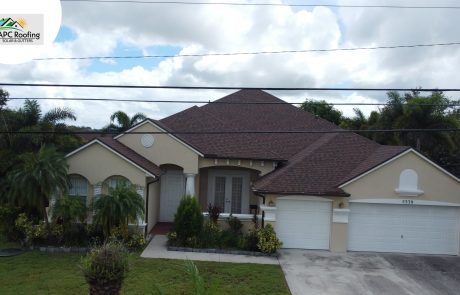
Looking into Roof Financing in Ozarks Region Missouri?
APC Roofing takes stock of attic conditions and how the surfaces overhead are wearing, and records storm damage in a plain written account.
Call 913-398-5020 and a roofer heads out for a firsthand look at the house.
The Stack Effect – Something Worth Remembering
Fresh air needs an entry point near the soffit before a vent up top can move anything at all, since a closed-off attic gives that high vent no source to draw from. Nearly everything sold under the venting label is outlet hardware, and a unit working alone stirs very little air through the space.
The Low End of the Roofline: Worth Knowing Before Insulation Goes In
Right where a rafter sits over the wall plate, the space shrinks to just a few inches, and that tight gap is the only supply route the space above has. Loose fill blown all the way out to the edge buries that choke point completely, a step almost any blow-in crew gets wrong.
A Vent Baffle – Easy to Overlook
A rigid strip set between rafters keeps fill clear of the narrow gap near the roof deck, leaving an open route from the wall plate all the way toward the peak. Placing a baffle is done as attic carpentry, not as work on the shingles above, a step some crews skip when the day runs long.
The Sizing Principle – Often Skipped Anyway
The typical target runs one square foot of net free vent area for each 150 square feet of attic floor, and the split eases to one-in-300 once the ceiling below stays air-sealed with intake and exhaust nearly equal. The number a vent's label gives always runs smaller than the raw opening built for that vent, so sizing work goes by that figure and leaves the hole's plain width aside.
Summer's Long Months – Building Through the Day
An attic sealed against any airflow turns into an oven compared with the air outside, and the difference is obvious to anyone who steps up to look. Asphalt ages mainly from sunlight hitting the surface, with little added by whatever is happening in that space below. At the warmer end of our territory, balanced venting keeps the deck and the framing under the shingles cooler and drier, which slows curling and early granule shedding.
The Ice Dam – a Freeze-Thaw Concern
Where winters turn hardest in our service area, the aim is keeping an attic near the temperature outside, though what is at stake changes once the warmer months arrive. Heat rising into the attic melts snow lying on the deck, and that water freezes back solid at the unheated eave. A ridge formed in that spot dams later runoff, and the backup travels beneath the courses above.
Where the Duct Terminates – Often Installed Halfway
A bath fan is supposed to send steam outside the house, not only from the room. On a fair share of homes the run for that duct quietly lets out in the attic, rarely caught until someone climbs into the attic to check. Sheathing over that particular room darkens with dampness as the months pass, visible the moment anyone shines a light into that corner of the attic. Redirecting the duct to an outdoor cap ends the trouble, handled from inside the house.
Sorting Out the Stain – Before Anyone Touches Shingles
Air from the living space seeps into the attic wherever a fixture or hatch leaves a gap, helped along by nothing more than rising air currents. Once nighttime temperatures fall, that air turns to beads of water beneath the deck, and that condensation drips down onto whatever sits below. A patch that appears during a dry stretch points to humidity rising indoors, but wetness that only follows a downpour comes from outside the house entirely.
The Seam Around a Skylight: the Joint, Not the Panel
A glazed unit comes sealed from the factory, and rarely admits water without some other cause. Leaks tend to begin at the transition between that fixture and the covering nearby, a junction that works loose faster than anything else close by. Manufacturers supply each unit's flashing kit, which is put together from step pieces, a head piece and an apron.
Sharing Intake and Exhaust – Working Together, Not Alone
A job's total vent area is meant to split close to evenly between the low openings and the high openings, with the load not landing mostly on one end. If the two cannot be brought to an exact match, the larger share goes to whichever set sits lower, because too little exhaust just slows the airflow down, while too little intake shuts the airflow off.
Choosing an Exhaust Type – Case by Case
A ridge-mounted vent draws air along the peak from end to end, formed by a slot cut straight through the roofing at that spot. One box vent covers just a small area of the surface, which is why a design built from hips rather than one long high edge often uses a handful. A powered fan pulls air from whatever source offers the least resistance, and a blocked soffit turns the rooms below into that supply instead.
Skylight Support Options – a Detail That Varies
A unit set on a curb sits on a wood frame raised clear of the deck, with the covering carried up along the sides as well. A raised-frame mount suits a low-slope section of roof where water can stand near the opening, because that structural rise holds the opening higher than the surface nearby. A deck-mounted unit attaches straight to the sheathing and holds up on roofs that drain well without help, and sits at a lower height than the curb-mounted version.
Choosing a Skylight Type – Chosen for the Job
A fixed unit contains no moving parts and cannot be opened, used strictly to bring daylight in, and nothing else. A venting assembly opens by way of a crank, a pole or a small motor, releasing warm air out of the room underneath. A tubular skylight sends daylight down a reflective tube to a hallway or closet, by way of a roof opening far smaller than what a standard fixture requires.
Adding a Skylight – More Involved Than the Outside Suggests
When the opening runs past the rafter spacing, cutting one rafter and framing a header into the gap becomes necessary, with the new support taking over the load the missing piece once carried. Wiring, a duct run or a plumbing vent found in that bay must be rerouted, before the job can go forward. A channel connecting the roof gap to the ceiling below needs framing, insulation and a finished surface as well, so nothing escapes into the attic through that opening along the way.
Condensation on the Skylight – a Case of Mistaken Identity
Above a bathroom or kitchen, the glazing is typically the coldest surface in a steamy room, colder than any other surface nearby. Droplets that travel down to the frame and drip from there can look exactly like a leak, with the roof completely dry and sound. The remedy is an indoor one, not a roof repair, either a fan sized and run long enough or a properly insulated shaft.
The Added Layer – a Plain-Language Definition
A coating is applied as a liquid, which gets rolled or sprayed over an existing covering and hardens into one unbroken skin over time. A coating adds a layer on the surface, without taking the place of what lies underneath. A coating is meant for a covering that is sound, dry and drains well, rather than one already breaking down or holding water.
Different Chemistries – Suited to the Job at Hand
An acrylic coating is water-based and does well reflecting sunlight, the most frequently chosen option, but warm, dry weather is required to set properly, and pooling water causes trouble. A silicone coating tolerates standing water and cures across a broader range of temperatures, though dirt clings to the surface and a wet surface turns slick. Urethane resists wear from foot traffic around equipment on the roof, often applied as a more durable top layer over a different base product.
Prepping the Surface – Worth Doing Properly
A peeling coating nearly always points back to a poor bond made at application, not a defect in the coating material. Dirt, chalk residue, oil film and old sealant all block adhesion from taking hold, leaving the coating with little to hold onto beneath. Thorough preparation starts with a wash, with full drying afterward, followed by a primer coat where called for, with seams and flashings repaired ahead of the coating work.
Where a Roof Layer Falls Short – Where Judgment Still Matters
Since a coating seals the surface, a wet deck or soaked insulation below ends up blistering the new skin rather than drying out. A scan or a core sample confirms whether the covering is ready before any coating is applied, because coating over a surface that needs more time only locks the problem in. A coating adds no slope at all, so any low spot that already collects water goes on collecting water.
Warning Signs: From Outside or From Above
- Staining with a rust color around nail points in the attic, easy to catch with a flashlight nearby.
- Fill pushed all the way to the eave with no baffle standing, a step sometimes skipped when time is short.
- Shingles curling or shedding granules well ahead of typical wear, frequently tied to how the attic breathes.
- An ice ridge forming along the eave after snowfall, at the colder end of our territory, occasionally paired with discoloration near the roofline inside.
- A ceiling mark that turns up on a bone-dry day, unrelated to anything happening outside.
- Water reaching a skylight's corner after a heavy rain, traced most often to the flashing around the unit.
- A coating showing peeling, blisters or chalking near a seam or edge, an indication that the bond has given way.
- A bathroom fan's duct ending in the attic rather than at an outlet, easy to catch during a routine attic check.
APC Roofing works one-on-one with the homeowner on Roof Financing in Ozarks Region Missouri
The attic gets looked at first, before the slope, since many conditions there trace back to how the space breathes. Every part of the roof gets evaluated at the same time, not only the specific item mentioned. Where a job needs financing, it is arranged through a partner; we are a roofing contractor, not a lender. Reasons come with any recommendation, and the decision stays with the homeowner.
Making a Decision on Roof Financing in Ozarks Region Missouri – a Visit Worth Scheduling
Dial 913-398-5020 to have the attic and the slope looked at.
The Follow-Up After a Storm – What We Take Care Of
A full inspection covers the roof, and any damage gets photographed and measured, and each section is looked over closely so nothing goes unnoticed, and the homeowner is given that written account afterward. Any pieces that came loose are set aside, not discarded, until checked, a small step that keeps everything in place.
Sequence Matters – Why Timing Is Everything
Insulation pushed out past the baffle line blocks the very intake meant to stay open, undoing the very thing that piece was placed there to do. Putting in vents before the ceiling is closed up pulls conditioned house air out instead of moist air from the attic, wasting energy the household already paid for. Sealing comes before insulation, which in turn comes before vent sizing, with baffles installed along the way.
Anyone who searched for Roof Financing in Ozarks Region Missouri can contact APC Roofing at 913-398-5020 and have a roofer take a look at the attic and the roof. Every stop covers what is worth seeing, with nothing left unclear.