The roof over your back porch has leaked three springs in a row, and each patch buys you a few months. Or you’ve added a room, enclosed a garage or bought a house with a low section that someone covered in shingles, and it’s never been right. If you’re looking into flat roof installation in Springfield, MO, you probably want to know one thing first: what will actually stop the water this time?
That’s a fair question, and it usually has a clear answer. Low roofs fail for predictable reasons, and most of those reasons come down to the wrong material or poor drainage. You deserve to understand the fix before you pay for it.
APC Roofing has been in business since 2017. We’re GAF Certified, licensed and insured, and your inspection is free.
Why shingles don’t belong on a low roof
Shingles work by shedding water. Each row overlaps the one below, and gravity pulls the rain down and off before it can work its way under. That only works when the roof has enough slope.
Shingle manufacturers generally won’t approve their products below a 2:12 pitch (two inches of drop per foot), and they call for extra underlayment on slopes under 4:12. On a porch or addition that’s nearly flat, water moves slowly, wind pushes it uphill and it backs up under the overlaps. In a Springfield winter, that water freezes, swells and lifts the shingles further.
A flat roof uses a different approach. Instead of overlapping pieces, it’s one continuous waterproof layer, so water can sit on it without getting through.
Flat roof systems we install in Springfield
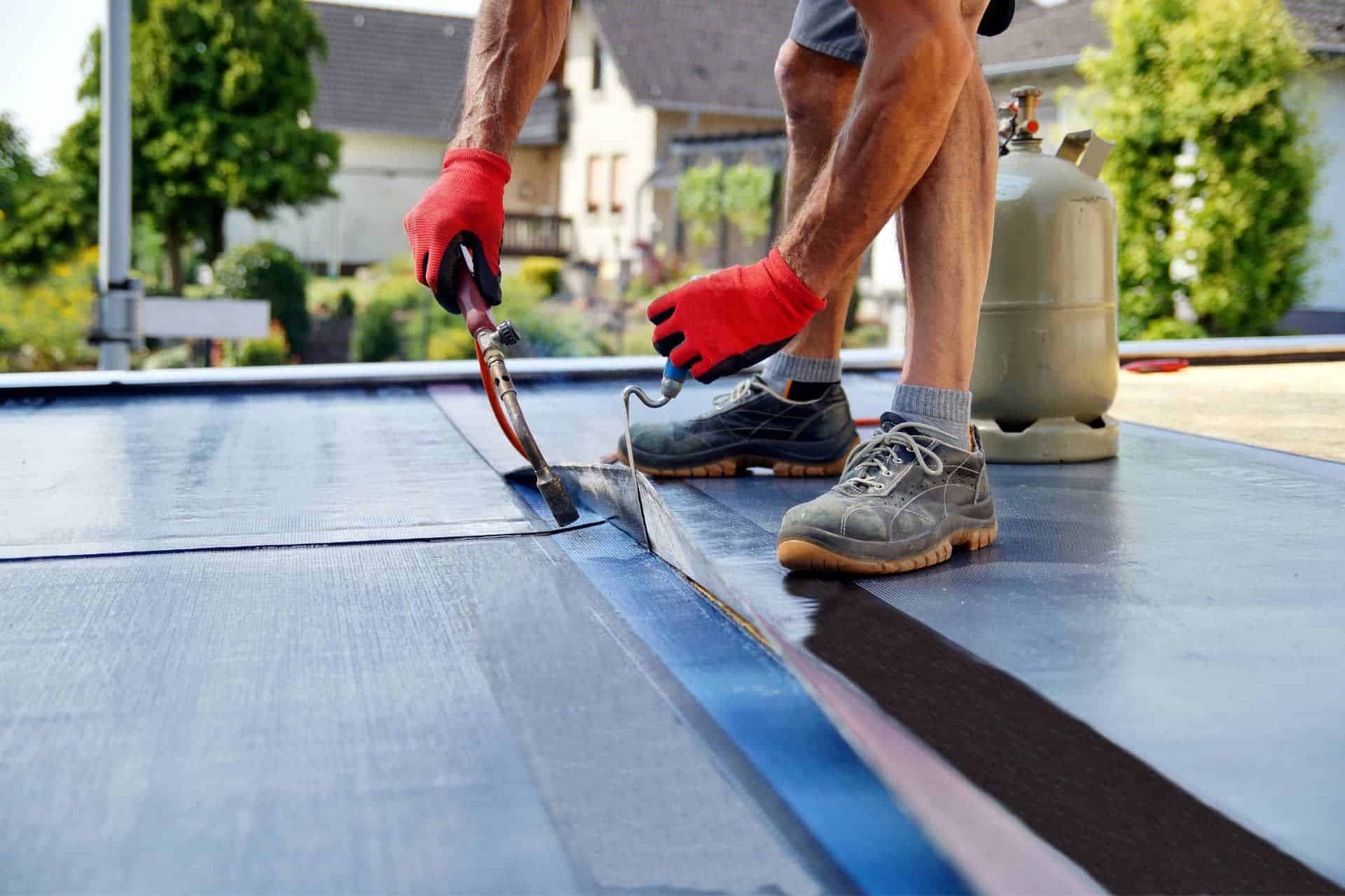
TPO. A white or light single-ply membrane with heat-welded seams. It reflects summer sun, which helps a room or porch underneath stay cooler. You can read more on our TPO roofing page.
EPDM. A black rubber membrane that stays flexible in cold weather and has a long track record on homes and small buildings. Our EPDM roofing page goes into more detail.
Built-up roofing. Layers of felt and asphalt, sometimes topped with gravel. It’s heavier and more common on commercial buildings than on a home porch.
Which one is right depends on the size of the roof, how much it gets walked on, what sits under it and how it ties into the rest of the house. The recommendation comes with the reasons, in plain terms.
Drainage decides how long a flat roof lasts
“Flat” roofs aren’t truly flat. They need a slight slope so water moves to an edge, gutter, scupper or drain. When a puddle is still there two days after a storm, that standing water is aging the membrane and stressing every seam it touches.
A new installation is the best time to fix drainage. That might mean tapered insulation that builds in slope, sistering or shimming framing that has sagged, or adding a scupper and gutter where water has nowhere to go. In Springfield’s hard spring storms, a low roof can take a lot of water in a short time, so the exit has to keep up.
Where the flat roof meets the house
Most low-roof leaks don’t start in the middle of the roof. They start at the edges: where the porch roof meets the wall of the house, where an addition ties into the main shingle roof, or around a vent pipe. These transitions are where a flat roof installation is won or lost.
A good install runs the membrane up the wall and behind the siding or under proper flashing, and carefully laps the main roof’s shingles over the new membrane where the two meet. Edge metal holds the perimeter down so wind can’t peel it back.
What’s under the old roof matters
Before a new flat roof goes on, the old one usually comes off. That’s the only way to see the decking underneath. On low roofs that have leaked for a while, it’s common to find soft or rotted plywood, and that wood has to be replaced before the new membrane goes down.
An overlay over the old roof can work in some cases, but only when the old roof is dry and the deck is sound. If the roof has been leaking, a tear-off is the safer bet.
Weather in the Ozarks and your low roof
Low roofs take Springfield’s weather head on. Hail hits a flat surface square instead of glancing off a slope, so a membrane with good puncture resistance and a firm base underneath holds up better. Summer heat expands the membrane every afternoon, and winter freeze-thaw tests every seam. Choosing the right material and getting the details right at the edges handles most of it.
How it works
- Book your free inspection. Call 913-398-5020 or request a free online estimate.
- Get a clear, honest assessment and estimate. You’ll see photos of the roof, the decking where it can be checked, and the drainage, plus a recommendation and a written estimate.
- Get your new flat roof installed and the site cleaned up. The crew finishes the work and cleans up before leaving.
If you’d like to spread the cost out, financing is available through Aqua Finance, Fortifi, Hearth and Home Run Finance.
Putting off a leaking low roof tends to cost more later. Water that gets past the membrane soaks the decking, and a roof that needed new membrane can end up needing new wood too.
Flat roof installation questions
Can you put a flat roof on just my porch or garage?
Yes. Many flat roof jobs cover only the low section of a house, tied carefully into the main roof.
Should I repair my flat roof or replace it?
If the damage is limited to one seam or a small area, a repair may be enough. Our flat roof repair page covers that. If the roof has leaked in several places or the decking is soft, replacement usually makes more sense.
Is TPO or EPDM better in Springfield?
Both handle Springfield weather well. TPO reflects heat and EPDM stays flexible in the cold. The right choice depends on the roof and what’s under it.
Can I walk on a flat roof?
Occasionally and carefully, yes. If a roof will see regular foot traffic, such as for an AC unit or a deck above, that changes which system makes sense, so mention it during the inspection.
Get a flat roof installation quote in Springfield, MO
Call 913-398-5020 or start your free estimate online. You can also see all of our flat roofing services in Springfield.
The goal is a low roof you stop worrying about: no more buckets under the porch ceiling, no surprise bill and a roof that handles the next spring storm.