Trying to Find Emergency Roof Repair in Shawnee Kansas?
APC Roofing seals the gaps that let rain indoors and traces the drip back to the detail that failed.
Reach us at 913-398-5020 and describe what you are seeing inside.
Sources of a Leak – the Details That Matter
Across the unbroken middle of a slope, shingles seldom fail, because the laps all face downhill. Entry points cluster where another material meets the covering: a vent pipe, a chimney, a valley or a wall.
The wet patch indoors rarely lines up with the damage above, since the flow travels along the framing for a stretch. A repair aimed straight up from the evidence can miss by a yard, and the leak carries on through the next storm.
Sidewalls and Headwalls: Trouble Spots
Every row of shingles gets a separate bent flashing piece, with a counterflashing tucked above to cover the upper edge. Once the joint under the trim opens, the leak shows up inside at the wall line.
A proper fix calls for fresh metal installed properly, so a few rows are taken up and put back. Caulk squeezed into the seam does not count, because movement in the joint splits a surface seal.
The Boots at the Pipes – Wear and the Fix
A flexible ring gripping the stack does the sealing where plumbing exits, and every summer of sun makes the material more brittle. Eventually a crack forms right around the pipe, and a bathroom ceiling is often where the water shows.
The remedy is a fresh unit, fed in beneath the courses on the uphill side, and rust in the flat metal part means swapping the whole piece. A silicone or lead boot resists the sun far better than standard rubber, on a roof with plenty of seasons left.
The Valley Channel: the Wear Points
An inside corner takes the water shed by the slopes on either side, so a heavy storm makes a fast stream. Shingles laid in a valley lose grit well ahead of the field, and if no metal or membrane lies underneath, worn spots leak.
Leaves and pine needles pile up along the channel, so rain is held back and forced sideways. A bad valley comes apart and goes back properly, since a smear of mastic washes out under heavy flow.
Nails That Work Loose – a Pinhole Leak
A wooden deck swells in damp spells and shrinks in dry ones, and every swing pushes the steel up a hair. A risen nail head tents the tab overhead, letting runoff trickle in around the high point.
Tapping a lifted fastener back into place is a short-lived fix, since the sheathing no longer clamps onto the shank. The proper repair pulls the nail out, seals the hole and drives a new nail an inch away, and any punctured tab is changed too.
Metal on Shops and Porches – What Fails With Age
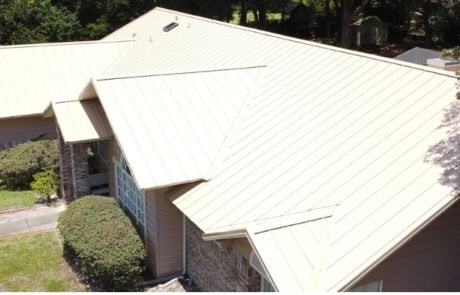
Exposed-fastener steel is attached with screws through the flat areas, and a rubber washer under each head does the sealing. With age the rings shrink and stop gripping, and a crooked install never sat square at all.
Every tired fastener is backed out and a replacement with a fresh gasket goes in, and where the hole has widened, a thicker size is used. The trim at the ridge and the edges is inspected on the same pass, because the neighbors have weathered just as long.
Loose Tabs on a Windy Roof – Folded, Torn or Missing
Every course is held by nails and by an adhesive strip that sticks to the course below, and a hard squall can pry the lower edge up. Any tab flipped past upright ends up creased, and the next blustery rain drives water inside.
A row that merely lifted, without harm, gets stuck down with roofing adhesive, while a torn tab is removed and matched. A bare patch with no tab uncovers the heads of the nails beneath, and rain soon trickles down the shanks.
The Crest – the Slot Under the Vent
The finishing pieces over the apex are creased over the fold, and age brings cracks across the top. A ridge vent sits over a channel cut through the sheathing, and the cap above does all the work of keeping weather out.
Nails that have risen let gusts drive spray inside, which leaves a wet band on the rafters just below the apex. Fixing the peak treats caps and vent hardware as one piece of work, because whatever is skipped lets the water return.
Ice at the Eaves: a Leak From Below
Where the winters are long and snowy, a covering with no defect can still admit water, since warm air under the deck softens the snow from beneath. The flow refreezes over the eave, out beyond the exterior wall, and a ridge of ice grows along the gutter line.
Behind the obstruction, melted snow gathers with nowhere to drain, and shingles were never made to hold back a puddle. Insulation and airflow in the attic end the problem at the source, while a peel-and-stick membrane under the bottom rows is the backstop.
Additions and Porches: the Wrong Covering
Lots of houses include a stretch that barely tilts, and the main material is often carried onto the flat portion regardless. Lapped courses depend on water draining off quickly, so a sluggish trickle climbs beneath the joints.
The lasting answer is modified bitumen or a rubber sheet, run up beneath the roofing on the section uphill.
Tracing a Leak From Inside: Marks and Measurements
Runoff under the deck leaves a tide line on the lumber, and weeks of dry weather do not fade the tint. The uppermost reach of the stain marks the source, and distances to the ridge and the gable find the same spot up top.
A thin nail pushed skyward through the wood makes the location plain from the ladder, while rooms with no attic above are traced from the exterior. Compressed, discolored insulation sits under the drip, and material that wet has to be replaced rather than dried.
Indoor Weather Overhead: Where the Drops Come From
Sheathing that is evenly wet everywhere, with no stain leading anywhere, is seldom a hole, since humid air escaping the living space turns to droplets up there. Where winters freeze, frost on the nail tips after a frigid night has the same cause, and drops fall once the sun reaches the deck.
Repairs up on the roof do not touch moisture from inside, since better airflow and sealed openings from below are what work. Our finding names the cause as a leak or as vapor from indoors, so effort goes where the trouble actually is.
Chimneys: Water Against the Brick
A broad apron closes the lower face, and step flashing is woven up both sides; higher up, counterflashing let into the joints laps down over everything. A chimney of any real width also needs a cricket at the rear, so the flow is split and sent around the brick.
If the builder never framed a water-shedding wedge, needles and standing water settle on the uphill face, and the upper corners are soon soaked. Eroded mortar passes rain into the brick well above the flashing, and roofing work alone cannot solve a mason's problem.
Skylights and Skylight Wells: the High Side
Water seldom gets through the glazing; the flashing kit at the curb lets go instead. The head of the opening takes the whole stream from overhead, while needles and debris build a small dam.
The unit stays put while the flashing around the frame is rebuilt, provided the wooden curb is still sound. Beads of vapor on the inner face can trickle down the well like a leak, and the remedy lies in ventilation.
The Lower Edge of a Roof: the Foot of the Slope
A mark in the corner of a top-floor ceiling is often gutter trouble, because a clogged or sagging trough pushes water behind the trim. Without a drip edge, rain wraps around the shingle lip and underneath, and rot spreads into the fascia and the rafter tails.
Clearing the trough and resetting the pitch is sometimes the whole job, and a hanger screwed into solid wood stays put. Missing drip edge is an installation error, and the remedy is a length of metal that covers the entire overhang.
Attachments on the Roof: Leaks Years Later
Solar lights, receivers and similar gear are usually screwed into the deck, and a squirt of caulk is the only barrier. Sun hardens the sealant until the bead cracks free, and water then runs down each shaft into the attic.
When a receiver is removed, the bolt holes remain, and openings that small rarely draw the eye. Every penetration gets sealant, and new shingles go over the area, while a fixture that stays is remounted on real flashing.
Wood Damage From Old Leaks: New Panels in Place of the Old
A trickle that goes on unnoticed waterlogs the plywood below, until mold and decay set in. Underfoot, the ruined section bounces like a trampoline, while from inside the boards bow downward.
Every rotten piece is removed, right back to sound lumber, and fresh sheets are nailed down across the supports. Felt and shingles are laid back over the patched area, while the source of the water is closed off at the same time.
A Cover on a Damaged Roof: Done Properly
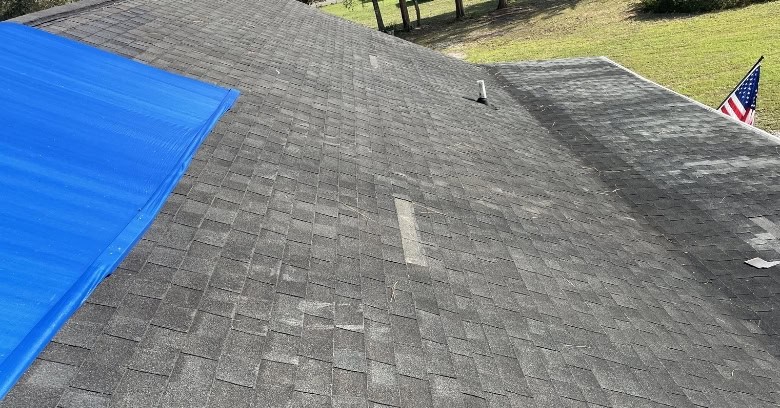
A tarp keeps the rooms dry, though the fault underneath is untouched. A secure installation laps over the ridge and clamps the edges under strips of wood, and anything merely weighted gets torn away.
Nails run through the cover and the shingles beneath into the deck, and each puncture is dealt with when the roof is properly mended. Plastic that sits for months traps heat and moisture against the roof, so the material underneath softens and ages early.
What You Are Given: For Your Files
After the replacement goes on, whatever gave way is gone from view, and the cause is often a detail no bigger than a hand. Pictures capture the gap and the ruined component before anything comes off, and the finished result is shot as well.
The homeowner receives all the images, which helps when a buyer or an inspector asks about the roof. The written account says what broke, plus a list of the work carried out.
Fixing or Starting Over – Deciding Honestly
On shingles with plenty of life, a leaking boot is treated as a local job, since a rubber or metal component seldom lasts as long as the tabs. A full new roof comes up when the granules have worn away everywhere, or once the drips move from place to place.
Patching an old roof can stop the damage in the short run, yet the surrounding shingles carry on wearing. We say which we would choose and explain why, and you make the call.
Blending a Repair – the Choices
Replacement tabs stand out against the neighboring courses, since ultraviolet light has worn the original surface pale. We match the profile, the size and the nearest color still made, and the gap closes as the new material weathers.
A design nobody sells anymore has no exact double, so either a near substitute goes in or the work runs to a natural break. A sample held against the actual roof shows how close the match is, since a screen or a brochure shifts the shade.
What a Homeowner Can Spot – Easy to Miss
- A brown ring on the drywall that gets larger each storm, usually below the attic.
- A musty smell in an upstairs closet, which comes and goes with the seasons.
- A sliver of daylight overhead, noticed with the attic in darkness.
- Stained, darkened wood along a rafter, below a single high point.
- A cracked rubber collar at a vent pipe, plain to see with binoculars.
- Heavy grit piling up in the gutters, heaviest after a downpour.
- A shingle corner flipped up, near a ridge or a rake.
- Flashing bent away at the edge, where an addition joins the main structure.
The Way APC Roofing Works on Emergency Roof Repair in Shawnee Kansas – Our Method
A visit begins up in the attic, and any wet track there leads a roofer to the spot on the slope above. The part that failed is mended with the material that belongs there, and anything close to giving out is listed.
Photographs are taken of the problem and of the finished job, and a written account comes with the set. Where replacement is the honest answer, we tell you, and you decide from there.
Emergency Roof Repair in Shawnee Kansas – Traced, Mended and Photographed
Dial 913-398-5020 to book a look at the damage.
Working With the Weather: Heat, Cold and Adhesives
A cover goes on even with moisture around, while the permanent fix waits for a dry surface. Adhesive strips on new tabs bond once the sun warms the shingles, which is why cool-season installs get each piece stuck down by hand.
Tall or steep houses get safety lines and brackets, because a tumble off the roof is serious. Sun-warmed tabs dent under the lightest weight, and granules knocked loose there do not grow back.
Older Roofs – Honest About the Limits
Asphalt that has baked for decades turns brittle, and raising a course to reach a nail cracks the shingle. Pieces harmed while getting to the fault become part of the job, and the mended section can creep outward.
We tell you in advance when the covering is too fragile to open safely, and a close-up of the cracking shows the reason. Patching an old roof still makes sense to stop the water, as long as the purpose is understood.
If you need Emergency Roof Repair in Shawnee Kansas, get in touch with APC Roofing at 913-398-5020. We track down the entry point and rebuild the detail, and you keep the photos.