Planning Shingle Roof Repair in Republic Missouri?
APC Roofing lays new courses of strip and laminated products, from a small cottage to a large two-story house.
Call 913-398-5020 and someone will come out and explain what is up there.
Anatomy of a Covering: Plant to Pallet
A fiberglass mat gives each shingle its strength, while asphalt soaked through the sheet turns rain away, and a dense layer of crushed rock granules takes the glare.
Two lines that appear matched may be put together quite differently, and added mass tends to buy durability. A showroom sample tells nothing beyond appearance, while a technical sheet sets out performance figures.
Choosing a Profile – Weight and Wind
A three-tab shingle is one thin layer with two slots cut into its lower half, and a slope covered this way shows even, repeating rows. An architectural product bonds a contoured upper strip to a solid backer, and the covering appears textured and shadowed.
The double-ply build adds material and weight, and listed wind classes are generally higher. A dimensional shingle is nailed through its double-thickness strip, and the maker marks the correct spot on each piece.
The Case for Strip Shingles: Sensible Settings
Little outbuildings and back porches are typical spots for three-tab, and an addition can blend with an older covering of that type. Selection has shrunk, since many brands have trimmed that style, and a favorite shade may be gone for good.
Textured shingles mask slight waves in the boards beneath, whereas a single-ply strip telegraphs each bump. The two styles share the same underlayment and edge metal, and only the visible layer differs.
Loose Grit: New Versus Worn
A freshly laid covering releases surplus grains during its opening months, which is harmless. Heavy grit at the downspouts of an older covering means the protective coat is thinning, and uncovered asphalt dries out and cracks in sunlight.
Planes aimed south or west receive the harshest sun, and bald spots usually show up there ahead of the rest.
Sealant Lines – Wind Resistance
A shingle comes from the plant with a glue stripe already applied, and bright sunshine activates it so the row above clings. An adhered course resists gusts that try to pry up its lower edge, and nailing still carries the load year after year.
During cold stretches at the colder end of our territory, sealing is delayed, and strong wind may raise tabs in the meantime. For such work the makers' directions call for asphalt cement under each piece, and a printed diagram marks the spots and their spacing.
Attachment Basics: Tools and Technique
Every nail belongs inside a narrow stripe the manufacturer marks, so the shank also grabs the upper margin of the row beneath. Four fasteners per shingle is the standard schedule, while steep pitches and windy locations need six.
A nail set too high misses the row underneath, excess air pressure buries the head in the mat, and a skewed shank tents the shingle on top. A listed wind class is valid only for the pattern the manufacturer specifies, while a bad compressor setting repeats itself on every shot.
Under the Underlayment – Replacing Weak Sections
Flat sheets of plywood or OSB make up the deck, and every fastener needs solid material there to hold. Older houses sometimes keep the gapped boards once used under shakes, and full sheathing is added on top before any shingles.
Rotted and spongy spots are replaced while the framing is open during a tear-off, since a nail in punky fibers pulls loose. A little clearance is kept at every panel seam, because wood swells in humid weather and buckles without room to move.
Underlayment Basics: Modern Options
The deck gets a water-resistant membrane before shingles are laid, and it goes on in overlapping runs starting at the eave. Synthetic sheet has largely replaced asphalt-saturated felt, because the replacement is lighter to carry and harder to rip.
Water blown under a lifted tab runs down the membrane to the gutter, but it was never designed to serve as the only covering.
Ice Dams at the Overhang – Around Every Shank
At the colder end of our territory, attic warmth melts snow on the upper slope, and meltwater goes solid again where the roof extends past the wall. Water pooling behind that buildup can back up under the shingles, and plain underlayment admits it around each nail hole.
Where ice dams form, building codes require an adhered membrane at the eave, and it reaches up the slope past the inside line of the exterior wall. Everywhere in our territory, it is also a regular choice for valleys and around chimneys, since runoff lingers at every such detail.
The Outer Rim – Guarding the Trim Board
Prefinished drip edge follows each eave and each rake, and water sheds into the gutter instead of onto wood. At the bottom of the roof, the flashing goes beneath the underlayment, whereas up the gable the sequence runs backward.
Edge metal around the whole perimeter is a code requirement in many towns, since rain otherwise wicks under and rots the sheathing.
Groundwork at the Eave – Rakes Too
The first exposed course rests on a dedicated starter strip, so sealant lands exactly where the covering stops. A regular field piece simply turned around leaves its adhesive well back from the gutter, so nothing but nails holds the lowest border down.
Makers often specify a starter product up the gable sides too, since uplift is not limited to the eaves.
The Low Seams: Debris and Flow
An open valley shows a strip of metal running down the crease, while the closed-cut type runs shingles from one side across and trims the other side along a chalk line. Weaving rows from both planes together suits single-layer tab products, though dimensional shingles rarely take to it because of their bulk.
The middle of the trough is kept free of fasteners, and a sealed membrane is placed below as backup. Debris packed into a valley stays damp long after rain ends, which can push rain beneath the trimmed shingles.
Vertical Surfaces: Water Shedding Order
Step flashing along a wall is set one to a course, while the exterior finish overlaps the upright flange. At the low corner by the house, a kickout piece bends outward, because otherwise rain soaks the framing.
Around a chimney, step pieces line the sides, an apron covers the front and counterflashing is set into the masonry, and a large stack gets a saddle that sheds water both ways.
Roof Penetrations – Sequence and Laps
Every pipe boot pairs a flat base of metal or plastic with a snug neoprene collar, and ultraviolet exposure dries the gasket out and cracks it. The flange slips under the courses higher up, so runoff flows across the downhill side instead of under it.
Collars often crack while the surrounding field still has years of wear left, so new boots come with every new covering.
Along the Peak – Fastener Length
The ridge and every hip are closed with cap shingles, and laminated work calls for the maker's coordinated accessory. Pieces cut from strip shingles are much thinner, and at the colder end of our territory they can crack along the fold in freezing weather.
The caps often conceal a vent along the peak, so longer fasteners go through it to anchor in the decking.
The Space Under the Deck: Balance
Soffit vents are where outdoor air is supposed to enter, and a ridge exhaust lets it out. Insulation that spills into the narrow cavity over the walls can shut the passage, and rafter baffles preserve a clear route.
Without airflow, an attic bakes the boards from below, while indoor humidity collects there with nowhere to go. On frigid nights at the colder end of our territory, condensation freezes on the nail tips, and the thaw sends droplets onto the ceiling. Mixing a ridge vent with gable louvers or a powered fan can short-circuit the flow, and the soffits stop doing their job.
Around the Map – Sunlight and Storms
Our service area stretches from high plains to subtropical towns, and the strain on asphalt shifts with the setting. At the coastal end of our territory, the large storm systems blow for hours, so manufacturers list a high-wind nailing schedule. Strong sun, season after season, makes the coating brittle, and moist air lets algae take hold.
At the colder end of our territory, freeze and thaw cycles pry at every small crack, and the weight of drifted snow adds its own strain.
Ice From the Sky: What a Strike Does
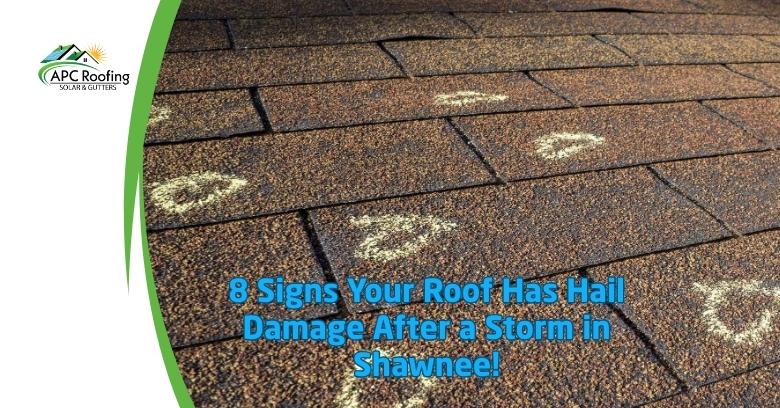
At the colder end of our territory, big hail visits many neighborhoods, and impact-resistant lines exist for exactly that. A hailstone knocks granules loose where it lands, while a sharp jolt can split the mat itself.
The impact class on a bundle comes from a standard drop test with steel balls, and a higher grade means passing a tougher trial. Certain makers blend a rubbery polymer into the coating, which lets the shingle flex instead of shattering.
Storm Winds: Bare Patches of Sheet
Suction pulls hardest along the eaves, the rakes and the corners of a roof, so any piece that has come unstuck shakes in each blast. A tab bent far back keeps a mark along the fold, and the damage leaves it permanently weakened. A shingle hurt like that is replaced with a new one, while a loose but unharmed one takes a few dabs of cement.
A missing tab leaves bare underlayment facing the sky, and it was never made to stand up to daylight.
Stains and Green Growth: Slowing the Return
Blackish trails are colonies of algae, which survives by feeding on limestone filler. At the humid end of our territory, shaded north-facing roof planes grow it fastest, and the film alone rarely shortens the life of the covering.
Moss is more serious, because it stays wet for days, and as clumps thicken they wedge the tabs upward. Pressure washing takes the granules along with the growth, so a mild product rinsed on softly is the better choice. Algae-resistant designs mix copper into the surface, and a zinc strip near the peak slows regrowth on an older covering.
Color on the Slope: Beyond Looks
A dark covering gains more warmth from sunshine, and pale shingles stay cooler. A few lines carry special granules that keep even a mid-tone from getting as hot, and a reflectance rating appears on the data sheet.
Shingles from separate production runs may not match exactly, and the recommended practice is to shuffle packs during installation. Blended colors, with many tones on each piece, hide those minor differences, while plain shades display every one of them.
Going Up Top: A Safer View
A sun-baked covering loses its firmness, and every tread grinds granules loose. At the colder end of our territory, frozen tabs split beneath a person's weight, while frost at dawn makes the footing treacherous.
A homeowner is far safer staying on the ground, and a look from across the street tells a great deal.
A Second Layer: What Gets Missed
Rules across much of the country accept an overlay over an original roof, but not where two are already stacked or the wood is damp and decayed. A layover keeps the worn shingles sitting on top, so any weakened patch gets buried under the added courses.
Irregularities beneath carry up into the finished roof, while tired metal at walls and chimneys tends to stay. A second layer's load sits on framing chosen decades ago, while the fasteners need more length to bite into the boards.
Early Warnings – Worth a Closer Look
- Mineral grains build up in the gutter troughs, and the layer thickens with each storm.
- Pieces are missing and bare underlayment peeks through, and wind has pried the adhesive apart.
- Shingle ends lift into curls, which happens as the oils bake out.
- Straight breaks run through a few pieces, and water can reach the mat through them.
- Parts of a slope look darker and slick, so the base is bare to sunlight.
- A pipe boot has gaps between its collar and the pipe, which lets rain into the attic.
- Flashing at a chimney has lifted off the brick, so every storm can find a weak point.
- A brown ring shows on a ceiling, though the entry is often some distance off.
How APC Roofing Goes About Shingle Roof Repair in Republic Missouri: What to Expect
Every slope is walked first during an inspection, and the flashings, valleys, vents and edges get a close look along the way. From inside, the attic is searched for water stains and pinholes of light, since discolored sheathing shows where water has traveled.
Every fault is photographed, and its size is measured. A written summary lays out what was found, with the reasons given for each recommendation. A modest problem is presented as modest, and a failing covering is not dressed up. The choice is the owner's, be it a repair, a replacement or no work yet.
Shingle Roof Repair in Republic Missouri – Help From People Who Know the Details
Call us at 913-398-5020 to book a time.
Mending or Starting Over – Matching Old and New
A cracked boot, loose flashing or a handful of torn tabs is routine repair work, and the remaining shingles are untouched. Fresh shingles stand out against faded neighbors at first, and the tone that went on years ago may be out of production.
Stiff, dried-out shingles split when raised for nailing, so the disturbed zone keeps widening. Once wear like that reaches across the covering, repairs no longer hold for long.
Time on the House – Estimates, Not Promises
A three-tab product commonly gives around fifteen to twenty years, and laminated types frequently see nearly thirty. Attic airflow, sun exposure and the quality of the nailing move that figure, while a hard storm can override every estimate.
Checking the flashings and pipe seals now and then is sensible upkeep, as prompt fixes keep water out of the wood.
For a roofer's view of Shingle Roof Repair in Republic Missouri, get hold of APC Roofing at 913-398-5020. Someone will walk every slope and look over the details, and a plain written report puts the next step in your hands.
Verified

Verified
Verified
Verified