
You’re getting estimates for a new roof, and every one of them lists “architectural” or “dimensional” shingles. You’d like to know what that actually means, whether it’s worth it and how to pick a product and a color you won’t regret for the next couple of decades. Architectural shingles in Republic, MO are the standard for a reason, but you should understand that reason before you sign.
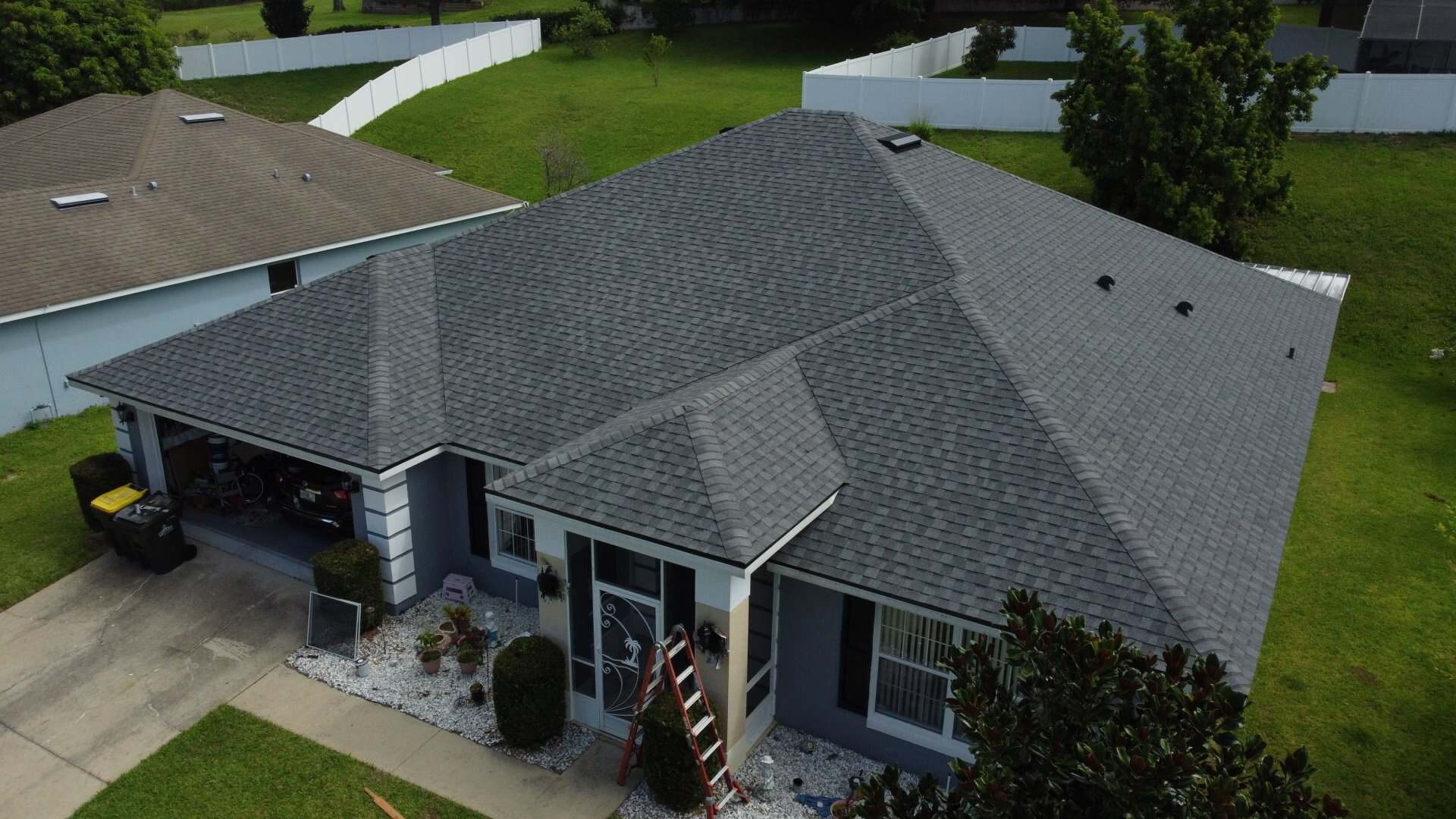
It’s a lot of decisions for something you’ll only buy once or twice. And it’s hard to judge a whole roof from a sample chip the size of your hand.
APC Roofing has been in business since 2017 and serves Republic from our Springfield office. We’re GAF Certified, licensed and insured, and your inspection and estimate are free. Call 913-398-5020 to talk through your options.
What makes a shingle “architectural”
An architectural shingle (also called dimensional or laminated) is made of two or more layers of asphalt-coated fiberglass bonded together. The top layer is cut into uneven tabs, so when the shingles are laid in rows they create shadow lines and a textured look, a bit like wood shake from a distance.
That extra layer does more than change the look. It makes each shingle heavier and stiffer than a flat 3-tab shingle, and the added thickness hides small dips and waves in the roof deck that would show through a thinner shingle. If you’re curious how the two compare, our 3-tab shingle roofing page covers the older style.
How architectural shingles in Republic, MO handle the weather
Southwest Missouri asks a lot of a roof, and each kind of weather tests a shingle differently.
Wind
The thicker shingles resist wind better than 3-tab and usually carry higher wind ratings. Those ratings assume proper installation: the right number of nails, placed in the narrow strip the manufacturer marks on each shingle, where the layers overlap. Nails set too high or driven too deep weaken the hold, no matter how good the shingle is.
Hail
A heavier shingle takes a hail strike better than a thin one, but standard architectural shingles aren’t hail-proof. Large hail can still knock granules loose and bruise the mat. If hail is your top concern, ask about impact-resistant architectural shingles. The highest rating, Class 4 under the UL 2218 test, means a sample held up to a steel ball dropped from a set height without cracking. Some insurers treat Class 4 roofs differently, so it’s worth calling your agent before you choose.
Cold
Each shingle has a strip of factory sealant that bonds it to the row below once the sun warms it. In winter that bond can take a while to form, and manufacturers often call for extra hand-sealing when it’s cold. Ice dams at the eaves are a winter risk around here too, which is why a waterproof layer under the shingles along the edges and in the valleys matters as much as the shingle itself.
Algae
On shady, damp slopes, dark algae streaks show up on a lot of roofs. Many architectural shingle lines include algae-resistant granules containing copper, which slows that growth down. If your house sits under big trees, it’s a feature worth asking about.
Choosing a color
Color is the part of a new roof you’ll notice every day, and it’s harder to choose than it looks. A few tips:
- Look at a full roof, not just a sample. Most manufacturers show photos of finished homes, and driving past a house with the same shingle helps even more.
- Blended colors hide small differences between production batches better than a solid color does.
- Darker colors absorb more heat. Some lines offer reflective granules if you’d like a cooler roof surface.
- Check with your HOA first if you have one. Some neighborhoods limit roof colors.
Architectural or premium?
Above standard architectural shingles sit premium and designer lines, made to look like slate or wood shake, often with heavier construction. They cost more and suit some homes well. For most houses in Republic, a quality architectural shingle, possibly with an impact-resistant rating, covers what you need. You’ll get a straight recommendation for your roof, not an upsell.
What goes on with the shingles
A shingle is only as good as the roof it sits on. A proper shingle roof installation includes the right underlayment, a waterproof layer at the eaves and valleys, new drip edge and flashing, starter strips at the edges and matching hip and ridge caps at the top. Ask that your estimate name each of these.
How it works with APC Roofing
- Book your free inspection. Call 913-398-5020 or request a free estimate online.
- Get a clear, honest assessment and estimate. You’ll see photos of your current roof and get a written estimate naming the shingle line and color you chose.
- Your roof gets done and the site gets cleaned up. Many residential projects are finished in a single day.
If a storm damaged your roof, you file the claim with your insurance company and pay your own deductible. We document the damage, provide the estimate and work with your adjuster. Financing is available through Aqua Finance, Fortifi, Hearth and Home Run Finance.
Architectural shingle questions
Are architectural shingles worth it over 3-tab?
For most homes, yes. They’re thicker, handle wind better and look more dimensional, which is why they’re the standard for new roofs.
Do architectural shingles protect against hail?
Better than thin shingles, but they aren’t hail-proof. Impact-resistant versions with a Class 4 rating hold up best in moderate hail.
Can architectural shingles go over my old roof?
Sometimes, but a tear-off is usually the better choice. It lets the roof deck be checked and repaired, and it gives the new shingles a flat base. If your current roof just took a hailstorm, our hail damage roof repair in Republic page is a good place to start.
How long do architectural shingles last?
The product, the installation, sun exposure and storm history all play a part. In general, they outlast 3-tab shingles.
A roof you’ll be glad you chose
Waiting on a worn roof usually means more of the deck needs replacing once the old shingles come off.
Call 913-398-5020 or book your free inspection online. You’ll pick the right shingle with all the facts, and you’ll look up at a roof you’re happy with every time you pull into the driveway.


















