
You’ve decided it’s time for a new roof, or you’re close. Now the worry shifts. Will the crew cut corners where you can’t see? Will the new roof hold up to the next Missouri hailstorm, or will you be calling someone back in three years? Most of what makes a roof installation good or bad ends up hidden under the shingles, so it’s hard to judge from the ground.
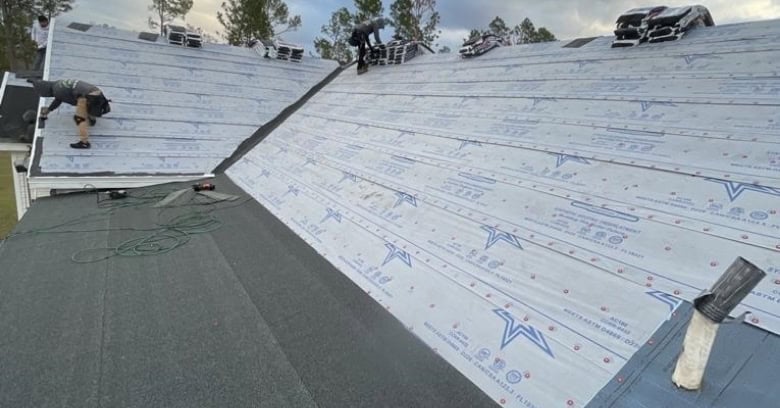
This page walks through what a proper roof installation in Republic, MO includes, from the bare deck to the ridge cap. Use it to understand what you’re paying for and to compare any estimates you get.
APC Roofing is a GAF Certified roofing contractor, licensed and insured, and many residential installs are finished in a single day. Inspections and estimates are free. Call 913-398-5020 to get started.
Step 1: Tear-off down to the deck
A new roof should start on a clean, solid surface. That means removing the old shingles and underlayment down to the wood decking. Some codes allow a second layer of shingles over the first, but it adds weight and hides the deck, so rot or soft spots stay buried. Ask any roofer you’re talking to whether they’re tearing off, and how many layers.
Step 2: Fixing the deck
With the old roof off, the decking is easy to inspect. Boards that are soft, rotted or delaminated get replaced before anything else goes on. Your estimate should explain how damaged decking is handled so there are no surprises.
Step 3: Drip edge and ice and water shield
Metal drip edge goes along the eaves and rakes so water drips cleanly into the gutters instead of soaking the fascia. Then a self-sealing membrane called ice and water shield goes down along the eaves and in the valleys.
That membrane matters in southwest Missouri. On winter days, snow melts on the upper roof and refreezes at the colder eaves, forming ice dams that can push water up under the shingles. Ice and water shield seals around the nails and keeps that backed-up water out of your house.
Step 4: Underlayment
The rest of the deck gets covered with underlayment, a water-resistant layer that’s your backup if water ever gets past the shingles. Synthetic underlayment is common today because it’s strong and holds up well if it gets wet during the install.
Step 5: Flashing, new not reused
Anywhere the roof meets a wall, a chimney or a vent pipe, flashing keeps water out. These spots cause a lot of leaks, so they deserve new metal and new pipe boots instead of whatever was on the old roof. The flashing at a chimney may need help from a mason if the brick is in bad shape.
Step 6: Starter strip and shingles
A starter strip goes along the eaves and rakes first. It gives the first row of shingles something to seal to, which helps keep the edges from lifting in a Missouri windstorm.
Then the shingles go on, row by row, nailed in the right spot. Nail placement sounds like a small thing, but shingles nailed too high or at an angle are a common reason for blow-offs. Following the manufacturer’s installation instructions matters for both performance and the shingle warranty.
Step 7: Hips and ridge cap
The hips and the ridge get finished with cap shingles made for the job, not cut-up pieces of regular shingle. Cap shingles are built to bend over the peak without cracking, and the ridge takes a lot of wind, so this is not the place to save a few dollars.
Step 8: Cleanup
When the roof is done, the crew picks up the old shingles, nails and debris. A magnetic sweep of the lawn and driveway helps catch stray nails before they find a tire or a bare foot.
Choosing the material
Most Republic homes get architectural asphalt shingles. Metal is popular too, especially on homes with acreage and on shops and barns. Tile and flat-roof systems are options for the right building. If you’re still deciding whether you need a full new roof at all, our roof replacement in Republic page covers the repair-or-replace decision, and our metal roof installation in Republic page covers metal in detail.
Getting your home ready for install day
- Move cars out of the garage and driveway so the crew can work and park the trailer.
- Keep pets and kids inside or away from the house. It’s loud, and things fall off roofs.
- Take down anything fragile hanging on interior walls. Hammering can shake it loose.
- Cover anything stored in the attic. Some dust and debris will fall.
How it works with APC Roofing
- Book your free inspection. Call 913-398-5020 or request a free estimate online.
- Get a clear, honest assessment and estimate. You’ll get photos of your current roof and a written estimate that spells out the work. Financing is available through Aqua Finance, Fortifi, Hearth and Home Run Finance.
- Your roof gets installed and the site gets cleaned up. Many homes are done in a single day.
Roof installation questions
How long does a roof installation take?
Many residential roofs are finished in one day. Bigger or steeper roofs, or ones with a lot of decking to replace, can take longer.
Does a new roof need a permit in Republic?
Permit rules vary by city and county. Your roofer should know what’s required where you live and handle it as part of the job. Ask about it when you get your estimate.
What if it rains during the install?
Crews watch the forecast and work in sections so the roof isn’t left open to the weather. Underlayment also protects the deck if a shower moves through.
Will my gutters be affected?
Gutters are checked during the install, and new drip edge should direct water into them. If yours are worn out, it’s a good time to replace them along with the roof. See our gutter installation in Republic page.
A roof put on right
When the crew leaves, you should have a roof you don’t have to think about, a clean yard and the confidence that nothing was skipped under the shingles. Call 913-398-5020 or book your free inspection online to get started.


















