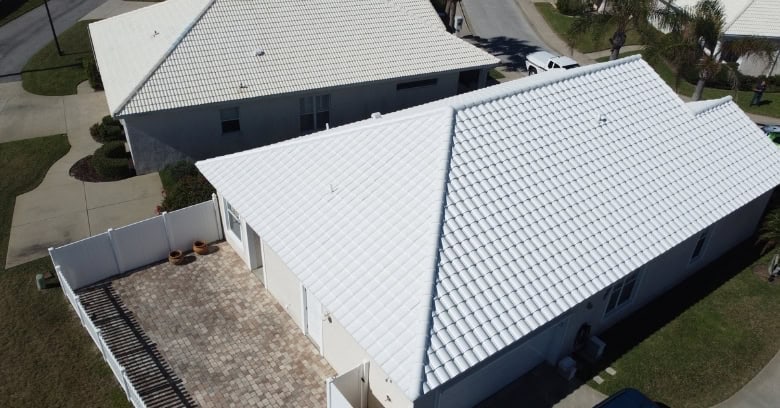
Need Emergency Roofing in Ozarks Region Missouri?
APC Roofing takes on anything from a checkup to a full replacement, whether the covering is shingle, metal or tile.
Get in touch at 913-398-5020, and a roofer arranges a visit to the house.
What a Roof Is Made Of: the Basics
The shingles or panels on top form the outer layer, and felt or a synthetic membrane, boards and rafters lie out of sight. Sheet-metal flashing takes over at each wall, stack and valley, and trouble nearby seldom means a failure in the surrounding shingles.
The air under the rafters counts as part of the roof, the same as any material, as heat trapped under the boards shortens the life of the shingles above. A brown mark on a ceiling can originate at any level of the roof, and work confined to the outside can miss the real source.
The Duties of a Roof: More Than Meets the Eye
A sloped covering sheds every storm's water downhill, while nails and seal strips resist the pull of gusts. The rafters and the deck carry the weight overhead, snow included at the colder end of our territory, and intake and exhaust let the attic breathe.
Water is a job for the covering, and wind is a task for the fastening, while gravity's pull goes to what is underneath. A weak link puts strain on the parts around the weak spot, so repairs target the root, not the visible mark.
The Smaller Details Up Top: A Shorter Story
The main covering is built for a long run, but the rubber boot at a drain stack wears through much earlier. Rain finds a way down past the weak point, and a brown patch forms on the ceiling underneath.
Caulk along a wall joint hardens and pulls away in the heat, and galvanized flashing corrodes at folds and nail holes. The capping pieces craze down the center, because wind and weather strike the peak harder than the slopes below.
What Appears Early: Near and Far
At a distance, the outline of the roof gives away dips, sags and wavy planes, and the gutters and trim can be checked in the same glance. A pair of binoculars brings collars, lifted tabs and bare patches into focus, but a weak spot underfoot tells what optics cannot.
Once on the roof, a roofer checks every connector closely and follows the flashing at each wall, and the field is read for brittleness, granule shedding and loose edges. A slippery or steep slope rules out walking, and the eave line, reached by ladder, becomes the vantage point.
Above the Ceiling: Evidence to Look For
A stained patch on the plywood shows water that got in before, and dampness under the fingers shows the entry is still active. Sunlight visible from inside marks a way in, and the spot gets pinned down by distance from the ridge, ready for the outside check.
Rusted nail tips point to condensation, not a leak, and a matted, gray patch backs up the same story. Fill pushed into the eave opening, or a fan duct ending in the attic, turns up only from inside, so a yard-only look passes over faults like that.
The Paper That Follows: the Basics
Each finding is recorded with a photograph tied to a place on the roof, and a line of text says what each image shows. Solid sections are treated in the same plain language as sections that are not, and trouble spots are ranked from most to least urgent.
A report kept on file lets the next check be measured against a known starting point, and movement across seasons reads more directly than one day's condition. A covering looked at on a regular schedule rarely catches the owner off guard, and a large job gets seen coming well ahead of time.
Maintenance Tasks: Practical Habits
Vent collars get replaced before splitting, and brittle beads at the walls get cut out and run again. Pine straw and twigs get picked out of the valleys, and sagging gutter hangers get tightened.
A lifted tab sealed down early stays a small job, but a season of neglect can end in a ceiling mark. Lichen keeps the surface damp and works in under the shingles, and a biocide treatment clears the growth, with no pressure washer involved.
How Often the Checkup Should Happen: a Homeowner's Part
Somebody trained in the trade should go over the roof once a year, timed for the point when local weather turns roughest. The point is finding small faults before a leak forms, and the homeowner learns roughly how much life the covering has left.
Between visits, an owner can look at the roof from the yard after rough weather, and ceilings on the top floor are worth a look for new rings. Checking the attic with a lamp each season makes sense: soft wood, tiny bright spots and soggy insulation surface long before anything reaches the space below.
Reading a Roof's Age: Early Signs to Late Signs
Brand-new shingles look dark and consistent across every slope, and approaching midlife the sunniest side fades before the rest. At the very end, tabs turn brittle and crack, and mending one area seems to open another.
Judging from the street supplies a reasonable idea, but only a hands-on check settles the matter. Once shingles are spent, patching stops making sense, and a straightforward contractor says so directly, instead of selling one more fix.
The Channel's Part in the System: The Stakes Explained
The covering's job on water stops at the drip edge, and from there a gutter does the remaining work. A channel hung the wrong way holds a pool against the house, and the material there softens over time.
A give in that spot points more often to a backup than a shingle problem, and reroofing alone will not solve a fault at that spot. The slope of every gutter and where each downspout empties get checked, and the drip edge gets looked over where the metal meets the fascia line.
What Ventilation Is For: An Overview
Fresh air is meant to come in at the soffits and exit along the ridge, and the draft clears warmth and humidity from under the sheathing. Once that gets shut off, the attic bakes in summer and stays soggy in humid weather, and the whole build's service life shortens.
A powered fan with too little inlet area draws cooled air through the ceiling, and two mismatched setups on one roof can work against each other. A roof placed over bad ventilation inherits an existing weakness, so a proper replacement addresses the same issue at the same time.
What Gets Chosen and Why: Different Choices for Different Homes
Toward the colder end of our territory, frozen gutters and heavy snow set the priorities, so an adhered barrier goes under the lowest rows. On the coastal side of our area, storm winds set the nail pattern, and storm-rated trim metal and taped seams get called for.
In towns at the colder end of our territory, where hailstones run large, a harder product makes sense, while strong sun bakes asphalt across every market we serve. Every material choice answers to the weather at that house, not routine, and not whatever a past project called for.
Homes and Businesses: One Steep, One Flat
A pitched covering sends water downhill by lap, laid in asphalt, tile or metal. A store or warehouse shelters under a nearly flat, sealed membrane, and mechanical equipment and drains break through that surface.
Some houses have a gently sloped patch over a back room, and a shingled surface there lets rain linger long enough to work under the courses. A low spot like that needs a continuous membrane tied in beneath the main covering, and re-shingling that spot only repeats the trouble.
Protecting a Damaged Roof for Now: Done the Right Way
A sheet shields a gap for a little while, but the underlying trouble waits for a crew. A good cover goes up and over the peak and gets fastened with wood strips, and the material gets drawn tight enough to hold quiet in a gale.
A cover needs a wide border around the hole, because rain travels sideways toward a gap that stops short. A cover left up through a whole season holds heat against the surface, and the shingles beneath start to deteriorate.
Doing the Vertical Joints Properly: No Room for Guesswork
Where shingles climb beside a wall, L-shaped pieces alternate with the courses, and an overlapping strip above keeps runoff off that metal. A chimney has an apron below and metal run up against both edges, and a broad stack gets a saddle set into the slope nearby.
Caulk troweled onto a bad seam lets go once temperatures shift the metal, so the lasting answer is new metal laced in properly. Porous or cracked mortar lets moisture into the masonry higher up, and some leaks like that need a mason as well as a roofer.
Putting Requirements on Paper: Nothing Left Vague
The plan for a job names every product by brand, and the document states plainly whether the work is a tear-off or a layover. The account explains how rotten decking gets handled if any turns up, and the metal, the ventilation and the yard cleanup are each called out.
Thorough scopes from rival bidders can be checked point by point, and the true difference between the two shows plainly. A roofer who will not put the plan down leaves the owner guessing, and a spoken assurance proves nothing after the fact.
What a Re-Roof Involves: Start to Finish
Beds, bushes and walkways get protected before demolition begins, and the old shingles get pulled off in pieces. Opened up, the decking gets checked for soft spots and breaks, and rotten sections get rebuilt before anything gets put back down.
Underlayment, new metal and ice-and-water membrane go on across the open deck, and the main covering, the ridge line and the vents finish the work. A magnet gets run over the lawn and the driveway when the work is done, and the gutters get checked and cleared of scraps.
Beyond the Shingle Roof: Particular Needs
A metal system with exposed fasteners relies on the gasket beneath every fastener, and a worn spot gets cured with a new screw rather than caulk. Clay and concrete tile go down by more than one method, from mortar to foam to clips, and the underlayment does the actual waterproofing.
A careless step snaps a piece easily, and a damaged unit gets swapped for another of matching shape. On a low-slope section, standing water and open seams are the things to watch, and debris gets cleared from drains and scuppers.
Signs Worth a Closer Look: Easy to Act On
- Coarse grains washing out after every rain, long after the covering was installed.
- Tab ends that curl instead of lying flat, spread across more than one row.
- A split rubber collar around a plumbing vent, letting water run down into the attic.
- Discoloration on a bedroom ceiling, close to an outside wall or a chimney.
- Light leaking in near a valley or a pipe, with the lamp switched off.
- Moss on a shaded slope, holding moisture against the surface.
- A sag along the ridge line, visible against the sky.
- Dried beads separating at a skylight, left behind by an earlier patch.
Emergency Roofing for Ozarks Region Missouri Households: How APC Roofing Works
Before any advice gets given, a roofer goes over the whole covering and the attic, and the results come back as images plus a short written summary. Sound parts get named as plainly as parts that need work, and the homeowner sets the order of any work.
Emergency Roofing Around Ozarks Region Missouri: Plain Talk, Careful Work
Phone 913-398-5020 and get a date on the calendar.
A Roof's Paperwork: A Short List
Writing down the installation date and the materials used is a smart habit, and each visit's report belongs with the earlier entries. Listing every fix, the place and the scope, takes only a minute, and looking back after enough time shows what keeps recurring.
At sale time, questions about the roof's age and history always come up, and a folder of dated pages settles things quickly. A backup copy of the whole file keeps one bad day from erasing the whole thing, because a single set can be destroyed in a flood or a fire.
A Neat Result, Up Close: Small Things, Handled Properly
Rows sit true across each plane, with tidy trimming at the gable edges, and nails stay covered by the layer above. The wall joints carry new flashing, tucked to match the way water runs, and no gob of roofing cement stands in for a missing piece.
Air can move from the eaves to the peak without obstruction, and the drainage runs at least as well as before. No nails or scraps get left in the grass or on the drive, and sawdust near a cut line is the most common leftover once the work wraps up.
Anyone researching Emergency Roofing in Ozarks Region Missouri does not have to keep guessing about next steps. Getting in touch with APC Roofing at 913-398-5020 sets the process moving. Every visit looks at the roof as a whole, not one spot alone, and nothing is left to guess at.