Exploring Architectural Shingle Roofing Across Orlando Florida?
APC Roofing mends torn, curled and lifted pieces and lays complete new coverings on houses, garages and sheds.
Reach us at 407-270-1129 and someone will come out and explain what is up there.
Inside the Product – Factory Details
Each shingle is built on a fiberglass mat for strength, and asphalt spread over the sheet stops water, and mineral granules across the top guard against sun damage.
Two lines that appear matched may be put together quite differently, and a heavier build generally adds years on a house. Hue is all a sample chip can show, but the manufacturer's printed sheet gives the test results.
Choosing a Profile – Weight and Wind
A three-tab product is a single-layer piece with twin cutouts at the exposed edge, so the overall look is orderly. An architectural shingle glues a shaped overlay onto a full-width base, and the staggered outline throws shadows that suggest depth.
The double-ply build adds material and weight, and a stronger wind class is commonly assigned. Nailing on a two-ply shingle aims at the strip where the plies are joined, and a wrapper diagram shows the exact position.
Keeping the Traditional Look: A Narrow Niche
Three-tab regularly serves a workshop, a garage or a porch, while a repair on an older house of that type stays uniform. Makers have pared back their tabbed lines, and discontinued hues cannot be ordered at all.
A dimensional surface disguises minor unevenness in the sheathing, while a thin strip follows every undulation. Either style is laid over identical underlayment and metal details, and the shingle itself is the only part that changes.
Aging of the Top Coat – Normal or Worrying
A freshly laid covering releases surplus grains during its opening months, and the amount tapers off quickly. Heavy grit at the downspouts of an older covering means the protective coat is thinning, and the unprotected asphalt soon cracks and curls.
Faces that point south and west take the strongest sun, and dull patches gather there.
The Factory Sealant Band – Wind Resistance
A shingle comes from the plant with a glue stripe already applied, and on a hot day it softens and grips the row laid over it. Adhered courses keep their bottom edges down in a gust, while the nails keep doing their share for decades.
During cold stretches at the colder end of our territory, sealing is delayed, and a stiff wind can raise a loose tab before then. Manufacturers' instructions call for dabs of roofing cement in that situation, and a printed diagram marks the spots and their spacing.
Attachment Basics – Frequent Errors
Nails are driven within a slim band set out by the manufacturer, and from there the shank reaches the top of the underlying row too. A standard shingle gets four fasteners, and high-wind or steep work moves the number to six.
A misplaced high nail leaves the lower course loose, an overdriven head cuts into the mat, and a crooked shank makes a bump that wears through the shingle above it. A bundle's wind class holds only when the printed pattern is followed, and a poorly adjusted pneumatic tool repeats its error across an entire plane.
The Structural Base – Older Houses
Plywood or OSB panels form the deck under a shingle roof, since fasteners must bite into something continuous. Homes that once wore wood shakes may still have spaced slats up top, so sheathing is laid across them before shingles.
Once the old covering is off, any soft or delaminated section is cut out and swapped for sound decking, because fasteners in decayed stock work free. Installers leave a slim gap where sheets meet, because expansion from humidity has to go somewhere.
Old Paper, New Fabric: Felt or Synthetic
Shingles never go straight onto bare decking, since a water-resistant membrane comes between, and its runs are lapped so water flows over each joint. Felt paper has mostly given way to synthetic underlayment, as the newer option is lighter, stronger and less prone to wrinkling.
Rain forced past a loose shingle is shed by the membrane below, but it was never designed to serve as the only covering.
Ice Dams at the Overhang – How Far Up
At the colder end of our territory, a heated attic thaws rooftop snow, and meltwater freezes solid at the unheated edge. Pooled water behind the obstruction travels uphill under the courses, and regular underlayment offers no seal where nails penetrate.
Where cold winters bring ice dams, a sticky rubberized barrier is applied at the eaves, and it extends upslope beyond the point directly above the heated interior. Everywhere in our territory, it is also a regular choice for valleys and around chimneys, because those junctions carry heavy flow.
Perimeter Flashing: Sequence Matters
A metal drip edge wraps the eaves and the rakes, and water sheds into the gutter instead of onto wood. The underlayment covers the lower flashing, and at the gable ends that sequence is reversed.
Current codes in many places make edge metal mandatory along every border of a shingled plane, since rain otherwise wicks under and rots the sheathing.
Base Row Details: Installation Order
The first exposed course rests on a dedicated starter strip, so sealant lands exactly where the covering stops. A reversed field piece puts its sticky band too far up, so the lowest run relies entirely on its nails.
Makers often specify a starter product up the gable sides too, because wind catches the outer margins along with the eaves.
Junctions of Adjoining Planes – Keeping Nails Clear
An open valley leaves a metal trough visible in the middle, while the closed-cut type runs shingles from one side across and trims the other side along a chalk line. A woven junction interlaces rows from both planes, which works with three-tab, whereas two-ply shingles do not bend well enough.
Fasteners stay out of the center of the channel, while a self-sealing sheet runs beneath from top to bottom. Leaves and pine needles that settle in a valley hold moisture against the shingles, and diverted water can work under the neighboring courses.
Roof-to-House Joints: Transitions Between Materials
Every course that meets a wall gets its own folded step flashing, and the exterior finish hangs down across the standing half. The corner where the eave reaches the house takes a kickout, because otherwise rain soaks the framing.
The flashing around a chimney is an apron below, steps on each side and counterflashing embedded in mortar, and a large stack gets a saddle that sheds water both ways.
Roof Penetrations: Wear Over Time
A pipe boot is built from a flat base plate and a stretchy neoprene collar, and the sealing ring stiffens and cracks as it weathers. The upper half of the flange tucks beneath the shingles above, and the exposed foot lets water pass over rather than behind.
Rubber collars commonly split long before the field gives out, so new boots come with every new covering.
Along the Peak: Cold and Cracking
The ridge and every hip are closed with cap shingles, and laminated work calls for the maker's coordinated accessory. Homemade substitutes trimmed from three-tab carry less material, and in a hard freeze at the colder end of our territory the bend can split.
A continuous ridge vent frequently lies under the cap row, so the nails must be long enough to pass through it and bite the sheathing.
Breathing Room Above the Ceiling – Mixed Systems
Intake openings in the soffits let cool air in near the bottom, while an exhaust at the peak lets it escape. Insulation blown tight against the outer walls can choke the flow, so baffles are installed to keep a clear gap.
An attic holding in heat warms the deck from underneath, and moisture from the living areas lingers up there. On frigid nights at the colder end of our territory, condensation freezes on the nail tips, and the melt drips down when the sun comes out. Combining different exhaust types can make one vent pull air in through another, since the draft takes the quickest route rather than sweeping the whole space.
Around the Map – Humidity and Wind
The area we serve spans cold, dry high country and warm, wet flatlands, and the strain on asphalt shifts with the setting. At the coastal end of our territory, big storms off the ocean send steady wind across a house, so manufacturers list a high-wind nailing schedule. Constant heat pushes the lighter oils out of the asphalt, and lasting humidity gives algae room to grow.
At the colder end of our territory, ice forming in hairline cracks forces them apart, and packed snow sits on the slopes for days.
Ice From the Sky: What a Strike Does
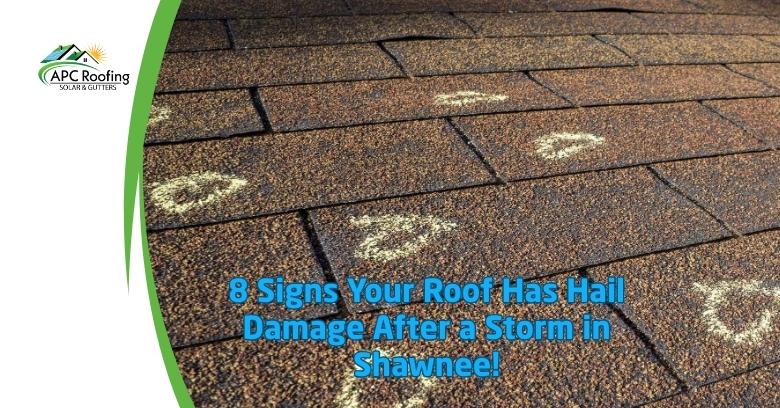
At the colder end of our territory, hail arrives most years with the thunderstorms, so shingles designed to resist impact are widely sold. A single stone can leave a dark circle where the granules came off, and a hard enough blow can crack the mat underneath.
Impact ratings come from a laboratory test that drops steel balls on the shingle, and a higher grade means passing a tougher trial. Rubber-modified asphalt is common in these designs, so the material bends where an ordinary mix would crack.
Strong Gusts: Folded Tabs
The eaves, rakes and corners take the heaviest upward pull, so a piece with a failed bond begins to lift and drop. A tab folded back far enough creases along its width, and it is liable to tear off later. A shingle in that condition gets replaced, while a loose but unharmed one takes a few dabs of cement.
Where a tab has blown away, the underlayment beneath lies open to the sun, and ultraviolet rays wear it down fast.
Streaks and Moss: Slowing the Return
Algae is what paints the long black marks on many slopes, and the microbes draw on limestone in the coating. At the humid end of our territory, the shady side of a building is where it spreads, though the color change is mainly cosmetic.
Moss is a different matter, since it holds water against the surface, and as clumps thicken they wedge the tabs upward. A pressure washer blasts granules off along with the growth, so a mild product rinsed on softly is the better choice. Shingles sold as algae-resistant carry copper in their top layer, while a strip of zinc at the ridge helps keep the stains from returning.
Color on the Slope – Blends and Batches
Deep tones take in more solar warmth and reach higher surface temperatures, and pale shingles stay cooler. Some product lines use specially coated granules that turn back more radiation, and the share they return is listed.
Stock can vary from one production lot to another, and the recommended practice is to shuffle packs during installation. Multicolored designs keep slight differences from showing, while a solid, even finish reveals them more readily.
Walking on Asphalt – Weighing the Risk
On a hot afternoon the coating turns soft, and a twisting heel tears the mineral layer. At the colder end of our territory, cold tabs grow brittle and crack when stepped on, and a glaze of ice leaves nothing to grip.
Staying down below is wiser for a homeowner, since a zoom lens on a phone catches a lot.
Covering What Is There – Weight and Nails
Rules across much of the country accept an overlay over an original roof, but not where two are already stacked or the wood is damp and decayed. Nothing about a layover uncovers the decking, and damaged sheets end up sealed beneath the added material.
Every ripple below telegraphs to the surface, and step and valley metal commonly remains in service. Two layers put more pounds on the rafters than they were planned to hold, while the fasteners need more length to bite into the boards.
Early Warnings: A Homeowner's Guide
- Granules pile up in the gutters, and more arrives after every heavy rain.
- Tabs stand up along one edge, which means the seal has let go.
- Corners turn up like an old leaf, as years of sun shrink the top.
- Fractures cross the exposed face, and moisture soaks into the mat.
- Some spots look dull and flat, where the stone coating has worn off.
- A flue or vent collar has turned brittle and torn, and drips may reach the ceiling below.
- Counterflashing at a chimney has worked out of its joint, so every storm can find a weak point.
- A damp patch shows up on the ceiling after heavy rain, but the place moisture enters may lie higher up.
How APC Roofing Takes On Architectural Shingle Roofing in Orlando Florida: Our Method
Every slope is walked first during an inspection, taking in the valleys, the vents, the flashings and the edges. From inside, the attic is searched for water stains and pinholes of light, since the underside of the deck keeps the marks of any old leak.
Any problem is photographed, and damage is measured where size matters. The findings are written up in plain language, with the reasons given for each recommendation. A minor job is presented as minor, and a worn-out covering is identified as such. Which way to go is up to the homeowner, including the option of doing nothing for now.
Architectural Shingle Roofing Around Orlando Florida – Inspected, Photographed and Explained
Reach us at 407-270-1129 and say what you have noticed.
Keep or Tear Off – Reading the Signs
Trouble at a boot, a flashing or a few scattered tabs is normally dealt with by a repair, and the sound shingles nearby stay in service. Even the same color from the same maker looks different once the old shingles have weathered, while the exact style may no longer be made.
Stiff, dried-out shingles split when raised for nailing, so the pieces beside the work may need to come out too. When curling edges and bald spots cover most slopes, a patch simply moves the problem along.
Useful Lifetime – Estimates, Not Promises
On three-tab, fifteen to twenty years is normal, while dimensional ones often manage a decade more. The ranges shift with attic ventilation, climate and installation care, while a hard storm can override every estimate.
Boots, flashings and sealed joints are worth checking every few years, as prompt fixes keep water out of the wood.
For a roofer's view of Architectural Shingle Roofing in Orlando Florida, call APC Roofing at 407-270-1129. The whole covering and the attic are inspected in person, and a plain written report puts the next step in your hands.
Verified

Verified
Verified
Verified
Verified