Looking for Roof Inspection in Orlando Florida?
APC Roofing takes on anything from a checkup to a full replacement, across asphalt, metal and tile alike.
Get in touch at 407-270-1129, and a roofer sets a time to come look at the house.
The Roof's Working Parts: What's Tucked Away
The shingles or panels on top form the outer layer, and underlayment, decking and rafters sit beneath the surface. Bent metal covers the gap at a chimney, a pipe or a valley, and a drip there rarely points to worn shingles on the slope.
The air under the rafters counts as part of the roof, the same as any material, since trapped summer heat bakes the deck from underneath. A drip inside a bedroom can come from any level of the roof, and work confined to the outside can miss the real source.
The Duties of a Roof: Quiet but Constant
The slope on the building sends runoff toward the gutters, and the fastening pattern resists wind uplift. The framing bears the load above, snow included at the colder end of our territory, while airflow through the attic moves damp air out.
Water is a job for the covering, and wind is a task for the fastening, and what is underneath keeps the whole structure standing. A weak link puts strain on the parts around the weak spot, and the real remedy sits back where the fault started.
Small Parts of a Roof System: The First to Weaken
The main covering is built for a long run, but the gasket around a vent pipe hardens within a fraction of that span. Rain finds a way down past the weak point, and a stain appears on the ceiling below.
Sealant around a skylight loses hold after enough summers, and aluminum flashing pits at the bends in salt air. Ridge caps split across the crease, since the peak catches more weather than the rest of the roof.
A Walk Around the Property Beforehand: Before Anyone Climbs
From the driveway, the outline of the roof shows dips, sags and wavy planes, and the gutters, fascia and trim come into view at the same time. A pair of binoculars brings collars, lifted tabs and bare patches into focus, but a weak spot underfoot tells what optics cannot.
Crouched at each pipe, a roofer feels for gaps and traces the flashing along every wall, and the field is read for brittleness, granule shedding and loose edges. Wet shingles and sharp pitches rule out getting up there safely, and the view comes instead from a ladder at the gutter line.
Inside the Attic: What Owners Can Find
A tide line on a rafter shows where rain has entered, and a clammy touch means the problem is ongoing. Light passing through the decking reveals a breach, and a measurement from the peak locates the spot for the outside look.
Nail points gone orange signal damp air, not a leak, and a matted, gray patch backs up the same story. Insulation stuffed into the eaves, or a bath fan ducted into the attic instead of outside, gets found only from inside, so a yard-only look passes over faults like that.
The Paper That Follows: a Plain Account
Findings arrive as photographs tied to specific places on the roof, and a caption states what each picture reveals. Parts in fine shape are covered as plainly as parts that are not, and faults are ordered from most to least pressing.
Keeping an older report gives the next check something to compare against, and a pattern over time tells more than a single day ever could. A roof followed on a consistent schedule rarely springs a surprise, and a serious repair shows warning signs long before the work turns urgent.
Routine Care for a Shingle Roof: a Short Rundown
Worn boots around the stacks get exchanged for new ones, and dried sealant at walls and flues gets redone. Needles and leaves get cleared from valleys and from behind chimneys, and sagging gutter hangers get tightened.
A raised corner glued down in time stays a simple repair, but delay through a wet season can let water reach the ceiling below. A mat of moss holds water along the lower edges, and the growth gets killed with a treatment and swept off by hand.
A Regular Routine: the Basics
A roofer's walk-through belongs on the calendar every year, scheduled once the harshest stretch of local weather has passed. Catching things early is the whole point of a regular check, and repair work gets planned rather than rushed.
Between checks, a glance from the lawn after a storm is useful, and any new mark on an upstairs ceiling is worth noting. A flashlight trip into the attic twice a year pays off: damp wood, daylight and wet insulation are easy to see long before anything reaches the space below.
Judging a Roof's Age From Outside: Clues at Each Stage
Freshly laid, a shingle covering is flat and evenly toned, and later in life the sun-exposed plane fades before the shaded side does. Toward the end, granules collect in the gutters and the mat starts to show, and each fix soon fails again.
A reading from the ground supplies a fair estimate, but a ladder and a closer look tell the fuller story. A roof near the finish line is better replaced than patched again, and a trustworthy contractor gives a plain answer, rather than selling more mending.
A Blocked Channel: What Homeowners Should Know
The covering carries runoff only to the lower edge, and the gutter line handles the flow after that. Blocked outlets send overflow over the back lip of the channel, and the wood close by swells and softens.
A weak area there more often means bad drainage than a shingle issue, and reroofing alone will not solve a fault at that spot. How each gutter runs and where the water discharges get checked, and the drip-edge metal and the overlap at each joint get looked over as well.
How the Roof Breathes: Why the Details Matter
Intake at the overhang and exhaust at the top keep air moving through the attic, and the draft clears warmth and humidity from under the sheathing. With the opening closed, the attic turns hot in summer and clammy in humid months, and the tabs curl and the plywood softens ahead of schedule.
Exhaust hardware installed with no matching intake draws conditioned air up from the rooms below, and stacking two setups the wrong way can leave one choking the other. Fresh shingles laid over stale, trapped heat age nearly as fast as the old ones did, so the arrangement gets corrected while the deck is already open.
Roofing That Fits Where You Live: What Shifts From Place to Place
Where winters bite hardest at the colder end of our territory, ice at the edge shapes the details, and a waterproof membrane covers the bottom few feet of deck. Closest to the ocean, gusts decide how the covering gets anchored, and hurricane-rated edges and sealed flashing get specified.
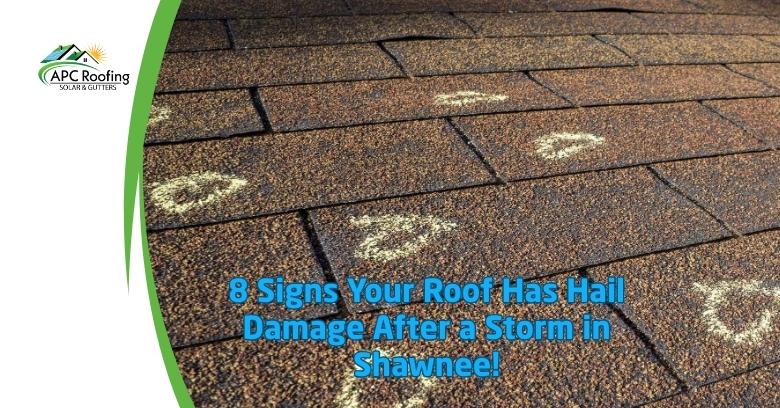
Where hail falls hard at the colder end of our territory, an impact-rated covering is worth considering, while strong sun bakes asphalt across every market we serve. What goes on a given roof depends on local conditions, not routine, and not whatever a past project called for.
Homes and Businesses: How the Roofs Differ
Angle and overlap work together to move water off a pitched covering, and shingle, tile and metal all serve that role. A store or warehouse shelters under a nearly flat, sealed membrane, and mechanical equipment and drains break through that surface.
Many houses have a gently rising porch or addition, and a lapped product there lets water back up under the tabs. A spot like that needs a welded or adhered membrane, laced under the pitched covering above, and a second round of shingles there fails the same way.
A Cover Until Things Get Fixed: What Works and What Fails
A secured sheet keeps rain out while repairs get scheduled, but nothing gets solved underneath. A sound cover sits over the ridge and gets held down by wood battens screwed through the material, and enough tension keeps gusts from finding any slack.
A cover needs a wide border around the hole, as driven rain works in wherever an edge falls short. A membrane left up too long traps moisture against the covering, and the covering underneath ages faster than expected.
The Detail Where a Roof Meets Something Upright: Getting the Work Right
Along a wall, one bent piece of metal goes in under every course, and trim set higher up sheds water past that metal. On a brick chimney, an apron handles the lower edge and metal runs up each edge, and a broad stack gets a diverter built into the roof behind.
Roof cement spread across an opening hardens and pulls away, and only a correct rebuild ends things for good. Porous or cracked mortar lets moisture into the masonry higher up, and part of that repair belongs to a mason, not a roofer.
Getting the Scope in Writing: Comparing Bids
A signed agreement should identify the shingle, the underlayment and the metal by name, and a plain line covers tearing off versus covering over. A dated form covers what happens if rotten boards turn up, and flashing, ventilation and cleanup each appear as a separate line.
Competing proposals listed in detail can be read side by side, and the true difference between the two shows plainly. A business that keeps every particular verbal gives an owner nothing to hold onto, because nobody can confirm later what got said.
A Tear-Off and Rebuild: the Basic Sequence
Anything near the eaves that could get damaged gets protected ahead of time, and the old shingles get pulled off in pieces. The bare deck gets checked plane by plane once the old covering is off, and weak areas get cut out and replaced with sound lumber.
Ice barrier, underlayment and new flashing go down across the deck, and the new covering goes down, capped and vented at the top. A magnet pass covers the grass and pavement at the end, and no debris gets left in the gutters.
Non-Shingle Roofing Care: Particular Needs
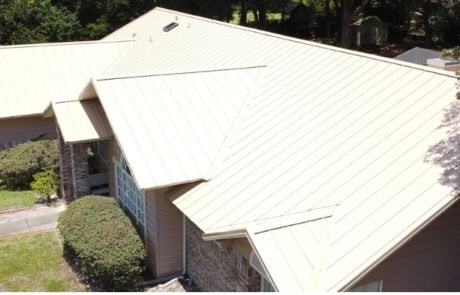
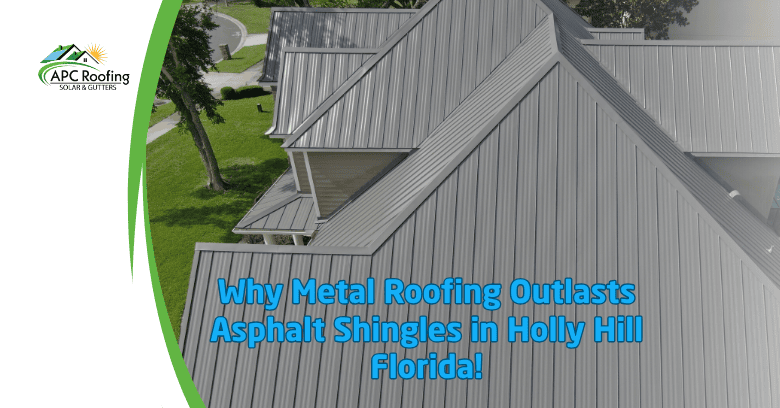
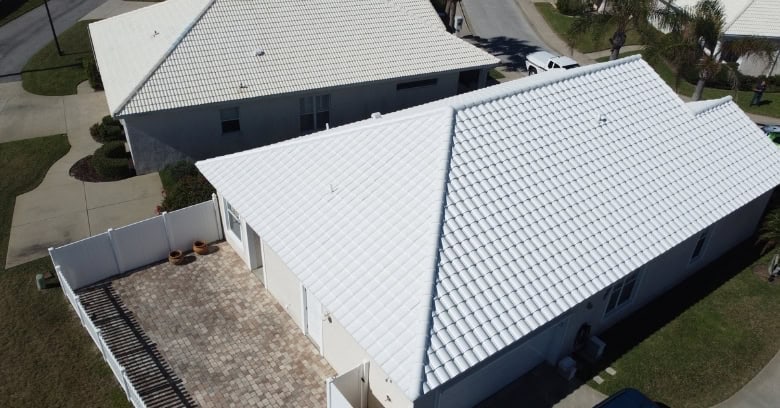
Metal sheets held by visible fasteners stay dry because of the gasket under each fastener, and a leaking screw gets paired with a fresh washer. Concrete and clay tile get installed by mortar, by foam or by mechanical attachment, and the layer underneath carries the job of shedding water.
A foot planted wrong breaks off a piece, and a damaged unit gets swapped for another of matching shape. Flat sections show trouble as standing water and raised seams, and clogged drains get cleaned out on a visit.
Clues That Point to Trouble: Easy to Act On
- Sand-like mineral grains in the gutter runs, well after the roof was new.
- Tabs curling at the corners, noticeable from across the street.
- A split rubber collar around a plumbing vent, letting water run down into the attic.
- A brown patch on upstairs drywall, new since the previous season.
- Light leaking in near a valley or a pipe, with the lamp switched off.
- Moss on a shaded slope, holding moisture against the surface.
- A bulge that catches the light at dusk, often pointing to trouble in the deck beneath.
- Gaps opening where flashing meets siding, easy to spot from the yard.
Roof Inspection Around Orlando Florida: APC Roofing's Approach
Before a scope gets drawn up, a roofer examines the whole covering and the attic, and the evidence comes back as photographs and the verdict in writing. What is fine gets said as plainly as what needs attention, and the homeowner sets the order of any work.
Roof Inspection Around Orlando Florida: Straight Answers About the Roof
Call 407-270-1129 and set a time for a visit.
Documentation for the Roof: Easy to Maintain
Keeping the install date and the product names is a good start, and every yearly report can go into the same file. Marking down every repair, with the location and the work done, leaves useful detail, and looking back after enough time shows what keeps recurring.
A buyer's home inspector almost always asks about the roof's history, and a folder of dated pages settles things quickly. A scanned set of the same files, stored separately, guards against a misplaced original, since a spill or a move should not be able to wipe out everything.
Judging the Result: Points to Look For
The field reads as straight bands, with crisp cuts where each slope ends, and no nail head shows on the finished surface. At each wall and chimney, fresh metal gets set in as the flashing climbs higher, and any sealant appears sparing and neat.
Air can move from the eaves to the peak without obstruction, and the gutters return to position, clean and fastened. No nails or scraps get left in the grass or on the drive, and a light scatter of sawdust near any cut line rinses off a walkway in seconds.
Anyone who arrived looking into Roof Inspection in Orlando Florida does not have to keep guessing about next steps. A call to APC Roofing at 407-270-1129 gets a date on the calendar. Every visit takes in the whole roof and the attic beneath, with nothing left unclear.
Verified

Verified
Verified
Verified
Verified