
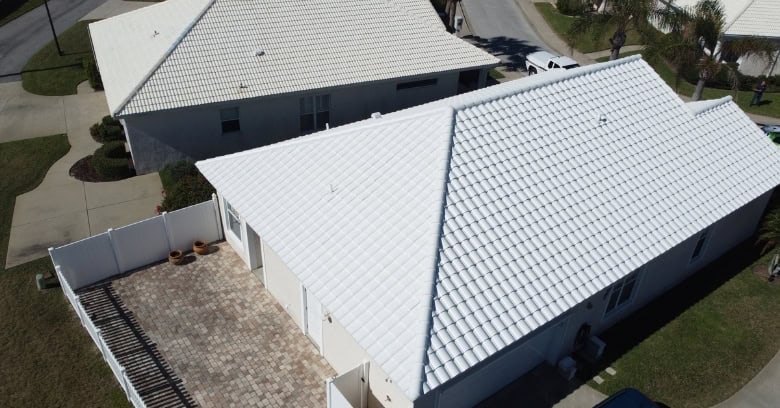
Looking for Roof Inspection in Ocala Florida?
APC Roofing takes care of a routine checkup right up to a complete replacement, on asphalt, steel and clay coverings alike.
Get in touch at 407-270-1129, and a roofer arranges a visit to the house.
The Roof's Working Parts: What's Tucked Away
What shows from the curb is just the outer layer, and a moisture barrier, sheathing and framing sit underneath. Metal flashing seals the seam at a wall, a pipe or a valley, and dampness there seldom traces to shingles failing somewhere close by.
The space under the sheathing works as a component of the roof, too, since heat and humidity held there wear down the wood and covering overhead. A leak noticed inside can begin at any level of the roof, so attention paid only to the outside can miss where the water entered.
Everyday Work of a Roof: Quiet but Constant
A sloped covering sheds every storm's water downhill, and seal strips keep gusts from getting under the courses. The trusses and sheathing support the load above, snow included at the colder end of our territory, while vents give damp attic air a way out.
Water is the covering's job, and wind is the fastening's task, and what is underneath keeps the whole structure standing. A weak link puts strain on the parts around the weak spot, so the cause gets traced instead of the symptom being patched.
The Smaller Details Up Top: What Falls Behind First
The shingled field is built to last for decades, but the flexible seal around a stack splits well before the shingles do. Water works past that spot and follows the framing down, and a stain appears on the ceiling below.
Sealant along metal edges dries and shrinks in strong sun, and metal flashing rusts at bends and cut ends. Cap shingles break along the seam, because wind and weather strike the peak harder than the slopes below.
A Walk Around the Property Beforehand: Near and Far
At a distance, the outline of the roof gives away dips, sags and wavy planes, and the gutters, fascia and trim come into view at the same time. Through binoculars, torn collars, lifted tabs and bare patches come into focus, but a weak spot underfoot tells what optics cannot.
Crouched at each pipe, a roofer feels for gaps and traces the flashing along every wall, and the surface is checked for cracking, granule shedding and curled edges. Wet shingles and sharp pitches rule out getting up there safely, and the eave line, reached by ladder, becomes the vantage point.
Behind the Ceiling: Signs Worth Finding
A stained patch on the plywood shows water that got in before, and a wet surface under the hand means water is still getting in. A pinpoint of sky through the boards marks a gap, and a measurement from the peak locates the spot for the outside look.
Nails freckled with rust show condensation at work, not rain damage, and a darkened patch under the deck tells the same story. A blocked eave packed with fill, or a bathroom fan venting into the attic, shows up only on an inside look, so a check from the ground alone leaves that kind of fault hidden.
The Follow-Up Paperwork: Kept for Reference
Findings arrive as photographs tied to specific places on the roof, and a written line explains what each image shows. Parts in fine shape are covered as plainly as parts that are not, and faults are ranked by how soon repair is needed.
A filed report from an earlier check-up serves as a reference going forward, and a pattern over time tells more than a single day ever could. A covering looked at on a regular schedule rarely catches the owner off guard, and a large job gets seen coming well ahead of time.
Seasonal Shingle Maintenance: Small Jobs, Done Often
Worn boots around the stacks get exchanged for new ones, and aging caulk at skylights gets cut out and redone. Pine straw and twigs get picked out of the valleys, and the gutter runs along the eaves get straightened.
A shingle corner resealed in good weather takes little effort, but waiting out a rainy stretch invites water in from beneath. Moss on a shaded slope traps moisture under the courses, and a gentle wash clears the growth, since a pressure washer strips granules.
How Often the Checkup Should Happen: the Basics
An experienced roofer should read the covering once every year, placed right after the toughest season for roofs in that market. Catching things early is the whole point of a regular check, and the family hears plainly where the roof stands.
In the months between visits, a look from the driveway after high wind helps, and top-floor rooms are worth checking for fresh stains. A few minutes under the deck with a lamp each season pay off: soft wood, tiny bright spots and soggy insulation surface long before anything reaches the space below.
The Age of a Roof Seen From the Ground: What Changes Over Time
Brand-new shingles look dark and consistent across every slope, and approaching midlife the sunniest side fades before the rest. Late in a roof's run, tabs cup and granules wash into the downspouts, and mending one area seems to open another.
An impression formed from outside has real value, but the true condition shows only from up top. Once shingles are spent, patching stops making sense, and an honest contractor states that plainly, rather than pitching another repair.
The Channel's Part in the System: A Quick Look
A roof moves water only as far as the drip edge, and the gutter picks up the flow at the edge. A clogged or sagging channel pushes water back behind the fascia, and the rafter tails nearby rot over seasons.
A soft spot along that edge points more often to drainage trouble than to worn shingles, and a new covering will not fix what backed-up water caused. The slope of every gutter and where each downspout empties get checked, and the drip edge gets looked over where the metal meets the fascia line.
What Ventilation Is For: What Homeowners Should Know
A balanced system draws air in low and releases air up high, and the draft clears warmth and humidity from under the sheathing. When that gets blocked, the attic overheats in summer and stays muggy through humid months, and the covering wears out early.
A roof opening installed with no matching intake draws air from the living space below, and one high point pulling toward a nearby high point can choke flow at the soffits. A roof placed over bad ventilation inherits an existing weakness, so the underlying issue belongs in the scope of any re-roofing plan.
What Gets Chosen and Why: Different Choices for Different Homes
At the colder end of our territory, ice at the eaves and the weight of snow shape the build, so an adhered barrier goes under the lowest rows. Nearest the coast, uplift resistance governs the fastening choices, and reinforced edge metal and sealed seams get specified.
Where big hail is common at the colder end of our region, a harder surface earns consideration, while intense sun dries out asphalt everywhere we work. What goes on a given roof depends on local conditions, not habit or a standard default.
Homes and Shops: Different Structures Entirely
A pitched covering sheds water through overlapping courses, laid in asphalt, tile or metal. An office or warehouse roof depends on a flat, sealed surface, and drains, scuppers and rooftop units sit built into that surface.
Plenty of residences include a shallow section over an addition, and a shingled surface there lets rain linger long enough to work under the courses. A spot like that needs a welded or adhered membrane, laced under the pitched covering above, and re-shingling that spot only repeats the trouble.
Covering an Open Roof: What Lasts a Few Weeks
A barrier keeps rain off a hole before repairs begin, but nothing gets solved underneath. A good cover goes up and over the peak and gets fastened with wood strips, and the material gets drawn tight enough to hold quiet in a gale.
A cover needs a wide border around the hole, because rain travels sideways toward a gap that stops short. Film left in place for months holds heat and humidity against the deck, and the material underneath weakens over time.
The Tie-In at a Chimney or Upright Surface: Getting the Work Right
Step flashing gets woven in with each course along a wall, and a cap of counterflashing laps down from above. A brick chimney gets an apron downhill and metal set in up each edge, and a broad stack gets a saddle set into the slope nearby.
Sealant slathered on a weak spot lets go as the metal expands and contracts, so the lasting answer is new metal laced in properly. Porous or cracked mortar lets moisture into the masonry higher up, and a mason may need to handle the stonework while a roofer handles the metal.
Getting the Scope in Writing: Items to Expect
The plan for a job names every product by brand, and the document says whether the existing roof gets stripped to the deck. A dated form covers what happens if rotten boards turn up, and flashing, ventilation and cleanup each appear as a separate line.
Bids laid out in full are easy to check against each other, and the gaps between the two sets of paperwork come into view. A firm unwilling to resolve the plan in advance is telling an owner something, since a spoken promise cannot be checked later.
What a Re-Roof Involves: What Changes at the House
Anything near the eaves that could get damaged gets protected ahead of time, and the old shingles get pulled off in pieces. At that stage, the wood underneath gets inspected, and anything that flexes underfoot gets sawn out and patched.
Membrane at the eaves, underlayment across the field and new flashing all go down, and the covering, the ridge caps and the vents go on to finish the job. A magnet gets run over the lawn and the driveway when the work is done, and nothing from the cleanup stays behind in the gutters.
Maintenance Beyond Asphalt: Notes by Covering Type
Exposed-fastener metal panels seal at a rubber gasket under every fastener, and a worn spot gets cured with a new screw rather than caulk. Clay and concrete tile go down by more than one method, from mortar to foam to clips, and the real water barrier is the underlayment, not the surface material.
A careless step snaps a piece easily, and a matching replacement goes in wherever one gives way. On the shallow parts of a roof, lingering water and loose seams are worth watching, and grit and leaves get cleared from the scuppers.
Signs Worth a Closer Look: Outside and In
- A buildup of shingle granules in the drainage, long after the covering was installed.
- Shingle edges cupping upward, noticeable from across the street.
- Torn rubber where a pipe exits the deck, with a stain trail on the covering below.
- A brown patch on upstairs drywall, new since the previous season.
- Daylight through the attic boards, beside a vent stack.
- Clumps of moss under overhanging trees, in spots that stay damp longest.
- A dip between rafters, often pointing to trouble in the deck beneath.
- Gaps opening where flashing meets siding, easy to spot from the yard.
Roof Inspection Near Ocala Florida: How the Visit Works
Before anything gets suggested, a roofer takes in the whole covering and the attic together, and the results come back as images plus a short written summary. Sound parts get named as plainly as parts that need work, and the next step is left to the homeowner.
Roof Inspection Around Ocala Florida: a Close Look at the Roof
Call 407-270-1129 to arrange a visit on site.
A Roof's Paperwork: Best Done Early
Tracking when the covering went on and what was used is worth the effort, and each visit's report belongs with the earlier entries. Tallying each repair, the location and the method, keeps things complete, and looking back after enough time shows what keeps recurring.
Once a home hits the market, the roof's age and condition come up in conversation, and paperwork with dates carries more weight than recollection. A second copy of the file, kept somewhere else, is worth having, because a single set can be destroyed in a flood or a fire.
Judging the Result: Small Things, Handled Properly
Courses run straight and the cuts along the rakes come out clean, and no nail head shows on the finished surface. Around chimneys and dormers, the flashing gets replaced rather than reused, and caulk, where used at all, forms a thin, careful line.
The soffit vents breathe freely and the ridge vent stays clear, and the gutter runs finish straight and fastened. The property gets checked with a magnet for stray fasteners, and a light scatter of sawdust near any cut line rinses off a walkway in seconds.
Anyone comparing options for Roof Inspection in Ocala Florida can get a straight answer without more digging. Getting in touch with APC Roofing at 407-270-1129 moves the scheduling forward. Every visit looks at the roof as a whole, not one spot alone, with nothing left to chance.
Verified

Verified
Verified
Verified
Verified


















