
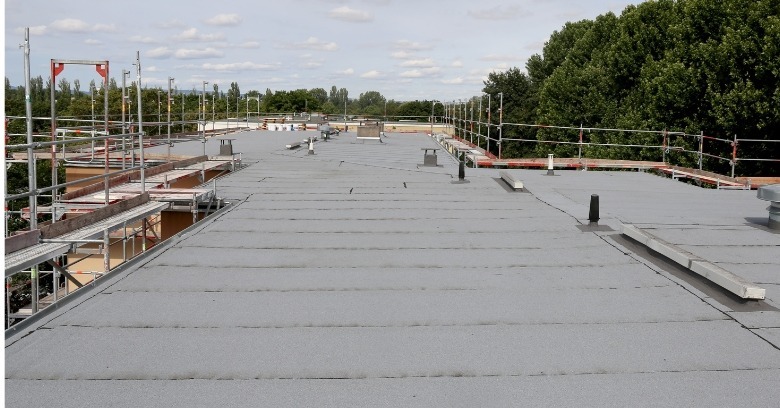
Hoping to find Commercial Roof Repair in Minneola Florida?
APC Roofing installs and mends membrane and metal coverings on business buildings, including the drains, curbs and flashings.
Phone 407-270-1129 and a roofer will climb up and look closely.
Over Stores and Warehouses – an Overview
Employees, inventory and equipment are what the membrane protects, and a leak can halt sales rather than just mark a ceiling. Across a large building, the upper surface is broad and barely sloped, so drainage and wind resistance are worked out by calculation.
Air handlers, fans and communications gear sit on the membrane, and every line or support is a hole that must be flashed. The purpose of the building drives the design, because a bakery and a document archive ask for different things.
Membrane Families: Options on the Market
Single-ply means one factory-made layer of TPO, PVC or EPDM, modified bitumen is asphalt toughened with polymers and laid from rolls, and built-up roofing piles felt and tar ply on ply. A walk-behind welder fuses the overlaps on thermoplastic material, but rubber is spliced with tape over a primed surface.
Fryer exhaust coats the area around a restaurant's fans, and oily residue softens asphalt and EPDM, so PVC usually covers the affected stretch. A stone-covered built-up system is weighty and tough, and the surfacing blocks sun that would dry out the bitumen.
Panel Roofs on Low Buildings: Upkeep Notes
Through-fastened sheets take a screw at intervals across the flats, and each shank is set into a purlin or joist. The sealing washers age and harden on a hot, sunny surface, and thermal movement works the fasteners loose over time.
Standing-seam panels attach with clips tucked under the raised seams, and the pans shift slightly through the day. Rust is often found at overlaps and cut edges, and an elastomeric coating over sound metal can keep the damage in check.
The Deck: Grip and Strength
Fastening choices depend on the structure below, and reroofing leaves the framing in place. Ribbed steel accepts screws with no trouble, concrete wants adhesive or expansion anchors, and wood or gypsum plank uses fasteners rated for the material.
Moisture trapped for years can rust through metal decking, and a damaged area is removed and a new piece fastened in place. From inside, the underside is inspected wherever the ceiling allows, and small cuts from the upper side answer the rest.
Anchoring the Membrane: Matching the Choice to the Site
Many installations are fastened with plates screwed along every lap, adhered systems are rolled into a coat of adhesive, and ballasted sheets lie free beneath river rock or concrete pavers. Height, exposure and the deck below guide the selection, and extra weight is used only where the structure can bear the load.
Screw-down systems flutter between plates when gusts hit, but an adhered sheet lies quiet and demands a dry, clean base. Ballast makes any inspection slow, since rock or pavers have to be cleared before a lap can be read.
Wind Forces Overhead: Setting the Screw Pattern
Each corner feels the hardest pull, because swirling eddies form where the air crosses the perimeter. The strips along the sides rank next, and the middle of the field takes a small fraction.
Fasteners go in closer together near corners and edges, and design tables for the height and exposure set the spacing. A thinly anchored outer angle can peel back, and a blow-off can run well across the field.
Foam Insulation – an Overlooked Component
Polyiso sheets are laid across the deck with joints staggered, and a thin, hard cover board is often added last. Insulation keeps utility bills in check, and tapered units can slope a dead-flat deck to the outlets.
Waterlogged foam barely resists heat flow, and trapped water weighs on the structure and corrodes steel. Scanning at dusk, with a few cores for proof, marks out the damage, and any spoiled patch is replaced, never roofed over.
Outlets on a Big Building: Clogs and Standing Water
A metal strainer bolts over each interior opening, and the bars catch bags, leaves and gravel before the pipe. A clogged grate slows the outflow to a trickle, and a pond spreads across the field.
A secondary outlet is set slightly above the everyday drain, so a gush at the upper spout means the normal path is shut. Ponding piles extra weight onto joists sized for far less, and a puddle that survives two days hints at settling or a choked strainer.
Following Water Back to the Entry Point: The Method
A brown ring on an acoustic tile shows where rain reached the room, though the actual flaw may be far across the bay. Corrugated decking channels seepage the length of the building, and gaps between insulation boards add more routes.
Laps, curbs and outlets upslope of the stain are checked by hand, and a flood test on a small section can reveal a stubborn leak. Patching straight above the damp tile usually lands in the wrong place, and moisture finds a way in at the next storm.
Package Units Overhead – a Closer Look
Each large machine stands on a raised curb, and the covering turns up the sides beneath metal counterflashing. Corner work calls for patient hands, and a small gap lets wind-driven rain into the structure.
When a heating contractor swaps a machine, an adapter curb often goes on unflashed, and water reaches the office below soon enough. A trickle from a condensate pipe wears a streak of slime into the membrane, so the stream ought to be carried to a drain.
Penetrations Through the Field: Handling Each Type
A snug molded boot slides over each round stack, while odd shapes go into a pitch pocket filled with sealant. The compound hardens, shrinks and separates at the edges, and a top-up is standard upkeep.
Electrical conduit and gas lines ride on blocks simply set in place, because anchoring a stand through the membrane invites a leak. A square of sacrificial material under each foot spreads the pressure, so heat and vibration scuff the buffer instead of the membrane.
Hinged Covers Up Top: Where Attention Goes
Plastic bubbles on older units go cloudy and brittle under sunlight, and splits appear around the screws along the rim. A gap at the frame corner lets rain inside, yet the membrane usually takes the blame.
An access hatch is opened by every trade that climbs up, so the latch, springs and weatherstrip eventually give out. Smoke vents release automatically when a fusible link melts, and no roofing work may block the mechanism.
Masonry Above the Roofline: Staying Dry
Base flashing carries the membrane up the inside face, a termination bar holds the top margin, and metal counterflashing laps down from higher up. Formed metal coping caps the parapet to keep rain off the top, but joints whose sealant has cracked admit runoff beneath.
Brick and block soak up a long downpour, and occupants below mistake the damp for a roof leak. Coping, wall and flashing are all looked at in the same inspection, and open mortar joints are repointed instead of caulked.
Fascia Metal at the Outer Edge – Parts and Purpose
A continuous cleat is fixed along the eave and locks the hem of the flange, and a strip of membrane seals the joint on top. Tested wind ratings decide which profile suits a given height, and an underrated section can let go in a gale.
Gutters along a long eave take a huge volume in a storm, and skimpy hangers or leaders lead to overflow and sagging. Crumpled or raised trim is a clear repair item, and fastening down loose runs helps stop the membrane peeling away.
Service Visits and the Membrane – Keeping Damage Down
Refrigeration and heating crews climb up to the equipment month after month, and a path gets a little more scuffed each season. A stray sheet-metal screw is driven into the membrane underfoot, and an access panel set down on a corner slices a gash.
Walkway pads set out a marked route to the equipment, and wear ends up on material built for foot traffic. Managers can require contractors to keep off the unprotected sheet, and a bucket for scraps and screws keeps the membrane clear.
Upkeep Through the Year: Timing and Tasks
Twice annually is a sensible rhythm for a walk-through of a commercial system, plus an extra check after a severe storm. Upkeep includes emptying every strainer, any open lap is found with a probe, and brittle sealant gets marked for replacement.
The trip ahead of the stormy months focuses on outlets and perimeter metal, and the next round, after a hard season, searches for fresh movement. Every minor fault is recorded with the exact spot, and repairs can be grouped and timed sensibly.
Roof Records – Notes That Help
A useful dossier includes a plan with every unit, drain and hatch marked, and a section view names each material from deck to membrane. Every repair is entered with the date and photos, and new moisture findings are added over the years.
Many older properties change hands without a scrap of information about the covering, and each roofer who climbs up has to investigate afresh. Roof records stay with the site office, so a future manager or purchaser inherits a copy.
Fix, Refresh or Rebuild – Letting Condition Rule
Localized faults on a healthy sheet are patched in place, while an aged but dry surface can take a liquid-applied system. Widespread waterlogged boards signal a full replacement, as do laps cracking across the whole field, but the calendar alone is no verdict.
A silicone or acrylic coat demands a clean, mended substrate, and over damp material the new layer only seals the trouble in. Removing only the ruined parts can make sense as a middle option, provided the rest of the field has good years left.
Routes to a Reroof – the Rules and the Reasons
With a recover, the old sheet stays and a new membrane goes over the top, and a cover board sits in between. An overlay is allowed by code over no more than a single existing covering, and only where the insulation underneath is dry.
A tear-off strips everything down to the structure, so rusted or soft decking gets fixed in the open. A new tapered layout can shed standing water, and a saddle between drains turns the flow toward each outlet.
Signs Worth Reporting – Before Leaks Spread
- Rain gushing out of the high overflow, which suggests a plugged strainer.
- Discolored ceiling panels that darken after wet weather, which shows moisture has worked through the insulation.
- Blotches or efflorescence on brick under the coping, which can point to seepage passing through the masonry.
- Fascia metal that flutters or rattles in a gust, which can expose the border to uplift.
- Ponding visible from a higher window days after rain, which may reflect a depression or a sluggish drain.
- A skylight whose plastic has turned chalky, which may give way under a misstep.
- Drips from light fixtures or sprinkler heads after a storm, which tells of moisture moving along the flutes.
- A gutter that overflows along the front edge in rain, which can reflect loose brackets or a jam.
How APC Roofing Carries Out Commercial Roof Repair in Minneola Florida: Readings Before Advice
Our first stop is every drain, scupper and overflow, and the laps, curbs and perimeter come next. When a leak is present, the boards beneath are scanned, and the advice waits for the numbers.
Each visit ends with a written account, a plan sketch and photographs, and every defect is keyed to a location. The recommendation names repair, restoration or replacement, and the why is explained in terms you can verify.
Commercial Roof Repair for Property Owners in Minneola Florida: Plan the Next Step
Call 407-270-1129 and someone will find a time to come out.
Keeping Tenants in Mind – Planning Together
Drilling a steel deck sounds like thunder to everyone below, and glue fumes can travel down through open intakes. Noisy steps are discussed with the manager beforehand, and outside-air vents next to the work can be sealed for the day.
A crane or chute takes stripped material to a bin, and stock under the open area can be covered over. Solvent adhesives carry a strong smell that water-based products lack, which makes the gentler kind a sensible pick over offices.
Phasing a Large Replacement – Order and Timing
Old layers come off only in amounts that can be closed up by evening, and fresh foam and sheet cover the bare area without delay. A night seal links the finished part to the untouched field, and the extra piece is sliced off the next morning.
The forecast sets how much covering comes off, and any hint of showers shortens the stretch. Bare foam hit by a downpour absorbs a great deal of water, and leaks can then reach stock and staff below.
The Weather We Work In – Market by Market
At the colder end of our territory, hailstones and drifted snow are real concerns, so impact-resistant cover boards and a framing check make sense. Across all the towns we serve, UV and high temperatures age a membrane, and white TPO or PVC keeps the top cooler.
The coastal end of our territory demands fastening designed around hurricane gusts, and torrential rain makes backup outlets essential. Low temperatures slow or stop many adhesives from curing, while welding thermoplastic seams works in chilly air but pauses for showers.
Fall Protection Up Top: Practical Precautions
Where the wall is low or missing, nothing catches a misstep over the side, so warning lines and harnesses come into play. A dome breaks through easily under a misplaced step, so every opening should get a screen or a railing.
Permanent anchors help everyone who services the units, and a gate at the ladder top adds protection. Any missing guard is noted in our findings, because a drop from a single floor can badly hurt someone.
When Commercial Roof Repair in Minneola Florida is on your list, dial APC Roofing at 407-270-1129. We will cover the surface on foot, from the outlets to the parapets, and written findings follow, with the choice left to you.
Verified

Verified
Verified
Verified
Verified


















