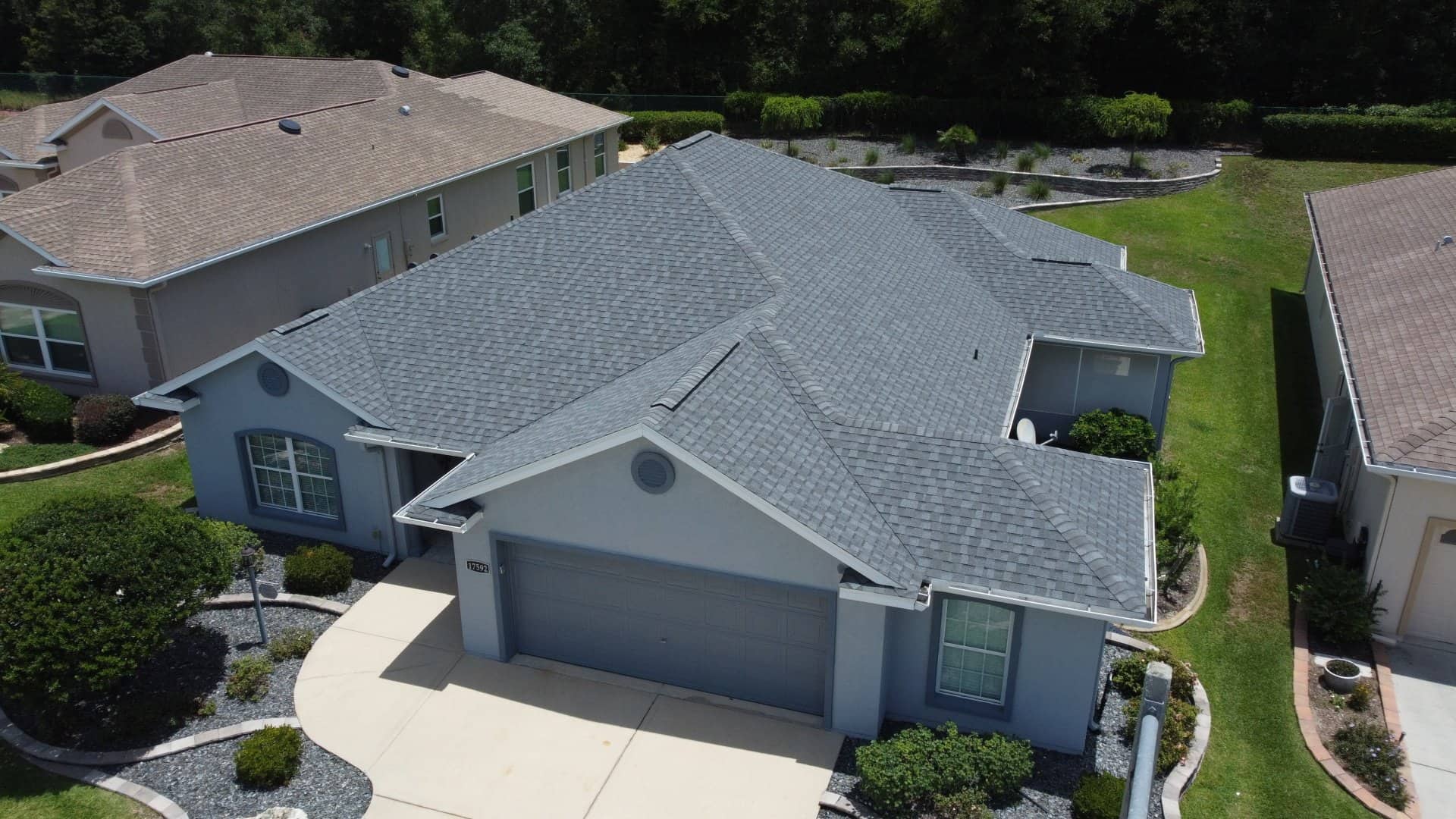
Weighing Shingle Roof Repair in Kansas City Missouri?

APC Roofing mends torn, curled and lifted pieces and lays complete new coverings, from a small cottage to a large two-story house.

Phone 913-398-5020 and a visit will show what condition everything is in.


How the Pieces Are Made – Factory Details

A mat of glass fibers makes each shingle strong, and a saturant of asphalt seals out rain, and granules rolled into the surface shade everything beneath from ultraviolet rays.

Bundles that seem identical on the shelf can differ widely inside, and a heavier build generally adds years on a house. A showroom sample tells nothing beyond appearance, but the manufacturer's printed sheet gives the test results.

Choosing a Profile: The Practical Contrast

Each three-tab unit is a lone layer slotted in two places near the bottom, so the surface shows neat uniform lines. An architectural product bonds a contoured upper strip to a solid backer, and the offset design reads as depth from the street.

The heavier laminated construction puts more asphalt on the deck, and a higher wind rating typically comes along. A dimensional shingle is nailed through its double-thickness strip, and a printed guide shows the right position.

Keeping the Traditional Look – Narrower Choices

Three-tab commonly goes on a shed, a carport or a covered porch, while a repair on an older house of that type stays uniform. Several makers now offer that style in fewer colors than before, and a favorite shade may be gone for good.

Uneven plywood is less noticeable under a dimensional product, while a thin strip follows every undulation. Either style is laid over identical underlayment and metal details, so the difference lives entirely in the top layer.

The Granule Surface – Normal or Worrying

Shingles fresh from the bundle drop leftover grains in their opening months, and that is no cause for concern. Thick deposits of grit below an old covering show that its surface is worn, and uncovered asphalt dries out and cracks in sunlight.

Planes aimed south or west receive the harshest sun, and dull patches gather there.

Courses Held Together: Limits in Cold Months

Glue is applied to every shingle at the plant as a narrow stripe, and on a hot day it softens and grips the row laid over it. An adhered course resists gusts that try to pry up its lower edge, while nails hold every shingle for its whole life on the house.

At the colder end of our territory, a covering installed in freezing temperatures can wait months to bond, so tabs stay at risk from wind for a while. Makers' directions cover this with cement placed by the installer, and a printed diagram marks the spots and their spacing.

Securing Each Course: Tools and Technique

Nails land in a slim target stripe laid out by the manufacturer, and from there the shank reaches the top of the underlying row too. Four fasteners per shingle meets the basic requirement, and six are required on steep slopes or in high-wind areas.

Nails placed high skip the course below, an overdriven head cuts into the mat, and a tilted shank props up the shingle resting on it. Published wind ratings assume the manufacturer's pattern was followed exactly, while one misadjusted compressor can spoil every drive on a job.

Under the Underlayment – Before New Courses Go On

Shingles are fastened to a deck of plywood or OSB, and each shank has to land in solid material. Homes that once wore wood shakes may still have spaced slats up top, and new sheathing bridges them before any shingles.

Rotted and spongy spots are replaced while the framing is open during a tear-off, because nails in weakened material back out over time. Adjacent sheets are spaced slightly apart at their edges, as moisture makes the wood expand and ridge up when butted tight.

Underlayment Basics: Known Limits

The deck gets a water-resistant membrane before shingles are laid, and it goes on in overlapping runs starting at the eave. Asphalt felt is less common now that synthetic sheet has taken hold, as the modern fabric is tougher and does not ripple after rain.

Water blown under a lifted tab runs down the membrane to the gutter, but it is meant for occasional water, not months of open sky.

Guarding Against Ice Dams: Seasonal Detail

Across the colder end of our territory, snow over a warm attic turns to water, and meltwater freezes solid at the unheated edge. Standing water behind the buildup finds its way beneath the shingles, and nails through ordinary underlayment give it an easy path.

Where ice dams form, building codes require an adhered membrane at the eave, and it reaches up the slope past the inside line of the exterior wall. In all of our territory, installers also lay it in valleys and around penetrations, since flow concentrates in such places.

Perimeter Flashing: Order of Layers

A metal drip edge wraps the eaves and the rakes, and a flange throws runoff away from the fascia. On the lowest margin the underlayment laps over the flashing, but on the gable sides the order reverses.

A modern code commonly calls for edge metal along every border, and without it water curls back under the shingles and soaks the deck.

Groundwork at the Eave: Installation Order

Before any exposed shingles, a starter strip is laid along the bottom, and its glue stripe sits at the extreme outer margin. A field piece set backward carries its adhesive uphill, out of reach, and nails alone then keep the lowest tabs from lifting.

Makers often specify a starter product up the gable sides too, because suction acts along the outer rims.

Where Slopes Meet: Choosing a Style

A valley can be built open, with a metal channel left exposed down its center, and the closed-cut type carries one side's courses through while the other side is cut back. Weaving rows from both planes together suits single-layer tab products, though dimensional shingles rarely take to it because of their bulk.

Installers keep nails several inches back from the centerline, and a sealed membrane is placed below as backup. Collected leaves and twigs slow the flow and keep the surface wet, and heavy rain can then spill sideways under the edges.

Masonry Connections: Transitions Between Materials

Along a sidewall, a bent L-shaped step flashing is woven in with each course, and the exterior finish hangs down across the standing half. Where the eave stops against the house, a kickout diverter goes in, since water left alone tracks into the sheathing.

A chimney gets an apron across its front, steps along its sides and counterflashing let into the mortar joints, and a broad stack calls for a saddle upslope.

Where Drain Lines Exit – Upkeep Notes

A typical boot is a metal or plastic plate carrying a flexible collar that grips the pipe, and sun eventually opens cracks where the seal wraps the stack. Shingles uphill cover the top of the flange, so the lower edge sheds onto the shingles beneath.

A cracked collar is common on a covering that is otherwise sound, so new boots come with every new covering.

At the Summit: Cold and Cracking

A line of cap shingles covers the ridge and the hips, and on a laminated covering the manufacturer supplies a thicker matching version. Pieces cut from strip shingles are much thinner, and at the colder end of our territory they can crack along the fold in freezing weather.

An exhaust vent commonly sits under the ridge caps, so longer fasteners go through it to anchor in the decking.

The Space Under the Deck – Mixed Systems

Fresh air is meant to enter low through soffit vents, and a ridge exhaust lets it out. Insulation blown tight against the outer walls can choke the flow, so a baffle in each rafter bay keeps the way clear.

An attic with poor airflow runs hot under the decking, while indoor humidity collects there with nowhere to go. At the colder end of our territory, frost can coat every protruding nail, and the water runs down as the day goes on. A powered fan or gable vents alongside a ridge vent can scramble the pattern, so the lower part of the space goes stagnant.

Around the Map: Wind, Sun and Winter

The towns we cover run from hard-freeze country to places that barely see frost, and each setting wears on asphalt differently. At the coastal end of our territory, hurricanes bring hours of sustained wind, so manufacturers list a high-wind nailing schedule. Strong sun, season after season, makes the coating brittle, while damp air in the humid markets feeds algae.

At the colder end of our territory, repeated freezing opens small splits further, while deep snow loads the deck for weeks.

Stones Out of a Thunderhead – Marks on the Surface

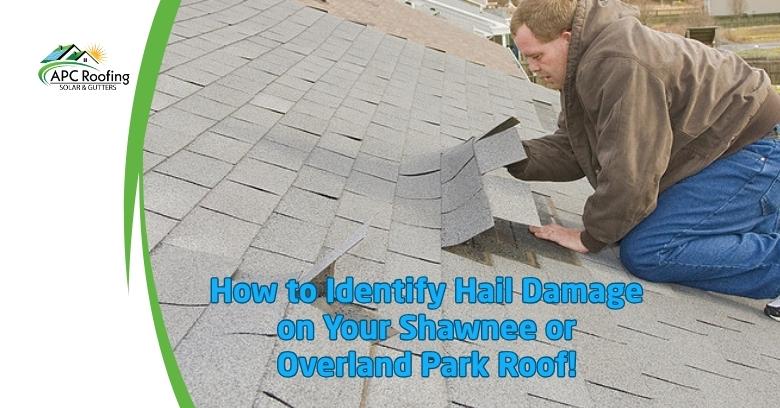
At the colder end of our territory, hail arrives most years with the thunderstorms, and impact-resistant lines exist for exactly that. A strike scatters the grit from a small round area, and a heavy blow may fracture the fiberglass below.

Impact ratings come from a laboratory test that drops steel balls on the shingle, and a higher grade means passing a tougher trial. Modified asphalt with added rubber is used by several makers, so the material bends where an ordinary mix would crack.

Wind on Asphalt – Putting Things Right

Force builds most at the eaves, the rakes and each corner, and a loose shingle rises and slaps back down. Once a tab is doubled back, a crease forms where it bent, and it is liable to tear off later. A piece in that state is swapped out, but one that lifted cleanly can be stuck back down.

An empty spot in the courses puts the underlayment in direct sun, and it was never made to stand up to daylight.

Growth on the Surface – Copper and Zinc

Algae is what paints the long black marks on many slopes, and the microbes draw on limestone in the coating. At the humid end of our territory, shaded north-facing roof planes grow it fastest, and the stain itself is mostly a cosmetic problem.

Moss is more serious, because it stays wet for days, and thick cushions push the lower edges up. Pressure washing takes the granules along with the growth, while a cleaner applied gently loosens the film. Some lines carry copper in the top layer to resist algae, while rain running over a zinc band near the ridge holds the stain back.

Shade and Color – Blends and Batches

Dark shingles soak up more sunlight and run hotter, while light ones reflect much of the light skyward. A few lines carry special granules that keep even a mid-tone from getting as hot, and a measured reflectance number comes with them.

The look can drift from one manufacturing lot to the next, and makers advise mixing bundles across a slope. Variegated patterns make those changes hard to see, whereas a single flat shade gives them away.

Climbing Onto the Courses – Frost and Footing

Midday sun softens the surface noticeably, and each tread can leave a mark. At the colder end of our territory, a frozen shingle can snap under a knee or a boot, and a thin film of frost makes the slope a slide.

The ground is the right place for anyone without roofing gear, and a good pair of field glasses picks up loose or missing pieces.

Laying Over the Old Covering – Hidden Trade-Offs

Rules across much of the country accept an overlay over an original roof, provided there is only one and nothing beneath is rotted. The current shingles stay on top of the decking throughout the job, and weak spots stay just as they were.

Irregularities beneath carry up into the finished roof, and step and valley metal commonly remains in service. A second covering adds weight to rafters that were sized for one, and the nails have to be long enough to pass through both into the deck.

Things to Watch For – When to Call

  • Dark sand gathers where the spouts empty, and more arrives after every heavy rain.
  • Gaps appear where pieces have blown off, and wind has pried the adhesive apart.
  • Bottom corners curl upward, since age and heat have stiffened the material.
  • Tabs show fine breaks from edge to edge, and the mat underneath takes on water.
  • Bald areas look black and shiny, because the granules there are gone.
  • The seal around a plumbing stack has cracked, so water works its way indoors.
  • The metal where a slope meets siding sits bent or pulled back, so every storm can find a weak point.
  • A brown ring shows on a ceiling, and the source can lie well uphill of it.

How APC Roofing Goes About Shingle Roof Repair in Kansas City Missouri: Findings You Can Use

An inspection first covers every slope on foot, with a close look at the valleys, vents, flashings and edges. The attic is checked from inside for stains and light coming through, because darkened wood marks where water got in.

Every fault is photographed, with measurements taken of the extent. A plain written account follows, and each suggestion is explained. A modest problem is presented as modest, and a worn-out covering is identified as such. The choice is the owner's, and waiting is one of the options.

Shingle Roof Repair Throughout Kansas City Missouri – Inspected, Photographed and Explained

Dial 913-398-5020 and describe what you are seeing.


Keep or Tear Off: Brittle Material

Trouble at a boot, a flashing or a few scattered tabs is normally dealt with by a repair, and the rest of the shingles stay where they are. Fresh shingles stand out against faded neighbors at first, and the tone that went on years ago may be out of production.

Stiff, dried-out shingles split when raised for nailing, so the disturbed zone keeps widening. Where the whole field is cupped and losing grit, a patch simply moves the problem along.

Life Expectancy: What Moves the Number

Flat three-tab designs usually run fifteen to twenty years, while laminated lines often reach close to thirty. Ventilation, exposure and fastening decide where a given covering lands, while a hard storm can override every estimate.

Checking the flashings and pipe seals now and then is sensible upkeep, because minor gaps closed promptly spare the sheathing.

If you are thinking about Shingle Roof Repair in Kansas City Missouri, reach APC Roofing at 913-398-5020. Someone will walk every slope and look over the details, and a plain written report puts the next step in your hands.


steve persaud

Verified

★★★★★
APC roofing provided the best price and the best service. Ivan was courteous and professional,he kept me informed thru out the process The installers were professionals and did excellent work. They made sure the yard was spotless when the job was completed.. Highly recommended.

R

Verified

★★★★★
Nicholas Rodriguez was so helpful and knowledgeable, I would highly recommend this company to my friends and family.

Tammy Baker

Verified

★★★★★
Love our new roof! Brian Derminer was our roof specialist. He explained the process and was there to answer any questions. APC worked with us and our insurance/mortgage company to get the job done. Kayla at the office was a great help too. When the roofers came it took then no time to replace the roof. It's beautiful 😍 Tammy & Owen Mount Dora

Danielle Aigner

Verified

★★★★★
I had a great time working with Kylan. He answered all my questions and handled the whole process with great care.

Angelina Salcedo

Verified

★★★★★
I highly recommend working with APC especially Nelson he did an exceptional job making sure everything worked out smoothly thank you !