Need Roofing Companies in Independence Missouri?
APC Roofing handles everything from a simple checkup to a full replacement, whether the covering is shingle, metal or tile.
Dial 913-398-5020, and a roofer comes out to see the house firsthand.
The Roof's Working Parts: a Plain Guide
The topmost material is nothing more than the outer layer, and felt or a synthetic membrane, boards and rafters lie out of sight. Flashing bridges the crossing wherever a wall, a pipe or a valley breaks the field, and water there rarely traces back to worn shingles close by.
The air under the rafters counts as part of the roof, the same as any material, as heat trapped under the boards shortens the life of the shingles above. A brown mark on a ceiling can originate at any level of the roof, so attention paid only to the outside can miss where the water entered.
What a Roof Does for a House: More Than Meets the Eye
A pitched covering sends rain down toward the gutters, and the nailing keeps gusts from lifting the courses. The framing bears the load above, snow included at the colder end of our territory, while airflow through the attic moves damp air out.
The covering handles water, and the fastening handles wind, and what is underneath keeps the whole structure standing. A weak link puts strain on the parts around the weak spot, and the real remedy sits back where the fault started.
Minor Roof Components: The First to Weaken
The main covering is built for a long run, but a neoprene sleeve at a pipe fails well ahead of that span. Moisture gets behind the covering and moves toward the room, and a mark spreads across the ceiling beneath.
Sealant around a skylight loses hold after enough summers, and galvanized flashing corrodes at folds and nail holes. Ridge caps split across the crease, since the crest takes more weather than the planes below.
Steps Before Heading Up: a Two-Step Read
From the driveway, the outline of the roof shows dips, sags and wavy planes, and the gutters and painted trim show up in the same look. A zoom lens singles out torn collars, lifted tabs and bare patches, yet a few conditions still need a hand on the surface.
Out on the roof, a roofer presses on every connector and follows each run of flashing, and the covering is checked for brittleness, granule shedding and curling. Wet shingles and sharp pitches rule out getting up there safely, and a ladder at the edge serves as the lookout instead.
Behind the Ceiling: Evidence to Look For
A watermark on the decking shows where rain has gotten in, and a clammy touch means the problem is ongoing. Sunlight visible from inside marks a way in, and a tape measure fixes the distance from the peak and gable wall.
Nail points gone orange signal damp air, not a leak, and a matted, faded patch nearby confirms the same condition. Insulation stuffed into the eaves, or a bath fan ducted into the attic instead of outside, gets found only from inside, so a street-level glance never catches faults of that kind.
After the Roofer Leaves: What Gets Handed Over
Each finding is recorded with a photograph tied to a place on the roof, and a short note describes what each image covers. Solid sections are treated in the same plain language as sections that are not, and weak spots are ranked by how soon attention is needed.
A saved report from an earlier stop gives the next check a baseline, and movement across seasons reads more directly than one day's condition. Regular yearly checks keep an owner from being caught off guard, and large jobs show warning signs well ahead of the work becoming pressing.
Seasonal Shingle Maintenance: Small Jobs, Done Often
Worn pipe gaskets get swapped out before failure, and shrunken caulk along the flashing gets a fresh bead. Anything the trees drop gets brushed out of the channels, and downspouts get flushed so water moves through.
A raised corner glued down in time stays a simple repair, but a season of neglect can end in a ceiling mark. Moss along a north-facing slope wedges under the laps, and a gentle wash clears the growth, since a pressure washer strips granules.
How Often the Checkup Should Happen: The Payoff
An experienced roofer should read the covering once every year, timed for right after the season that is hardest on roofs locally. The aim is spotting aging before rain gets through, and the family hears plainly where the roof stands.
After rough weather, anyone can scan the roof from the yard, and any new mark on an upstairs ceiling is worth noting. Looking around the attic with a flashlight now and then makes sense: soft wood, tiny bright spots and soggy insulation surface long before anything reaches the space below.
Judging a Roof's Age From Outside: From New to Worn
Newer asphalt lies smooth and uniform in tone, and around the midpoint the sun-facing plane grows paler sooner than the rest. Late in a roof's run, tabs cup and granules wash into the downspouts, and a repair rarely holds for long at that stage.
A reading from the ground supplies a fair estimate, but only a hands-on check settles the matter. When shingles are exhausted, the candid conversation turns to replacement, and an honest contractor states that plainly, rather than pitching another repair.
A Channel That Has Given Up: the Basics
Shingles hand off rainfall at the drip edge and no farther, and the gutter takes over from that point. Blocked outlets send overflow over the back lip of the channel, and the wood close by swells and softens.
A soft spot along that edge points more often to drainage trouble than to worn shingles, and new shingles will not cure a fault of that kind. Gutter fall and downspout placement get checked together, and the drip edge gets looked over where the metal meets the fascia line.
What Ventilation Is For: How the Design Works
Fresh air is meant to come in at the soffits and exit along the ridge, and that path carries heat and moisture out of the attic. If the vents get blocked, the attic overheats each summer and stays sticky the rest of the year, and the tabs curl and the plywood softens ahead of schedule.
Adding roof openings without matching intake draws air from the rooms beneath, and stacking two setups the wrong way can leave one choking the other. Reroofing with poor airflow left alone carries the fault forward, so the underlying cause gets addressed in the plan for the new roof.
What Gets Chosen and Why: Different Choices for Different Homes
At the colder end of our territory, ice at the eaves and the weight of snow shape the build, and a sticky underlayment protects the lowest courses. At the coast, uplift decides the fastening pattern, and hurricane-rated edges and sealed flashing get specified.
In the hail-prone part of our range, at the colder end, a tougher product deserves a look, while sun and heat age coverings everywhere we work. Specifications follow the weather at the house, not routine or whatever was used on the last job.
Homes and Businesses: Different Demands
A sharply angled pitch sheds water course over course, and the surface is usually shingle, tile or metal. A store or warehouse shelters under a nearly flat, sealed membrane, and internal drains and heating units share space on that roof.
Some houses have a gently sloped patch over a back room, and a shingled surface there lets rain linger long enough to work under the courses. A low spot like that needs a continuous membrane tied in beneath the main covering, and another layer of shingles there brings back the same problem.
Tarps and Emergency Covers: a Short-Lived Patch
A sheet shields a gap for a little while, but the trouble below stays untouched. A good cover goes up and over the peak and gets fastened with wood strips, and the cover gets tensioned before the flapping starts.
A tarp needs to extend well beyond the break, since water runs sideways under a short edge. A membrane left up too long traps moisture against the covering, and whatever sits below begins to suffer.
Where the Roof Changes Direction: the Proper Method
Step flashing gets woven in with each course along a wall, and a strip of trim above turns down over the top edges. A brick chimney gets an apron downhill and metal set in up each edge, and a wide stack gets a cricket that divides the flow around back.
Caulk troweled onto a bad seam lets go once temperatures shift the metal, and a proper tie-in, rebuilt from scratch, is what holds. Porous or cracked mortar lets moisture into the masonry higher up, and a mason may need to handle the stonework while a roofer handles the metal.
A Contract Worth Reading: a Careful Look Before the Ink Dries
The plan for a job names every product by brand, and the document states plainly whether the work is a tear-off or a layover. A solid outline sets a rule for any soft sheathing found mid-job, and flashing, ventilation and cleanup each appear as a separate line.
Bids laid out in full are easy to check against each other, and what one write-up covers and another skips becomes obvious. A crew that asks for trust instead of anything in hand has left out the part that matters, since a handshake settles nothing once a dispute starts.
Replacing a Roof, Step by Step: What Changes at the House
Landscaping and paving get shielded before any tearing begins, and the old shingles get pulled off in pieces. The bare deck gets checked plane by plane once the old covering is off, and anything that flexes underfoot gets sawn out and patched.
Underlayment, new metal and ice-and-water membrane go on across the open deck, and the surface material, the ridge caps and the vents close out the job. A magnetic sweep covers the yard and the drive at the end of the workday, and the gutters get checked and cleared of scraps.
Maintenance Beyond Asphalt: Details by Material Type
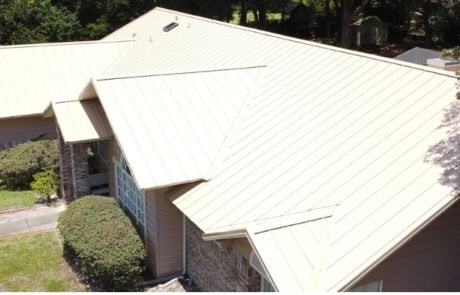
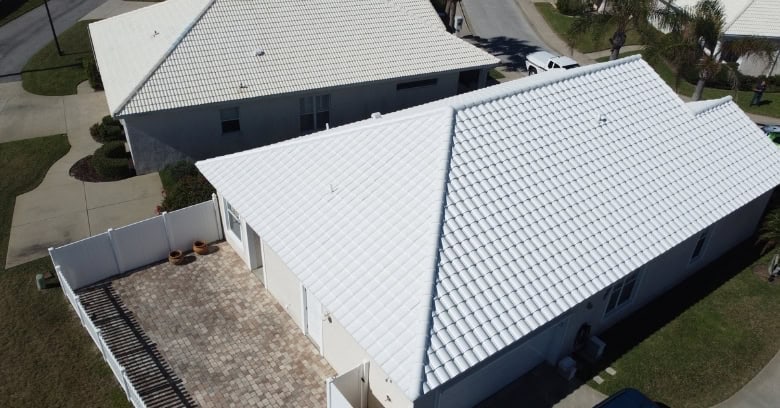
Metal sheets held by visible fasteners stay dry because of the gasket under each fastener, and a brittle washer gets replaced whole, never smeared with anything extra. Based on the house, tile may be mortar-set, foam-set or clipped directly, and the underlayment handles the water, not the surface material.
Weight placed wrong breaks a piece, and a damaged unit gets lifted out and replaced with one of the same profile. On a low-slope section, standing water and open seams are the things to watch, and leaves get removed from the outlets regularly.
Things an Owner Can Spot: Outside and In
- Coarse grains washing out after every rain, well after the roof was new.
- Tabs curling at the corners, spread across more than one row.
- Torn rubber where a pipe exits the deck, letting water run down into the attic.
- Discoloration on a bedroom ceiling, new since the previous season.
- Pinholes of light in the sheathing, with the lamp switched off.
- Moss on a shaded slope, in spots that stay damp longest.
- A dip between rafters, visible against the sky.
- Sealant pulling away at a wall, often after a hot summer.
Roofing Companies in Independence Missouri: How the Visit Works
Before anything gets suggested, a roofer takes in the whole covering and the attic together, and the report shows up as photographs and a clear written account. What is fine gets said as plainly as what needs attention, and the next step is left to the homeowner.
Roofing Companies for Independence Missouri Homes: Straight Answers About the Roof
Dial 913-398-5020 to arrange a visit on site.
Documentation for the Roof: Best Done Early
Writing down the installation date and the materials used is a smart habit, and every yearly report can go into the same file. Marking down every repair, with the location and the work done, leaves useful detail, and after several years the weak spots become obvious.
A buyer's home inspector almost always asks about the roof's history, and a documented account settles the matter later. A copy kept at a second location protects the earlier notes, because a single set can be destroyed in a flood or a fire.
A Neat Result, Up Close: Points to Look For
Rows sit true across each plane, with tidy trimming at the gable edges, and nails stay covered by the layer above. Around chimneys and dormers, the flashing gets replaced rather than reused, and caulk, where used at all, forms a thin, careful line.
Intake and exhaust vents stay open and unblocked, and the gutter runs finish straight and fastened. The yard gets swept with a magnet before the crew leaves, and a quick hose-down removes the last of the sawdust from a walkway.
Anyone comparing options for Roofing Companies in Independence Missouri is one step away from a straight answer. Picking up the phone for APC Roofing at 913-398-5020 puts a roofer on the calendar. Every visit takes in the whole roof and the attic beneath, and nothing is left to guess at.
Verified

Verified