In Search of Roofing Contractors in Independence Missouri?
APC Roofing takes care of a routine checkup right up to a complete replacement, across asphalt, metal and tile alike.
Reach us at 913-398-5020, and a roofer heads out for a look at the house.
What a Roof Is Made Of: a Plain Guide
The shingles or panels on top form the outer layer, and felt or a synthetic membrane, boards and rafters lie out of sight. Strips of flashing cover the gap at a chimney, a pipe or a valley, and water there rarely traces back to worn shingles close by.
The air under the rafters counts as part of the roof, the same as any material, since heat and humidity held there wear down the wood and covering overhead. A leak noticed inside can begin at any level of the roof, so attention paid only to the outside can miss where the water entered.
A Roof at Work: Quiet but Constant
A sloped covering sheds every storm's water downhill, and seal strips keep gusts from getting under the courses. The trusses and sheathing support the load above, snow included at the colder end of our territory, and intake and exhaust let the attic breathe.
Shedding water is the covering's task, and resisting wind is the fastening's job, and what is underneath keeps the whole structure standing. A weak component shows up as a sign of trouble somewhere else on the roof, so the trail gets followed back before anything gets mended.
Minor Roof Components: Different Timelines
The main covering is built for a long run, but a neoprene sleeve at a pipe fails well ahead of that span. Moisture gets behind the covering and moves toward the room, and a mark spreads across the ceiling beneath.
The bead where two materials meet cracks after enough hot seasons, and coated metal rusts once the coating wears through. Hip and ridge caps open at the center crease, because the highest point stands open to glare and gusts.
Different Stages, Different Details: Before Anyone Climbs
At a distance, the outline of the roof gives away dips, sags and wavy planes, and the gutters and trim can be checked in the same glance. Good binoculars show up torn collars, lifted tabs and bare patches, though failing sealant can stay hidden from the ground.
Moving across the planes, a roofer tests every connector and traces every flashing joint, and every course is checked for edges that have come loose. A slippery or steep slope rules out walking, and the eave, reached by ladder, provides the vantage point instead.
The Underside of a Roof: What Owners Can Find
A dark ring on the sheathing shows water has come through, and moisture felt by hand shows the water is still coming through. A pinpoint of sky through the boards marks a gap, and the position gets noted by measurement before anyone climbs.
Corroded fasteners poking through mean the attic air runs humid, and a matted, gray patch backs up the same story. A soffit choked with insulation, or a bath fan venting into the attic space, is spotted only from inside, so a street-level glance never catches faults of that kind.
After the Roofer Leaves: An Overview
The visit produces photographs linked to particular spots on the roof, and a written line explains what each image shows. Good sections get the same plain treatment as sections that do not, and faults are ranked by how soon repair is needed.
A filed report from an earlier check-up serves as a reference going forward, and a trend across seasons is clearer than a single day's snapshot. A roof tracked across each year brings few surprises, and large jobs show warning signs well ahead of the work becoming pressing.
Upkeep on a Shingle Roof: the Basic List
Stiffened collars at the plumbing vents get changed early, and shrunken caulk along the flashing gets a fresh bead. Pine straw and twigs get picked out of the valleys, and the gutters get kept running and secured.
A loose piece fastened back promptly stays a minor task, but delay through a wet season can let water reach the ceiling below. Moss on a shaded slope traps moisture under the courses, and the growth gets treated and brushed off, never pressure-washed.
The Habit Worth Keeping: a Homeowner's Part
A roofer should walk the roof once a year, scheduled once the harshest stretch of local weather has passed. The aim is spotting aging before rain gets through, and the homeowner learns roughly how much life the covering has left.
After rough weather, anyone can scan the roof from the yard, and bedroom ceilings upstairs can be watched for fresh spots. A few minutes under the deck with a lamp each season pay off: dark spots, daylight and matted insulation turn up long before anything travels any further.
Reading a Roof's Age: Early Signs to Late Signs
Brand-new shingles look dark and consistent across every slope, and by mid-life the sun-facing side fades ahead of the shaded side. Close to the finish, corners lift and bald patches spread, and repairs stop holding.
An appraisal from the yard supplies a decent guide, but a ladder and a closer look tell the fuller story. When shingles are exhausted, the candid conversation turns to replacement, and an honest contractor states that plainly, rather than pitching another repair.
The Channel's Part in the System: A Quick Look
The covering carries runoff only to the lower edge, and the gutter picks up the flow at the edge. A channel hung the wrong way holds a pool against the house, and the material there softens over time.
A soft spot along that edge points more often to drainage trouble than to worn shingles, and a new covering will not fix what backed-up water caused. Gutter pitch and downspout discharge get checked on a visit, and the drip-edge metal and the overlap at each joint get looked over as well.
How the Roof Breathes: Why the Details Matter
Outside air should enter under the eaves and leave near the peak, and that movement removes heat and moisture from under the deck. Where the opening gets sealed off, the attic runs hot in summer and stays sticky through humid stretches, and the deck and shingles suffer early.
Exhaust hardware installed with no matching intake draws conditioned air up from the rooms below, and a mismatched pairing at the ridge and gables can cut the draft short. Fresh shingles laid over stale, trapped heat age nearly as fast as the old ones did, so the fix belongs in the same job as the new covering.
One Company, Many Conditions: An Overview
At the colder end of our range, ice and drifting snow set the build, and a sticky underlayment protects the lowest courses. Closest to the ocean, gusts decide how the covering gets anchored, and wind-rated materials and sealed flashing go into the plan.
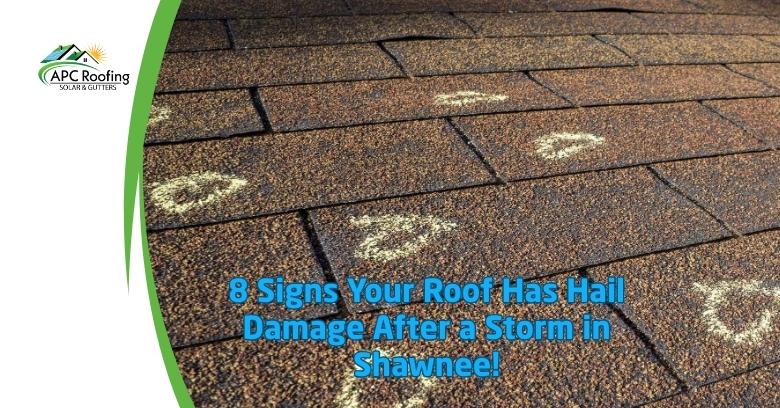
Across the hail belt at the colder end of our territory, impact ratings matter, while heat takes a toll on roofs everywhere we work. Every build answers to conditions at that particular site, not custom or what happened to be on the truck.
Family Homes and Business Buildings: One Steep, One Flat
A sloped covering sheds rain by lap, and shingle, tile and metal all serve that role. A commercial building usually has a nearly flat, sealed membrane, and mechanical equipment and drains break through that surface.
A good number of homes have a shallow section over a porch or a sunroom, and a lapped product there lets water back up under the tabs. A low spot like that calls for a sealed sheet, tucked beneath the steeper roof above, and re-laying shingles there repeats the same fault.
A Cover Until Things Get Fixed: What Holds Up
A secured sheet keeps rain out while repairs get scheduled, but the broken parts stay broken all the same. A well-set cover laps over the peak and gets battened along the edges, and the cover gets tensioned before the flapping starts.
A cover has to reach well past the damaged area, because rain slips in around a snug fit. A membrane left up too long traps moisture against the covering, and the shingles beneath start to deteriorate.
The Detail Where a Roof Meets Something Upright: the Proper Method
Along a wall, one bent piece of metal goes in under every course, and an overlapping strip above keeps runoff off that metal. A chimney gets an apron across the downhill face and metal tied in up each edge, and a broad stack gets a diverter built into the roof behind.
Caulk troweled onto a bad seam lets go once temperatures shift the metal, so the lasting answer is new metal laced in properly. Crumbling mortar lets rain soak into the masonry higher up, and a mason may need to handle the stonework while a roofer handles the metal.
Getting the Scope in Writing: What to Look For
A clear plan identifies every material, from the shingle to the metal, by name, and the document says whether the existing roof gets stripped to the deck. A solid outline sets a rule for any soft sheathing found mid-job, and new metal, vents and the cleanup work appear as separate items.
Two written proposals can be compared line by line, and the real differences between the two documents come into view. A roofer who waves off the specifics gives no genuine protection, since a spoken promise cannot be checked later.
How a Re-Roof Unfolds: the Basic Sequence
Landscaping and paving get shielded before any tearing begins, and the worn material gets pulled loose and hauled away. With the old material gone, the plywood gets examined board by board, and weak areas get cut out and replaced with sound lumber.
Membrane at the eaves, underlayment across the field and new flashing all go down, and the main covering, the ridge line and the vents finish the work. A magnet gets run over the lawn and the driveway when the work is done, and nothing from the cleanup stays behind in the gutters.
Maintenance Beyond Asphalt: Particular Needs
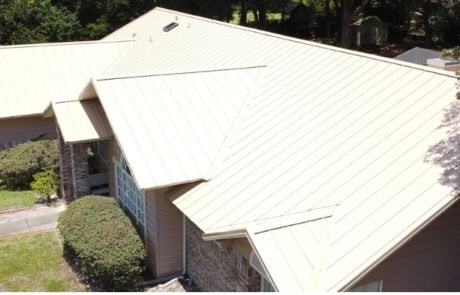
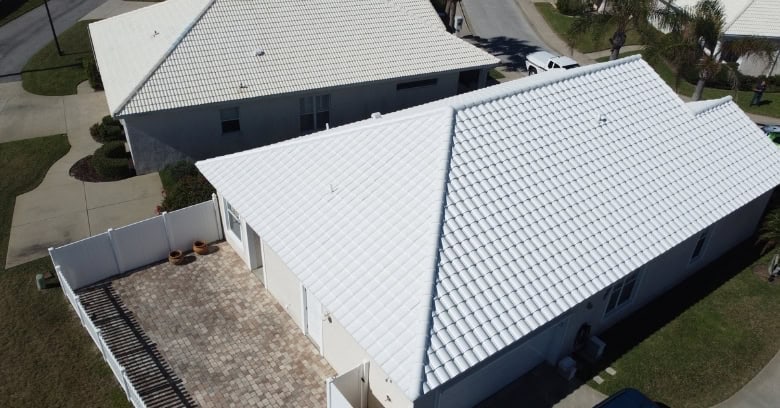
A metal system with exposed fasteners relies on the gasket beneath every fastener, and a leaking screw gets paired with a fresh washer. Based on the house, tile may be mortar-set, foam-set or clipped directly, and the real water barrier is the underlayment, not the surface material.
Weight placed wrong breaks a piece, and a damaged unit gets pulled and replaced to match the surrounding pattern. Flat sections show trouble as standing water and raised seams, and clogged drains get cleaned out on a visit.
Signs Worth a Closer Look: Outside and In
- Coarse grains washing out after every rain, in amounts that keep returning each season.
- Shingle edges cupping upward, spread across more than one row.
- A split rubber collar around a plumbing vent, easy to spot with binoculars.
- A ceiling ring in a top-floor room, new since the previous season.
- Light glowing between the planks, beside a vent stack.
- Moss on a shaded slope, growing thicker every spring.
- A bulge that catches the light at dusk, new since the previous year.
- Rust streaks below a metal joint, a sign that the tie-in needs attention.
Roofing Contractors Near Independence Missouri: How the Visit Works
Before any advice gets given, a roofer goes over the whole covering and the attic, and the results come back as images plus a short written summary. Sound parts get named as plainly as parts that need work, and the homeowner sets the order of any work.
Roofing Contractors Around Independence Missouri: a Roofer Who Reads the Whole Roof
Dial 913-398-5020 and book a visit to the property.
Documentation for the Roof: Easy to Maintain
Tracking when the covering went on and what was used is worth the effort, and each visit's report belongs with the earlier entries. Listing every fix, the place and the scope, takes only a minute, and given enough time the pattern becomes clear.
When a house goes up for sale, a buyer's inspector asks about the roof, and a documented account settles the matter later. A backup copy of the whole file keeps one bad day from erasing the whole thing, since a spill or a move should not be able to wipe out everything.
Signs of a Job Done Right: Points to Look For
The field reads as straight bands, with crisp cuts where each slope ends, and no fastener gets left exposed. Metal against any wall or chimney rests flush and secure, and any sealant used is a neat bead, never a smear.
Ventilation openings stay in place and free of debris, and the gutters return to position, clean and fastened. No nails or scraps get left in the grass or on the drive, and wood shavings from a trimmed edge are the most common leftover from the work.
Anyone who arrived looking into Roofing Contractors in Independence Missouri does not have to keep guessing about next steps. Contacting APC Roofing at 913-398-5020 moves the scheduling forward. Every visit covers the roof and the attic together, with nothing left to chance.
Verified

Verified