Searching for Storm Damage Roofing on a Family Home in Holly Hill Florida?
APC Roofing examines a slope in the calm after a rough spell, checking every edge and photographing what is there.
Call us at 386-356-2111 and a roofer will come out for a closer look.
Airflow Over a Sloped Roof: Not Spread Out Evenly
The greatest pressure gathers at the eaves, the rakes and the ridge, though a plain stretch across the middle goes largely untroubled. A draft finding a way beneath a raised flap levers the course set over the flap, so a lone nail beneath a shingle bears a following blast unaided.
Where two exterior faces meet, wind tumbles rather than running smooth, and builders space the attachment points closer together at that spot. A course near a structure's outside edge absorbs more force than a course out in the open field, and a closer-set fastener arrangement there is a direct answer to that pressure.
What the Crew Leaves to the Sun – Easy to Miss
Asphalt shingles carry a line of sealant that fuses down to the row set beneath, which is what keeps a shingle from lifting in a light breeze. A strong blast can snap a bond without moving the shingle, though nothing shifts out of place in the first hour after.
A broken seal goes unnoticed until the wind returns, and rain then reaches nail heads left bare for the first time. Taken alone, a single loose shingle is no emergency, though several shingles parted together make a doorway rather than a blemish.
A Manufacturer's Printed Figure – Often Misread
In a lab, unused shingles are pinned to a board and every seal is made deliberately, and only then does a machine bring the airflow up to speed. A covering installed for years responds differently on a rough day than unweathered material would, so a rating drawn from the original goods does not describe an aged roof.
A nail driven above the marked strip catches only the upper edge of a shingle, and a course can fail at a wind nobody would call extreme. A shingle ages from the moment installation finishes, and stiffness follows, so a rating measured on fresh stock says little about a roof carrying years of weather.
Ice From the Sky: the Part That Matters
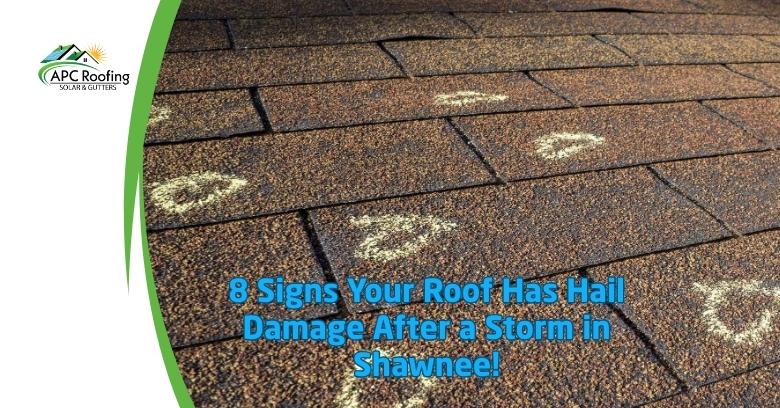
At the colder end of our territory, stones fall heavier than anywhere else we cover, though a milder shower still reaches every market we serve. The force of a hailstone buries granules in the layer set below, and a dimple stays on a shingle after a storm passes.
A shingle blocks water through an inner core, not the shingle's own face, so a bruise reaching that depth is a fault, not a blemish. A damaged section of a shingle breaks down ahead of the surface nearby, and a slope carrying many such spots fails unevenly over time.
What Else Takes a Beating: Quiet Evidence After the Fact
A hit the asphalt handles fine dents soft metal beside a struck slope, because bent material never straightens back out without help. Rubber torn at a pipe penetration sends rain straight past a boot's seal, so a stain indoors turns up close under the opening. A dented gutter can still carry water as designed, though a squashed downspout keeps the length above a squashed section from emptying out.
Lighter items up on a roof get checked the same way as the shingles, and measurements cover trim as carefully as the shingles. Dented metal parts rarely turn up where the asphalt above escaped unharmed, and neither kind of damage shows up alone.
Loose Grit After a Storm – Reading the Runoff
Small stones pressed into a shingle's face shield the material beneath the surface, because an uncovered stretch dries out and cracks quickly. A hard rain washes displaced grains all the way to a gutter, and a handful scooped from that spot says plenty about the roof.
An uncovered patch of shingle weathers far faster than a covered one, and a covering left that way begins to fail in scattered places. Coarse sand sitting in a trough came off a shingle not long before, and tracing grains back to that slope is straightforward for a roofer.
Driven Rain on a Slope: a Different Kind of Path
An overlap performs because whatever comes from overhead obeys gravity, and a strong gust uncovers a route that ordinary wet weather never finds. An open soffit can draw damp air upward into the attic space, and dampness pulled in that way lands on the insulation nearby.
What a Storm Drops From Above: More Than a Scrape
Considerable energy arrives through one narrow patch, and a substantial dose of force travels downward into the framing. A plank can fracture with little sign of damage on the visible surface, and the underside tells a roofer what a glance from above cannot.
A swaying bough polishes a bright curve into the granules a branch touches, and the mark is lighter than the surrounding material. Repairing a fractured deck means opening the slope above the fracture, and the work grows once the true extent becomes clear.
The View From the Rafters: Simple to Follow
Brightness passing through the framing tells where the covering gave way, so the precise place gets logged before anything else is disturbed. A wet section of decking darkens and rust often follows at fastener tips, and every mark narrows on the way toward one likely spot.
Matted fiberglass under a rafter says seepage has been arriving there for a while, and a room beneath that area can lose heat as a result. A louver can admit rain into the far end of an attic during a hard blow, so nothing on the covering needs disturbing at all in a case like that.
What a Bubbling Ceiling Says – What the Damage Tells You
Discolored edges spread outward from where rain finally let go, as water follows the wood down to the lowest reachable point. Blistered coating shows paint pushed away from behind by trapped moisture, and appearance on that surface says almost nothing about the size of a break.
A drip at a fan or a light is reason to cut the breaker without delay, and only after that switch is confirmed off does the cleanup begin. Dampness at the top of a wall adjacent to a chimney can run down inside the chase, and step flashing along that run gets looked at as well.
Flashing, Ridge and Rake: Quietly Doing Real Work
Counterflashing set into masonry has to pin an apron in place at the same time, and a failure at either point alone can let rain through. Air sliding under a gable edge can roll that length of metal upward, and the damage travels along that whole run once the break starts.
Ridge-cap fasteners bite directly into the deck beneath the caps, and slack fastening opens the seal on the seam sitting beneath. Vent sections pulled free let weather straight into the space a vent once covered, so insulation across a wide stretch can end up wet, not just underneath.
What Lets Daylight In – Not the Same as a Window
Every skylight frame stands taller than the surrounding shingles, and shingles lap onto the sides of that structure in order. The outside glass of a unit can break while the inside layer holds, so lifting the adjacent courses becomes part of that job.
A dome hit by a falling branch can crack as force travels through the material, and warm weather can lengthen a split that started out tiny. Moisture trapped between the panes of a sealed glass unit means the edge seal has failed, so the affected section is exchanged for a sound one.
More Than a System Can Take: What Overflows and Why
Half an inch of rain in a few minutes can overwhelm what sits at the eave, and whatever misses the channel runs down the siding underneath. Leaves and grit washed off a roof can choke the drain opening at the point of collection, and moisture sitting in a clogged length can work beneath the trim over time.
Not the Final Answer – Anchored, Not Weighted
Anything secured over a break can protect a house until the weather clears, because anything temporary is meant to come off once real repairs begin. A covering run over the ridge and down both slopes moves water downhill as designed, so a support strip backed by lumber spreads the load across a wider stretch.
Loose weight on top rarely secures a sheet once the gusts pick up, which does more harm than leaving a gap exposed in the first place. Driving nails through sound shingles just to hold a cover adds new leaks later, and nothing gets fastened through material that was already solid.
Putting Findings on Paper: Useful Later On
Every affected area gets photographed before anything is disturbed, and the record shows the roof exactly as things stood after the storm. Measured lengths and a plain description accompany every damaged spot, and a ruler answers what the eye alone cannot.
A broken covering rarely stays exactly as the first storm left the surface, and marks seen now may look different again next week. What gets requested for review comes across precisely as the paperwork shows, and nothing in that record gets dressed up to suit the occasion.
New Faces After the Damage – Slow Down Before Signing
Vehicles with out-of-area plates can work a neighborhood for days after a big storm, and a share of that traffic does solid, honest work. A deal reached at a front door carries the same weight as one signed indoors, so a careful reader takes that stack of pages inside before making any commitment.
A contractor whose office sits nearby stays reachable long after the work is done, so a concern that comes up afterward has somewhere to go. An offer that expires while a truck sits in the driveway is not a real offer, so there is no harm in declining to agree to anything on the spot.
A Repeat Performance – What Gets Left Behind
A roof that lost some grip once needs less wind the next time to lose more, and each following round can claim more than the round that came first. A fold formed in one storm marks a weak line that never fully disappears, and water can find that same flaw on a future occasion.
Water reaching a deck a second time can carry on into insulation and drywall well beyond that point, which is how a small fault can grow into a much more sizable one. Plywood swollen and dried repeatedly holds a nail less firmly with each cycle, which turns what should be a simple job into a larger, structural one.
What to Watch For After a Storm: Notes Worth Keeping
- Corners of shingles curled or torn loose, obvious from across a street.
- Soft metal marked where a stone or a branch made contact, on the faces that took the worst of a storm.
- Sandy drifts along a gutter run, in amounts that keep returning.
- Pinpricks of light in the sheathing, near a vent or a stack.
- A wet patch upstairs that returns again and again, usually right under a roof plane.
- A dark line running down an interior wall, following the line of the masonry.
- A cracked dome over a light shaft, once a storm has cleared.
- A downspout crushed or pulled loose from a bracket, where a fall has gone visibly wrong.
The Way APC Roofing Works on Storm Damage Roofing in Holly Hill Florida: From the Call to the Finish
Everything begins at ground level, logging anything that fell before going up, so anything unusual gets flagged before the review wraps up. Every roof plane gets covered wherever the pitch allows safe footing, and the space beneath the deck gets examined from the attic.
Findings come back in writing, with photographs attached to every item, and every finding stays tied to a specific spot on the roof. Each recommendation arrives together with reasons that hold up under questions, and the decision on what happens next stays with the homeowner.
Storm Damage Roofing Across Holly Hill Florida: Straight Answers After Bad Weather
Phone 386-356-2111 to book a time for an inspection.
Snow Over the Shingles: Standing Up to More
Out at the colder end of our territory, a large fall remains on the rafters well after the weather has moved on, which strains the wood beneath more than fresh powder would. A frozen lip at the overhang can hold melt above that point, which the membrane at that edge is meant to guard against.
Across the colder end of our territory, snow blown off one plane lands on the plane below, so the load across the framing ends up uneven rather than balanced. A sheet coming free from a metal surface can drop without warning, which is why guards get installed in some exposed spots.
The Toll Taken Near the Water – More Upkeep for Fixtures
A house at the coastal end of our territory can face a gale from breakfast to dark, and metal surfaces along the coast face more frequent exposure to salt spray. A load held that steadily can work fasteners loose in a way a brief burst never would, and a covering can give way to wind late in an event that started far milder.
Spray blown against a wall can find every lap in the exterior finish, and the attic is far from the only place moisture like that turns up. Codes at the coastal end of our territory call for more fasteners per shingle, so replacement pieces go on using the stricter local pattern.
A Patch on an Established Surface – What Stands Out Up Close
Granules fade with age, so freshly made stock looks noticeably brighter, and the surrounding roof ends up setting the visual standard. Replacement shingles near a driveway can catch the eye of anyone passing, while work on the back of a house draws far less attention.
An older style no longer sold gets replaced with something comparable, and the outline rarely lines up with total precision. Where one face of a house carries too many separate repairs, a patchwork look sets in, and an even surface is often the whole point of a full redo.
The Completed Slope: Nothing Left Loose
Replacement shingles bed in as though installed on the original day, and the courses carry straight across the seam between old and new. Flashing goes under and over the layers as the design intends, so sealant only backs up the main barrier, not the whole defense.
Nails land at the spot the next row of shingles covers completely, and every course sits flush rather than sinking in too deep. A snapshot taken soon after a repair is worth saving for the future, since a later inspection can see exactly what section was replaced and when.
If Storm Damage Roofing is what brought you here after rough weather in Holly Hill Florida, call APC Roofing at 386-356-2111 to arrange for a roofer to come out. What the weather left behind gets examined closely and photographed, and a homeowner gets walked through exactly what was found.
Verified

Verified
Verified
Verified